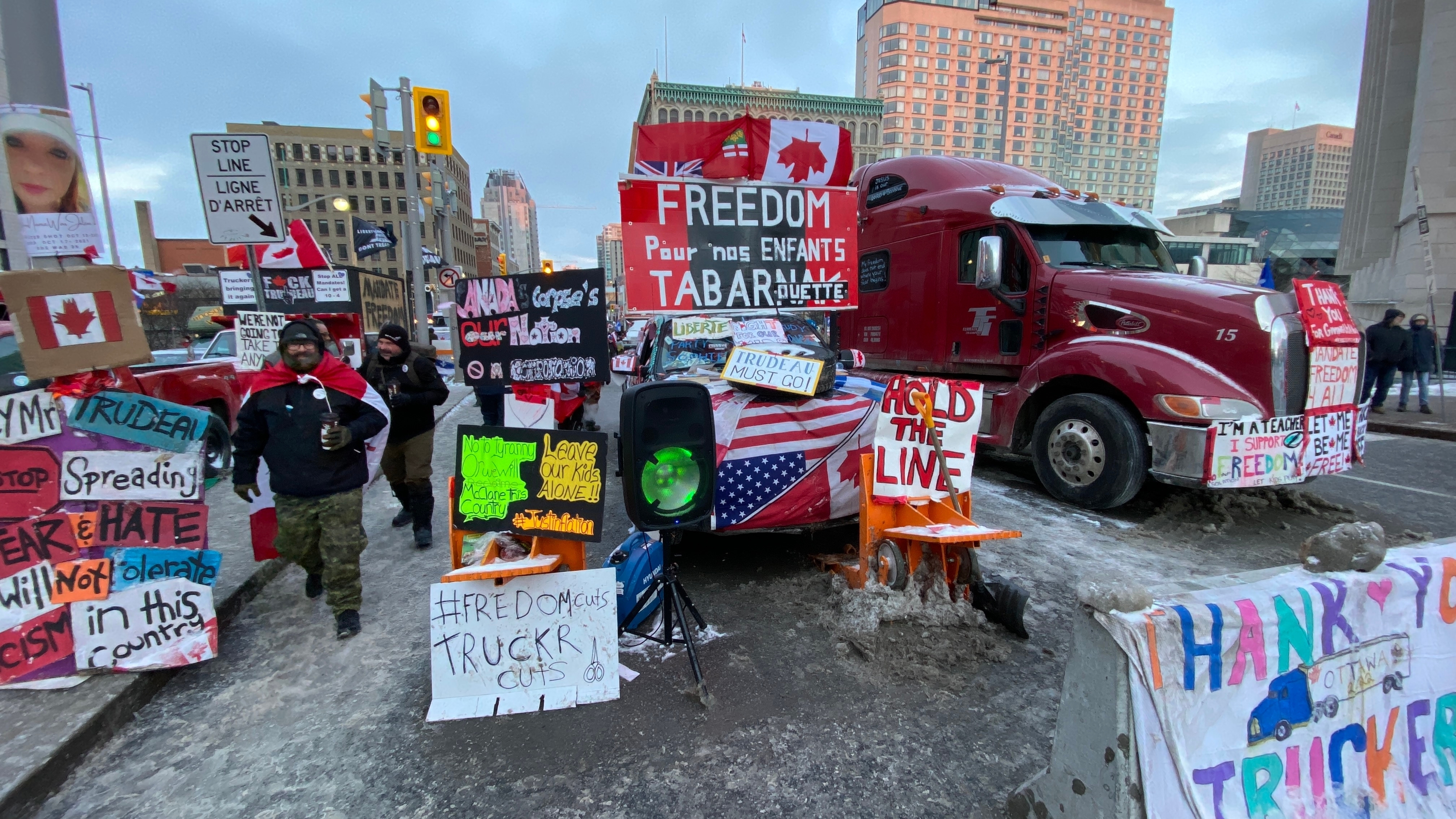
As Canadian police ended blockades in Ottawa by anti-vaccine-mandate protesters, the country’s financial services sector was also pressed into action under emergency economic orders that required it to freeze and report transactions that support the demonstrators.
The orders, issued Feb. 15 under the Canadian Emergencies Measures Act, last 30 days.
Canada’s parliament on Monday endorsed the government’s use of the orders to address the blockade after police cleared roads and made arrests to end the demonstrations. The orders had initially caused confusion among financial institutions, which struggled to figure out how to comply, according to media reports. But as of Monday, enforcement was robust, including the freezing of 219 financial products, according to Royal Canadian Mounted Police figures.
“While it remains the responsibility of the financial institutions to make the decision of freezing accounts, the RCMP is diligently working with our law enforcement and federal partners to disclose relevant information of individuals and companies suspected of involvement in illegal acts,” the police statement said. “The list that was provided to financial institutions included identities of individuals who were influencers in the illegal protest in Ottawa, and owners and/or drivers of vehicles who did not want to leave the area impacted by the protest.”
Financial entities, including banks, investment managers and money services businesses (MSBs), are required under Canadian anti-money laundering (AML) rules to register with the Financial Transactions and Reports Analysis Center of Canada (FINTRAC) and report any suspicious activity or large transactions. FINTRAC is the national financial intelligence agency of Canada.
The orders also covered crowdfunding platforms and payment service providers, entities not typically subject to requirements under Canadian law. The move against these firms appears to presage legislation that would formally bring them under Canadian AML compliance rules, according to recent client alerts from law firms.
“While the order and the invoking of the Emergencies Measures Act is significant for many reasons, from a financial services perspective, it signals an expansion of what types of entities will, going forward, likely be subject to the money services provisions of the [AML law],” Blake, Cassels & Graydon LLP said in a client note. ”FINTRAC has historically taken the view that those entities involved in payment processing are not subject to regulation… It now appears that payment service providers will in fact be regulated as money services businesses.”
A spokesman for the Department of Finance Canada confirmed Monday to Kharon in an email that the measures extending the reporting requirements to crowdfunding platforms and payment service providers are temporary. But the government plans to bring forward legislation that would “provide these authorities to FINTRAC on a permanent basis,” he added, citing recent comments from Deputy Prime Minister and Minister of Finance Chrystia Freeland.
Under the emergency orders, crowdfunding platforms and payment service providers only are required to register with FINTRAC if they hold assets on behalf of a “designated person,” which is defined as anyone engaged in the prohibited public assembly.
Once registered, though, the entities are subject to the same requirements under the orders as the regulated financial entities, including a duty to cease dealings with designated persons and to determine “on a continuous basis” whether they possess assets of designated persons, as well as the reporting obligations, according to a client alert from Osler, Hoskin & Harcourt LLP.
Freeland, the deputy prime minister and minister of finance, has acknowledged that the flow of funds to the blockades had highlighted how these entities aren’t captured under existing law, according to a client alert from Davies Ward Phillips & Vineberg LLP.
“The potential changes…signal that these entities, which previously operated in a regulatory gray zone, will need a robust framework to ensure compliance with [AML] regimes in the future,” the Davies Ward Phillips & Vineberg note said.
The orders, issued Feb. 15 under the Canadian Emergencies Measures Act, last 30 days.
Canada’s parliament on Monday endorsed the government’s use of the orders to address the blockade after police cleared roads and made arrests to end the demonstrations. The orders had initially caused confusion among financial institutions, which struggled to figure out how to comply, according to media reports. But as of Monday, enforcement was robust, including the freezing of 219 financial products, according to Royal Canadian Mounted Police figures.
“While it remains the responsibility of the financial institutions to make the decision of freezing accounts, the RCMP is diligently working with our law enforcement and federal partners to disclose relevant information of individuals and companies suspected of involvement in illegal acts,” the police statement said. “The list that was provided to financial institutions included identities of individuals who were influencers in the illegal protest in Ottawa, and owners and/or drivers of vehicles who did not want to leave the area impacted by the protest.”
Financial entities, including banks, investment managers and money services businesses (MSBs), are required under Canadian anti-money laundering (AML) rules to register with the Financial Transactions and Reports Analysis Center of Canada (FINTRAC) and report any suspicious activity or large transactions. FINTRAC is the national financial intelligence agency of Canada.
The orders also covered crowdfunding platforms and payment service providers, entities not typically subject to requirements under Canadian law. The move against these firms appears to presage legislation that would formally bring them under Canadian AML compliance rules, according to recent client alerts from law firms.
“While the order and the invoking of the Emergencies Measures Act is significant for many reasons, from a financial services perspective, it signals an expansion of what types of entities will, going forward, likely be subject to the money services provisions of the [AML law],” Blake, Cassels & Graydon LLP said in a client note. ”FINTRAC has historically taken the view that those entities involved in payment processing are not subject to regulation… It now appears that payment service providers will in fact be regulated as money services businesses.”
A spokesman for the Department of Finance Canada confirmed Monday to Kharon in an email that the measures extending the reporting requirements to crowdfunding platforms and payment service providers are temporary. But the government plans to bring forward legislation that would “provide these authorities to FINTRAC on a permanent basis,” he added, citing recent comments from Deputy Prime Minister and Minister of Finance Chrystia Freeland.
Under the emergency orders, crowdfunding platforms and payment service providers only are required to register with FINTRAC if they hold assets on behalf of a “designated person,” which is defined as anyone engaged in the prohibited public assembly.
Once registered, though, the entities are subject to the same requirements under the orders as the regulated financial entities, including a duty to cease dealings with designated persons and to determine “on a continuous basis” whether they possess assets of designated persons, as well as the reporting obligations, according to a client alert from Osler, Hoskin & Harcourt LLP.
Freeland, the deputy prime minister and minister of finance, has acknowledged that the flow of funds to the blockades had highlighted how these entities aren’t captured under existing law, according to a client alert from Davies Ward Phillips & Vineberg LLP.
“The potential changes…signal that these entities, which previously operated in a regulatory gray zone, will need a robust framework to ensure compliance with [AML] regimes in the future,” the Davies Ward Phillips & Vineberg note said.