Through these gateways also comes a complex dynamic of exposure risk.
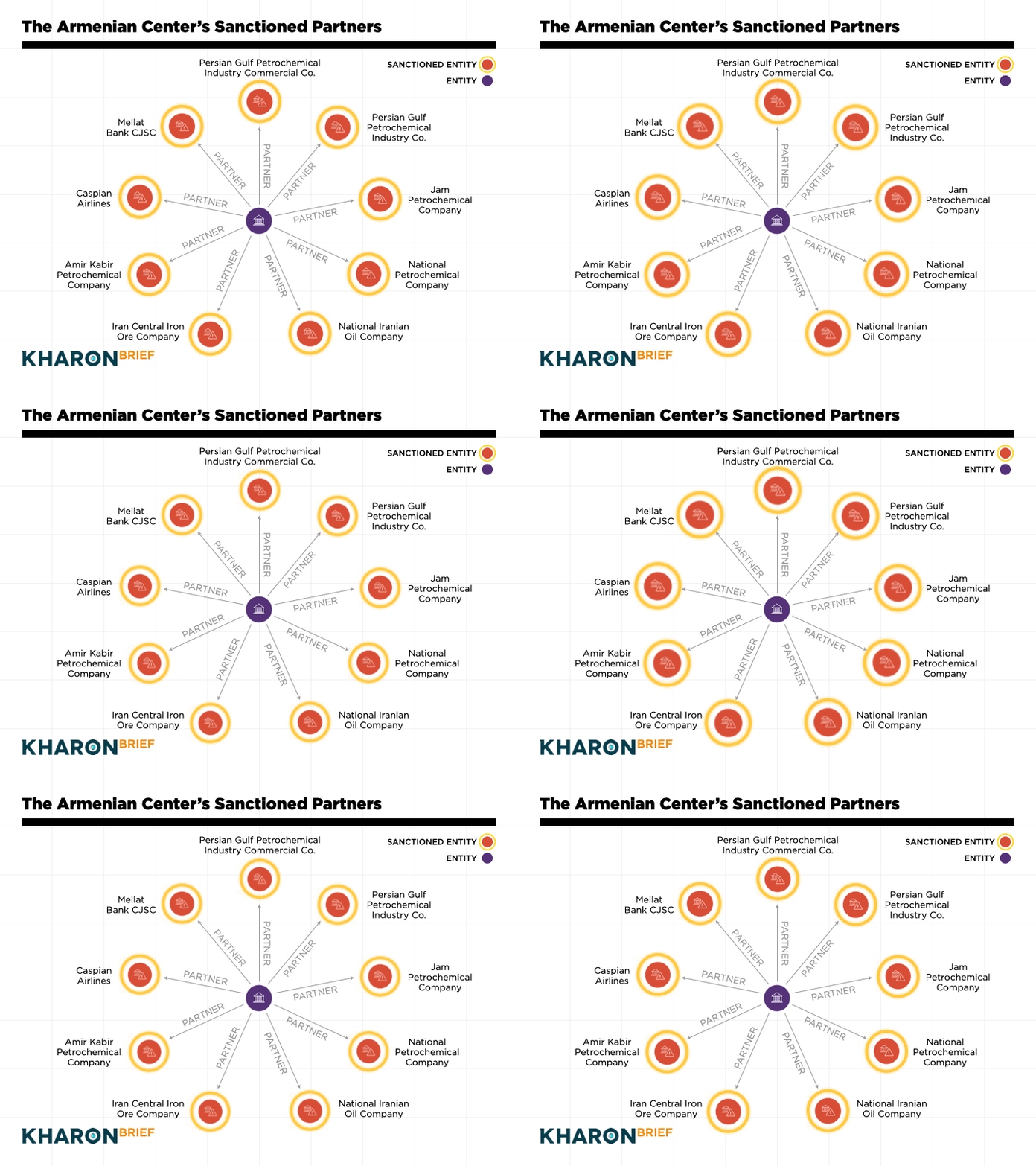
Kharon’s research after the opening of the Armenian trade center found that its clientele includes sanctioned Iranian entities, as well as others operating in critical industries, often under the control of the Iranian state. It grants such actors a new reach.
The details: Besides Armenia, Iran notably has opened such trade centers in China, India, Russia and Turkey. For each, the Trade Promotion Organization of Iran issues licenses allowing businesses to operate and trade their products in those countries, “with the aim of facilitating foreign trade, providing business consulting, marketing of Iranian products and services, providing trade and consulting services in different sectors, and helping to execute commercial contracts,” as an Iranian media outlet described it.
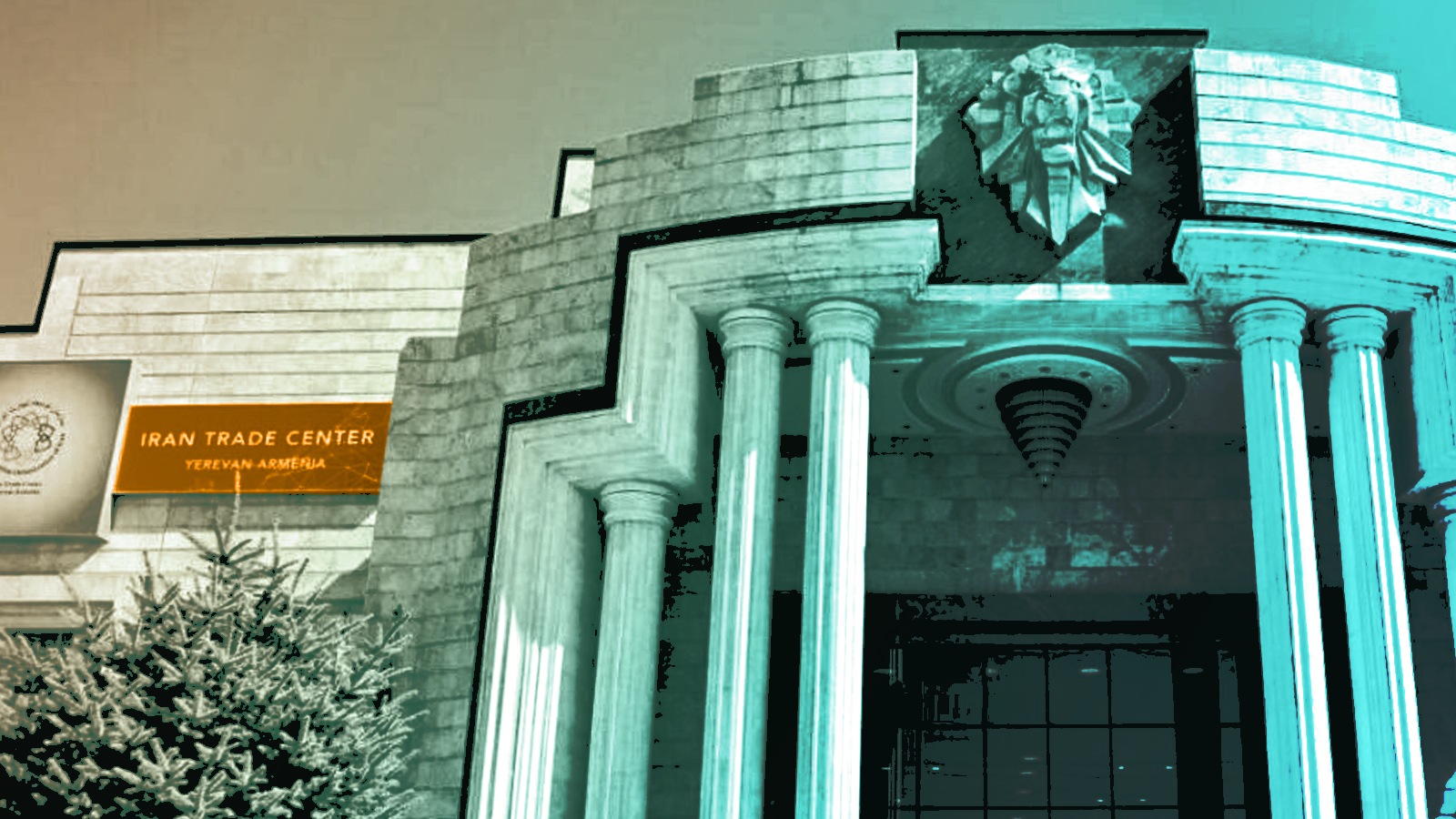
Armenia’s colossal trade center in Yerevan, spanning nearly 200,000 square feet, features more than 100 specialized booths, designed to cater to Iranian traders and manufacturers in industries including oil, gas, petrochemicals, pharmaceuticals, construction and advanced technologies. U.S. sanctions have targeted many of these industries, petroleum products in particular.
In practice: Although Iran is not a full member of the Eurasian Economic Union (EAEU), the two parties have a free trade agreement, which aims to reduce trade barriers and promote economic cooperation between Iran and EAEU’s member states, including Armenia. Iran and Armenia signed a new barter trade agreement after the trade center’s opening ceremony, too, a move that a state-affiliated Iranian outlet cast as “a strategic solution to navigate the challenges posed by Western sanctions.”
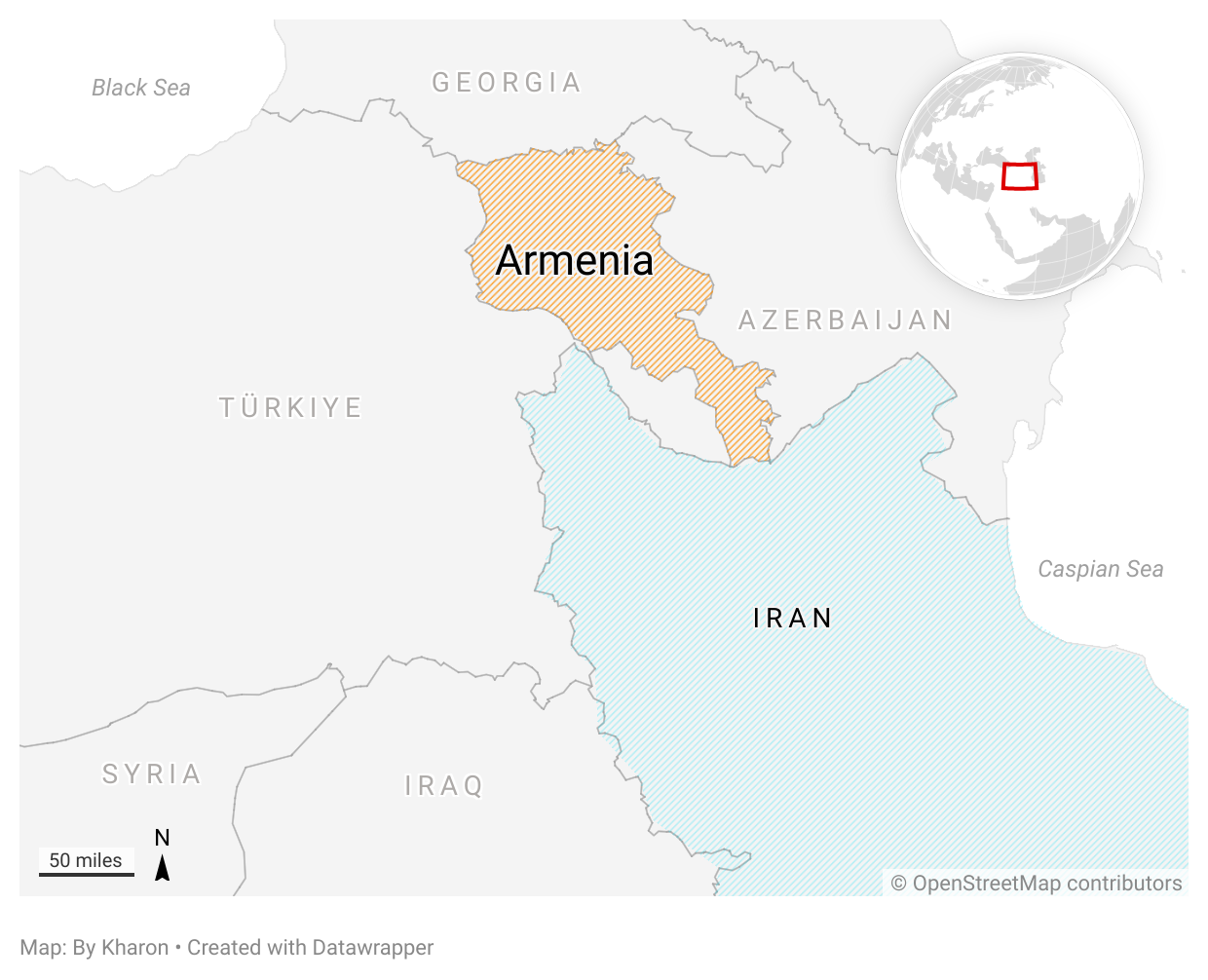
Armenia is an especially valuable partner because of its location between Iran and the rest of the EAEU and because of its connections to Russian, central Asian and European business. The trade center allows such entities a space to interface with Iranian companies without the usual barriers. From that entry point, Iranian goods could flow out to Europe, Asia and beyond.
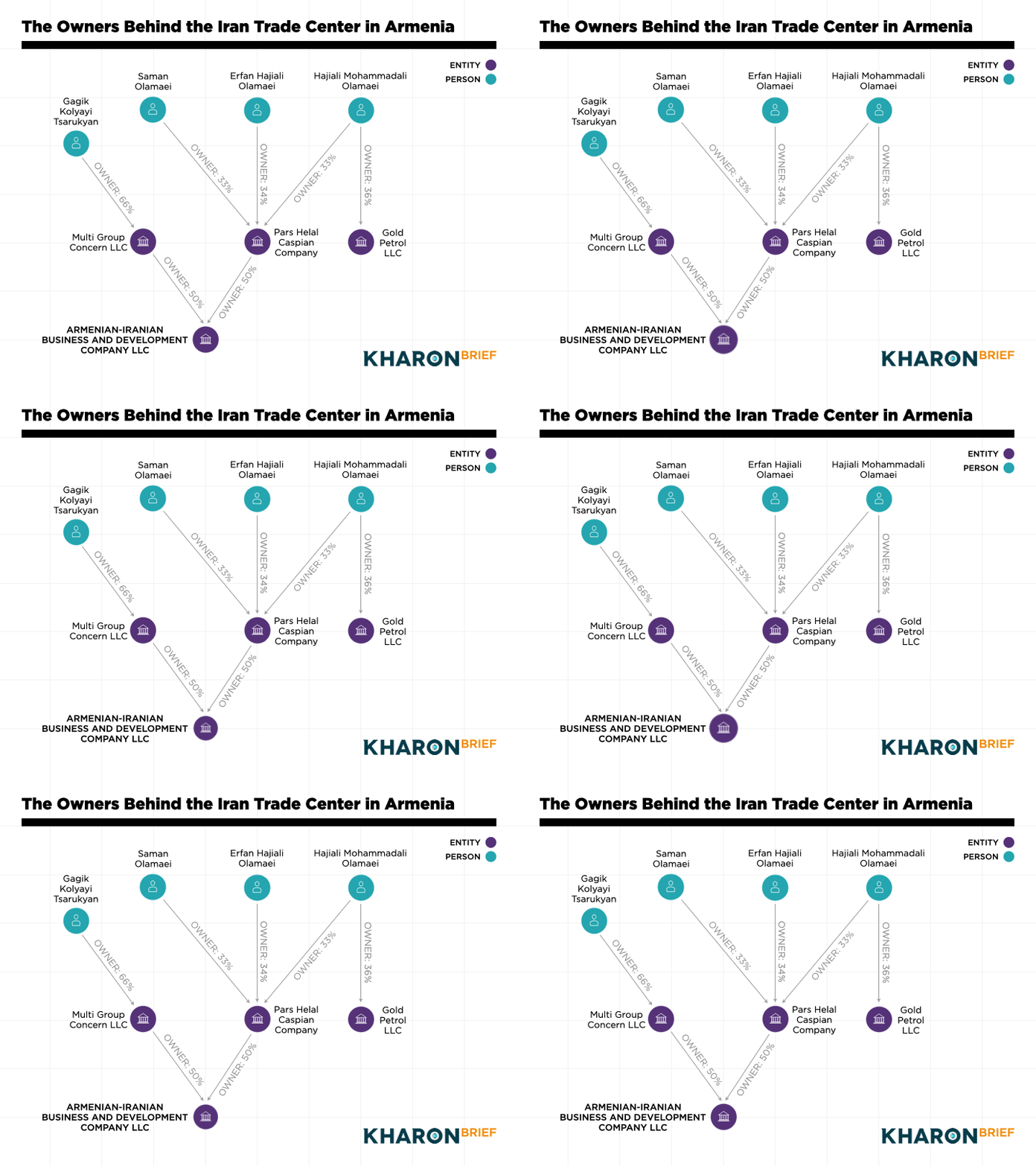
- One example: the commercial manager for both Gold Petrol and the trade center, who was previously a petroleum inspector for the U.S.-sanctioned National Iranian Oil Products Distribution Company. Its parent, the state-owned National Iranian Oil Company, is one of the center’s partners. The Iran Trade Center in Armenia shares managers with several of the Olamaeis’ other Iran-based businesses as well.
- One non-Iranian booth, labeled “The Republic of Belarus,” is operated by the Armenian-Belarusian Trading House Ar-Be LLC, an Armenian entity acting on behalf of the state of Belarus, Kharon found. Ar-Be serves as the official representative and distributor of sanctioned Belarusian agricultural machinery manufacturers in Armenia. The initiative is another venture by Tsarukyan, the Armenian businessman behind the Iran Trade Center, together with entities ultimately controlled by Belarus.
- The Armenian branch of the U.S.-sanctioned Iranian Bank Mellat provides financial and logistics services at the trade center. According to an Instagram post by the trade center last year, companies can “open an account at this branch and receive currency in Armenia and settle in Iran.” Opening accounts, the post said, is just one of several “banking solutions” the center has considered “to facilitate export and trade with Armenia.”
- A partnership with one of Armenia’s top freight-forwarders, Eurasia Logistic LLC, allows Iranian traders to access logistical support at the center. Tsarukyan and Arman Hajiali Olamaei, head of the Iran Trade Center in Armenia, established that company to facilitate cargo transportation between Iran and Armenia for their clients. Eurasia Logistics LLC, whose website says it maintains offices in both countries’ capitals and along the border, markets itself as a “hassle-free” transporter capable of handling a wide range of cargo, including petrochemical products, minerals, iron and heavy machinery.
Read more on Iran: