This story, originally published Feb. 28, has been updated.
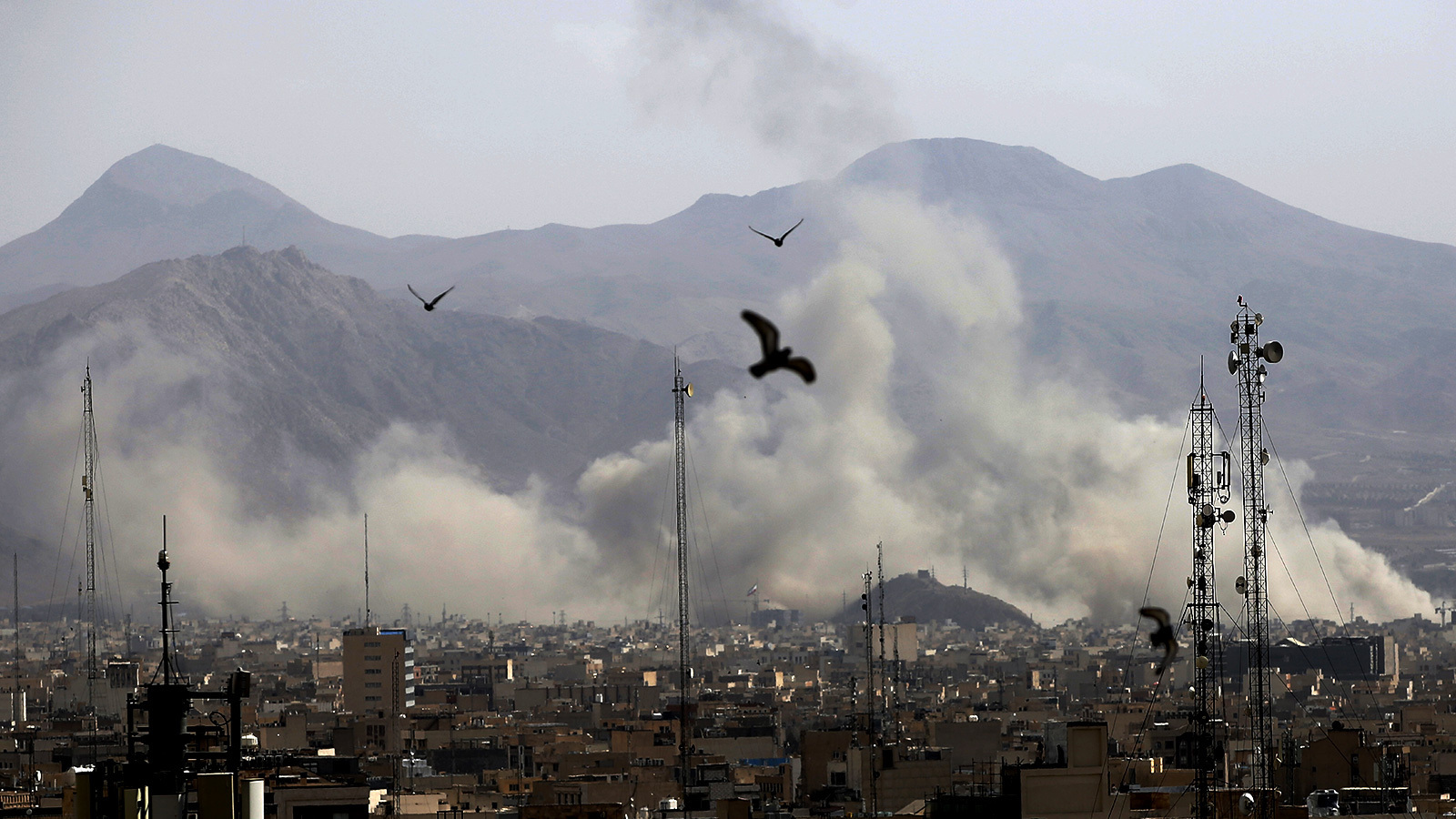
Hizballah fired rockets into Israel and drew returning airstrikes on Lebanon on Monday, reopening a fight officially closed since November 2024. An Iran-aligned Iraqi militia struck U.S. forces with a drone at Baghdad’s airport. And major shipping companies rerouted vessels away from the Red Sea before Yemen’s Houthi rebels had fired a shot.
Within 72 hours of U.S. and Israeli forces attacking Iran, the embattled “Axis of Resistance” that it spent decades supporting had opened additional fronts, from the Mediterranean to the Persian Gulf.
The regional militias, a core piece of isolated Iran’s national security, can serve as deterrents and, when its Islamic Revolutionary Guards Corps (IRGC) needs, weapons. U.S. and European security officials had been monitoring indicators suggesting that, in the case of an attack on Iran, proxy groups could launch retaliatory attacks in the Middle East and Europe, the New York Times reported. Those concerns have now been realized.
President Trump acknowledged the group’s threat directly in a video posted to Truth Social on Saturday addressing the U.S. operation.
“We are going to ensure that the region’s terrorist proxies can no longer destabilize the region or the world and attack our forces,” he said. On Monday, in his first public appearance at the White House since the attack, Trump said the U.S. military operations in Iran could take four to five weeks but added that it has “the capability to go far longer than that.”
Hizballah fired rockets into Israel and drew returning airstrikes on Lebanon on Monday, reopening a fight officially closed since November 2024. An Iran-aligned Iraqi militia struck U.S. forces with a drone at Baghdad’s airport. And major shipping companies rerouted vessels away from the Red Sea before Yemen’s Houthi rebels had fired a shot.
Within 72 hours of U.S. and Israeli forces attacking Iran, the embattled “Axis of Resistance” that it spent decades supporting had opened additional fronts, from the Mediterranean to the Persian Gulf.
The regional militias, a core piece of isolated Iran’s national security, can serve as deterrents and, when its Islamic Revolutionary Guards Corps (IRGC) needs, weapons. U.S. and European security officials had been monitoring indicators suggesting that, in the case of an attack on Iran, proxy groups could launch retaliatory attacks in the Middle East and Europe, the New York Times reported. Those concerns have now been realized.
President Trump acknowledged the group’s threat directly in a video posted to Truth Social on Saturday addressing the U.S. operation.
“We are going to ensure that the region’s terrorist proxies can no longer destabilize the region or the world and attack our forces,” he said. On Monday, in his first public appearance at the White House since the attack, Trump said the U.S. military operations in Iran could take four to five weeks but added that it has “the capability to go far longer than that.”
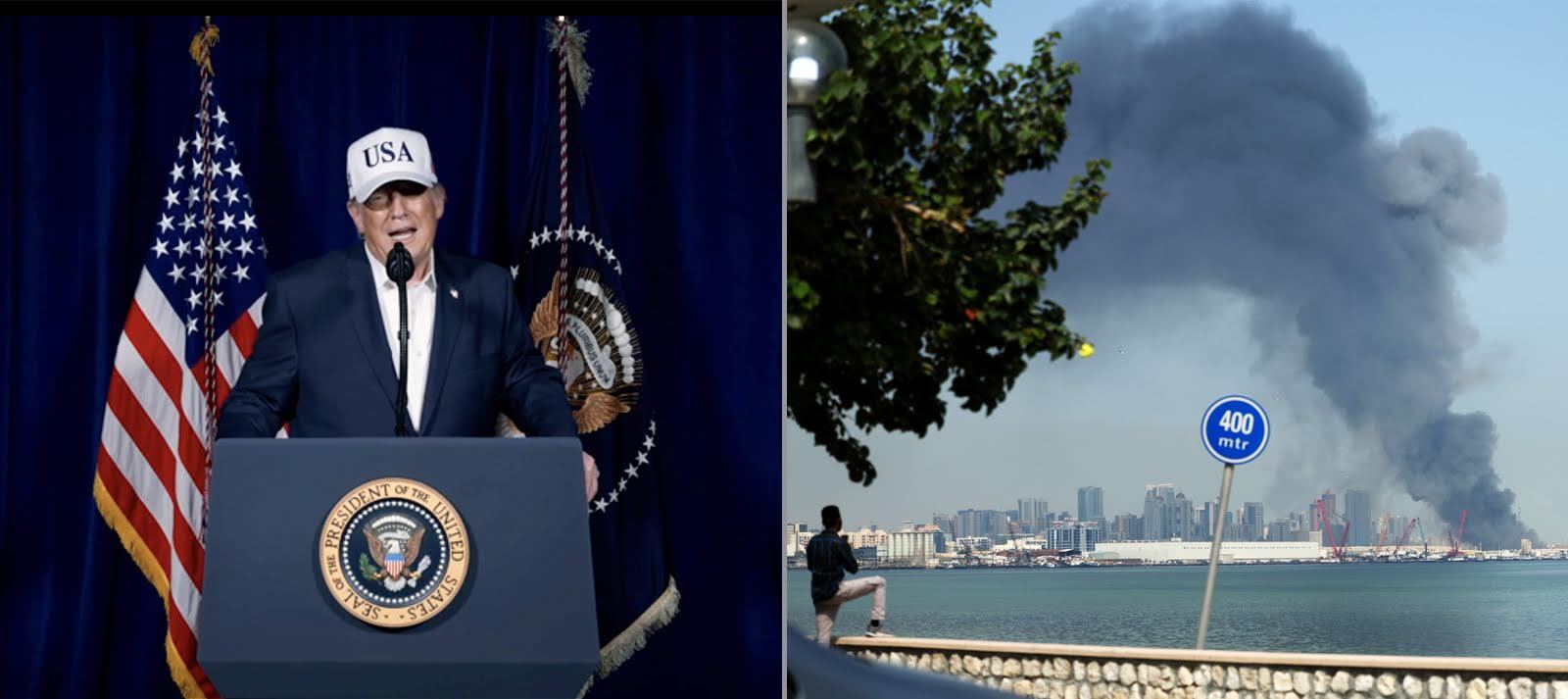
Left: President Trump addresses combat operations in Iran, in a video posted to Truth Social. Right: Smoke rises after Iran carried out a retaliatory missile strike Saturday on the main headquarters of the U.S. Navy’s 5th Fleet in Manama, Bahrain. (Photo by Stringer/Anadolu via Getty Images)
If the conflict does drag on, the Iran-backed militias are likely to be a big part of why.
Here’s how the most prominent proxy threats operate.
Here’s how the most prominent proxy threats operate.
Hizballah: ‘Degraded’ but Not Dormant
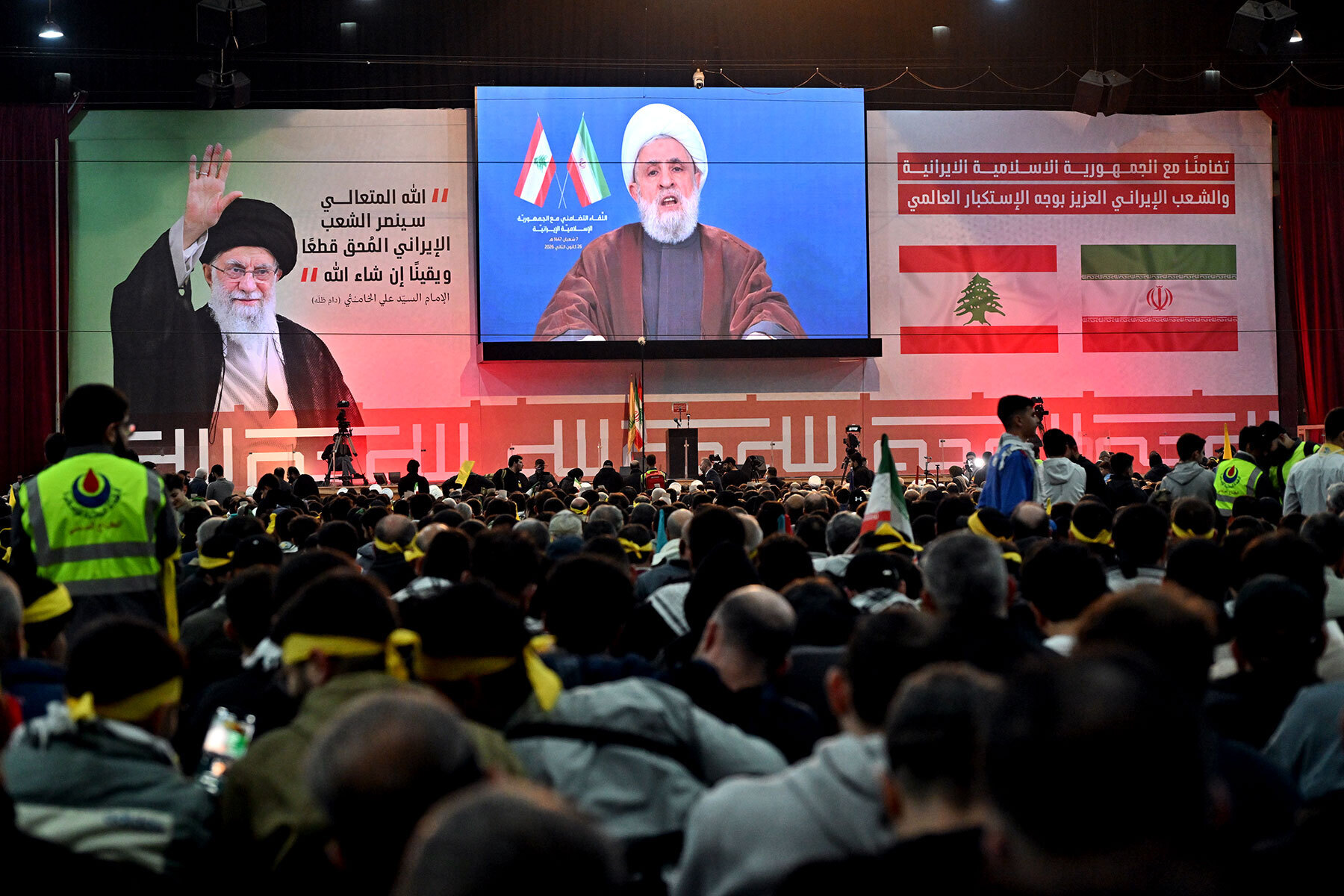
A crowd in Beirut watches a speech by Hizballah Secretary General Naim Qassem in January, at a solidarity event with Iran’s leader Ali Khamenei and the Iranian people. (Fadel Itani/NurPhoto via Getty Images)
Lebanon-based Hizballah has been Iran’s most strategically valuable proxy for four decades. On Monday, when the group fired feebly on Israel, drawing intense retaliatory fire in Beirut and around the country, it risked its own survival to aid the IRGC again.
Even so, the Office of the Director of National Intelligence’s (ODNI) Annual Threat Assessment for 2025 described Hizballah as simply “degraded.” “Although weakened,” the report said, “Hizballah maintains the capability to target U.S. persons and interests in the region, worldwide, and — to a lesser extent — in the United States.”
What they’ve said: Hizballah had underscored its solidarity with Iran before Saturday’s strikes. The group’s new secretary-general, Naim Qassem, said in a Jan. 26 speech that it was “religiously and ideologically duty-bound” not to remain neutral if the U.S. attacked Iran or its assets—vowing that Hizballah reserved “every right” to “take all necessary measures” and “do whatever we deem appropriate.”
The State Department’s partial evacuation last week of its embassy in Beirut, a longtime Hizballah target, suggests the U.S. took such risks seriously.
- Hizballah said the attack was in response to Saturday’s killing of Ayatollah Ali Khamenei, Iran’s supreme leader and the group’s most powerful backer.
Even so, the Office of the Director of National Intelligence’s (ODNI) Annual Threat Assessment for 2025 described Hizballah as simply “degraded.” “Although weakened,” the report said, “Hizballah maintains the capability to target U.S. persons and interests in the region, worldwide, and — to a lesser extent — in the United States.”
What they’ve said: Hizballah had underscored its solidarity with Iran before Saturday’s strikes. The group’s new secretary-general, Naim Qassem, said in a Jan. 26 speech that it was “religiously and ideologically duty-bound” not to remain neutral if the U.S. attacked Iran or its assets—vowing that Hizballah reserved “every right” to “take all necessary measures” and “do whatever we deem appropriate.”
The State Department’s partial evacuation last week of its embassy in Beirut, a longtime Hizballah target, suggests the U.S. took such risks seriously.
- The U.S. blames Hizballah for the infamous 1983 bombing of its Beirut embassy that killed 63 people, including 17 Americans, though an affiliate Shia militia at the time claimed it was responsible. Hizballah then bombed the annex of the embassy’s new Beirut location the following year.
- State followed up on Monday by urging any U.S. citizens “to depart Lebanon now.”
How the money flows: The Treasury Department assessed in November that Iran smuggled an estimated $1 billion to Hizballah since the start of the year, routed through UAE-based exchange houses and other channels.
In March of last year, the Treasury Department sanctioned five individuals and three companies in a Lebanon-based sanctions evasion network. The Hizballah finance team, Treasury said then, manages commercial projects and oil-smuggling networks, “often in conjunction with Iran’s IRGC-Qods Force,” using front companies to generate millions in revenue.
From Kharon’s research: Hizballah’s military capabilities may be degraded, but its financial and social networks remain resilient.
One example is the Wa Tawanou Association in Lebanon. According to an interview with its president on Hizbollah-affiliated Al Mayadeen TV, Wa Tawanou was founded in 2019 in response to a call by then-Hizballah leader Hassan Nasrallah for more charitable efforts to support the group’s field activities. While it claims to operate independently, Wa Tawanou has said in posts on X that it partnered through at least 2025 with Iran-based organizations to distribute aid in Lebanon; among them is the Iran Hamdel Association, whose director works for Iran’s office that glorifies the speeches and works of Iran Supreme Leader Ayatollah Ali Khamenei.
The charity also appears to have collaborated with Hizballah directly. It has promoted on its Facebook account two bank accounts under the name Al-Qard, one in April 2023 and another this past October. That appears to be a reference to the Al-Qard Al-Hassan Association, a financial institution the Treasury Department sanctioned back in 2007, describing it as a cover that Hizballah uses “to manage its financial activity.”
In March of last year, the Treasury Department sanctioned five individuals and three companies in a Lebanon-based sanctions evasion network. The Hizballah finance team, Treasury said then, manages commercial projects and oil-smuggling networks, “often in conjunction with Iran’s IRGC-Qods Force,” using front companies to generate millions in revenue.
From Kharon’s research: Hizballah’s military capabilities may be degraded, but its financial and social networks remain resilient.
One example is the Wa Tawanou Association in Lebanon. According to an interview with its president on Hizbollah-affiliated Al Mayadeen TV, Wa Tawanou was founded in 2019 in response to a call by then-Hizballah leader Hassan Nasrallah for more charitable efforts to support the group’s field activities. While it claims to operate independently, Wa Tawanou has said in posts on X that it partnered through at least 2025 with Iran-based organizations to distribute aid in Lebanon; among them is the Iran Hamdel Association, whose director works for Iran’s office that glorifies the speeches and works of Iran Supreme Leader Ayatollah Ali Khamenei.
The charity also appears to have collaborated with Hizballah directly. It has promoted on its Facebook account two bank accounts under the name Al-Qard, one in April 2023 and another this past October. That appears to be a reference to the Al-Qard Al-Hassan Association, a financial institution the Treasury Department sanctioned back in 2007, describing it as a cover that Hizballah uses “to manage its financial activity.”
- The U.S. sanctioned senior members of Al-Qard just last July.
The Houthis: Ship strikes and oil money
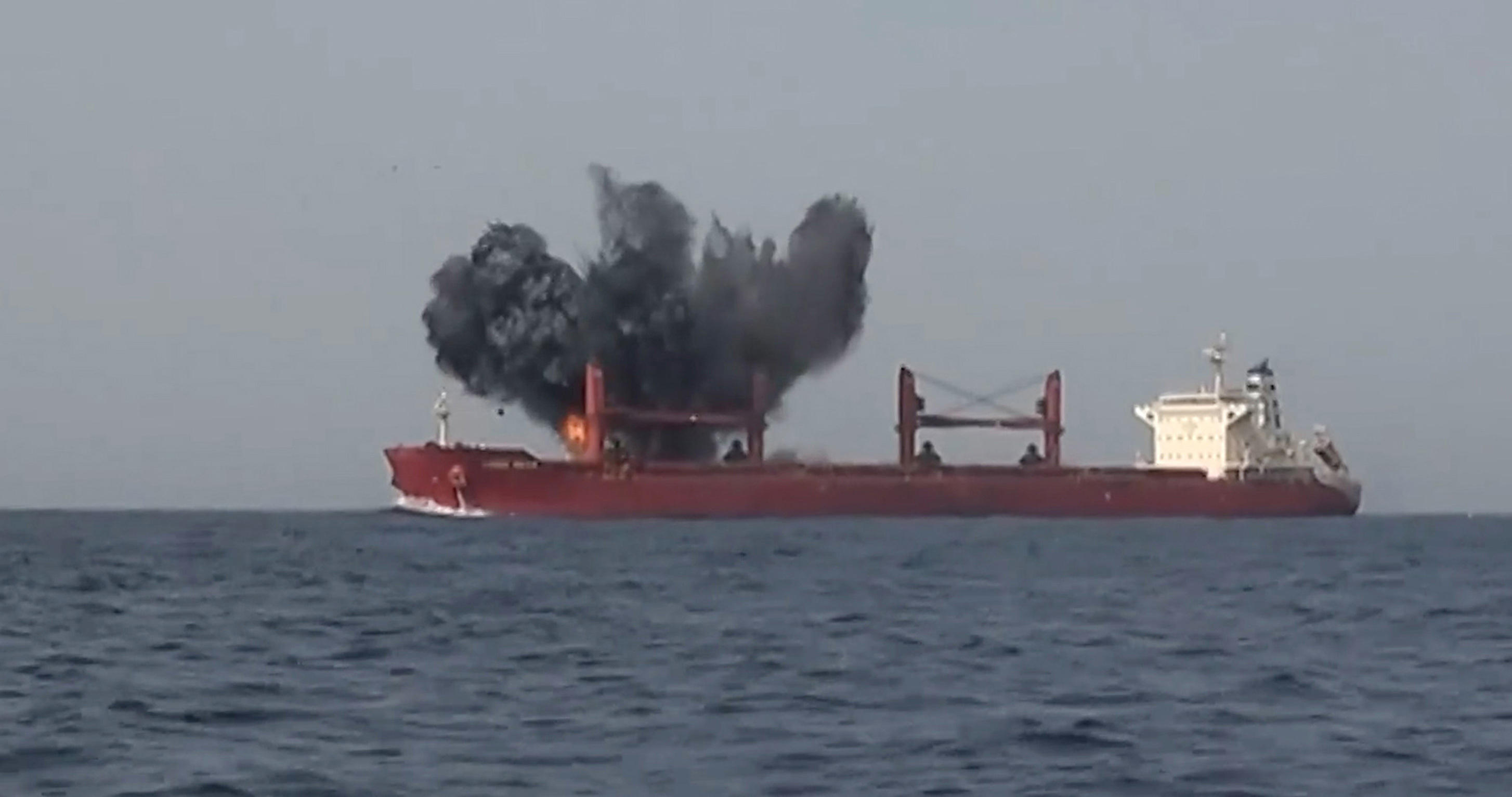
A screengrab from a Houthi-provided video shows the targeting of the Magic Seas, a Liberian-flagged and Greek-operated commercial vessel, last July. (Handout photo by Houthi Media Center/Getty Images)
The Houthi insurgency controls Yemen’s coast along the Red Sea, a critical shipping lane for global commerce that connects the Indian Ocean and Middle East to Europe through the Suez Canal. Houthi missile strikes on hundreds of vessels since 2023 have turned it into a gauntlet, leading some major international shipping companies to reroute an extra 4,000 miles around Africa rather than risk it.
The Houthis vowed more such strikes after the U.S. and Israel attacked, and the threat alone prompted more such rerouting.
For the U.S., past Houthi strikes make the possible threat that the designated terrorist group poses a known quantity. But that doesn’t mean it’s an easily repelled one: Last March, the Trump administration conducted retaliatory strikes against the Houthis, reportedly with limited success.
Iran’s role: Supplying training, arms and oil.
“U.S. officials have described Iran’s efforts to supply the Houthis with weaponry, targeting information, and military advice,” the Congressional Research Service wrote in a Feb. 20 report on the Houthis. In one representative case, the Treasury Department sanctioned five Iranian individuals “with links to Iran’s ballistic missile program” in 2018 for providing the Houthis with missiles and “related technical expertise.”
Then, in a January designation, Treasury claimed that Tehran “both sells and provides a free monthly shipment of oil to the Houthis using Iranian-owned or affiliated companies based in Dubai.” That would probably make up a sizable chunk of the more than $2 billion in annual oil revenue, by U.S. estimates, that underpins the Houthis’ operations.
How the money flows: Through exchanges and front companies based both in Yemen and abroad. The Houthis pay for their Iranian oil, Treasury said, “by sending money to UAE-based exchanges … via exchange companies in Sana’a.” They then sell that oil to Yemenis at “exorbitant rates.”
The group pays for weapons, meanwhile, through Yemeni outfits, most prominently the Houthi-affiliated (and now U.S.-sanctioned) Al-Ridhwan Exchange and Transfer Company, in Sana’a. The U.S. said Houthi leaders have used Al-Ridhwan to facilitate “numerous payments to Houthi-owned accounts outside Yemen for missile components, advanced weapon systems, and other military-grade materials.”
From Kharon’s research: Digital platforms give these Houthi-affiliated exchanges—and, by extension, the Houthis’ funding efforts—international reach.
Coin Cash is a Yemen-based entity offering crypto-fiat and fiat-crypto conversion, as well as money transfer services to get funds into and out of Yemen. According to its website, its “most common” cryptocurrency “partners” are Binance, the world’s largest crypto exchange, and Dubai-based Bybit.
The Iran-aligned militias have attacked U.S. forces in Iraq and Syria dating to 2017, and Washington has responded periodically with airstrikes. The start of the Israel-Hamas conflict in 2023 accelerated that.
Since then, these groups—operating under the banner of the Islamic Resistance of Iraq—have conducted more than 150 attacks against U.S. forces in the region, according to ODNI. Their apparent first of the new Iran conflict came Sunday, when Saraya Awliya al-Dam claimed a drone attack that targeted U.S. troops at the Baghdad airport.
The U.S. has designated six Iraqi militia groups as foreign terrorist organizations, including four just last September.
“Iran continues to provide support that enables these militias to plan, facilitate, or directly carry out attacks across Iraq,” the State Department said then. “Iran-aligned militia groups have conducted attacks on the U.S. Embassy in Baghdad and bases hosting U.S. and Coalition forces, typically using front names or proxy groups to obfuscate their involvement.”
Here are three other key players.
Kata’ib Hizballah (KH): Washington first designated KH, which U.S. intelligence currently estimates at 7,000 to 10,000 fighters, as a terrorist organization in 2009.
KH operates with direct IRGC Qods Force support, including personnel training, according to the Treasury Department; Treasury said in 2024 that the group in turn plays “a prominent role” in laundering money for the Iranian military unit. According to ODNI, Kata’ib Hizballah backed the closely Iran-allied Assad regime in Syria’s civil war, “closely collaborated with Lebanese Hizballah” and “has engaged with” the Houthis.
In January 2024, the group struck a U.S. airbase in western Iraq with rockets and ballistic missiles, leaving four American service members with traumatic brain injuries, officials said.
On Feb. 28, the group announced on X its intent to join the war to support the Islamic Republic.
HAN is a leading member of the Islamic Resistance in Iraq (IRI), the umbrella front that coordinates Iran’s militia network in the country.
HAAA was part of the IRI coalition that carried out that strike. It has “since publicly threatened to continue attacking U.S. interests in the region,” according to the State Department.
Read more from The Brief:
The Houthis vowed more such strikes after the U.S. and Israel attacked, and the threat alone prompted more such rerouting.
For the U.S., past Houthi strikes make the possible threat that the designated terrorist group poses a known quantity. But that doesn’t mean it’s an easily repelled one: Last March, the Trump administration conducted retaliatory strikes against the Houthis, reportedly with limited success.
Iran’s role: Supplying training, arms and oil.
“U.S. officials have described Iran’s efforts to supply the Houthis with weaponry, targeting information, and military advice,” the Congressional Research Service wrote in a Feb. 20 report on the Houthis. In one representative case, the Treasury Department sanctioned five Iranian individuals “with links to Iran’s ballistic missile program” in 2018 for providing the Houthis with missiles and “related technical expertise.”
Then, in a January designation, Treasury claimed that Tehran “both sells and provides a free monthly shipment of oil to the Houthis using Iranian-owned or affiliated companies based in Dubai.” That would probably make up a sizable chunk of the more than $2 billion in annual oil revenue, by U.S. estimates, that underpins the Houthis’ operations.
How the money flows: Through exchanges and front companies based both in Yemen and abroad. The Houthis pay for their Iranian oil, Treasury said, “by sending money to UAE-based exchanges … via exchange companies in Sana’a.” They then sell that oil to Yemenis at “exorbitant rates.”
The group pays for weapons, meanwhile, through Yemeni outfits, most prominently the Houthi-affiliated (and now U.S.-sanctioned) Al-Ridhwan Exchange and Transfer Company, in Sana’a. The U.S. said Houthi leaders have used Al-Ridhwan to facilitate “numerous payments to Houthi-owned accounts outside Yemen for missile components, advanced weapon systems, and other military-grade materials.”
From Kharon’s research: Digital platforms give these Houthi-affiliated exchanges—and, by extension, the Houthis’ funding efforts—international reach.
Coin Cash is a Yemen-based entity offering crypto-fiat and fiat-crypto conversion, as well as money transfer services to get funds into and out of Yemen. According to its website, its “most common” cryptocurrency “partners” are Binance, the world’s largest crypto exchange, and Dubai-based Bybit.
- An archived 2023 version of its website reviewed by Kharon had listed another notable partner: the Sana’a-based Al Hazmi Exchange Company, which the U.S. sanctioned in December 2024 for facilitating money laundering on the Houthis’ behalf.
Iraqi Militias: Mounting attacks since Oct. 7
Tehran spent years cultivating Shia militant groups in Iraq that gained their combat credentials fighting the Islamic State. They’ve since parlayed that battlefield experience into something more durable: seats in Iraq’s parliament, command of tens of thousands of fighters and direct lines to the IRGC Qods Force.The Iran-aligned militias have attacked U.S. forces in Iraq and Syria dating to 2017, and Washington has responded periodically with airstrikes. The start of the Israel-Hamas conflict in 2023 accelerated that.
Since then, these groups—operating under the banner of the Islamic Resistance of Iraq—have conducted more than 150 attacks against U.S. forces in the region, according to ODNI. Their apparent first of the new Iran conflict came Sunday, when Saraya Awliya al-Dam claimed a drone attack that targeted U.S. troops at the Baghdad airport.
The U.S. has designated six Iraqi militia groups as foreign terrorist organizations, including four just last September.
“Iran continues to provide support that enables these militias to plan, facilitate, or directly carry out attacks across Iraq,” the State Department said then. “Iran-aligned militia groups have conducted attacks on the U.S. Embassy in Baghdad and bases hosting U.S. and Coalition forces, typically using front names or proxy groups to obfuscate their involvement.”
Here are three other key players.
Kata’ib Hizballah (KH): Washington first designated KH, which U.S. intelligence currently estimates at 7,000 to 10,000 fighters, as a terrorist organization in 2009.
KH operates with direct IRGC Qods Force support, including personnel training, according to the Treasury Department; Treasury said in 2024 that the group in turn plays “a prominent role” in laundering money for the Iranian military unit. According to ODNI, Kata’ib Hizballah backed the closely Iran-allied Assad regime in Syria’s civil war, “closely collaborated with Lebanese Hizballah” and “has engaged with” the Houthis.
In January 2024, the group struck a U.S. airbase in western Iraq with rockets and ballistic missiles, leaving four American service members with traumatic brain injuries, officials said.
- From Kharon’s research: Like other Iranian proxies, KH celebrated Hamas’s Oct. 7, 2023, attacks on Israel and solicited funds thereafter, purportedly for humanitarian purposes. The week after that war began, the militia’s Iraq-based media channel, Kaf Media, shared a campaign collecting donations in part via Mastercard.
On Feb. 28, the group announced on X its intent to join the war to support the Islamic Republic.
HAN is a leading member of the Islamic Resistance in Iraq (IRI), the umbrella front that coordinates Iran’s militia network in the country.
- Three weeks after the Oct. 7 attacks, a HAN front group claimed a drone attack on Bashur Airbase in Iraq targeting U.S. forces.
HAAA was part of the IRI coalition that carried out that strike. It has “since publicly threatened to continue attacking U.S. interests in the region,” according to the State Department.
Read more from The Brief: