
Russian state-controlled media outlets RT and Sputnik have promoted content to foreign audiences from disinformation “proxy sources” sanctioned by the U.S., according to a recent report from the U.S. State Department’s Global Engagement Center and findings from Kharon investigations.
Each outlet broadcasts in multiple languages and attempts to equate itself with major fact based-international media organizations, including government-funded networks like the BBC and Voice of America, according to the State Department report. The effort is meant to increase reach and credibility, and to portray criticism as a violation of press freedom, the report said.
“RT and Sputnik are not transparent, and their overall goals appear to be fundamentally different from independent media. The Russian government is closely involved in RT and Sputnik’s operations,” the State Department said in the report.
The report was released alongside fact sheets about Russian disinformation and U.S. sanctions imposed on Ukrainians involved in an effort to destabilize their country at Russia’s behest.
RT and Sputnik’s organizational structure and management hierarchy are opaque, and neither outlet produces public budgets, the State Department said in its report. Margarita Simonyan, the editor in chief of RT and Sputnik’s parent company, is one of the few people identified as having a leadership role at either organization. She also has ties to Aleksey Gromov, the first deputy chief of staff to Russian President Vladimir Putin. Gromov co-founded RT and is sanctioned for interference in U.S. elections and his role in the 2014 invasion of Ukraine, and Simonyan is often referred to as his protege, according to the State Department report.
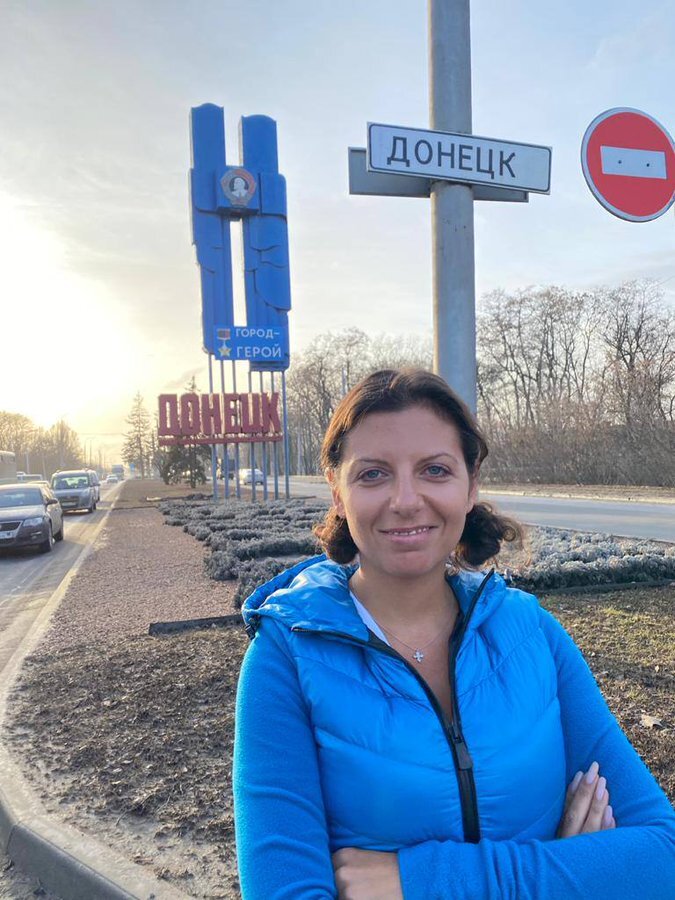
Simonyan attended a conference in January 2021 in the Donetsk People’s Republic (DPR) hosted by the local government about the Donbass region breaking from Ukraine to join Russia, according to a press release from the People's Council of the DPR and a Russian media report.
Each outlet broadcasts in multiple languages and attempts to equate itself with major fact based-international media organizations, including government-funded networks like the BBC and Voice of America, according to the State Department report. The effort is meant to increase reach and credibility, and to portray criticism as a violation of press freedom, the report said.
“RT and Sputnik are not transparent, and their overall goals appear to be fundamentally different from independent media. The Russian government is closely involved in RT and Sputnik’s operations,” the State Department said in the report.
The report was released alongside fact sheets about Russian disinformation and U.S. sanctions imposed on Ukrainians involved in an effort to destabilize their country at Russia’s behest.
RT and Sputnik’s organizational structure and management hierarchy are opaque, and neither outlet produces public budgets, the State Department said in its report. Margarita Simonyan, the editor in chief of RT and Sputnik’s parent company, is one of the few people identified as having a leadership role at either organization. She also has ties to Aleksey Gromov, the first deputy chief of staff to Russian President Vladimir Putin. Gromov co-founded RT and is sanctioned for interference in U.S. elections and his role in the 2014 invasion of Ukraine, and Simonyan is often referred to as his protege, according to the State Department report.
Simonyan attended a conference in January 2021 in the Donetsk People’s Republic (DPR) hosted by the local government about the Donbass region breaking from Ukraine to join Russia, according to a press release from the People's Council of the DPR and a Russian media report.
Rather than operating as truth-seeking actors, RT and Sputnik have “mutually beneficial relationships” with writers for proxy sources, several of which create content for, or are directed, controlled or guided by Russian intelligence, the report said. Proxy sources are unofficial mouthpieces used to promote disinformation and propaganda; some have direct links to the Russian state, while others are enmeshed within the country’s broader ecosystem, it said.
RT and Sputnik each regularly cited and promoted material from News Front, a Crimea-based outlet sanctioned in April 2021 and a “key player” within the Russian disinformation and propaganda ecosystem, the report said. News Front worked with the Russian Federal Security Service (FSB) officers to coordinate narratives that undermined the credibility of a news website advocating for human rights, and it was used to distribute false information about COVID-19 vaccines, the U.S. Treasury Department said at the time it was sanctioned.
News Front also created eight websites in March 2021 that mirror its non-Russian language content, including in English, Spanish, French, Russian, German, Serbian, Georgian and Bulgarian. The websites are hosted by a U.S.-based service provider amid the sanctions, according to a review by Kharon.
And News Front “coordinate[d] disinformation activities” with Alexander Malkevich, who has been sanctioned twice by the U.S., the State Department said in the report.
One of the designations, in April 2021, related to Malkevich’s founding of the Foundation for National Values Protection, which has facilitated disinformation efforts associated with Russian financier Yevgeniy Prigozhin since at least 2019, the Treasury said at the time.
Malkevich’s foundation also purportedly hired Maria Butina, the host of a show on RT, as an “expert,” the State Department report said. Butina was imprisoned in the U.S. for acting as a Russian agent. Since her deportation and subsequent election as a member of the Russian parliament, RT and Sputnik regularly amplify her anti-U.S. statements, the report said.
Prigozhin, for his part, has been sanctioned several times by the U.S., including for his role as the funder of entities that form part of Project Lakhta, a Russian influence operation described by the U.S. as “information warfare.”
RT also promoted a story by South Front, the State Department report said. South Front, a Russia-registered disinformation site operated by the FSB that the Treasury said appeals to military enthusiasts, veterans and conspiracy theorists, was also sanctioned in April 2021.
South Front promoted perceptions of voter fraud in the aftermath of the 2020 U.S. presidential election, the Treasury said at the time. Both News Front and South Front were cited in April 2020 by Meta Platforms Inc., then known as Facebook, for coordinated inauthentic behavior relating to a wide range of content, including the military conflict in Ukraine, the Syrian civil war, the annexation of Crimea, U.S. elections and the pandemic.
RT and Sputnik each regularly cited and promoted material from News Front, a Crimea-based outlet sanctioned in April 2021 and a “key player” within the Russian disinformation and propaganda ecosystem, the report said. News Front worked with the Russian Federal Security Service (FSB) officers to coordinate narratives that undermined the credibility of a news website advocating for human rights, and it was used to distribute false information about COVID-19 vaccines, the U.S. Treasury Department said at the time it was sanctioned.
News Front also created eight websites in March 2021 that mirror its non-Russian language content, including in English, Spanish, French, Russian, German, Serbian, Georgian and Bulgarian. The websites are hosted by a U.S.-based service provider amid the sanctions, according to a review by Kharon.
And News Front “coordinate[d] disinformation activities” with Alexander Malkevich, who has been sanctioned twice by the U.S., the State Department said in the report.
One of the designations, in April 2021, related to Malkevich’s founding of the Foundation for National Values Protection, which has facilitated disinformation efforts associated with Russian financier Yevgeniy Prigozhin since at least 2019, the Treasury said at the time.
Malkevich’s foundation also purportedly hired Maria Butina, the host of a show on RT, as an “expert,” the State Department report said. Butina was imprisoned in the U.S. for acting as a Russian agent. Since her deportation and subsequent election as a member of the Russian parliament, RT and Sputnik regularly amplify her anti-U.S. statements, the report said.
Prigozhin, for his part, has been sanctioned several times by the U.S., including for his role as the funder of entities that form part of Project Lakhta, a Russian influence operation described by the U.S. as “information warfare.”
RT also promoted a story by South Front, the State Department report said. South Front, a Russia-registered disinformation site operated by the FSB that the Treasury said appeals to military enthusiasts, veterans and conspiracy theorists, was also sanctioned in April 2021.
South Front promoted perceptions of voter fraud in the aftermath of the 2020 U.S. presidential election, the Treasury said at the time. Both News Front and South Front were cited in April 2020 by Meta Platforms Inc., then known as Facebook, for coordinated inauthentic behavior relating to a wide range of content, including the military conflict in Ukraine, the Syrian civil war, the annexation of Crimea, U.S. elections and the pandemic.
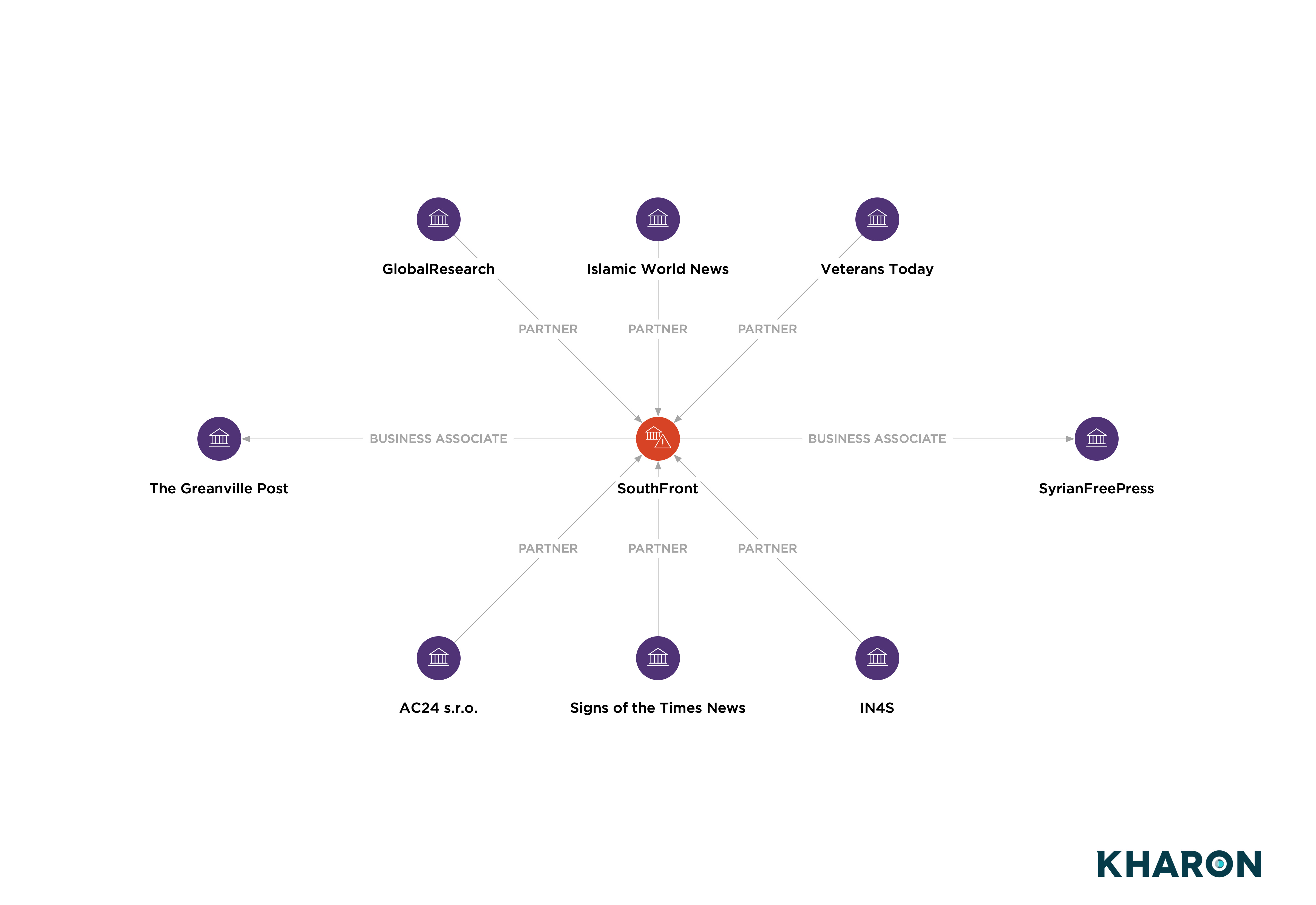
South Front lists a number of partners and media “resources,” many of which are still active, according to a review of names listed on an archived version of its website. Among them is GlobalResearch.ca, a Canada-based outlet connected to other purveyors of Russian and Iranian disinformation, Kharon found. And prior to its designation, South Front had solicited funds through American and European payment providers, but it recently shifted the appeals to come from digital currencies, according to a review of its donation page by Kharon.
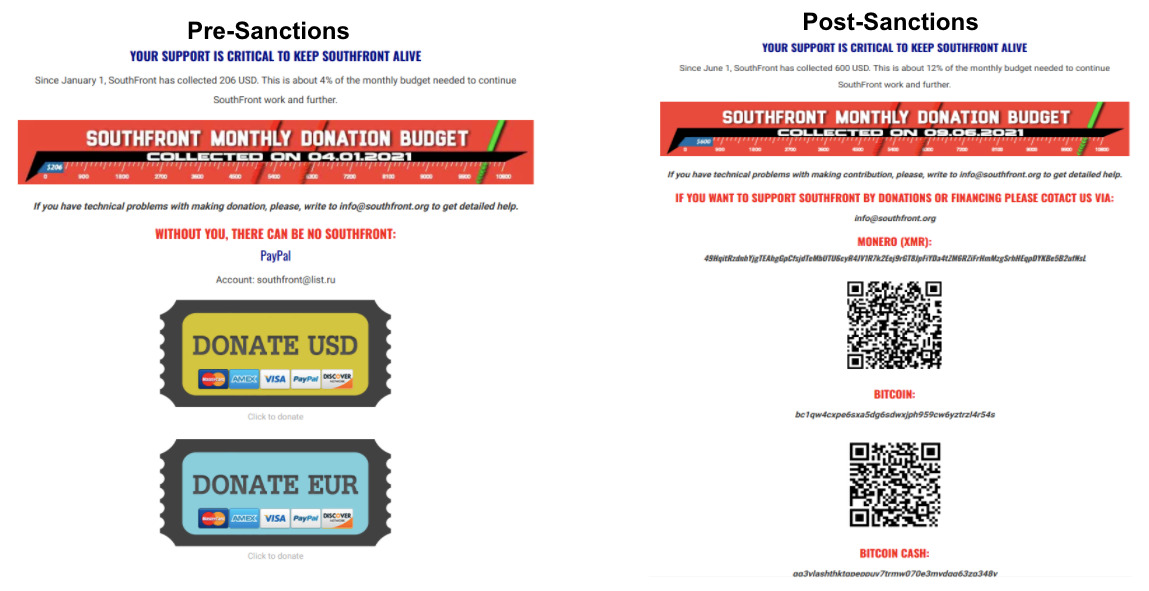
A composite showing the South Front donations page, pre- and post-sanctions.
In addition to promoting content from proxy sources, RT also controls a network of outlets that obscure their Russian state backing, according to the State Department report.
RT founded the German-based firm Ruptly GmbH, which in turn wholly owned Redfish as of 2017, corporate records show.
Like RT and Sputnik, Ruptly presents itself as an outlet independent of the Kremlin’s influence, and its connection may not be obvious to the average news consumer, the State Department report said. Various Western outlets have used Ruptly’s footage, and it was the most-watched news agency on YouTube in 2020, according to the report. Redfish, meanwhile, is a digital content creator aimed at the Western political left, the report said.
Ruptly also owned a 51 percent stake of Maffick Media GmbH, an outlet that hosts a variety of online web pages, before Maffick became a U.S. limited liability company (LLC), according to the State Department report. Maffick has registered under the Foreign Agents Registration Act (FARA) and its documents include information about its relationship with RT’s parent company, TV-Novosti, the report said.
RT, Ruptly and Maffick each have shared staff, records show. The founder and first director of Ruptly, Denis Trunov, was also the first director of RT’s German language branch, according to the State Department report. Anissa Naouai, identified in U.S. court filings as the “sole member” of Maffick LLC, was an RT anchor and senior correspondent, and is a longtime associate of Simonyan, the editor-in-chief of RT and of Sputnik’s parent firm, Kharon found.
RT founded the German-based firm Ruptly GmbH, which in turn wholly owned Redfish as of 2017, corporate records show.
Like RT and Sputnik, Ruptly presents itself as an outlet independent of the Kremlin’s influence, and its connection may not be obvious to the average news consumer, the State Department report said. Various Western outlets have used Ruptly’s footage, and it was the most-watched news agency on YouTube in 2020, according to the report. Redfish, meanwhile, is a digital content creator aimed at the Western political left, the report said.
Ruptly also owned a 51 percent stake of Maffick Media GmbH, an outlet that hosts a variety of online web pages, before Maffick became a U.S. limited liability company (LLC), according to the State Department report. Maffick has registered under the Foreign Agents Registration Act (FARA) and its documents include information about its relationship with RT’s parent company, TV-Novosti, the report said.
RT, Ruptly and Maffick each have shared staff, records show. The founder and first director of Ruptly, Denis Trunov, was also the first director of RT’s German language branch, according to the State Department report. Anissa Naouai, identified in U.S. court filings as the “sole member” of Maffick LLC, was an RT anchor and senior correspondent, and is a longtime associate of Simonyan, the editor-in-chief of RT and of Sputnik’s parent firm, Kharon found.