
The U.K. government released new guidance Tuesday aimed at helping exporters identify and mitigate risks related to Russian sanctions evasion. The document emphasizes the need to prevent U.K. businesses from unknowingly facilitating activities that violate international sanctions against Russia.
Published in response to growing concerns over increasingly sophisticated methods to circumvent sanctions, the guidance outlines risks, red flags and best practices. It serves as an essential resource for businesses navigating this complex regulatory environment.
Takeaways and key recommendations:
STRATEGIC RISK ASSESSMENT
A core component of the guidance is the emphasis on conducting a strategic risk assessment. Exporters are encouraged to systematically evaluate their exposure to sanctions risks by:
Key Recommendations: The U.K. guidance stresses the importance of ensuring that the U.K.-based companies’ overseas subsidiaries are not involved in sanctions circumvention. This aligns with recent EU requirements that mandate companies incorporate their overseas subsidiaries into their financial crime control policies, holding parent companies accountable for any sanctions violations.
Reviewing past transactions is another crucial element of a strategic risk assessment. By analyzing historical trade data, businesses can identify patterns that may signal emerging risks, such as shifts in trade routes or changes in customer behavior. These insights can lead to valuable intelligence, enabling more thorough due diligence.
CIRCUMVENTION DATA
Recent data shows an increase in efforts to circumvent sanctions through indirect routes. Notably, exports to countries near Russia have risen, suggesting they may be used as transshipment points for prohibited goods. Exporters are advised to scrutinize trade patterns and remain cautious of sudden changes in demand from these regions.
Key Recommendation: The country list in the U.K. guidance is not exhaustive. The U.S. Bureau of Industry and Security (BIS) has identified additional high-risk countries where circumvention activities have been observed. These include Brazil, Mexico, Singapore, and Taiwan—which do not border Russia. Exporters should factor these broader risks into their compliance programs. The EU's Annex IV under its Russia regulations also lists additional countries of concern, such as Iran and Sri Lanka, reinforcing the need for a global perspective in risk assessments.
CIRCUMVENTION RED FLAGS
The guidance highlights several indicators that may suggest potential sanctions evasion:
For instance, companies can use open-source intelligence to uncover hidden relationships or transactions that may indicate sanctions evasion. This practice not only strengthens compliance efforts but also demonstrates a proactive approach to managing regulatory obligations.
Published in response to growing concerns over increasingly sophisticated methods to circumvent sanctions, the guidance outlines risks, red flags and best practices. It serves as an essential resource for businesses navigating this complex regulatory environment.
Takeaways and key recommendations:
STRATEGIC RISK ASSESSMENT
A core component of the guidance is the emphasis on conducting a strategic risk assessment. Exporters are encouraged to systematically evaluate their exposure to sanctions risks by:
- Evaluating Client Portfolios: Reviewing relationships with current and potential clients and partners to identify those operating in high-risk sectors or regions.
- Mapping Supply Chains: Understanding the full scope of supply chains, including indirect suppliers and intermediaries.
- Assessing Product Sensitivities: Determining whether products could be repurposed for illicit activities, such as military use.
- Monitoring Regulatory Updates: Staying informed about evolving sanctions regimes to ensure ongoing compliance.
Key Recommendations: The U.K. guidance stresses the importance of ensuring that the U.K.-based companies’ overseas subsidiaries are not involved in sanctions circumvention. This aligns with recent EU requirements that mandate companies incorporate their overseas subsidiaries into their financial crime control policies, holding parent companies accountable for any sanctions violations.
Reviewing past transactions is another crucial element of a strategic risk assessment. By analyzing historical trade data, businesses can identify patterns that may signal emerging risks, such as shifts in trade routes or changes in customer behavior. These insights can lead to valuable intelligence, enabling more thorough due diligence.
CIRCUMVENTION DATA
Recent data shows an increase in efforts to circumvent sanctions through indirect routes. Notably, exports to countries near Russia have risen, suggesting they may be used as transshipment points for prohibited goods. Exporters are advised to scrutinize trade patterns and remain cautious of sudden changes in demand from these regions.
Key Recommendation: The country list in the U.K. guidance is not exhaustive. The U.S. Bureau of Industry and Security (BIS) has identified additional high-risk countries where circumvention activities have been observed. These include Brazil, Mexico, Singapore, and Taiwan—which do not border Russia. Exporters should factor these broader risks into their compliance programs. The EU's Annex IV under its Russia regulations also lists additional countries of concern, such as Iran and Sri Lanka, reinforcing the need for a global perspective in risk assessments.
CIRCUMVENTION RED FLAGS
The guidance highlights several indicators that may suggest potential sanctions evasion:
- Unusual Trade Routes: Shipments passing through countries with no logical connection to the goods or their end-use.
- Opaque Ownership Structures: Clients or partners with complex or non-transparent ownership, making it difficult to identify the ultimate beneficiaries.
- Last-Minute Changes: Sudden alterations in shipping instructions or destinations, particularly to jurisdictions with weak enforcement of sanctions.
- Payment Anomalies: Transactions involving unknown third parties or requests for payments in cash or via unconventional methods.
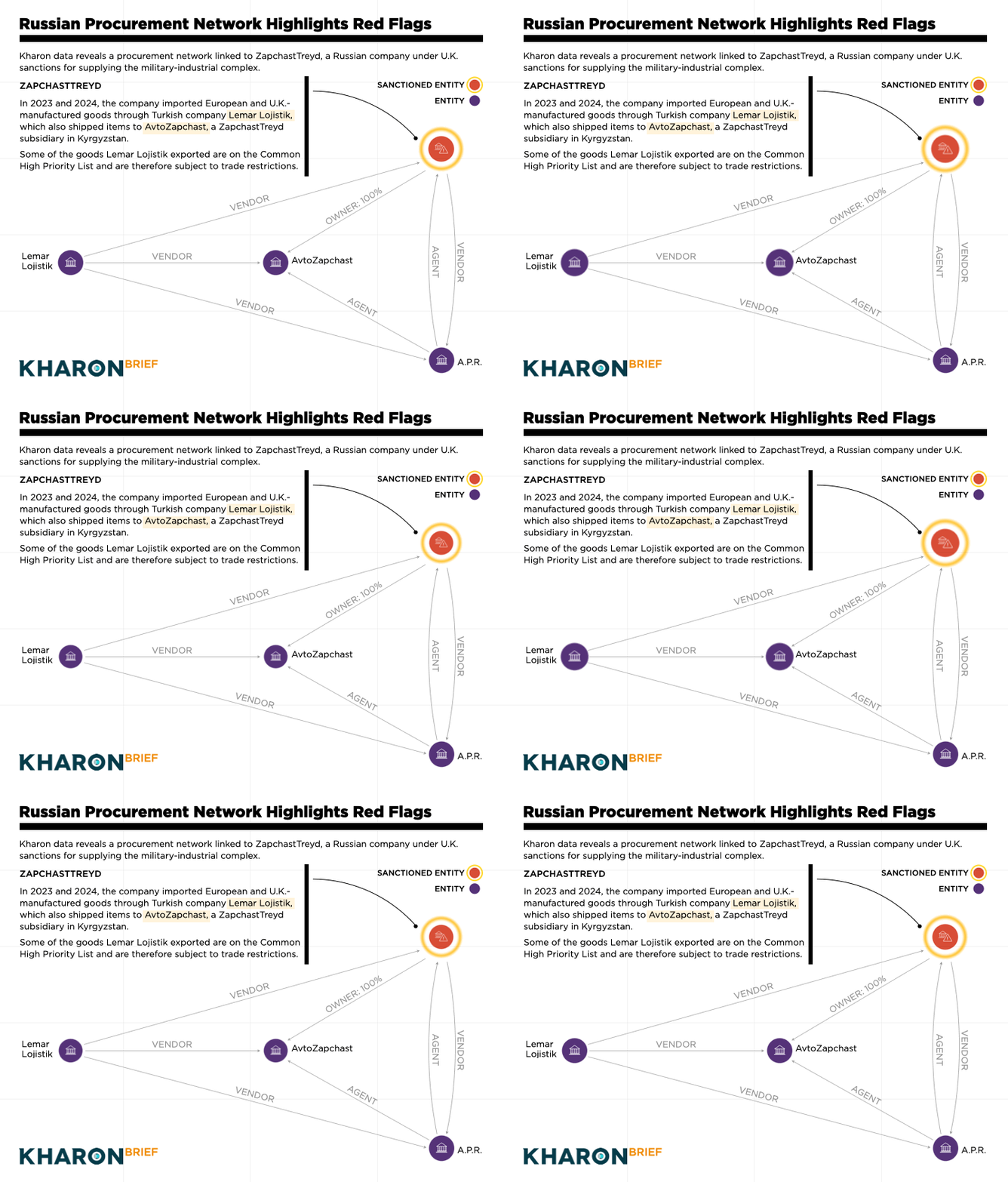
- Connections to High-Risk Entities: The customer is linked to companies suspected or known to be selling sanctioned goods or technology to Russia, based on publicly available sources.
For instance, companies can use open-source intelligence to uncover hidden relationships or transactions that may indicate sanctions evasion. This practice not only strengthens compliance efforts but also demonstrates a proactive approach to managing regulatory obligations.
DUE DILIGENCE BEST PRACTICES
To mitigate risks, exporters are encouraged to implement robust due diligence measures:
Additionally, while the U.K. government suggests including a “no-Russia” clause to prevent clients from re-exporting goods to Russian end-users, this is not mandatory. This differs from the European Union, which, as of December 18, 2023, requires EU exporters to include a “no-Russia” clause in all export contracts with companies based outside the EU, with the exception of those based in partner countries like in the U.K., U.S., or Japan. The U.S., like the UK, does not require such clauses but expects exporters to take measures to ensure their clients avoid involvement in export control violations.
ENFORCEMENT AND REPORTING
The U.K. government emphasizes its commitment to enforcing sanctions and holding violators accountable. Businesses found to be in violation may face severe civil or criminal penalties, including substantial fines. Exporters are urged to report any suspicious activities or potential breaches to the relevant authorities promptly.
By following the best practices outlined in this guidance, along with industry tips, expert advice, businesses can protect themselves from legal repercussions and contribute to the broader goal of upholding global security and ethical trade standards.
Key Recommendations: The U.K. has fined companies for failing to comply with sanctions regulations. In 2024, Sterling Bank paid £29 million to the Financial Conduct Authority (FCA) after failing to address weaknesses in its Anti-Money Laundering controls, leading to the onboarding of thousands of high-risk clients. The same year, the Office of Financial Sanctions Implementation (OFSI) fined U.K. company Integral Concierge Services Limited £15,000 for providing property management services to a U.K. sanctioned individual. In both cases, the companies’ lack of awareness of sanctions-related obligations did not prevent enforcement action by the government.
U.K.-based exporters should familiarize themselves with these regulations and report any suspicious activity or potential sanctions violations to HMRC and the newly launched Office of Trade Sanctions Implementation (OTSI), both of which are responsible for enforcing trade sanctions.
—-—-—
Additional Resources for Managing Russia Evasion:
Whitepapers:
To mitigate risks, exporters are encouraged to implement robust due diligence measures:
- Know Your Customer (KYC): Conduct thorough background checks to understand the business activities and ownership structures of clients and partners, as well as the identity and role of any third parties involved in the transaction.
- Contractual Safeguards: Include clauses that prohibit the re-export of goods to Russia and require compliance with all relevant sanctions.
- Transaction Monitoring: Regularly review and monitor transactions for any irregularities or deviations from typical business patterns.
- Employee Training: Ensure staff are educated about sanctions regulations and the importance of compliance to foster a culture of vigilance.
Additionally, while the U.K. government suggests including a “no-Russia” clause to prevent clients from re-exporting goods to Russian end-users, this is not mandatory. This differs from the European Union, which, as of December 18, 2023, requires EU exporters to include a “no-Russia” clause in all export contracts with companies based outside the EU, with the exception of those based in partner countries like in the U.K., U.S., or Japan. The U.S., like the UK, does not require such clauses but expects exporters to take measures to ensure their clients avoid involvement in export control violations.
ENFORCEMENT AND REPORTING
The U.K. government emphasizes its commitment to enforcing sanctions and holding violators accountable. Businesses found to be in violation may face severe civil or criminal penalties, including substantial fines. Exporters are urged to report any suspicious activities or potential breaches to the relevant authorities promptly.
By following the best practices outlined in this guidance, along with industry tips, expert advice, businesses can protect themselves from legal repercussions and contribute to the broader goal of upholding global security and ethical trade standards.
Key Recommendations: The U.K. has fined companies for failing to comply with sanctions regulations. In 2024, Sterling Bank paid £29 million to the Financial Conduct Authority (FCA) after failing to address weaknesses in its Anti-Money Laundering controls, leading to the onboarding of thousands of high-risk clients. The same year, the Office of Financial Sanctions Implementation (OFSI) fined U.K. company Integral Concierge Services Limited £15,000 for providing property management services to a U.K. sanctioned individual. In both cases, the companies’ lack of awareness of sanctions-related obligations did not prevent enforcement action by the government.
U.K.-based exporters should familiarize themselves with these regulations and report any suspicious activity or potential sanctions violations to HMRC and the newly launched Office of Trade Sanctions Implementation (OTSI), both of which are responsible for enforcing trade sanctions.
—-—-—
Additional Resources for Managing Russia Evasion:
Whitepapers:
- Strategic Counterplay: Learn detailed strategies for leveraging transaction data to strengthen compliance efforts.
- Managing Regulatory & Compliance Risk in Global Supply Chains: Dive deeper into managing supply chain risk.
- Navigating the complexities of Russian Diversion: Kharon and Descartes hosted a webinar in December focused on Russian circumvention tactics and best practices to strengthen sanctions compliance.