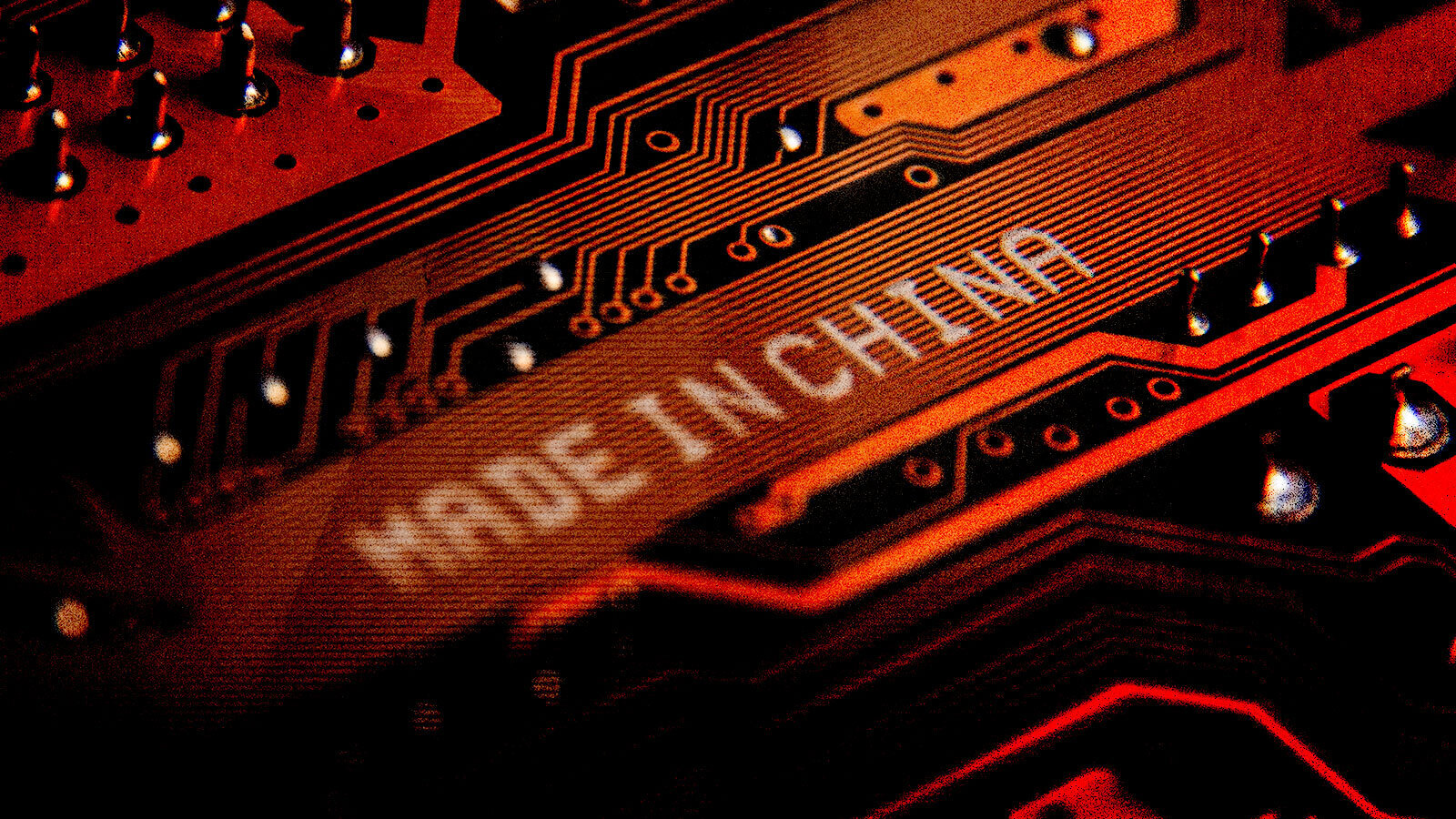

A report published last week by the U.S. Department of Commerce’s Bureau of Industry and Security (BIS) revealed that U.S. companies in critical industries have limited visibility into the supply chains of their legacy semiconductors.
The report is based on a survey taken of companies in two industry groups — end users and suppliers of semiconductors. The survey found that more than two-thirds of the respondents’ products likely contain legacy chips made in China. Meanwhile, nearly half of the surveyed companies didn’t know whether their goods contain chips originating in China.
The survey found that only 17 percent of users could confirm that the legacy semiconductors in their products didn’t come from China.
The report is based on a survey taken of companies in two industry groups — end users and suppliers of semiconductors. The survey found that more than two-thirds of the respondents’ products likely contain legacy chips made in China. Meanwhile, nearly half of the surveyed companies didn’t know whether their goods contain chips originating in China.
The survey found that only 17 percent of users could confirm that the legacy semiconductors in their products didn’t come from China.
What are Legacy Semiconductors
Legacy semiconductors—also known as mature-node semiconductors—are produced using older manufacturing processes, typically with transistors sized 28 nanometers (nm) or larger. While not as advanced as cutting-edge chips, they remain highly stable and reliable, making them essential for many industries. Source: CSIS
Legacy semiconductors—also known as mature-node semiconductors—are produced using older manufacturing processes, typically with transistors sized 28 nanometers (nm) or larger. While not as advanced as cutting-edge chips, they remain highly stable and reliable, making them essential for many industries. Source: CSIS
Based on the respondents’ answers, BIS determined that U.S. firms’ use of legacy chips made in China is pervasive.
“Our survey results indicate that companies remain shockingly unaware of the sources of chips used in their products,” said Under Secretary of Commerce for Industry and Security Alan Estevez. “While government cannot act alone, more action is needed to build strong, diverse, and resilient semiconductor supply chains.”
However, BIS indicated that these legacy chips represent a small share of the total number of semiconductors used in the products. “In other words, even though [People’s Republic of China] chips were present in the vast majority of surveyed companies’ products, they currently make up a small proportion of the total chips in most individual products,” BIS said.
Respondents also revealed that cost was the primary reason for why they used China-based foundries that manufacture semiconductors. “Among the wafers for which respondents had comparable pricing, 72 percent were cheaper at the [People’s Republic of China]-based foundry than at a non-China alternative; the median price at PRC-based foundries was 10 percent lower.”
Other reasons for companies using China-based foundries include supply chain diversification, specialized technology, and production availability. “For 31 percent of the respondents’ chips that were fabricated in [People’s Republic of China] foundries, respondents indicated that no other foundries were available to make the chips.”
The report further states that “some chip suppliers indicated that they have been unable to find foundries outside of China that are willing to take the business they use [People’s Republic of China]-based foundries for, in part because there are not sufficient market incentives to manufacture these chips outside of China.”
The survey was initiated in January to understand where and how companies are sourcing these semiconductors. Its aim is to help the agency’s ongoing work in developing robust semiconductor supply chains, supporting domestic production of chips, and protecting U.S. national security.
According to BIS, 97 end users responded to the survey, which focused on six industrial categories that are significant users of legacy chips. Those industries include aerospace/defense, automotive, consumer products, industrial, medical and healthcare, and technology hardware and software/services.
The release of this report follows BIS’s recent announcement on new export control restrictions aimed at stymieing China’s efforts to become a global tech power.
BIS said the new restrictions are designed to “further impair” China’s ability to produce semiconductors that can be used for military applications.
—-—-—
More on Semiconductors
“Our survey results indicate that companies remain shockingly unaware of the sources of chips used in their products,” said Under Secretary of Commerce for Industry and Security Alan Estevez. “While government cannot act alone, more action is needed to build strong, diverse, and resilient semiconductor supply chains.”
However, BIS indicated that these legacy chips represent a small share of the total number of semiconductors used in the products. “In other words, even though [People’s Republic of China] chips were present in the vast majority of surveyed companies’ products, they currently make up a small proportion of the total chips in most individual products,” BIS said.
Respondents also revealed that cost was the primary reason for why they used China-based foundries that manufacture semiconductors. “Among the wafers for which respondents had comparable pricing, 72 percent were cheaper at the [People’s Republic of China]-based foundry than at a non-China alternative; the median price at PRC-based foundries was 10 percent lower.”
Other reasons for companies using China-based foundries include supply chain diversification, specialized technology, and production availability. “For 31 percent of the respondents’ chips that were fabricated in [People’s Republic of China] foundries, respondents indicated that no other foundries were available to make the chips.”
The report further states that “some chip suppliers indicated that they have been unable to find foundries outside of China that are willing to take the business they use [People’s Republic of China]-based foundries for, in part because there are not sufficient market incentives to manufacture these chips outside of China.”
The survey was initiated in January to understand where and how companies are sourcing these semiconductors. Its aim is to help the agency’s ongoing work in developing robust semiconductor supply chains, supporting domestic production of chips, and protecting U.S. national security.
According to BIS, 97 end users responded to the survey, which focused on six industrial categories that are significant users of legacy chips. Those industries include aerospace/defense, automotive, consumer products, industrial, medical and healthcare, and technology hardware and software/services.
The release of this report follows BIS’s recent announcement on new export control restrictions aimed at stymieing China’s efforts to become a global tech power.
BIS said the new restrictions are designed to “further impair” China’s ability to produce semiconductors that can be used for military applications.
—-—-—
More on Semiconductors