The Treasury Department last week sanctioned two Hizballah senior leaders and two of the U.S.-designated terrorist group’s financial facilitators. One facilitator, Treasury wrote in its news release, “coordinated the delivery of hundreds of thousands of U.S. dollars to the Hizballah-aligned Islamic Movement of Nigeria.”
That line stood out—because while the Islamic Movement of Nigeria (IMN) appears to be squarely on Treasury’s radar, and while it also is aligned with Iran, the group has not actually been sanctioned.
Kharon’s research into the IMN’s networks began in 2020. Taken together, it illustrates how the group and its leadership works with Iran-based organizations and Iran’s regional proxy groups to promote the ideology of the Islamic Republic, which itself is confronting the ramp-up of U.S. “maximum pressure.”
Background: The IMN is a decades-old Shia movement that seeks to establish a Nigerian state modeled after the Islamic Republic of Iran. The organization operates schools under the banner of its foundation, plus Islamic centers and a Hausa-language newspaper.
Ibrahim Zakzaky, a Nigerian Shia religious figure, founded and leads the IMN. Nigerian authorities notably imprisoned Zakzaky without trial from 2015 to 2021, after Nigerian soldiers clashed with the group at its headquarters, reportedly killing hundreds of its members. Zakzaky was ultimately acquitted of various charges, including for unlawful assembly, disruption of public peace and culpable homicide, in connection with the death of a Nigerian soldier.
Many pro-Iran organizations, including the Islamic Human Rights Commission in the U.K., had taken up efforts to secure Zakzaky’s release.
Hizballah ties: The IMN appears to be “Hizballah-aligned” through a number of channels. Before and since his six-year detention by Nigerian authorities, Zakzaky has coordinated with the networks of Hizballah, including travelling to Beirut to attend events and meet with organizations. (At a conference held there in 2015 to organize against Israel, he did an interview with the U.S.-sanctioned media outlet al-Manar TV.)
Treasury on Thursday invoked the Islamic Movement of Nigeria in designating senior Hizballah official Hasan Abdallah Ni’mah, who it said was the individual responsible for delivering IMN the “hundreds of thousands of U.S. dollars,” in August 2022. Ni’mah “facilitates funding and networking opportunities for Hizballah across Africa, including the management of millions of dollars in transactions for Hizballah,” Treasury said.
More recently, in February, Zakzaky attended the Beirut funeral of the longtime Hizballah leader Hassan Nasrallah. The Islamic Movement of Nigeria’s website posted pictures from the funeral and other events held in Nasrallah’s honor, writing that Zakzaky “expressed his heartfelt condolence on the martyrdom of the great resistance leader whose legacy lives on, and his resistance will continue until victory.”
Iran ties: The IMN’s connections to Iran and to U.S.-sanctioned actors there span the personal—such as a visit Zakzaky paid to Supreme Leader Ali Khamenei in October 2023—to the allegedly financial.
A former U.S. State Department official estimated to Bloomberg in 2017 that the Islamic Movement in Nigeria had been receiving $10,000 a month from Iran. Zakzaky has denied accusations of receiving Iranian funding.
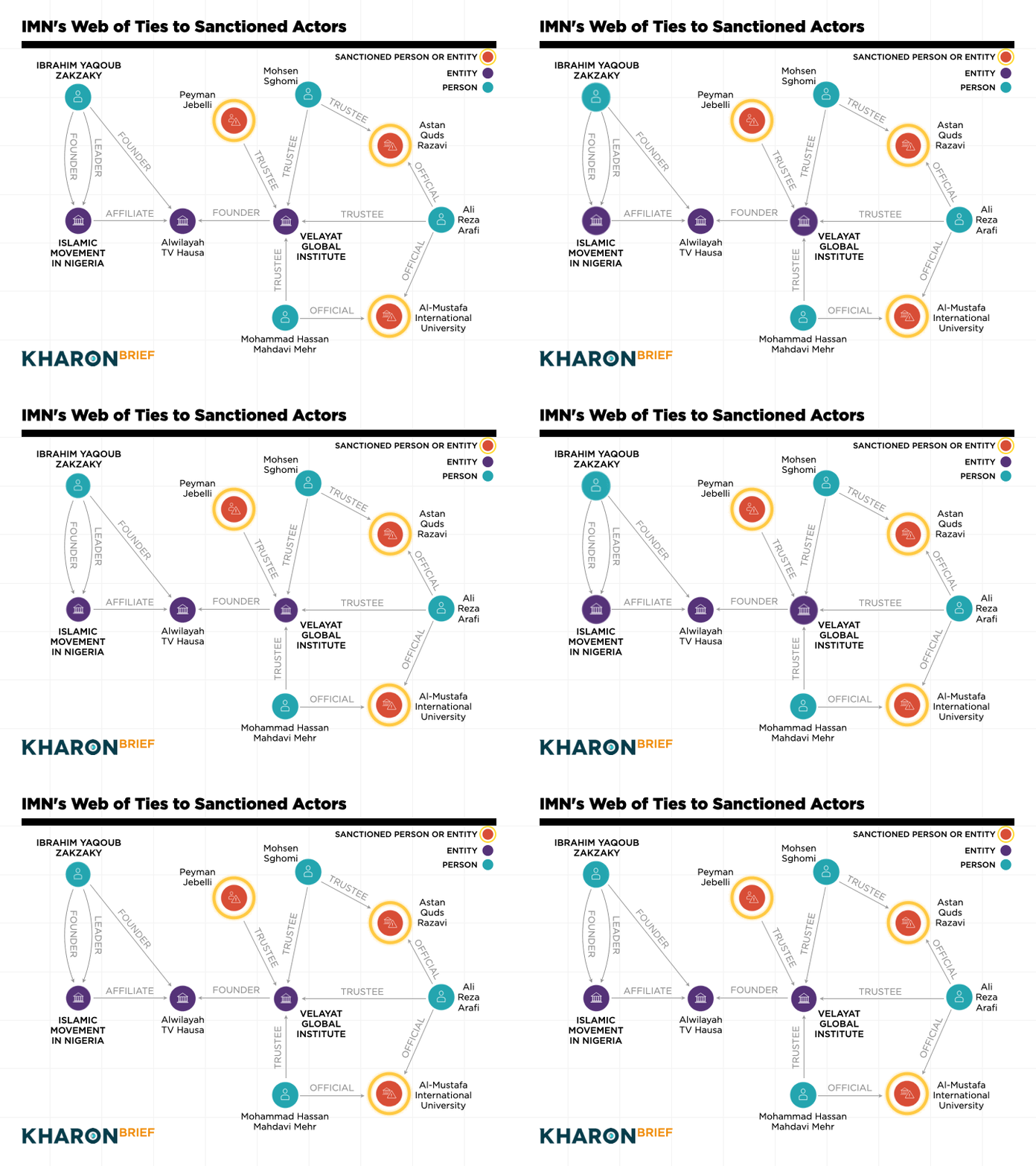
Other ties are less direct, including through Al Mustafa International University, which the United States sanctioned in 2020 for its facilitation of recruitment efforts abroad for Iran’s Islamic Revolutionary Guard Corps. An IMN delegation visited the sanctioned university’s Beirut branch in 2012; Zakzaky’s son attended that same branch.
Additionally, Zakzaky co-founded Alwilayah TV Hausa, an Iran-based Hausa-language Shia TV outlet, with the Iran-based Velayat Global Institute. The Velayat institute’s board of trustees includes two Al Mustafa International University officials, along with two members who have roles at a U.S.-sanctioned Iranian charity and one Iranian national whom the U.S. sanctioned outright in 2022, for directing the state-owned Islamic Republic of Iran Broadcasting.
That line stood out—because while the Islamic Movement of Nigeria (IMN) appears to be squarely on Treasury’s radar, and while it also is aligned with Iran, the group has not actually been sanctioned.
Kharon’s research into the IMN’s networks began in 2020. Taken together, it illustrates how the group and its leadership works with Iran-based organizations and Iran’s regional proxy groups to promote the ideology of the Islamic Republic, which itself is confronting the ramp-up of U.S. “maximum pressure.”
Background: The IMN is a decades-old Shia movement that seeks to establish a Nigerian state modeled after the Islamic Republic of Iran. The organization operates schools under the banner of its foundation, plus Islamic centers and a Hausa-language newspaper.
Ibrahim Zakzaky, a Nigerian Shia religious figure, founded and leads the IMN. Nigerian authorities notably imprisoned Zakzaky without trial from 2015 to 2021, after Nigerian soldiers clashed with the group at its headquarters, reportedly killing hundreds of its members. Zakzaky was ultimately acquitted of various charges, including for unlawful assembly, disruption of public peace and culpable homicide, in connection with the death of a Nigerian soldier.
Many pro-Iran organizations, including the Islamic Human Rights Commission in the U.K., had taken up efforts to secure Zakzaky’s release.
Hizballah ties: The IMN appears to be “Hizballah-aligned” through a number of channels. Before and since his six-year detention by Nigerian authorities, Zakzaky has coordinated with the networks of Hizballah, including travelling to Beirut to attend events and meet with organizations. (At a conference held there in 2015 to organize against Israel, he did an interview with the U.S.-sanctioned media outlet al-Manar TV.)
Treasury on Thursday invoked the Islamic Movement of Nigeria in designating senior Hizballah official Hasan Abdallah Ni’mah, who it said was the individual responsible for delivering IMN the “hundreds of thousands of U.S. dollars,” in August 2022. Ni’mah “facilitates funding and networking opportunities for Hizballah across Africa, including the management of millions of dollars in transactions for Hizballah,” Treasury said.
More recently, in February, Zakzaky attended the Beirut funeral of the longtime Hizballah leader Hassan Nasrallah. The Islamic Movement of Nigeria’s website posted pictures from the funeral and other events held in Nasrallah’s honor, writing that Zakzaky “expressed his heartfelt condolence on the martyrdom of the great resistance leader whose legacy lives on, and his resistance will continue until victory.”
Iran ties: The IMN’s connections to Iran and to U.S.-sanctioned actors there span the personal—such as a visit Zakzaky paid to Supreme Leader Ali Khamenei in October 2023—to the allegedly financial.
A former U.S. State Department official estimated to Bloomberg in 2017 that the Islamic Movement in Nigeria had been receiving $10,000 a month from Iran. Zakzaky has denied accusations of receiving Iranian funding.
Other ties are less direct, including through Al Mustafa International University, which the United States sanctioned in 2020 for its facilitation of recruitment efforts abroad for Iran’s Islamic Revolutionary Guard Corps. An IMN delegation visited the sanctioned university’s Beirut branch in 2012; Zakzaky’s son attended that same branch.
Additionally, Zakzaky co-founded Alwilayah TV Hausa, an Iran-based Hausa-language Shia TV outlet, with the Iran-based Velayat Global Institute. The Velayat institute’s board of trustees includes two Al Mustafa International University officials, along with two members who have roles at a U.S.-sanctioned Iranian charity and one Iranian national whom the U.S. sanctioned outright in 2022, for directing the state-owned Islamic Republic of Iran Broadcasting.
Soundbite: “Today’s action underscores Hizballah’s extensive global reach through its network of terrorist donors and supporters, particularly in Tehran,” Deputy Secretary of the Treasury Michael Faulkender said in the designation’s news release. “As part of our ongoing efforts to address Iran’s support for terrorism, Treasury will continue to intensify economic pressure on the key individuals in the Iranian regime and its proxies who enable these deadly activities.”
In brief: Iran and Hizballah maintain a resilient network of allies in the Middle East and beyond. Treasury’s statement last week makes clear that their affiliated groups—including those not targeted by sanctions—are in U.S. authorities’ sights as they seek to counter Iranian and Hizballah influence networks.
Read more from Kharon:
In brief: Iran and Hizballah maintain a resilient network of allies in the Middle East and beyond. Treasury’s statement last week makes clear that their affiliated groups—including those not targeted by sanctions—are in U.S. authorities’ sights as they seek to counter Iranian and Hizballah influence networks.
Read more from Kharon: