
The U.S. Treasury Department this week sanctioned six Gaza-based charities that it said funnel international donations to Hamas, the latest in a rash of recent Western actions targeting Hamas and the civic, charitable and financial networks that allegedly facilitate it.
The highest-profile target has been the Muslim Brotherhood, which Treasury and the State Department each moved against last week, by designating its chapters in Egypt, Jordan and Lebanon as terrorist groups.
The charity designations notably followed Italian authorities’ arrests in December of nine individuals who allegedly helped send millions of dollars to Hamas through Italian charities. And both U.S. rollouts coincided with the EU’s renewal last week of sanctions against Hamas and “the Palestinian Islamic Jihad” through January 2027.
Big picture: Together, the actions suggest a sustained Western focus on Hamas’s facilitators as Trump now assembles his “Board of Peace” to oversee redevelopment in Gaza, where a formal ceasefire has been in place since October but some fighting has persisted.
Zoom in: Kharon research traced the networks of the newly sanctioned charities and Muslim Brotherhood branches—and identified repeated instances of overlapping leadership with Hamas or its associates, jointly organized events, and ties to terrorist financing fronts.
Connecting the dots: The LMB connects materially to Hamas both through personnel and through a string of collaborative events.
The highest-profile target has been the Muslim Brotherhood, which Treasury and the State Department each moved against last week, by designating its chapters in Egypt, Jordan and Lebanon as terrorist groups.
- During President Donald Trump’s first term, the New York Times reported, officials had debated whether the legal criteria for terrorist designations fit the Brotherhood, a loosely organized movement with chapters across the Middle East.
The charity designations notably followed Italian authorities’ arrests in December of nine individuals who allegedly helped send millions of dollars to Hamas through Italian charities. And both U.S. rollouts coincided with the EU’s renewal last week of sanctions against Hamas and “the Palestinian Islamic Jihad” through January 2027.
Big picture: Together, the actions suggest a sustained Western focus on Hamas’s facilitators as Trump now assembles his “Board of Peace” to oversee redevelopment in Gaza, where a formal ceasefire has been in place since October but some fighting has persisted.
Zoom in: Kharon research traced the networks of the newly sanctioned charities and Muslim Brotherhood branches—and identified repeated instances of overlapping leadership with Hamas or its associates, jointly organized events, and ties to terrorist financing fronts.
The Lebanese Muslim Brotherhood: Hamas Events and glorification
What the U.S. said: The State Department designated the Lebanese Muslim Brotherhood (LMB), also known as al-Jamaa al-Islamiyah, as both a Foreign Terrorist Organization and a Specially Designated Global Terrorist, along with its secretary general, Muhammad Fawzi Taqqosh. State’s rationale largely concerned the LMB’s role in military operations, writing that:- It reactivated its al-Fajr Forces after the October 7 attacks and launched rockets from Lebanon into northern Israel “in coordination with Hizballah and Hamas.”
- Israeli forces targeted al-Fajr operatives in March 2024 as they prepared attacks against Israel.
- The Lebanese Army dismantled a covert training camp last July involving Lebanese Muslim Brotherhood and Hamas militants.
Connecting the dots: The LMB connects materially to Hamas both through personnel and through a string of collaborative events.
- Leadership overlap: Faisal Mawlawi, a leader in the Lebanese branch, helped establish the al-Quds International Foundation, which the Treasury Department sanctioned in 2012 for being “controlled by and acting for or on behalf of Hamas.” In issuing that designation, Treasury said the foundation existed to support the families of Hamas fighters and prisoners and to raise funds for projects in the Palestinian territories intended to expand the group’s influence.
- Shared event: Hamas and the Al Aqsa Support Association, a subsidiary of the LMB, co-organized a “Battle of the Sword of Jerusalem” Festival in May 2021, according to social media posts. Ali Abd Al Rahman Baraka, head of Hamas’s national relations abroad, delivered a speech at the event, as did LMB leaders.
- Direct meeting: In November 2022, Taqqosh and other senior figures from the LMB met with Hamas spokesperson Sami Abu Zuhri in Beirut, according to a Twitter post and photo.
- Post-October 7 support: The Al Aqsa Support Association organized an event in late October 2023 “in solidarity with our people in Gaza and support for the Palestinian issue.” A banner for the event, whose speakers included an official of Hamas’s al-Quds International Foundation, contained images of paragliders—a reference to the motorized paragliders used by attackers during the raids—honoring those who carried out that month’s attacks.
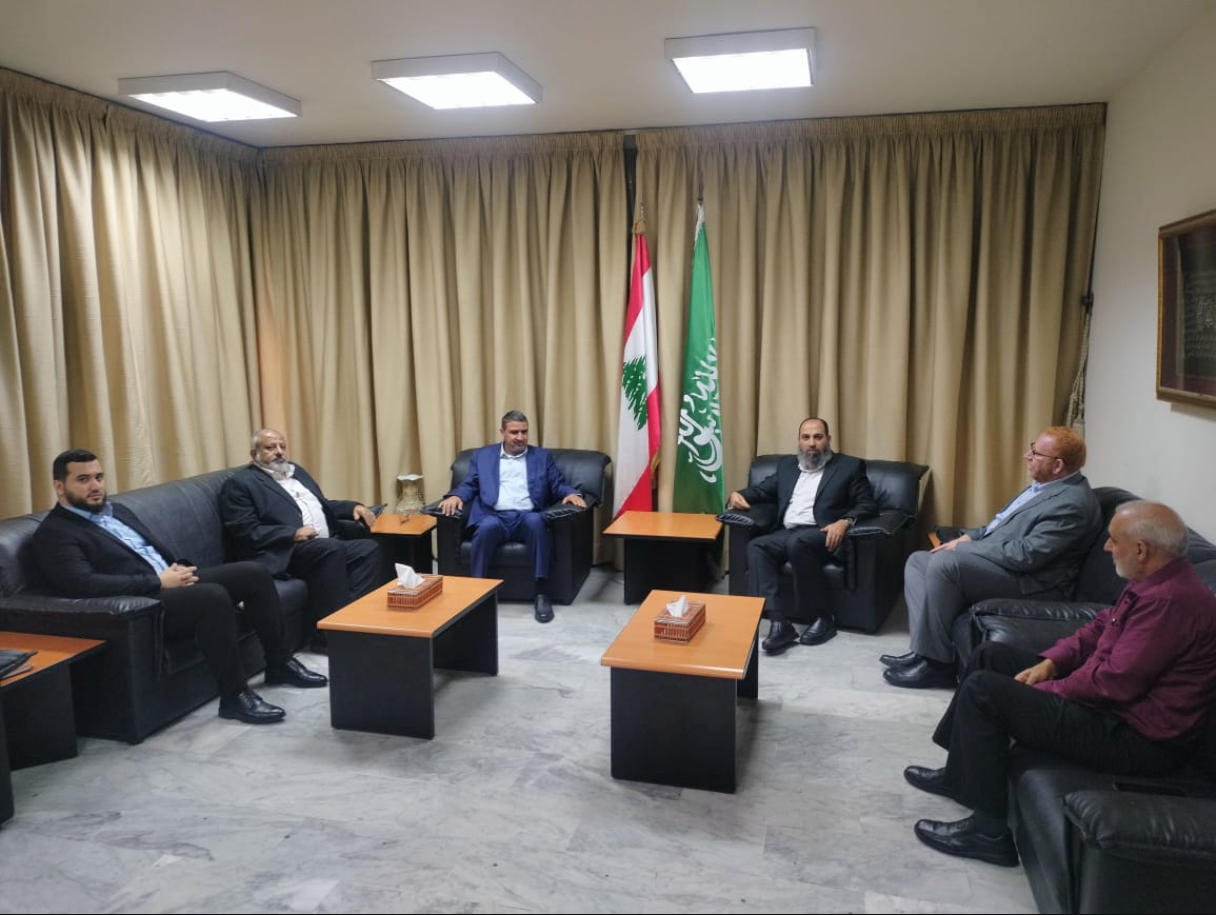
An image from a Twitter post shows Muhammad Fawzi Taqqosh, whom the U.S. sanctioned Wednesday, and other Lebanese Muslim Brotherhood members meeting with Hamas leader Sami Abu Zuhri in November 2022.
The Jordanian Muslim Brotherhood: Intersecting Leaders
What Treasury said: The Jordanian branch, though dissolved by a Jordanian court in 2020, had “materially assisted Hamas,” Treasury stated. Elements linked to the group, it said, have been involved in terrorism cases in Jordan and, abroad, “engaged in manufacturing rockets, explosives and drones, as well as recruitment operations”; members also facilitated such activity by raising funds “through illegal means.”Connecting the dots: Top officials in the Jordanian group have led organizations both in Jordan and in Gaza that work with Hamas’s leadership and financing networks.
- Wael al-Saqa, secretary general of the Islamic Action Front, the political arm of the Jordanian Muslim Brotherhood, has served on the board of the Arab and International Commission to Build Gaza, according to an archived version of the charity’s website. Other members of the commission’s management have included sanctioned Hamas financiers or leaders of other financing fronts.
- Soud Sallem Abou Mahfouz, a senior official in the Jordanian Muslim Brotherhood, co-founded Jordan’s Green Crescent Charity, according to its site. The site also identifies a partnership with a sanctioned Hamas financing front.
Qawafil Al-Khair: A Sinwar Job Reference and a Financing Web
What the U.S. said: The Treasury Department designated Qawafil Al-Khair, or Alms Caravan, describing it as one of the Gaza-based “so-called charities” whose funding “enable[s] Hamas’s terrorism.”Treasury said Qawafil Al-Khair specifically was “tasked and funded by Hamas to provide support for the organization and complete projects that are intended to benefit Hamas.”
Connecting the dots: Qawafil Al-Khair is led in part by Hamas associates, and it, too, has ties to Hamas’s foreign financing networks.
The leadership ties:
- Until his death in an Israeli airstrike last January, Ali Yusuf Al-Maghrebi was both a manager of the charity and a spokesman for Hamas’s Asra Media Office, according to their respective websites.
- Mansour Rian, the chair of Qawafil Al-Khair, was released in the Gilad Shalit prisoner exchange in 2011, freeing him from his life sentence for fatally stabbing an Israeli citizen in the West Bank in 1993. A CV for Rian, published on a website of a Hamas-controlled university, listed deceased Hamas leader Yahya Sinwar among his “references,” a Kharon review found. According to a post on his since-suspended social media account, Rian received an award from Hamas in 2021, he said, “in appreciation of the efforts I made during the media coverage of the Battle of Saif al-Quds, which had a positive impact on the victory of the Palestinian resistance.”
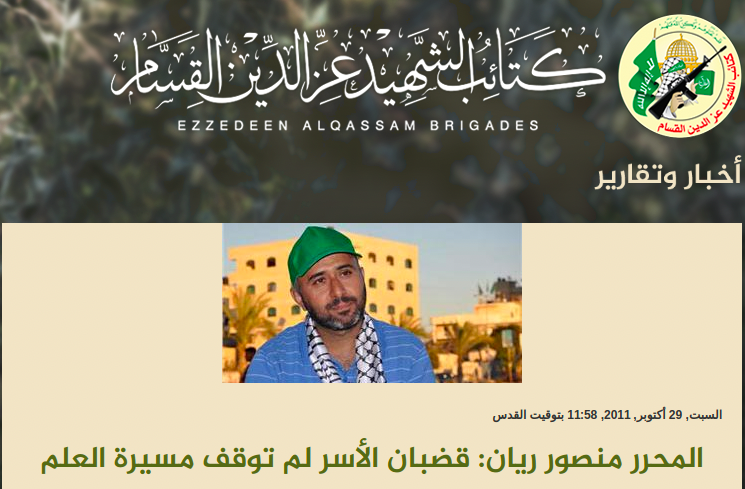
A 2011 post by Al-Qassam Brigades, Hamas’s military wing, on Rian’s imprisonment and subsequent release states: “The Freed Mansour Rian: The Bars of Prison Did Not Stop the March of Knowledge.”
The financing ties:
- Wala Abu Musabah, a board member of Qawafil Al-Khair, is also the Gaza manager for the Türkiye-based charity Hayat Yolu Dernegi. According to its website and corporate filings, Hayat Yolu Dernegi partners with two organizations in Europe and Southeast Asia that share management with sanctioned Hamas fronts.
- In 2021, Qawafil Al-Khair received a “generous donation” from Gulf businessman Ali al-Sada for its reconstruction of the Taqawi Mosque in Gaza, according to a banner for the project published by the charity. Ismail Haniyeh, the former Hamas chairman and Palestinian National Authority prime minister, delivered a speech at the inauguration of the mosque, according to a Gulf newspaper’s report on the event. It was not his first brush with the financier: In 2017, al-Sada received Haniyeh and senior Hamas political leader Khaled Meshal at his home.
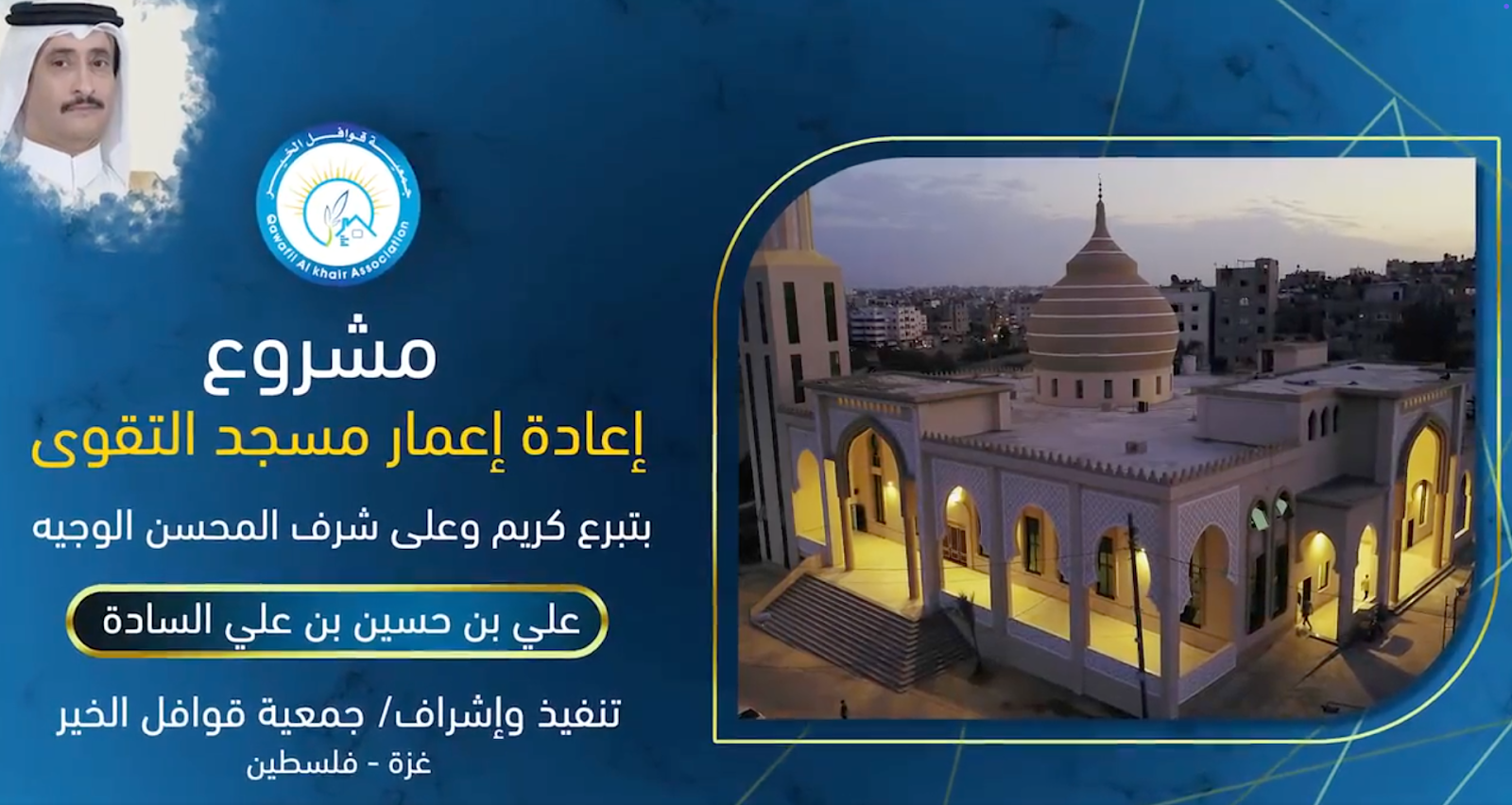
In an image posted to Twitter in 2021, Qawafil al-Khair official Ahmed Abd Elal identifes Ali al-Sadah as the financier of Taqawi Mosque’s reconstruction overseen by Qawafil al-Khair.
In addition to supporting Qawafil al-Khair, al-Sada has also provided financing to various projects and initiatives of al-Falah Society, another Gaza-based charity that Treasury sanctioned in the same action.
Italian media reported after the arrests that ABSPP funds had allegedly been sent to a group of Hamas-tied organizations in Gaza. Among them were four charitable groups the U.S. sanctioned on Tuesday.
Read more from the Kharon Brief:
The Italian Connections
Among those arrested in Italy last month was Mohammad Hannoun, whom the U.S. sanctioned in 2024, calling him “an Italy-based Hamas member” who founded the “sham charity” Associazione Benefica di Solidarieta con il Popolo Palestinese (ABSPP), or Charity Association of Solidarity with the Palestinian People.Italian media reported after the arrests that ABSPP funds had allegedly been sent to a group of Hamas-tied organizations in Gaza. Among them were four charitable groups the U.S. sanctioned on Tuesday.
Read more from the Kharon Brief: