
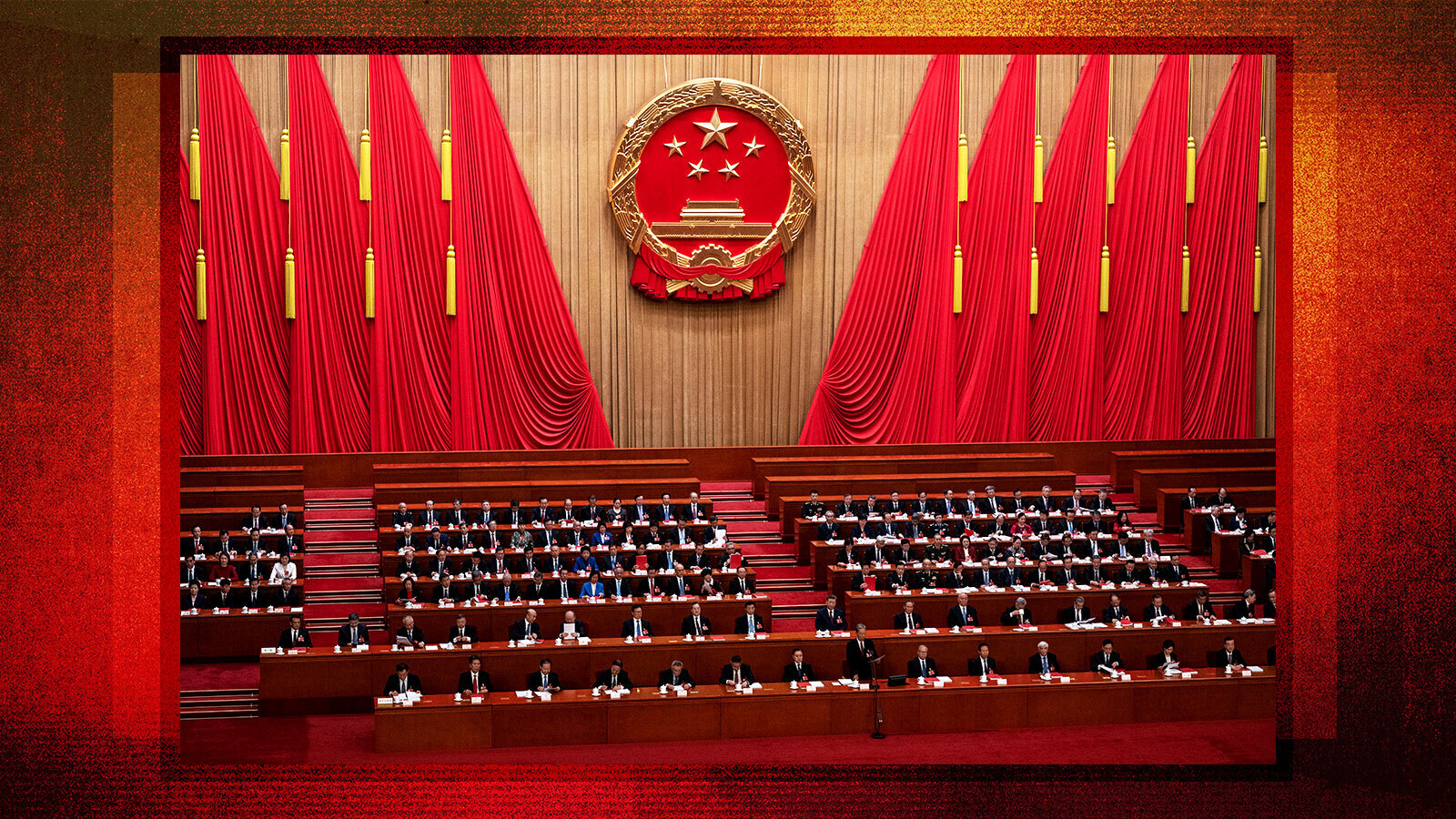
China wrapped up its largest political meetings of the year on Thursday, a weeklong gathering that signaled Beijing’s determined push for advanced-tech self-sufficiency and a shift from its reactive posture in its rivalry with the West.
The Two Sessions—the plenary meetings of the National People’s Congress and the Chinese People’s Political Consultative Conference—set China’s economic and political agenda each spring. This year’s carried added weight, as delegates reviewed the draft blueprint for China’s next five-year plan, for 2026 to 2030.
Speaking to delegates, President Xi Jinping called for breakthroughs in core technologies to secure what he cast as China’s “strategic high ground” against the West.
What China needs most, Xi said, can “no longer be requested, purchased or borrowed” from abroad.
The Two Sessions—the plenary meetings of the National People’s Congress and the Chinese People’s Political Consultative Conference—set China’s economic and political agenda each spring. This year’s carried added weight, as delegates reviewed the draft blueprint for China’s next five-year plan, for 2026 to 2030.
Speaking to delegates, President Xi Jinping called for breakthroughs in core technologies to secure what he cast as China’s “strategic high ground” against the West.
What China needs most, Xi said, can “no longer be requested, purchased or borrowed” from abroad.
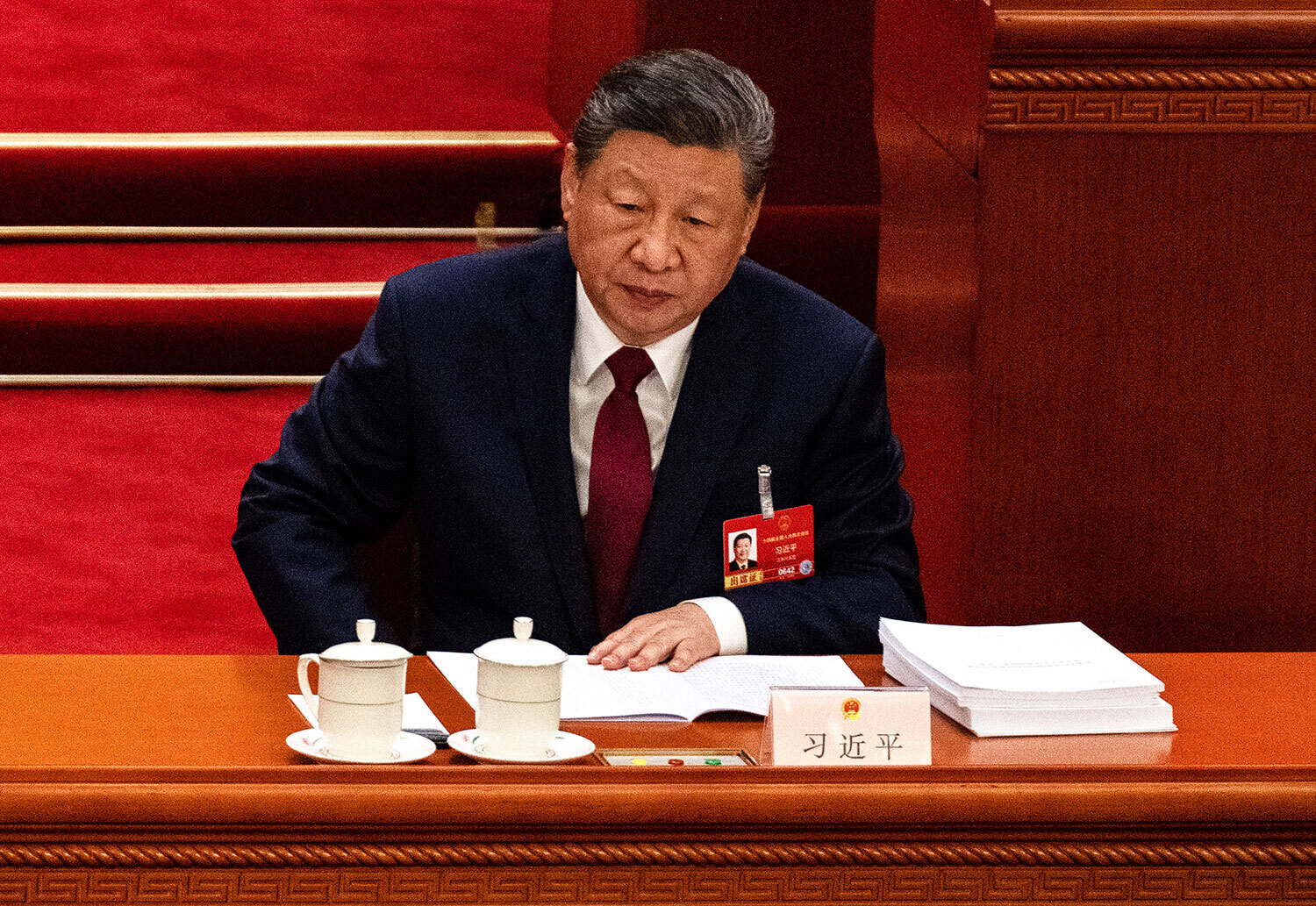
Chinese President Xi Jinping listens to speeches during the opening session of the National People's Congress on March 5 in Beijing. (Kevin Frayer/Getty Images)
Beijing held its GDP growth target at “around 4.5 to 5%,” its official report said, a conservative call in the face of deflation, a property slump and its ongoing trade war with Washington. In three other areas closely watched by U.S. regulators, however, Chinese delegates moved more aggressively:
This year, its Government Work Report upgraded the slogan with the new framing of “whole-of-chain” deployment: a vow to connect basic research, industrial production, capital markets and talent into a single, national innovation machine.
Securing strategic supply chains: The plan calls for “extraordinary measures” to close gaps in “critical core technologies,” including integrated circuits, industrial machine tools, high-end instruments, foundational software, advanced materials and bio-manufacturing.
The money is following the mission.
At the same time, after Washington’s further recent tightening of its outbound investment restrictions, Beijing moved to fill the gap by pledging a “fast-track channel” for listings, mergers and restructuring in its critical technologies.
Nurturing “frontier technology”: Beyond plugging existing gaps, the work report puts state capital to work building China’s next tech champions. State-owned enterprises are being directed to lead adoption of new technologies and generate market demand, with resources concentrated in semiconductors, aerospace, biomedicine and the “low-altitude economy,” China’s bet on a drone-heavy future for food deliveries, sightseeing tours and more.
The Pentagon’s December report on Chinese military power, however, estimated that Beijing’s actual past spending numbers have run 32% to 63% higher than what it publishes, once defense-related R&D, capital expenditure, internal security and mobilization costs are included. A senior Pentagon official warned last month that China’s manufacturing advantage, representing roughly 30% of global output, gives the People’s Liberation Army (PLA) unmatched capacity to scale production across domains as needed.
Two passages in this year’s work report stood out, concerning:
What they said: Wang Kuiran, the Xinjiang regional government’s secretary-general, told delegates its forced-labor-tied textile and garment industry had created nearly 47,000 jobs last year despite U.S.-led restrictions. (The figures are difficult to verify independently.) Since the Uyghur Forced Labor Prevention Act (UFLPA) took effect in 2022, the U.S. has designated 144 Chinese companies in textiles and related sectors with a legal presumption that has effectively shut them out of the U.S. market.
Wang acknowledged an early sting but said the region had moved on, touting that in 2025 yarn output rose 20%, fabric production jumped 36% and sectoral investment climbed 35%. China opposed “economic bullying,” he said, and would fight back.
He added that authorities had drawn up medium- and long-term development plans for Xinjiang’s textile and garment industry.
A legal escalation: The Two Sessions also passed the Law on Promoting Ethnic Unity and Progress, the most sweeping codification of Beijing’s assimilation policy to date, which:
But while textiles used to make up a far higher share of UFLPA seizures, U.S. enforcement targets have shifted as China’s own priorities have: So far this fiscal year, more than half of that $72 million has come from shipments of semiconductor devices.
Read more from The Brief:
- On technology, China presented its most detailed blueprint for supply-chain independence since the pandemic.
- It kept defense spending on an upward trajectory.
- And on Xinjiang and forced labor, leaders passed sweeping new legislation that enshrines and escalates state assimilation and repression efforts.
Technology: The ‘Whole-of-Chain’ Blueprint
Since 2020, a push for “sci-tech self-reliance” has been Beijing’s response to Western export controls.This year, its Government Work Report upgraded the slogan with the new framing of “whole-of-chain” deployment: a vow to connect basic research, industrial production, capital markets and talent into a single, national innovation machine.
Securing strategic supply chains: The plan calls for “extraordinary measures” to close gaps in “critical core technologies,” including integrated circuits, industrial machine tools, high-end instruments, foundational software, advanced materials and bio-manufacturing.
The money is following the mission.
- Central government science and technology spending is budgeted at 424.6 billion yuan (around $62 billion), up 10% year-on-year.
- Basic research, historically China’s weak link, is growing faster still, with central allocations set to rise more than 16% this year.
At the same time, after Washington’s further recent tightening of its outbound investment restrictions, Beijing moved to fill the gap by pledging a “fast-track channel” for listings, mergers and restructuring in its critical technologies.
Nurturing “frontier technology”: Beyond plugging existing gaps, the work report puts state capital to work building China’s next tech champions. State-owned enterprises are being directed to lead adoption of new technologies and generate market demand, with resources concentrated in semiconductors, aerospace, biomedicine and the “low-altitude economy,” China’s bet on a drone-heavy future for food deliveries, sightseeing tours and more.
- A recent policy report by experts involved in China’s 15th Five‑Year Plan recommended that the next phase of the “low-altitude” industry should “strengthen civil‑military coordinated pathways” and “establish two‑way technology transfer channels.”
Defense: More Spending, and a Push on Unmanned Warfare
China raised its official defense budget by 7% for 2026, bringing military spending to 1.91 trillion yuan (approximately $277 billion)—a slight pullback from the 7.2% annual increases of the past three years. Xinhua, the state-run news agency, described the figure as “comparatively modest” by GDP, per-capita and per-soldier measures.The Pentagon’s December report on Chinese military power, however, estimated that Beijing’s actual past spending numbers have run 32% to 63% higher than what it publishes, once defense-related R&D, capital expenditure, internal security and mobilization costs are included. A senior Pentagon official warned last month that China’s manufacturing advantage, representing roughly 30% of global output, gives the People’s Liberation Army (PLA) unmatched capacity to scale production across domains as needed.
Two passages in this year’s work report stood out, concerning:
- Unmanned warfare: The report calls for accelerating the development of unmanned and intelligent combat forces and counter-capabilities, for the sake of “modernizing and upgrading traditional combat forces.”
- The civil-to-military fast track: Beijing pledged to strengthen the “fast-track channel” for frontier technology to enter military use, ensuring that commercial breakthroughs flow directly into PLA capability.
Xinjiang: Defiant on Trade, Tightening on Culture
This year’s Two Sessions delivered a defiant message on Xinjiang: open for business, closed to dissent.What they said: Wang Kuiran, the Xinjiang regional government’s secretary-general, told delegates its forced-labor-tied textile and garment industry had created nearly 47,000 jobs last year despite U.S.-led restrictions. (The figures are difficult to verify independently.) Since the Uyghur Forced Labor Prevention Act (UFLPA) took effect in 2022, the U.S. has designated 144 Chinese companies in textiles and related sectors with a legal presumption that has effectively shut them out of the U.S. market.
Wang acknowledged an early sting but said the region had moved on, touting that in 2025 yarn output rose 20%, fabric production jumped 36% and sectoral investment climbed 35%. China opposed “economic bullying,” he said, and would fight back.
He added that authorities had drawn up medium- and long-term development plans for Xinjiang’s textile and garment industry.
A legal escalation: The Two Sessions also passed the Law on Promoting Ethnic Unity and Progress, the most sweeping codification of Beijing’s assimilation policy to date, which:
- mandates Mandarin as the primary language of schools and state institutions.
- requires parents to instill “love for the Communist Party of China” in their children and bars them from passing on views deemed “harmful to ethnic unity.”
- threatens legal action against anyone, inside or outside China, who promotes “separatism,” a term critics say has long been used to suppress minority communities in Xinjiang.
But while textiles used to make up a far higher share of UFLPA seizures, U.S. enforcement targets have shifted as China’s own priorities have: So far this fiscal year, more than half of that $72 million has come from shipments of semiconductor devices.
Read more from The Brief: