
Iran has choked off the Strait of Hormuz since its war with the U.S. and Israel began, rattling global oil markets with its attacks and threats against vessels sailing through. But certain ships reportedly are getting a pass—to allow millions of barrels of Iranian crude to continue flowing to China.
That unique accommodation reflects the economic “lifeline” that experts say Tehran has gotten from Beijing, which now absorbs around 90% of Iran’s oil exports. And while China has cast itself during the conflict as an outside “force of peace,” that extensive oil trading—through hard-to-trace networks of state-tied actors and front companies—is enabling Iran now to fund its fighting.
“With the IRGC now controlling up to around 50% of Iran’s oil export revenues, [oil revenue from China] is effectively funding its military operations and regional proxies,” said Tuvia Gering, a Jerusalem-based researcher and a nonresident fellow in the Atlantic Council’s Global China Hub, citing a 2024 Reuters report.
After Western sanctions cut Tehran off from many international buyers and global financial systems, Iran found a willing buyer in China, the world’s largest crude importer. Beijing formalized this relationship in 2021 with a 25-year, $400 billion cooperation agreement, securing a discounted Iranian oil supply in exchange for investment across Iran’s energy, banking and infrastructure sectors, the New York Times reported.
But much of their trade remains in the shadows. According to a Department of Energy report last year, some of the oil destined for China is routed through Malaysia, Singapore and Vietnam, or had its destination listed simply as “unknown.”
Kharon research and U.S. sanctions designations reveal the role that Chinese actors play in Iran’s oil trade, at three key steps.
The gap was filled by “teapots,” the small, independent refineries clustered in Shandong province and named for their modest scale of operations. China only had begun issuing them import licenses in 2015, when it broke its state monopoly on oil purchases; by 2025, they accounted for an estimated 90% of Iran’s oil exports to China.
The setup has given Beijing “a degree of plausible deniability,” said Maia Nikoladze, associate director at the Atlantic Council’s GeoEconomics Center. The smaller refiners “pose limited systemic risk if sanctioned.”
Yet Kharon research shows that the teapots’ “independent” label doesn’t capture the full underlying reality. Beneath their private ownership structures, these refineries connect closely to the Chinese state through joint ventures, partnerships with state-owned enterprises and government-linked customers.
That unique accommodation reflects the economic “lifeline” that experts say Tehran has gotten from Beijing, which now absorbs around 90% of Iran’s oil exports. And while China has cast itself during the conflict as an outside “force of peace,” that extensive oil trading—through hard-to-trace networks of state-tied actors and front companies—is enabling Iran now to fund its fighting.
“With the IRGC now controlling up to around 50% of Iran’s oil export revenues, [oil revenue from China] is effectively funding its military operations and regional proxies,” said Tuvia Gering, a Jerusalem-based researcher and a nonresident fellow in the Atlantic Council’s Global China Hub, citing a 2024 Reuters report.
After Western sanctions cut Tehran off from many international buyers and global financial systems, Iran found a willing buyer in China, the world’s largest crude importer. Beijing formalized this relationship in 2021 with a 25-year, $400 billion cooperation agreement, securing a discounted Iranian oil supply in exchange for investment across Iran’s energy, banking and infrastructure sectors, the New York Times reported.
But much of their trade remains in the shadows. According to a Department of Energy report last year, some of the oil destined for China is routed through Malaysia, Singapore and Vietnam, or had its destination listed simply as “unknown.”
Kharon research and U.S. sanctions designations reveal the role that Chinese actors play in Iran’s oil trade, at three key steps.
The Buyers: Teapot Refineries
Wary of sanctions exposure, China’s major state-owned refineries stepped back from buying Iranian crude after the U.S. withdrew from the Iran nuclear deal in 2018.The gap was filled by “teapots,” the small, independent refineries clustered in Shandong province and named for their modest scale of operations. China only had begun issuing them import licenses in 2015, when it broke its state monopoly on oil purchases; by 2025, they accounted for an estimated 90% of Iran’s oil exports to China.
The setup has given Beijing “a degree of plausible deniability,” said Maia Nikoladze, associate director at the Atlantic Council’s GeoEconomics Center. The smaller refiners “pose limited systemic risk if sanctioned.”
Yet Kharon research shows that the teapots’ “independent” label doesn’t capture the full underlying reality. Beneath their private ownership structures, these refineries connect closely to the Chinese state through joint ventures, partnerships with state-owned enterprises and government-linked customers.
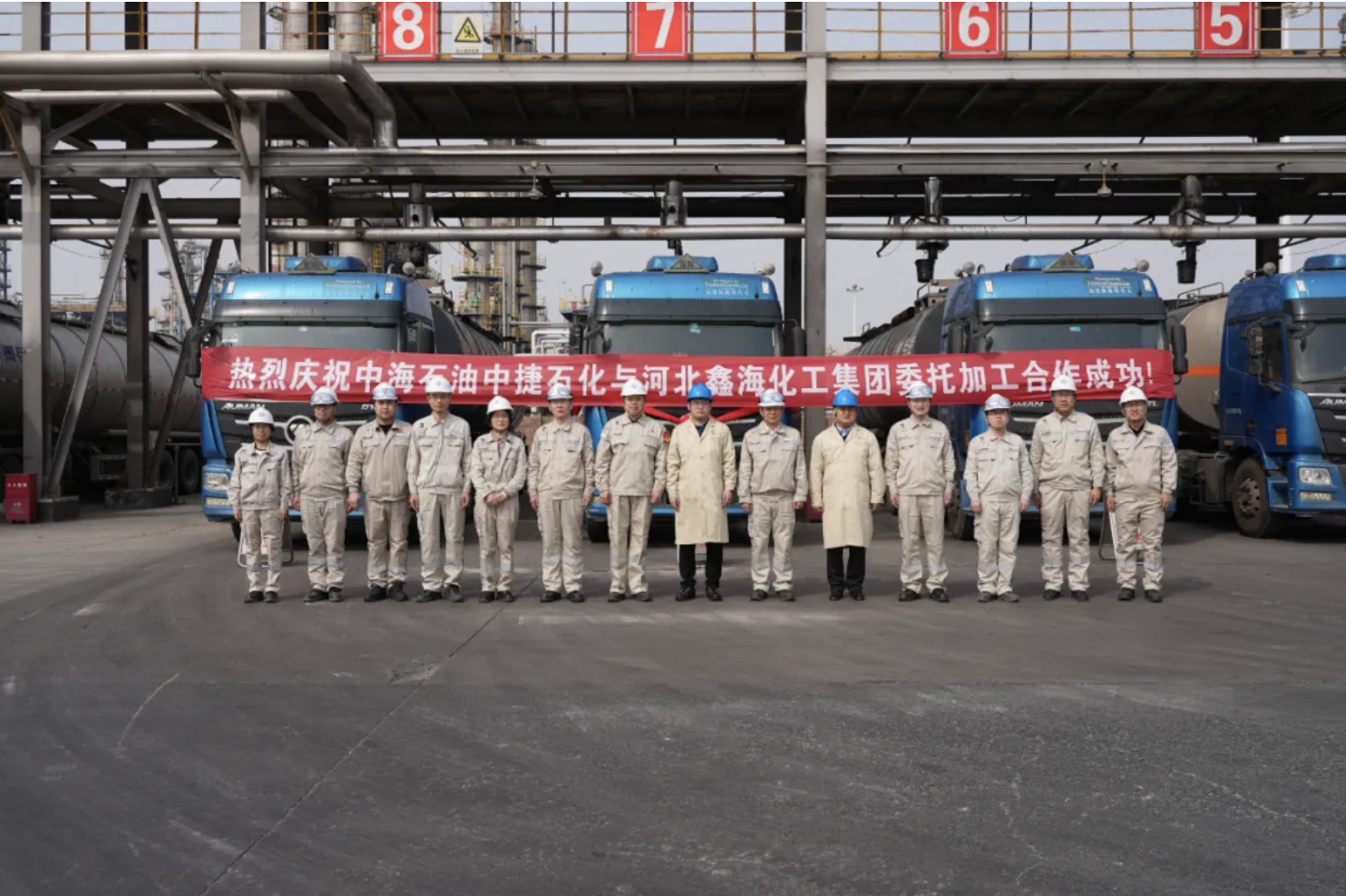
Workers stand beneath a banner “celebrating a successful partnership between Hebei Xinhai Chemical Group and CNOOC-Zhongjie Chemicals Co.,” in a photo the company posted in March 2025. The U.S. sanctioned Xinhai two months later. (Hebei Xinhai Holding Group Co., Ltd.)
From Kharon’s research: Treasury designated Hebei Xinhai Chemical Group Co., Ltd. last May for receiving shipments of Iranian crude from previously sanctioned shadow-fleet vessels. Its Singapore-based oil brokerage subsidiary was targeted in the same action.
According to corporate records, Hebei Xinhai Chemical Group has established joint ventures—including one in petrochemicals processing—since 2023 with two state-owned entities. Meanwhile, the teapot’s parent, Hebei Xinhai Holding Group Co., Ltd., works closely with two subsidiaries of China’s four state-owned, centrally administered energy giants:
According to corporate records, Hebei Xinhai Chemical Group has established joint ventures—including one in petrochemicals processing—since 2023 with two state-owned entities. Meanwhile, the teapot’s parent, Hebei Xinhai Holding Group Co., Ltd., works closely with two subsidiaries of China’s four state-owned, centrally administered energy giants:
- A March 2025 company press release shows that a subsidiary of China National Petroleum Corp. (CNPC) sent a representative to Xinhai Holding’s annual customer meeting, where the executive said the company was “committed to deepening cooperation” and praised Xinhai’s product quality and service.
- Days earlier, a separate release described a business meeting with a subsidiary of China National Offshore Oil Corporation (CNOOC) that had established “deep cooperation encompassing crude oil, intermediate material processing, and refined oil sales across the entire supply chain.”
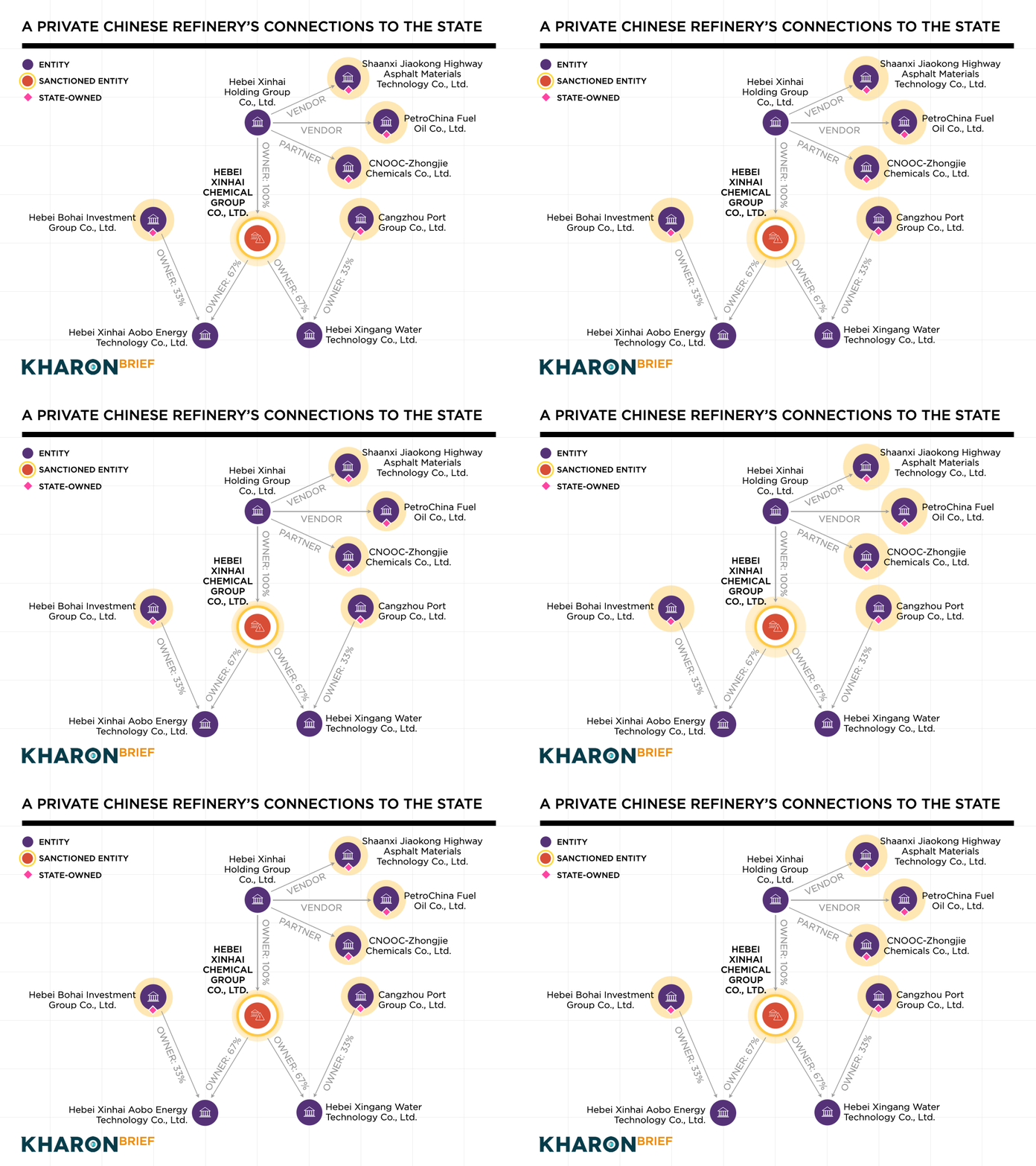
The first Chinese teapot that Treasury sanctioned, Shandong Shouguang Luqing Petrochemical, fits the same pattern. A Kharon review of corporate records found that refinery, which Treasury alleged had bought roughly $500 million worth of Iranian crude, including oil linked to the Houthis and Iran’s defense ministry, owns substantial stakes in three joint ventures with state-owned enterprises.
Big picture: These refineries may be independent in a sense, but they’re embedded in the Chinese state through the companies they build, the partners they choose and the customers they supply.
A designation from last month that targeted a Chinese corner of the Iran-facilitating shadow fleet shows how these networks are structured to adapt.
From Kharon’s research: Chinese national Chen Yongkang runs a shipping operation that spans at least two Hong Kong companies, a Shanghai tanker operator, and a fleet of chemical and oil vessels. China’s energy giants pop up as clients here, too.
Last month, Treasury sanctioned a Barbados-flagged chemical tanker in this network, the Yongheng Ocean, and its operator, Shanghai Qizhang Ship Management Co., for transporting Iranian petrochemical products. Both connect back to Chen.
Big picture: These refineries may be independent in a sense, but they’re embedded in the Chinese state through the companies they build, the partners they choose and the customers they supply.
The Delivery System: Shadow-Fleet Networks
Iran moves its oil through what Treasury has called “a sprawling network of tankers and ship management firms.” Ships change names and flags, falsify cargo records and manipulate tracking systems to hide where they’ve been. Ownership is buried in front companies, making it hard to trace who controls a vessel, or who gets paid.A designation from last month that targeted a Chinese corner of the Iran-facilitating shadow fleet shows how these networks are structured to adapt.
From Kharon’s research: Chinese national Chen Yongkang runs a shipping operation that spans at least two Hong Kong companies, a Shanghai tanker operator, and a fleet of chemical and oil vessels. China’s energy giants pop up as clients here, too.
Last month, Treasury sanctioned a Barbados-flagged chemical tanker in this network, the Yongheng Ocean, and its operator, Shanghai Qizhang Ship Management Co., for transporting Iranian petrochemical products. Both connect back to Chen.
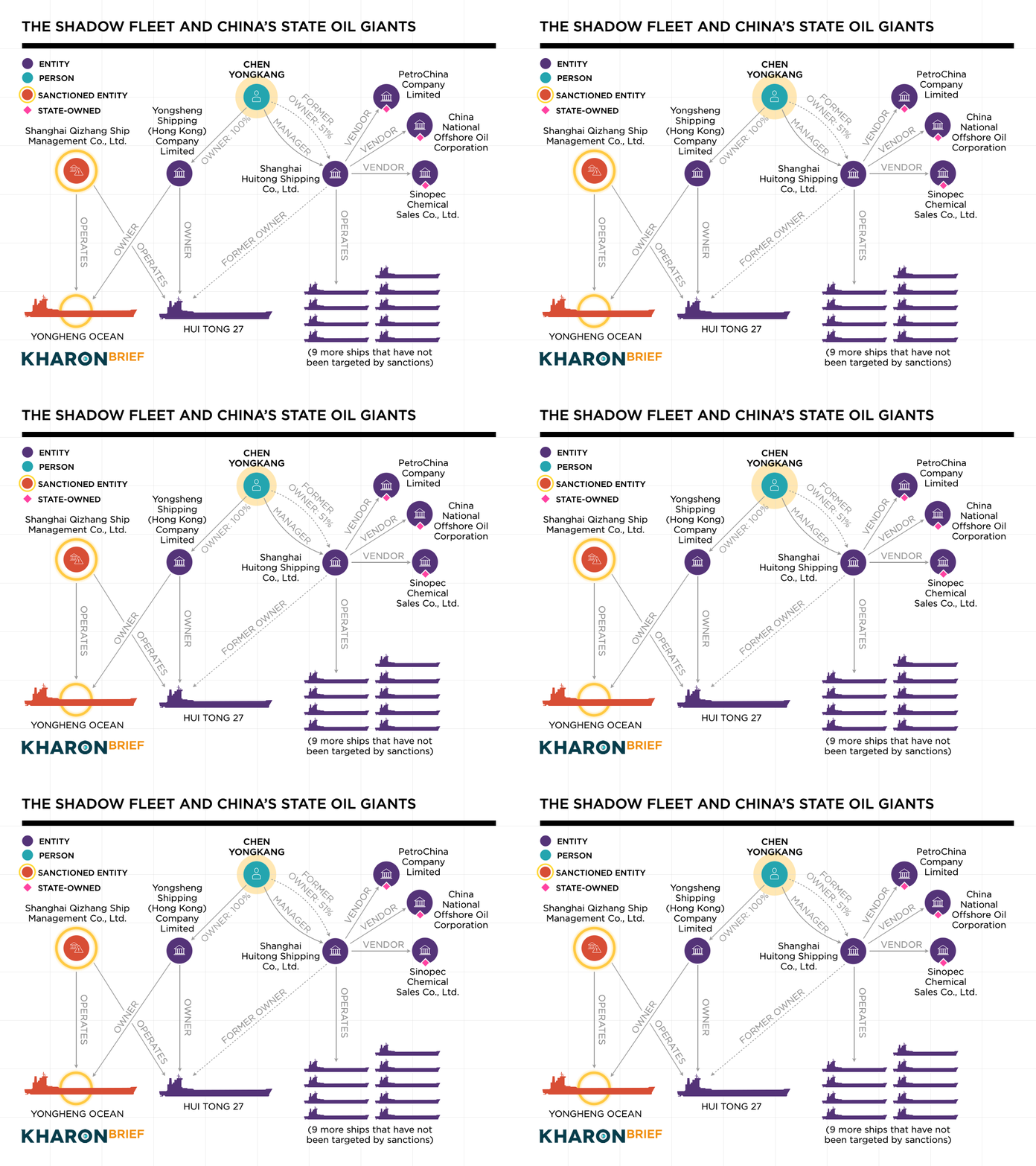
Maritime records show that the Hui Tong 27, a sister ship to the Yongheng Ocean, was previously owned by Shanghai Huitong Shipping Co., Ltd., a tanker operator in which Chen held a 51% stake until last September. He remains one of its two listed managers, and Shanghai Huitong’s website still lists the Hui Tong 27 as its own.
According to a Wall Street Journal report from October, China is bypassing restrictions with a “construction-for-oil” exchange, in which Iran ships crude to China, while Chinese companies build airports, refineries and transport networks in Iran. Chinese and Hong Kong front companies act as intermediaries, registering trades and masking the oil’s origin.
That’s familiar territory for Tehran, which has long employed a back-channel strategy of its own to fund its regional “Axis of Resistance.”
“China has built a sanctions-evasion economy,” Gering said. “The shadow system wouldn’t exist if Beijing and Tehran hadn’t made a strategic decision to allow it, from oil to finance.”
From Kharon’s research: In June 2025, Treasury sanctioned multiple members of Iran’s Zarringhalam family for using front companies in the UAE and Hong Kong to collect oil and commodity revenues on behalf of sanctioned Iranian officials and their associates.
Five of the designated Hong Kong entities have no digital presence that Kharon could identify. But corporate records say they share a common director and, for two of the companies, a common owner: Lu Chunling, a Chinese national.
- Shanghai Huitong’s clients, according to that site, include CNOOC as well as subsidiaries of CNPC and likewise state-owned Sinopec, one of the world’s largest oil-refining companies.
The Financing: Front Companies
U.S. sanctions restrict direct, conventional payments from China to Iran. But the two countries have found workarounds.According to a Wall Street Journal report from October, China is bypassing restrictions with a “construction-for-oil” exchange, in which Iran ships crude to China, while Chinese companies build airports, refineries and transport networks in Iran. Chinese and Hong Kong front companies act as intermediaries, registering trades and masking the oil’s origin.
That’s familiar territory for Tehran, which has long employed a back-channel strategy of its own to fund its regional “Axis of Resistance.”
“China has built a sanctions-evasion economy,” Gering said. “The shadow system wouldn’t exist if Beijing and Tehran hadn’t made a strategic decision to allow it, from oil to finance.”
From Kharon’s research: In June 2025, Treasury sanctioned multiple members of Iran’s Zarringhalam family for using front companies in the UAE and Hong Kong to collect oil and commodity revenues on behalf of sanctioned Iranian officials and their associates.
Five of the designated Hong Kong entities have no digital presence that Kharon could identify. But corporate records say they share a common director and, for two of the companies, a common owner: Lu Chunling, a Chinese national.
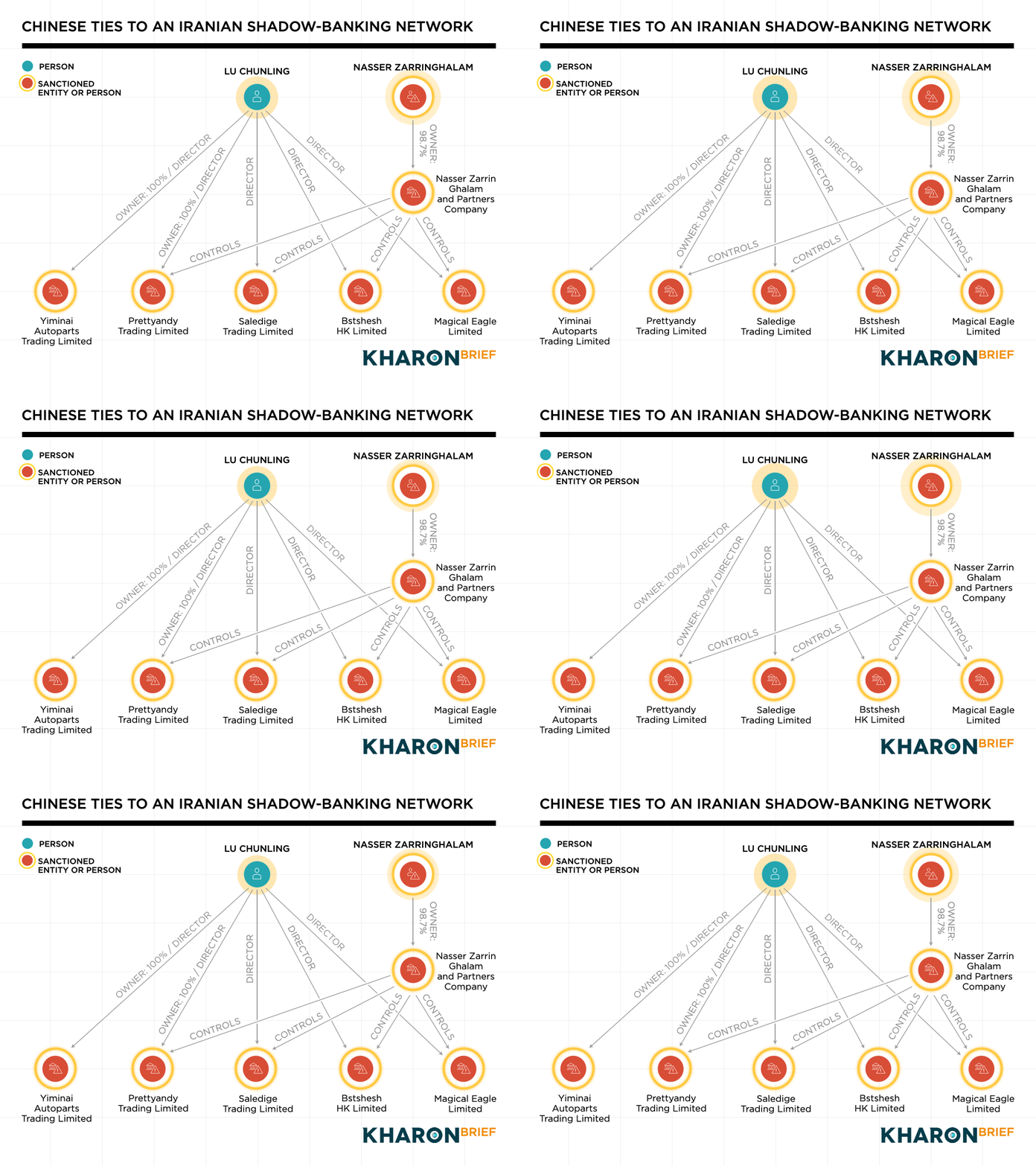
- Additionally, Lu served as liquidation manager for Vertex Pioneer Chem (Shanghai) Co., a trading company whose executive director, Farhad Zarringhalam, managed an Iran-based petro trading company in this network.
- The State Department sanctioned that Turkish firm, Fiva Plastik Sanayi Ve Ticaret Limited Sirketi, last July for importing more than $6.8 million worth of Iranian-origin petrochemical products, including from U.S.-sanctioned companies.
Read more from The Brief: