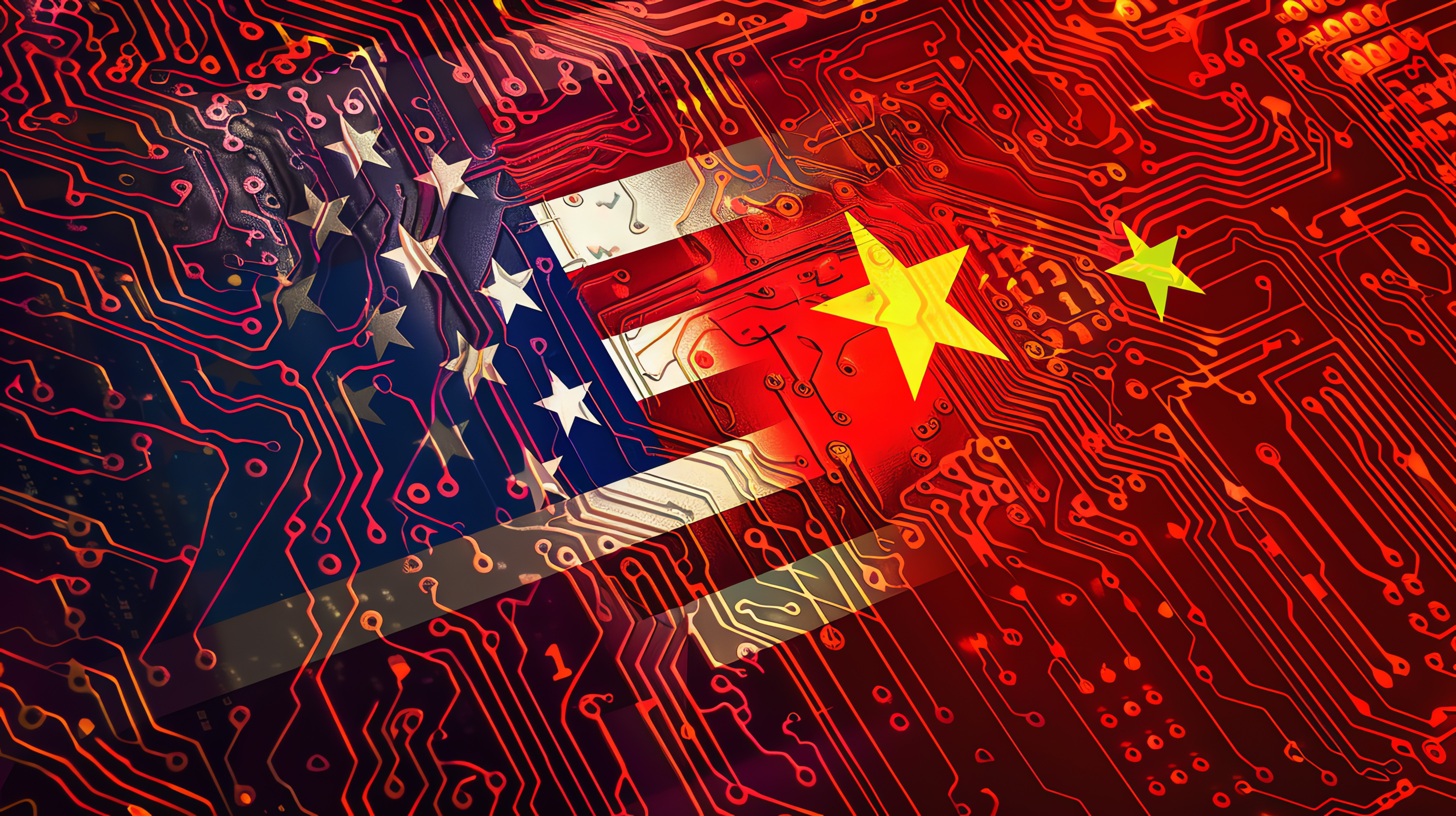
The Department of Defense (DOD) added Chinese e-commerce and AI giant Alibaba Group, top electric-vehicle maker BYD, and a slew of other high-profile firms on Friday to its list of “Chinese military companies” operating in the United States, before quickly withdrawing the document from the Federal Register.
Michael Kremlacek, DOD’s acting director for privacy, civil liberties and transparency, requested the notice’s removal from the register without explanation, according to a copy of the withdrawal letter obtained by The Brief. A spokesperson for DOD said it had “nothing to announce at this time.”
Such an expansion of the so-called 1260H list, if implemented, would reflect a striking U.S. assessment of the extent to which Beijing’s advanced-tech sectors allegedly aid its military. Among the 68 entities named Friday were many stock-traded companies and firms involved in semiconductors, biotech, batteries, LED technology, telecoms and logistics. Some of the newly listed companies were subsidiaries of previous entries, including at least eight subsidiaries that are based in the U.S., according to a Kharon review.
The implications of the 1260H list are expanding, too. The FY 2024 National Defense Authorization Act prohibits DOD from entering into or renewing contracts for goods or services directly with listed entities starting June 30, 2026, and indirectly starting a year later.
In the meantime, placement on the U.S. list has become a red flag to investors, as an indicator of future restrictions. When DOD last added to the 1260H list, in January 2025, it sent stock values for tech giant Tencent and battery maker CATL tumbling.
Alibaba, sometimes referred to as “the Amazon of China,” and the AI and search-engine leader Baidu both saw similar effects Friday, Bloomberg reported. In statements, each company rejected its characterization as a state military firm.
Meanwhile, two of China’s premier manufacturers of memory chips—Yangtze Memory Technologies Co. (or YMTC) and ChangXin Memory Technologies (or CXMC)—were dropped from the version of the 1260H list posted Friday.
The back-and-forth on the list notably came a day after President Donald Trump told reporters he would visit China in April to meet with President Xi Jinping. It also followed an appearance this week by Michael Cadenazzi, assistant secretary of defense for industrial base policy, at a Washington think tank, where he had framed 1260H enforcement as a DOD priority.
“This year, we are intensifying our analysis under our Section 805 authorities, targeting companies that do business with 1260H-listed entities,” Cadenazzi said Tuesday. “We urge all defense firms to assess these relationships internally and get ahead of potential risks.”
Another notable name on the withdrawn list was Unitree Robotics, whose dog-like robots have appeared repeatedly in People’s Liberation Army videos. A Kharon investigation last year found that Unitree, while promoting civilian uses for its robots publicly, had developed deep ties to China’s military ecosystem.
Jane Tang contributed to this report, which has been updated.
Read more from The Brief:
Michael Kremlacek, DOD’s acting director for privacy, civil liberties and transparency, requested the notice’s removal from the register without explanation, according to a copy of the withdrawal letter obtained by The Brief. A spokesperson for DOD said it had “nothing to announce at this time.”
Such an expansion of the so-called 1260H list, if implemented, would reflect a striking U.S. assessment of the extent to which Beijing’s advanced-tech sectors allegedly aid its military. Among the 68 entities named Friday were many stock-traded companies and firms involved in semiconductors, biotech, batteries, LED technology, telecoms and logistics. Some of the newly listed companies were subsidiaries of previous entries, including at least eight subsidiaries that are based in the U.S., according to a Kharon review.
The implications of the 1260H list are expanding, too. The FY 2024 National Defense Authorization Act prohibits DOD from entering into or renewing contracts for goods or services directly with listed entities starting June 30, 2026, and indirectly starting a year later.
In the meantime, placement on the U.S. list has become a red flag to investors, as an indicator of future restrictions. When DOD last added to the 1260H list, in January 2025, it sent stock values for tech giant Tencent and battery maker CATL tumbling.
Alibaba, sometimes referred to as “the Amazon of China,” and the AI and search-engine leader Baidu both saw similar effects Friday, Bloomberg reported. In statements, each company rejected its characterization as a state military firm.
Meanwhile, two of China’s premier manufacturers of memory chips—Yangtze Memory Technologies Co. (or YMTC) and ChangXin Memory Technologies (or CXMC)—were dropped from the version of the 1260H list posted Friday.
The back-and-forth on the list notably came a day after President Donald Trump told reporters he would visit China in April to meet with President Xi Jinping. It also followed an appearance this week by Michael Cadenazzi, assistant secretary of defense for industrial base policy, at a Washington think tank, where he had framed 1260H enforcement as a DOD priority.
“This year, we are intensifying our analysis under our Section 805 authorities, targeting companies that do business with 1260H-listed entities,” Cadenazzi said Tuesday. “We urge all defense firms to assess these relationships internally and get ahead of potential risks.”
Another notable name on the withdrawn list was Unitree Robotics, whose dog-like robots have appeared repeatedly in People’s Liberation Army videos. A Kharon investigation last year found that Unitree, while promoting civilian uses for its robots publicly, had developed deep ties to China’s military ecosystem.
Jane Tang contributed to this report, which has been updated.
Read more from The Brief: