As the year came to a close, the Kharon Brief asked a range of industry leaders to assess 2025’s biggest storylines and what’s coming in 2026 in sanctions, risk and compliance.
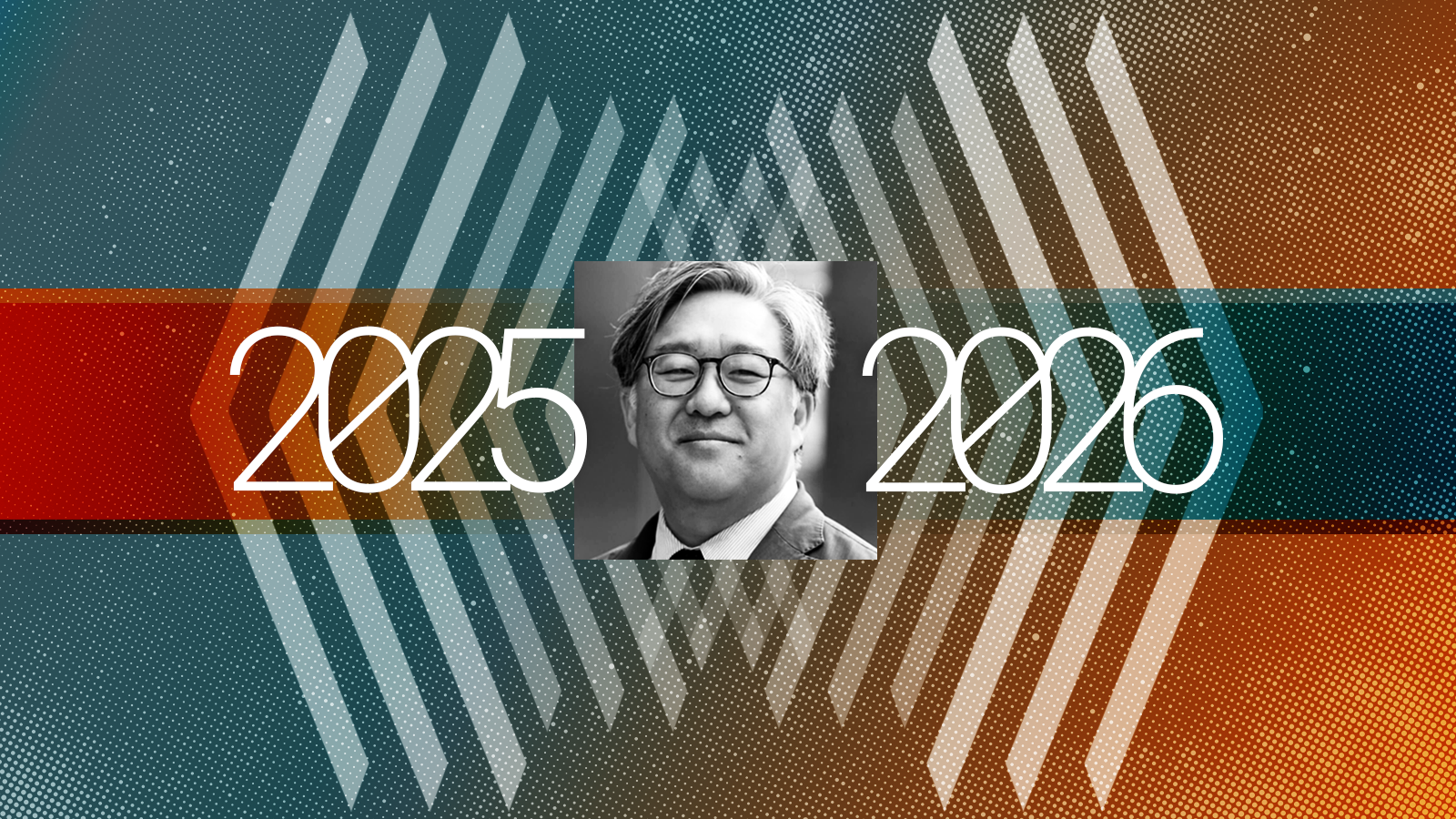
J. James Kim leads the Stimson Center’s Korea Program.
Looking back: There was no shortage of surprises for South Korea during a volatile 2025, which was defined by an off-cycle presidential transition following the impeachment and removal from office of Yoon Suk Yeol. Seoul’s power vacuum and political turmoil unfolded alongside, and was compounded by, the start of President Trump’s second term in the United States—which heaped on more surprises.
The Trump administration’s on-again-off-again changes this year to tariffs, Section 301 port fees and the BIS Affiliates Rule complicated Seoul’s trade policy and South Korean companies’ ability to make logistics and investment decisions. So did the new trade and investment deals the U.S. and South Korea announced from July to November, which encapsulated what the Koreans referred to as a year of upheaval. Aside from the fact that the deals’ newly negotiated 15 percent tariffs upend the longstanding U.S.-Korea Free Trade Agreement, the two countries have yet to finalize any of the pledges they made during these negotiations, which only resulted in a series of non-binding MOUs and factsheets.
Meanwhile, South Korea—like much of the world—awaits the Supreme Court’s decision on the constitutionality of IEEPA tariffs and the Trump administration’s response.
Looking ahead: South Korean government and industry leaders now will be watching the U.S. midterm election cycle for its possible impacts on trade and on U.S.-China relations. And with good reason.
U.S.-China relations were amicable early on in Trump’s first term, with a Trump-Xi summit at Mar-a-Lago in April 2017, followed by discussions on trade and possible collaboration on North Korea. But by September 2018 the relationship had soured, as the U.S. moved to impose a series of tariffs and waged Section 301 investigations against Beijing.
There is a danger that a similar dynamic could be at play in the coming year, which would complicate South Korea’s relations with the two largest players in the region. In 2024, China and the United States accounted for nearly 40 percent of South Korea’s global trade, particularly significant in a year when trade made up 85 percent of its economy. Although South Korea maintains a mutual defense treaty with the United States and hosts approximately 28,500 U.S. troops on the Korean Peninsula, it fears Beijing’s threats of economic coercion whenever U.S.-China tensions escalate. It all can make South Korea’s business environment and trade relations more challenging.
J. James Kim leads the Stimson Center’s Korea Program.
Looking back: There was no shortage of surprises for South Korea during a volatile 2025, which was defined by an off-cycle presidential transition following the impeachment and removal from office of Yoon Suk Yeol. Seoul’s power vacuum and political turmoil unfolded alongside, and was compounded by, the start of President Trump’s second term in the United States—which heaped on more surprises.
The Trump administration’s on-again-off-again changes this year to tariffs, Section 301 port fees and the BIS Affiliates Rule complicated Seoul’s trade policy and South Korean companies’ ability to make logistics and investment decisions. So did the new trade and investment deals the U.S. and South Korea announced from July to November, which encapsulated what the Koreans referred to as a year of upheaval. Aside from the fact that the deals’ newly negotiated 15 percent tariffs upend the longstanding U.S.-Korea Free Trade Agreement, the two countries have yet to finalize any of the pledges they made during these negotiations, which only resulted in a series of non-binding MOUs and factsheets.
Meanwhile, South Korea—like much of the world—awaits the Supreme Court’s decision on the constitutionality of IEEPA tariffs and the Trump administration’s response.
Looking ahead: South Korean government and industry leaders now will be watching the U.S. midterm election cycle for its possible impacts on trade and on U.S.-China relations. And with good reason.
U.S.-China relations were amicable early on in Trump’s first term, with a Trump-Xi summit at Mar-a-Lago in April 2017, followed by discussions on trade and possible collaboration on North Korea. But by September 2018 the relationship had soured, as the U.S. moved to impose a series of tariffs and waged Section 301 investigations against Beijing.
There is a danger that a similar dynamic could be at play in the coming year, which would complicate South Korea’s relations with the two largest players in the region. In 2024, China and the United States accounted for nearly 40 percent of South Korea’s global trade, particularly significant in a year when trade made up 85 percent of its economy. Although South Korea maintains a mutual defense treaty with the United States and hosts approximately 28,500 U.S. troops on the Korean Peninsula, it fears Beijing’s threats of economic coercion whenever U.S.-China tensions escalate. It all can make South Korea’s business environment and trade relations more challenging.