banner

Industry Solutions

Asset Management Sanctions Compliance & Investment Risk

Sanctioned Securities and Global Controversy Intelligence with the Depth and Sophistication Your Screening Data Doesn't Provide

Kharon helps asset management firms identify and manage compliance and investment risk driven by sanctions, global controversy topics, and geopolitical competition — across public equities, fixed income, ETFs and non-exchange traded funds, private equity, venture capital, and alternative investments — supporting investment screening and due diligence at every stage. Our platform goes beyond matching issuers to published sanctions lists. Kharon’s reporting on sanctioned securities leverages proprietary mapping of beneficial ownership networks, identifying unlisted blocked entities under the OFAC 50 Percent Rule, isolating key insights on issuers that fall under the Outbound Investment Security Program (OISP) and delivering verified, expert-sourced intelligence that integrates directly into existing screening, investment due diligence, and risk management infrastructure. Compliance officers, portfolio managers, and risk teams rely on Kharon to build defensible screening and investment risk programs that satisfy regulators and protect investors.
How it works

Proven at Scale

7 of the 10

Largest U.S. banks

6 of the 10

Largest EU banks

35+

Fortune 100 companies

U.S. Treasury

Trusted by

The Problem

Comprehensively identifying securities, issuers and fund-level exposure to global sanctions regimes and related controversies requires specialized expertise

Sanctions exposure, global controversies, and regulatory risk require specialized data underpinned by investigative depth that standard screening data providers don't deliver. Most sanctioned securities data covers what's on a published list — it doesn't map the ownership structures, unlisted blocked entities, and activities at the center of geopolitical competition that create the exposures asset management firms actually need to identify.

Hidden ownership

01

Hidden Sanctions Exposure

The networks that surround sanctioned actors and jurisdictions are complex and opaque – ownership stakes can be layered, dynamic, and fractional across multiple jurisdictions. The OFAC 50 Percent Rule treats entities as blocked when they are owned, directly or indirectly, 50 percent or more in the aggregate by one or more sanctioned persons — even if the entity itself does not appear on any sanctions list. The same dynamic applies to securities — an equity instrument can be blocked property by virtue of the issuer's ownership, even when standard sanctioned securities screening would not flag it. For asset managers, this means an investment holding can be blocked property without any screening system flagging it. Identifying these exposures requires mapping beneficial ownership across opaque jurisdictions and layered corporate structures – investigative work that standard sanctioned securities data providers do not perform.

Portfolio risk infrastructure

02

New Obligations Without New Tools

The regulatory landscape for investment risk has shifted materially in ways that most compliance and portfolio risk infrastructure was not designed to handle. Sanctioned securities restrictions can impact any asset classes or investment structure, including derivatives, ETFs and non-exchange traded funds. New outbound investment rules create notification and prohibition requirements that did not exist five years ago. Enforcement actions are expanding — OFAC's $11.8 million settlement with a major broker-dealer demonstrated that securities sanctions violations carry real financial consequences. Asset managers now face sanctions and investment ban compliance obligations with increasing complexity and global scope — and most firms are navigating them with screening infrastructure that was not built for an era of intense geopolitical competition.

Investment Risk

03

Closing the Gap Between Hidden Risk and Portfolio Impairment

Sanctions exposure, ownership networks, and restricted activities embedded in a holding or counterparty can materialize as portfolio impairment, illiquidity, forced divestiture, and regulatory liability — often without warning from standard screening data. The issuer of a security is designated. An ownership chain triggers the 50 Percent Rule. A fund holding includes securities that are subject to sanctions. Kharon fills these gaps with the most comprehensive sanctioned securities data and investigative intelligence that identifies embedded and emerging risk before it becomes portfolio loss.

The Kharon Approach

Verified Risk Intelligence for Sanctioned Securities and Global Controversies

Kharon provides risk intelligence on sanctions and related global controversies — underpinned by network analysis and continuous monitoring — that helps asset management firms identify, understand, and manage risk of investment impairment and breach of compliance obligations. Kharon’s deep expertise on sanctions and national security-based investment restrictions, combined with our global coverage of securities, funds and derivatives, creates the most comprehensive and accurate data solution for asset management firms.

All research in the Kharon Core is led and verified by subject matter experts steeped in national security threat networks, open-source investigations, and government restriction programs. Ownership information and ties to sanctions and related global controversies are sourced, documented, and traceable — and our securities data maps exposure across equities, fixed income, funds, and derivatives by ISIN, CUSIP, and other standard identifiers, including constituent holdings of over 300,000 funds. This gives compliance and investment teams the defensible, auditable intelligence that regulators expect.


Network Intelligence

Network Intelligence

Continuous mapping of sanctioned networks, industries targeted by investment bans, and beneficial owners, where exposure can impair portfolio value or trigger regulatory action. Sanctions exposure traced to the security level across equities, fixed income, funds, and derivatives by standard identifiers

Expert Research

Expert Research, Verified Data

Expert-led investigations and data sourcing produce verified entity and securities data — ownership linkages sourced and documented, sanctions exposure mapped to individual securities by ISIN, CUSIP, and other standard identifiers, and fund holdings analyzed at the constituent level. Dynamic Exposure Scores translate that investigative depth into a quantifiable risk signal that portfolio managers and compliance committees can act on.

Unified Platform

Unified Platform

ClearView, GraphCast, CoreStream, and API as a connected ecosystem — from pre-trade screening to portfolio surveillance to regulatory reporting.

Government trusted

Government Trusted

Used operationally by U.S. Department of the Treasury, Department of Homeland Security, Customs and Border Protection, and dozens of other international government partners.

Asset Management Workflows

How Investment Firms Work with Kharon

TradeInvestment Risk Signals

SCREENING, MONITORING & DUE DILIGENCE

GraphCast delivers curated, continuously maintained datasets — including OFAC 50 Percent Rule ownership data and Outbound Investment Security Program restrictions — that integrate directly into existing screening and due diligence workflows. Higher data accuracy means fewer false positives on legitimate securities and faster clearing of investment decisions across pre-trade, compliance, and ongoing review.


Outcome: Investment decisions cleared with confidence. Blocked and restricted securities are identified as early as possible.
ScreeningSanctioned Securities

SANCTIONED SECURITIES SCREENING

GraphCast powers Kharon's sanctioned securities data, screening over 18 million active securities — equities, bonds, funds, derivatives — and constituent holdings of over 300,000 funds. Coverage spans CUSIP, ISIN, and other standard identifiers, identifying exposure to SDN-listed issuers, entities blocked under the OFAC 50 Percent Rule, and securities subject to investment prohibitions under Executive Order 14105 and the Outbound Investment Security Program. For each flagged security, Kharon provides complete traceability on the sanctions authority, program, and underlying evidence — giving compliance teams auditable, defensible documentation.


Outcome: Sanctioned securities exposure identified across the portfolio by identifier — pre-trade and post-trade — with full traceability on the sanctions basis and evidence chain.
MonitoringPortfolio Surveillance

CONTINUOUS MONITORING & NETWORK ANALYSIS

CoreStream delivers tailored risk intelligence aligned to your portfolio's sectors, jurisdictions, and investment themes — surfacing ownership relationship, commercial activity, linkages to new designations, and emerging exposure before they appear in headlines. ClearView presents enriched entity profiles and ownership networks in a single, powerful tool for investigations and due diligence when a holding's risk profile changes.


Outcome: Portfolio Surveillance
ComplianceCompliance Assurance

REGULATORY READINESS & AUDIT COMMITTEE INTELLIGENCE

Kharon's API enables custom risk reporting and portfolio screening built directly on Kharon data, integrating sanctions and global controversies risk into existing risk management and regulatory workflows. All data in the Kharon Core is readable by AI and LLM-powered systems to ground results in a reliable source of truth.


Outcome: Sanctions risk management operations and reporting that boards can rely on and regulators trust.

The Kharon Platform

Built for the Most Demanding Compliance Workflows

Each tool is optimized for seamless integration within your workflow: from detection, to deep investigation, to operational screening, to automation at scale. Together, our technology allows teams to move fluidly from signal to understanding to action.

Kharon clearview

ClearView

SearchInvestigate

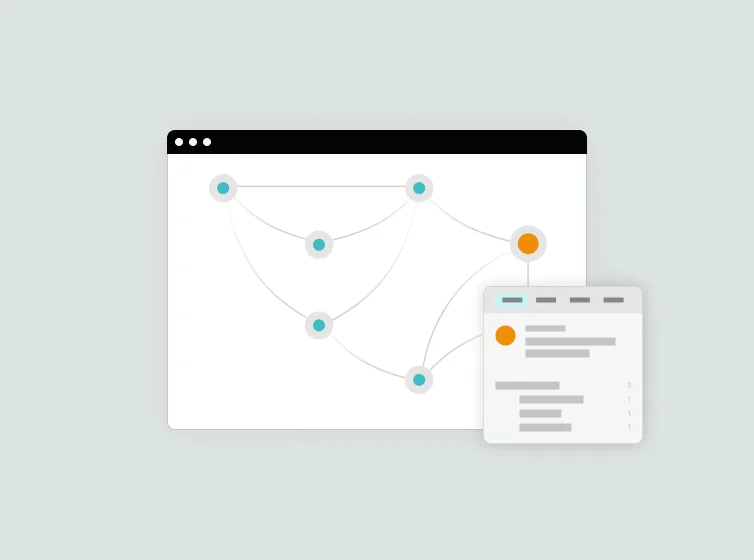
Kharon ClearView is a powerful tool for analyzing and visualizing complex entity relationships and associated risk at global scale, supporting the most demanding due diligence, investment risk, and investigative workflows.

Kharon graphcast

GraphCast

ScreenAlert

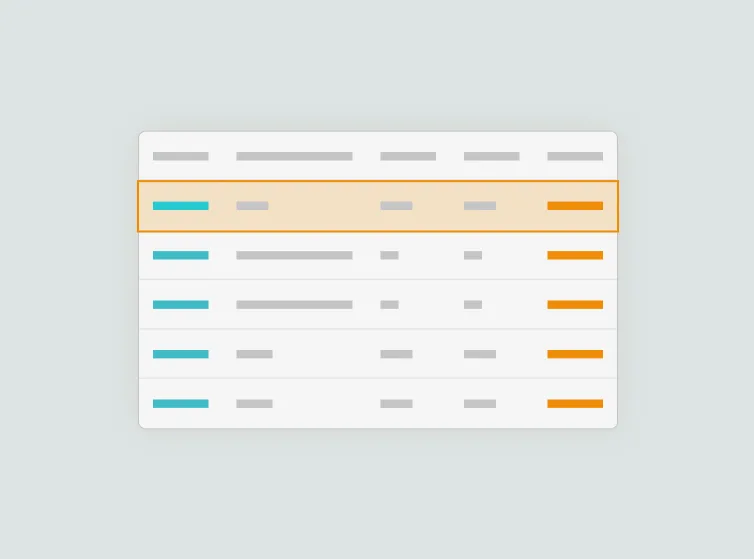
Kharon GraphCast provides curated, continuously maintained datasets aligned to specific risk typologies, including sanctioned securities, OFAC sanctions ownership, and outbound investment restrictions, designed to power complex global screening and monitoring systems for sanctions, investment risk, and portfolio compliance.

Kharon api

API

IntegrateScale

The Kharon API enables custom applications and workflows built directly on Kharon insights and risk scores, integrating seamlessly into internal systems to power analysis, automation, and decision-making at scale.

Kharon corestream

CoreStream

DiscoverPrioritize

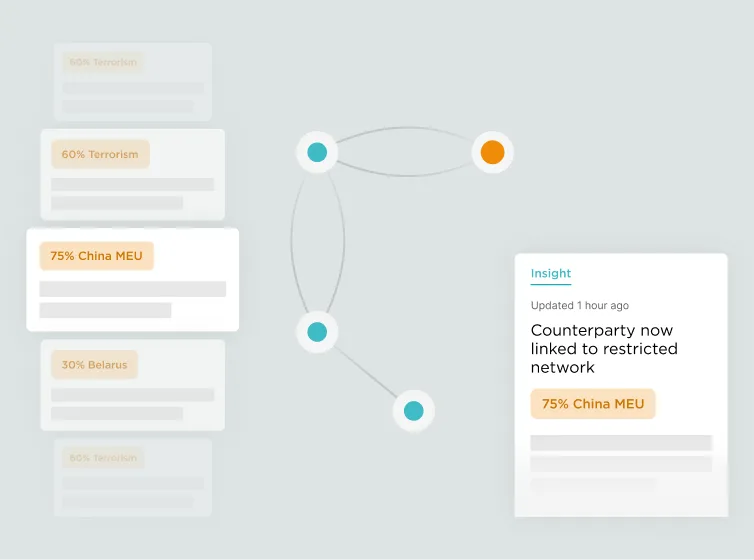
Kharon CoreStream turns fragmented global signals into continuous, personalized streams of insight, establishing a new standard for situational awareness in a complex world.

Solutions by Role

Built to Strengthen Investment Risk and Compliance Outcomes Across Your Organization

Counsel

CCO / General Counsel

Build a defensible sanctions and investment risk compliance program with intelligence that regulators recognize and trust. Demonstrate coverage beyond published lists — across the OFAC 50 Percent Rule, sanctioned securities, and OISP — with auditable, analyst-verified data. When regulators ask what intelligence your program relies on, Kharon is a name they recognize.

Investment risk

Portfolio Management / CIO

Integrate global security risk as a systematic investment input. Dynamic Exposure Scores and network intelligence identify sanctions and related global controversy exposure that no other data provider can offer — before it impairs returns. Kharon provides the risk signal you can’t justify missing, in a format your team can act on.

Risk Management

Investment Risk / Risk Management

Screen holdings and pipeline for sanctions ownership exposure, OISP restrictions, and emerging risk from geopolitical conflict and competition. Dynamic Exposure Scores quantify relative risk across entities and securities. ClearView enables deep investigation when a holding requires analysis beyond a binary flag.

Operations

Operations / Middle Office

Pre-trade and post-trade sanctions screening with data that integrates into existing OMS and portfolio management infrastructure via GraphCast and the Kharon API. Higher data accuracy reduces false positives on legitimate securities and accelerates clearing — same headcount, broader coverage.

Research Analysts

Research Analysts

Deep entity profiles and network visualization for investment due diligence. Trace ownership chains, identify hidden connections to sanctioned or restricted parties, and assess risk before recommending positions. ClearView enables visibility into esoteric risk that previously was not accessible.

FAQ

Common Questions

From investment and compliance professionals evaluating solutions for sanctioned securities and related global controversies.

Most securities data providers that offer sanctions screening aggregate published sanctions lists, match by ISIN or CUSIP, and flag securities that appear on a government list. This tells you what is already publicly designated — it does not tell you what should be treated as blocked under the OFAC 50 Percent Rule, what ownership networks connect a security to sanctioned parties, or how risk is evolving across an entity's corporate structure. Kharon takes a fundamentally different approach. Our team of subject matter experts — steeped in national security threat networks, open-source investigations, and government restriction programs — conducts original research to map ownership networks, identify unlisted blocked entities, and verify risk at the entity level. The result is high-quality risk intelligence, supported by powerful context from features like Dynamic Exposure Scores, that provides instant insight into risk emanating from sanctions and other trade and investment restrictions — coverage and investigative depth that securities data infrastructure was never designed to provide.

Sanctioned securities screening is the process of identifying securities — equities, fixed income, derivatives, funds and other instruments — that are subject to sanctions restrictions. This includes securities issued by designated entities on the SDN List, securities that should be treated as blocked under the OFAC 50 Percent Rule due to sanctioned ownership, and securities subject to other restrictions such as Executive Order 14105 (the Outbound Investment Security Program). For asset managers, this is not optional. Holding blocked property is a strict liability violation under U.S. sanctions law. Kharon's sanctioned securities data covers millions of active securities across sanctions, ownership, and trade and investment restriction risk — giving compliance teams the coverage to identify exposure that standard screening misses.

Under OFAC's 50 Percent Rule, any entity owned 50 percent or more in the aggregate, directly or indirectly, by one or more blocked persons is itself considered blocked — even if that entity does not appear on the SDN List. For investment portfolios, this means a security can be blocked property without any sanctions list flagging it. Identifying these exposures requires mapping beneficial ownership across layered corporate structures and opaque jurisdictions — the kind of investigative work that corporate registry data and algorithmic aggregation cannot reliably perform. Kharon’s subject matter experts investigate and verify these ownership chains, producing data that identifies entities and securities subject to the 50 Percent Rule that published lists do not cover.

The Outbound Investment Security Program, established under Executive Order 14105 and effective January 2, 2025, requires U.S. persons — including asset managers — to notify or refrain from certain transactions involving entities in countries of concern that are engaged in specified technology sectors, including semiconductors, quantum computing, and artificial intelligence. For asset managers, this means new due diligence obligations on investments that may involve covered entities or activities. Kharon provides OISP-relevant data through GraphCast and ClearView, enabling firms to screen holdings and prospective investments against verified entity-level intelligence rather than relying on incomplete or unverified sources.

Clear and convincing evidence is the evidentiary threshold importers must meet to release goods detained under the UFLPA. It requires that the evidence be substantially more likely than not to be true—a higher standard than the preponderance standard used in most civil proceedings. For apparel importers, this means providing supply chain documentation that specifically traces raw materials through every processing stage and demonstrates that no input originated with a UFLPA Entity List entity or the XUAR. Generic supplier certifications and factory audit reports are rarely sufficient. Kharon’s entity-level intelligence and documented ownership chains help build the kind of specific, sourced evidence CBP expects.

Standard sanctions screening compares holdings against published lists — the SDN List, the EU Consolidated List, and similar government designations. This catches what is explicitly named. It does not catch entities that should be treated as blocked due to their ownership by sanctioned parties, entities that use layered corporate structures to obscure their beneficial owners, or entities where the sanctioned connection runs through multiple jurisdictions and intermediaries. Kharon's network intelligence maps these ownership structures through original investigations, not algorithmic scraping of corporate registries. GraphCast delivers this data in formats that integrate into existing screening systems, and ClearView provides the visualization and investigative tools to trace ownership and commercial relationships when a holding requires deeper analysis.

Dynamic Exposure Scores are Kharon's patented, proprietary risk indicators that quantify the degree of sanctions and related global controversy exposure associated with an issuer. Unlike binary list-based flags that indicate only whether a name appears on a sanctions list, Dynamic Exposure Scores reflect the entity's position within a sanctioned network, its proximity to sanctioned parties, and the nature and severity of its risk indicators. These scores are available through ClearView for visual risk analysis and through the Kharon API as a filterable data point for portfolio-level analytics. They give investment and compliance teams a quantifiable risk signal that translates complex analysis into a format that compliance teams, portfolio managers, risk committees, and regulators can understand and act on.

Sanctions risk affects investment returns through multiple channels. A security issued by a designated entity can become illiquid overnight — with no buyer, no clearing mechanism, and no exit. A holding blocked under the 50 Percent Rule may require costly freezing and reporting requirements, and marking the position to zero. A new designation or ownership revelation can impair the value of otherwise performing assets. And the regulatory exposure itself — potential OFAC enforcement, investor scrutiny, reputational impact — compounds the financial cost. Kharon provides the intelligence to identify these exposures before they materialize, turning an invisible risk factor into a manageable investment input.

Pre-trade screening evaluates a security or entity before an investment decision is executed — identifying sanctions exposure, ownership risk, and regulatory restrictions at the point of decision. Post-trade screening monitors existing holdings on a continuous basis for changes in sanctions status, ownership structure, or regulatory designation. Both are essential for a defensible compliance program. Kharon supports both workflows: GraphCast provides data feeds that integrate into order management systems for pre-trade screening and continuous monitoring alerts and ClearView enables investigation when a holding's risk profile requires a deeper look.

Yes. Kharon is designed to integrate into existing compliance and investment infrastructure, not replace it. GraphCast delivers curated datasets in standard formats that connect directly to portfolio management systems, order management systems, and compliance screening platforms. The Kharon API enables custom integrations and workflows built on Kharon data and risk scores. This approach means firms can add Kharon's sanctions and ownership intelligence to their existing technology stack without rip-and-replace — enhancing coverage and data quality within systems their teams already use.

ESG risk data provides assessments of environmental, social, and governance factors that may affect an investment's long-term performance or alignment with stakeholder values. Kharon provides intelligence on a fundamentally different category of risk: sanctioned companies and jurisdictions, issuers that are trade and investment restrictions, and related global controversies like sensitive technology transfer and adversarial military production, These regulatory restrictions can create binary outcomes — a holding is blocked or it is not, a transaction is prohibited or it is not. These risks are not captured by ESG frameworks, which are not designed to investigate entities implicated in national security threats, map beneficial ownership chains, or identify issuers subject to the OFAC 50 Percent Rule. That said, there is a critical intersection: human rights abuses and forced labor are core concerns within ESG frameworks, and they are increasingly subject to enforceable trade restrictions. The EU Forced Labour Regulation, which requires companies to demonstrate that goods entering the EU market are free from forced labor, creates compliance obligations that connect ESG commitments to the kind of supply chain and entity-level intelligence Kharon provides. The two are complementary: ESG addresses long-term sustainability risk, while Kharon addresses sanctions and related global controversy risk — and in areas like forced labor, those two categories overlap directly.

Private equity and venture capital firms face the same OFAC sanctions compliance obligations as other U.S. persons and financial institutions — it is unlawful to engage in transactions involving blocked persons or blocked property. For PE firms, this applies across the investment lifecycle: screening target companies and their ownership structures, monitoring portfolio companies for changes in sanctions status and commercial exposure to sanctioned actors, and ensuring co-investors, LPs, and counterparties are not sanctioned. Venture capital firms face particular exposure under the Outbound Investment Security Program, which restricts investments in AI, semiconductors, and quantum computing in countries of concern — sectors where VC activity is concentrated. The involvement of both PE and VC in complex ownership structures and cross-border transactions makes ownership and affiliation-level intelligence — not just list screening — essential. Kharon provides the investigative depth and entity-level data that PE and VC compliance programs require.

Leading asset management firms are increasingly looking to use AI and data analytics to move beyond manual, list-based screening toward continuous, intelligence-driven risk management. This includes automated screening of holdings against dynamic risk datasets, network analysis to identify ownership commercial connections that manual review would miss, and natural language processing to extract risk signals from regulatory filings and enforcement actions. Kharon's data is structured to support these applications — all data in the Kharon Core is readable by AI and LLM-powered systems to ground results in a reliable source of truth. The combination of Kharon's verified, expert-sourced data with a firm’s own analytical capabilities creates a compliance and risk management program that is both more thorough and more efficient than traditional approaches.

Get Started

See How Kharon Fits Your Investment Risk Program

Talk to our team about your portfolio risk infrastructure, compliance program, and investment risk priorities — and see how Kharon's data and technology can strengthen what you've already built.

Asset Management & Sanctioned Securities Compliance | Kharon