banner

Industry Solutions

Insurance Sanctions Compliance

Network Intelligence That Helps Insurers Make Defensible Sanctions Risk Decisions

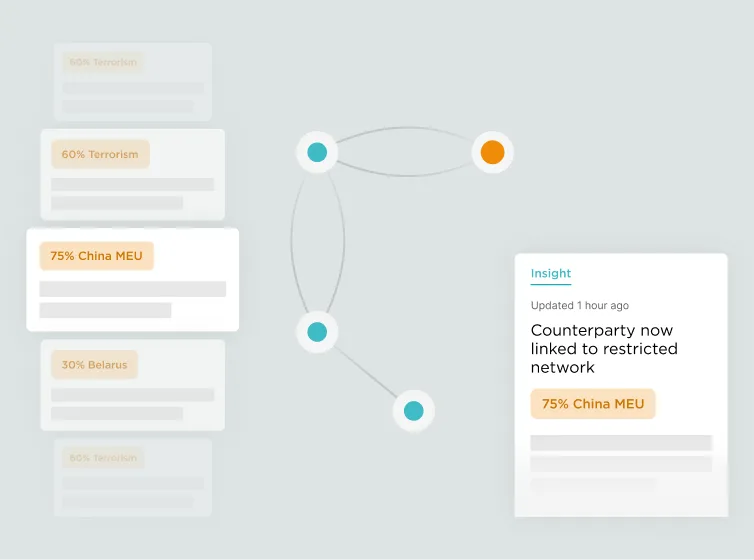
Kharon helps insurers — from global carriers and specialty lines to P&I clubs, reinsurers, and insurance brokers — strengthen sanctions screening, underwriting due diligence, claims review, and compliance programs with verified, network-level risk intelligence on sanctioned and high-risk entities, and their related parties. Our platform goes beyond standard watchlist matching — mapping beneficial ownership networks, identifying entities blocked under the OFAC 50 Percent Rule and equivalent frameworks, and delivering expert-guided intelligence that gives compliance teams and underwriters the evidence base they need to make defensible risk decisions. The world’s leading insurers rely on Kharon to build the kind of intelligence-driven sanctions compliance program that regulators and banking partners expect.
How it works

Proven at Scale

35+

Fortune 100 companies

7 of the 10

Largest U.S. banks

6 of the 10

Largest EU banks

U.S. Treasury

Trusted by

The Problem

Watchlist Screening Alone Cannot Manage Today’s Insurance Sanctions Risk

Regulators and enforcement agencies expect insurers to demonstrate sanctions compliance coverage well beyond official designation lists. Most screening infrastructure was not built for this — and for insurers, the stakes are structural: limited ability to exit risk mid-policy makes upfront intelligence and continuous monitoring far more critical than in other financial sectors.

Hidden ownership

01

Hidden Ownership Creates Undetected Sanctions Exposure.

The OFAC 50 Percent Rule treats entities as blocked when they are owned, directly or indirectly, 50% or more in the aggregate by one or more sanctioned persons — even if the entity itself does not appear on any designation list. UK and EU frameworks go further, applying “control” and “significant influence” tests at lower ownership thresholds. For insurers, this means that a policyholder, counterparty, or beneficial owner can be sanctioned by operation of law without ever appearing on a watchlist. Identifying these entities requires intelligent mapping of beneficial ownership across opaque jurisdictions and layered corporate structures — capabilities that standard screening tools do not provide.

Decision Points

02

Insurers Lack Intelligence at the Decision Points That Matter Most.

Unlike banks, insurers cannot easily freeze or reverse a transaction once a policy is bound. The critical control points are at underwriting and at claims — and it is precisely here that most insurers are making decisions with legacy screening tools and manual research processes that do not effectively surface material associations with high-risk actors, including complex ownership structures, shadow vessel activity, ownership transfers, or other associations with sanctioned networks.

Sanctions Evasion

03

Sanctions Evasion Tactics Defeat Standard Screening.

Sanctioned actors operate through shell companies, layered corporate structures, and rapid ownership reorganization to evade detection. These evasion techniques manifest across every domain where insurers carry exposure. In maritime — one of the highest-risk sectors for sanctions evasion and one where Kharon has deep expertise — tactics include AIS manipulation, flag-state changes, and fleet-level network overlap, with the same operators and shell structures creating exposure under multiple sanctions programs simultaneously. Static screening cannot track networks that continuously reinvent themselves. Sophisticated evasion demands intelligence that goes beyond list-matching to map the ownership structures, shared identifiers, and network connections behind the names.

The Kharon Approach

Verified Risk Intelligence for Insurance Sanctions Compliance

Kharon’s sanctions intelligence starts with Sanctions 50% solution — the world’s most comprehensive and accurate dataset on entities blocked under the OFAC 50 Percent Rule and equivalent ownership-based sanctions frameworks. This data is used by the world’s leading financial institutions, Fortune 100 corporations, and trusted by regulators and enforcement bodies as the definitive resource for identifying restricted entities and their networks. For insurers, this is the foundation: the ownership intelligence that transforms list-based screening into network-aware risk assessment.

Kharon extends this foundation with specialized intelligence across the risk domains most relevant to insurers — including maritime networks, where Kharon maps the relationships between vessels, operators, shell companies, and sanctioned actors across programs and jurisdictions. Across every line of business, Kharon delivers the kind of network-level visibility that practitioners consistently identify as the gap in their current screening infrastructure.

Kharon supports sanctions compliance across the insurance ecosystem — from global carriers and specialty lines to P&I clubs, reinsurers, and insurance brokers. Whether your exposure is entity-level counterparty risk or vessel-level coverage, Kharon delivers the intelligence layer your compliance program needs.

All research in the Kharon Core is led and verified by subject matter experts. Aliases are validated against source documents. Ownership linkages are sourced, documented, and traceable — giving compliance teams and underwriters the defensible, auditable intelligence that regulators and banking partners increasingly demand.


Network Intelligence

Network Intelligence

Continuous mapping of beneficial ownership networks, entities blocked under the OFAC 50 Percent Rule, shell companies, and financial intermediaries — extended to vessel operators, fleet associations, and maritime sanctions exposure where relevant to your risk profile.

Expert Research

Expert-Driven Research, Verified Data

Expert-driven insights create verified entity, vessel, and network relationship data — aliases validated, ownership linkages sourced, commercial histories documented.

Government trusted

Government Trusted

Used operationally by the U.S. Department of the Treasury, Department of Homeland Security, Customs and Border Protection, and dozens of other international government partners.

Compliance Workflows

How Insurers Work with Kharon

OnboardingOnboarding & Underwriting Due Diligence

SANCTIONS DUE DILIGENCE AT BIND

ClearView delivers pre-bind risk intelligence on entities, vessels, and networks — presenting enriched entity profiles, ownership structures, and risk indicators in a single, powerful investigation tool. Underwriters and compliance teams can verify beneficial ownership risk indicators, screen counterparties against Kharon’s Sanctions 50% and Control datasets, and assess network proximity to sanctioned actors before a policy is bound.


Outcome: Defensible underwriting decisions backed by documented intelligence, not just government list-based screening results.
ScreeningSanctions Screening

SCREENING AGAINST SANCTIONED ENTITIES & THEIR NETWORKS

GraphCast provides curated, continuously maintained datasets covering sanctioned and high-risk entities, their ownership networks, and associated vessels — designed to integrate directly into existing screening infrastructure without rip-and-replace. Screening against Kharon’s Sanctions 50%, Control, and maritime risk datasets reduces false positive volume while surfacing the ownership connections, shared identifiers, and network associations that government list-matching alone cannot detect.


Outcome: Screening that catches network risk, not just listed names. Alert volumes reduced. Examinable by regulators.
InvestigationClaims-Stage Investigation

COUNTERPARTY VERIFICATION & NETWORK ANALYSIS

When a claim surfaces new counterparty information, ClearView enables rapid investigation of beneficial ownership, operator networks, and cross-program sanctions exposure — including screening against Sanctions 50% and Control datasets. Documented, evidence-grade network analysis supports internal review, regulatory inquiry, and coordination with banking partners on payment-chain questions.


Outcome: Claims-stage discoveries investigated in minutes, not days. Evidence documented defensibly for internal and regulatory review.
MonitoringContinuous Monitoring

PORTFOLIO-LEVEL RISK MONITORING

CoreStream delivers ongoing, tailored intelligence on entities, vessels, and networks relevant to your portfolio — shifting the discovery point upstream from claims to the policy term. Alerts covering new designations, ownership changes, risk indicators, or enforcement actions that can affect insured risks. ClearView enables precise and efficient follow-up analysis.


Outcome: Sanctions exposure detected during the policy term, not at claims. Same headcount, expanded risk coverage.

The Kharon Platform

Built for the Most Demanding Compliance Workflows

Each tool is optimized for seamless integration within your workflow: from detection, to deep investigation, to operational screening, to automation at scale. Together, our technology allows teams to move fluidly from signal to understanding to action.

Kharon clearview

ClearView

SearchInvestigate

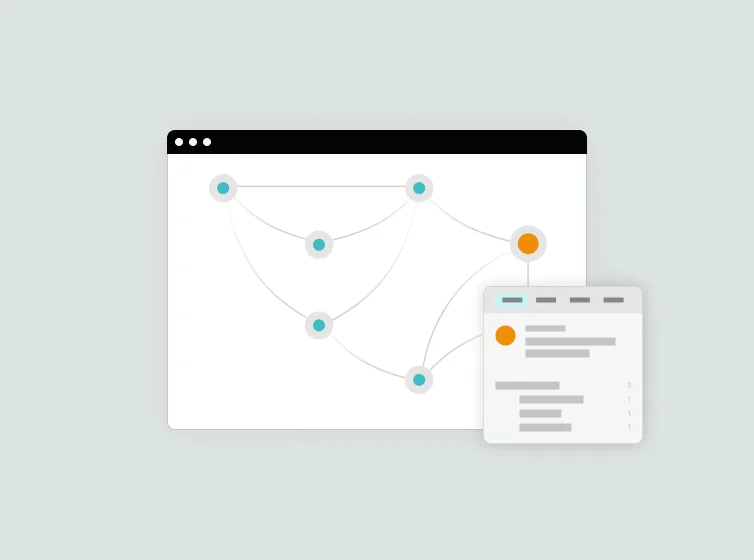
Kharon ClearView is a powerful tool for analyzing and visualizing complex entity relationships and associated risk at global scale, supporting the most demanding due diligence, KYC, and investigative workflows.

Kharon graphcast

GraphCast

ScreenAlert

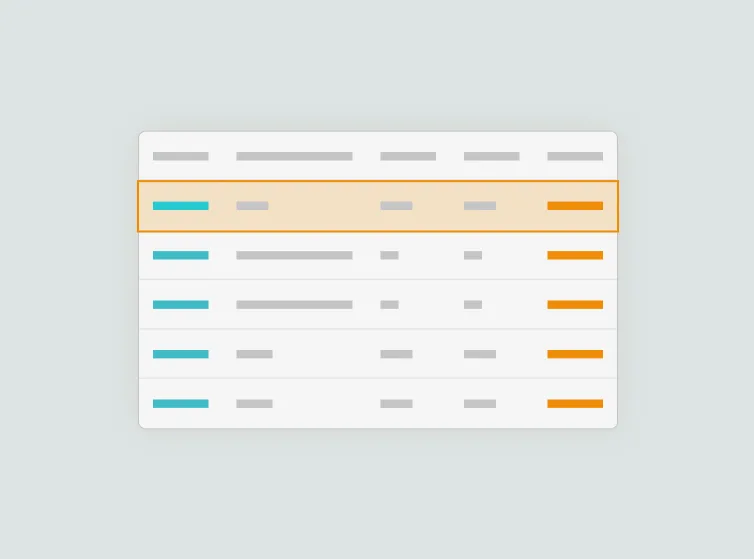
Kharon GraphCast provides curated, continuously maintained datasets aligned to specific red flags and risk typologies — including sanctions ownership under the OFAC 50 Percent Rule, maritime sanctions risk, and vessel behavioral indicators — designed to power complex global screening and monitoring systems for sanctions compliance.

Kharon api

API

IntegrateScale

Our API enables custom applications and workflows built directly on Kharon insights and risk scores, integrating seamlessly into internal systems to power analysis, automation, and decision-making at scale.

Kharon corestream

CoreStream

DiscoverPrioritize

Kharon CoreStream turns fragmented global signals into continuous, personalized streams of insight, establishing a new standard for situational awareness in a complex world.

Solutions by Role

Built to Strengthen Sanctions Compliance Across Your Insurance Organization

Compliance Leadership

Compliance Leadership

Kharon extends sanctions coverage beyond government-list screening, building defensibility into your compliance program and daily operations. Multi-jurisdictional coverage spans U.S., UK, and EU sanctions frameworks — including the broader “control” tests that go beyond the OFAC 50 Percent Rule. When regulators or banking partners ask what intelligence your program relies on, Kharon is a name they recognize and trust.

Underwriter

Underwriters

Pre-bind risk intelligence on entities, counterparties, and ownership networks — delivered through ClearView and GraphCast at the decision point that matters most. Screen against Sanctions 50% and Control datasets before you are locked into a policy. When the risk is real, but the name does not appear on a government list, Kharon provides the documented evidence to defend a decline.

Investigators

Investigators & Claims Teams

When a claim surfaces new counterparties, ClearView provides immediate access to ownership structures, network visualizations, and cross-program sanctions data. Investigations that took days complete in minutes, with documentation detailed enough to pass internal review and regulatory scrutiny.

Compliance

Reinsurance Compliance

Portfolio-level visibility into entity and vessel risk across treaty programs. For reinsurers with limited upstream visibility, Kharon enables earlier detection and continuous monitoring — closing the information gap that treaty structures create.

FAQ

Common Questions

From insurance compliance professionals evaluating sanctions intelligence solutions.

Insurance sanctions screening typically begins with matching policyholders, counterparties, and — for marine lines — vessels against government designation lists, primarily the OFAC SDN List, EU consolidated sanctions list, and UK sanctions list. However, effective screening requires going beyond these lists to identify entities that are blocked by operation of law (such as entities 50% or more owned by sanctioned persons under the OFAC 50 Percent Rule), entities with significant network connections to sanctioned actors, and — where relevant — vessels that indicate sanctions evasion risk. Kharon provides the network-level intelligence layer that transforms list-based screening into risk-based screening — surfacing ownership structures, associations, and commercial patterns that designation lists alone do not capture.

The OFAC 50 Percent Rule provides that entities owned 50% or more in the aggregate, directly or indirectly, by one or more blocked persons are themselves blocked — even if they do not appear on any designation list. For insurers, this means that a policyholder, counterparty, vessel owner, or beneficial owner can be sanctioned by operation of law without any government listing. Screening against the SDN List alone will not detect these entities. Kharon’s Sanctions 50% dataset is the world’s most comprehensive and accurate resource for identifying entities blocked under this rule, used by the world’s leading financial institutions and trusted by government enforcement bodies.

The global shadow fleet refers to a growing network of vessels — now numbering in the thousands — that transport sanctioned crude oil and petroleum products outside the visibility of mainstream Western insurance, classification societies, and P&I clubs. These vessels are typically older, poorly maintained, and operate through opaque ownership structures designed to obscure connections to sanctioned actors and programs. For insurers, shadow fleet risk extends beyond the vessels themselves: shared ownership networks, common operators, overlapping shell company structures, and rapid post-designation reorganization can create sanctions exposure even for insurers with no direct shadow fleet coverage. Kharon maps these networks continuously, identifying the fleet-level associations and operator relationships that create indirect exposure.

Sanctions evasion detection requires intelligence that goes beyond name-matching. Effective detection combines beneficial ownership mapping (identifying entities blocked by operation of law, even when not listed), network analysis (connecting entities, vessels, operators, and shell companies across jurisdictions and sanctions programs), and — for marine lines — vessel behavioral analysis (AIS gaps, dark periods, ship-to-ship transfers, re-flagging patterns). Kharon integrates all three — verified by subject matter experts — into a platform that surfaces evasion indicators standard screening tools cannot detect.

An effective insurance sanctions compliance program includes policies and procedures tailored to the organization’s risk profile, sanctions screening at underwriting and renewal, ongoing monitoring during the policy term, claims-stage due diligence procedures, clear escalation and reporting protocols, and regular training. For marine and specialty insurers, the program should also address vessel-level risk assessment, beneficial ownership verification, behavioral monitoring, and multi-jurisdictional compliance (U.S., UK, and EU frameworks each define ownership and control differently). Kharon’s platform supports these workflows end-to-end — from screening and underwriting intelligence through continuous monitoring to claims-stage investigation.

OFAC has issued guidance relevant to insurers across lines of business, including advisories on the 50 Percent Rule, sanctions risks in the maritime petroleum shipping industry, and deceptive practices used to evade sanctions. These advisories identify specific risk indicators — including use of shell companies to obscure beneficial ownership, rapid changes in corporate structure, and for marine lines, AIS manipulation and flag-state changes. OFAC has also emphasized that the 50 Percent Rule applies broadly to entities owned by sanctioned persons, meaning that a counterparty can be blocked even if it does not appear on any government designation list. Kharon’s data is built to operationalize this guidance — surfacing the ownership structures, commercial indicators, and network connections that OFAC’s framework expects insurers to detect.

Beneficial ownership screening is critical for insurers because the OFAC 50 Percent Rule treats entities as blocked when they are owned 50% or more in the aggregate by one or more sanctioned persons — even if the entity itself is not on any government designation list. UK and EU frameworks go further: the UK’s “significant influence” test can apply at ownership levels well below 50%, and EU “control” definitions encompass board representation, management authority, and other non-ownership indicators. For insurers underwriting global programs, the strictest applicable standard governs. Kharon maps high risk beneficial ownership across complex, multi-layered corporate structures — including the opaque jurisdictions, shared directorships, and rapid ownership transfers that characterize both sanctions evasion networks and legitimate but high-risk counterparties — giving compliance teams the visibility they need to satisfy multi-jurisdictional requirements.

Kharon’s research has documented extensive overlap between Russian and Iranian sanctions evasion networks. The same operators, shell companies, and corporate structures frequently service both programs — using shared phone numbers, overlapping addresses, and common directors across jurisdictions like Hong Kong, Oman, and the UAE. For insurers, this means that screening for Russia exposure alone may miss significant Iran sanctions risk, and vice versa. Kharon connects the dots across sanctions programs, mapping these cross-program network relationships that other screening tools cannot see.

P&I clubs face distinct sanctions screening challenges because of their mutual structure and the breadth of their vessel coverage. A single P&I club may provide coverage across thousands of vessels, each with its own ownership chain, operator relationships, and trading patterns. The club must screen not only its direct members but the beneficial owners, operators, charterers, and counterparties associated with entered vessels — across multiple jurisdictions with different ownership and control definitions. Kharon’s continuous monitoring and network intelligence are built for this scale — providing portfolio-level visibility and alerting that keeps pace with the evolving risk landscape rather than relying on point-in-time screening at entry.

Most sanctions screening tools available to insurers aggregate government watchlists, scan media for negative news, and flag name matches. They are designed to answer a binary question: is this entity on a list? Kharon answers a fundamentally different question: is this entity, vessel, or counterparty connected to sanctioned risk through ownership networks, shared identifiers, commercial patterns, or network-level associations? Where standard tools generate high volumes of false positives from suboptimal name matching, every relationship in Kharon’s database has been identified as relevant to a specific risk topic. Where standard tools rely on public ownership records that may be outdated or incomplete, Kharon’s expert-guided research sources and verifies ownership linkages through original investigation. And all data in the Kharon platform is structured to be readable by AI and LLM-powered compliance systems, grounding automated analysis in a reliable, verified source of truth.

Leading insurance compliance programs are increasingly looking to incorporate AI and advanced data analytics to augment human judgment in sanctions screening and risk assessment. Applications include network analysis to map complex ownership and operator relationships, analytics to detect anomalies, and automated monitoring to flag changes in entity risk profiles across large portfolios. The effectiveness of these tools depends on the quality and structure of the underlying data: AI models that rely on incomplete or unverified data produce unreliable results. Kharon’s data is purpose-built for this environment — structured, verified, and designed to be readable by AI and LLM-powered systems to ground results in a reliable source of truth.

Get Started

See How Kharon Fits Your Insurance Sanctions Compliance Program

Talk to our team about your sanctions screening infrastructure, compliance program, and risk profile — and see how Kharon’s data and technology can strengthen what you’ve already built.

Insurance Sanctions Compliance | Kharon