banner

Industry Solutions

Automotive Forced Labor Compliance

Verified Forced Labor Risk Intelligence Across Every Tier of Your Supply Chain

Kharon helps automotive OEMs and suppliers identify forced labor risk across complex, multi-tier supply chains with entity-level intelligence that goes beyond supplier self-reporting and standard due diligence questionnaires. Our platform surfaces entities that align with regulatory red flags and maps the actual ownership networks and affiliate relationships behind entities on the UFLPA Entity List — delivering verified, expert-guided intelligence that integrates directly into existing supply chain compliance workflows. Leading US and global automotive companies rely on Kharon to build the kind of defensible, evidence-based forced labor compliance program that CBP and EU regulators increasingly demand; Kharon was selected by the Automotive Industry Action Group’s OEMs as the preferred risk data provider as part of the Due Diligence Reporting Template (DDRT) initiative.
How it works

Proven at Scale

7 of 10

Largest U.S. automotive companies

35+

Fortune 100 companies

CBP & DHS

Trusted by

12+

Supply chain partners

The Problem

Supplier Questionnaires Alone Are Not Enough

CBP and EU regulators now expect automotive companies to demonstrate forced labor due diligence well beyond supplier self-certification. Most compliance infrastructure in the automotive industry was not designed to deliver this level of supply chain visibility.

Automotive Shipment 2

01

Sub-Tier Limited Visibility

Forced labor risk in automotive rarely sits with direct Tier 1 suppliers. It is buried two, three, or more tiers deep — in aluminum smelters, lithium processors, polysilicon refineries, and the mines themselves. OEM supplier questionnaires and codes of conduct do not reach these tiers with sufficient reliability. Even the most rigorous audit programs struggle to access the sub-tier facilities where state-imposed forced labor is most prevalent.

Automotive Material

02

Material Exposure Across FLETF Priority Sectors

Automotive supply chains touch multiple UFLPA high-priority sectors simultaneously. A single vehicle can contain aluminum, lithium, steel, copper, and PVC — each flagged as a FLETF priority sector with distinct entity-level risks. Electric vehicle battery supply chains concentrate this risk further — lithium, cobalt, nickel, and graphite processing networks intersect multiple FLETF priority sectors simultaneously, with critical processing capacity concentrated in regions where forced labor risk is most acute. Generic supply chain risk platforms aggregate corporate records and return probabilistic matches — flagging entities as “possibly same as” without verifying whether a match represents actual risk. They do not take into account the full scope of red flag indicators or use all sources of public information to differentiate between a compliant aluminum supplier and one whose smelter sources from a UFLPA Entity List affiliate two tiers upstream.

Automotive Shipment 1

03

Enforcement Acceleration

Kharon Brief reporting indicates that UFLPA enforcement in automotive is a critical and growing area of focus for CBP, with automotive shipments subject to escalating inspection volumes and denial rates. The vast majority of flagged shipments originate from China. Only a small fraction of detained shipments are ultimately released into U.S. commerce. The evidentiary standard — “clear and convincing evidence” — is among the highest in U.S. trade law. In parallel, the EU Forced Labour Regulation (Regulation 2024/3015) will take full effect in December 2027, prohibiting products made with forced labor from being placed on or exported from the EU market — creating a parallel compliance obligation with a distinct enforcement model.

The Kharon Approach

Verified Risk Intelligence for Forced Labor Due Diligence

Kharon provides entity-level risk intelligence — underpinned by network analysis and continuous monitoring — that helps automotive companies identify actual forced labor exposure across their supply chains, not just collect supplier self-certifications or rely on superficial risk alerts. Many available tools in this space are corporate and trade record aggregators — they ingest millions of records, return probabilistic matches that may or may not be relevant, and leave the investigator to determine which hits represent actual risk. Entity records are often flagged as “possibly same as” rather than verified — pushing the entire disambiguation burden onto your team. Kharon is fundamentally different: expert-verified entity intelligence where every result is risk-relevant. Kharon does the complex research to surface entities that align with regulatory red flags, and then maps the specific ownership networks, affiliate relationships, and corporate structures connecting supply chain participants to forced labor concerns — and every entity relationship is sourced, verified, and documented before it reaches your team.

All research in the Kharon Core is led and verified by subject matter experts supported by proprietary investigative and analytical technology. Entity relationships are sourced, documented, and traceable — giving compliance teams the defensible, auditable intelligence that CBP’s “clear and convincing evidence” standard and EU regulators increasingly demand.


Network Intelligence

Network Intelligence

Continuous mapping of beneficial owners, affiliate entities, and intermediary networks across UFLPA Entity List companies, entities that exhibit red flag indicators for forced labor and FLETF high-priority sectors — identifying where forced labor exposure can put your enterprise, your supplier panel, and your import operations at risk.

Expert Research

Expert Research, Verified Data

Expert-led investigations and data sourcing create verified entity data: names and identifiers validated against source documents, ownership linkages sourced and documented, affiliate relationships mapped across opaque jurisdictions and layered corporate structures.

Unified Platform

Unified Platform

ClearView, GraphCast, CoreStream, and API as a connected ecosystem — from entity screening to deep network investigation to continuous monitoring to automation at scale.

Government trusted

Government Trusted

Used operationally by U.S. Customs and Border Protection (CBP), the U.S. Department of Homeland Security (DHS), the U.S. Department of the Treasury, and dozens of other U.S. and international government partners.

Compliance Workflows

How Automotive Companies Work with Kharon

ScreeningSupplier Screening

ENTITY LIST SCREENING & SUPPLIER PANEL RISK

GraphCast delivers curated, continuously maintained datasets aligned to UFLPA Entity List companies, entities that exhibit red flag indicators and their affiliated networks, designed to power supplier screening and onboarding decisions. Higher data accuracy and verified entity relationships reduce false positives and surface genuine risk exposure — whether screening new suppliers for panel inclusion or responding to OEM due diligence requirements like the AIAG Forced Labor Due Diligence Reporting Template (DDRT).


Outcome: Supplier panel decisions grounded in verified entity intelligence, not just self-reported questionnaire data.
InvestigationSub-Tier Investigation

NETWORK ANALYSIS & MATERIAL ORIGIN RISK

ClearView presents enriched entity profiles, red flag indicators, and ownership data in a single, powerful tool for investigating entity relationships behind sub-tier suppliers, raw material processors, and intermediaries across FLETF high-priority sectors. When a Tier 1 supplier reports its aluminum source as compliant, ClearView can reveal the ownership and commercial network connecting that processor to entities that raise concerns under the UFLPA.


Outcome: Visibility into supply chain tiers and risk that questionnaires, audits, and codes of conduct cannot reach.
DocumentationDetention Response & Rebuttable Presumption

EVIDENTIARY RECORD BUILDING

When CBP detains a shipment under the UFLPA, the importer must present “clear and convincing evidence” to rebut the forced labor presumption — one of the highest evidentiary standards in U.S. trade law. Kharon’s entity-level intelligence and documented network analysis can create understanding and support the evidentiary record required for release: verified entity data, sourced ownership linkages, and traceable affiliate relationships that demonstrate due diligence depth beyond what generic compliance tools can provide.


Outcome: Faster, better-documented detention responses grounded in verified entity data.
PartnersIndustry Due Diligence Partnership

AIAG PARTNERSHIP & INDUSTRY DUE DILIGENCE

Kharon is the foundational risk intelligence provider for the AIAG Forced Labor Due Diligence Program — the automotive industry's standardized framework for identifying, managing, and reporting forced labor risk. Participating platform partners — Altana, SupplierAssurance, and Resilinc — can incorporate Kharon's entity intelligence directly, enabling supplier batch screening and automated reporting within the tools OEMs and suppliers already use. When OEMs require DDRT submissions, Kharon provides the verified entity intelligence that gives suppliers confidence in what they report.


Outcome: Due diligence aligned with the industry’s own framework, backed by the verified entity intelligence that makes DDRT submissions defensible.

The Kharon Platform

Built for the Most Demanding Compliance Workflows

Each tool is optimized for seamless integration within your workflow: from detection, to deep investigation, to operational screening, to automation at scale. Together, our technology allows teams to move fluidly from signal to understanding to action.

Kharon clearview

ClearView

SearchInvestigate

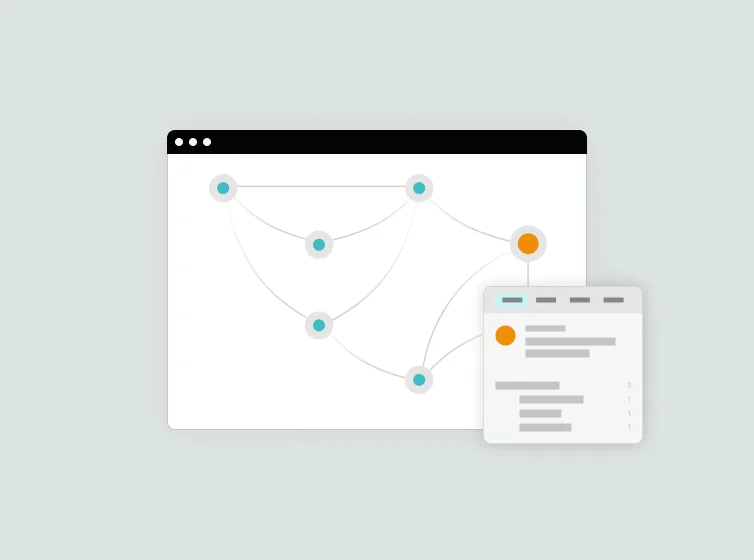
Kharon ClearView is a powerful tool for analyzing and visualizing complex entity relationships and associated risk at global scale, supporting the most demanding due diligence and investigative workflows.

Kharon graphcast

GraphCast

ScreenAlert

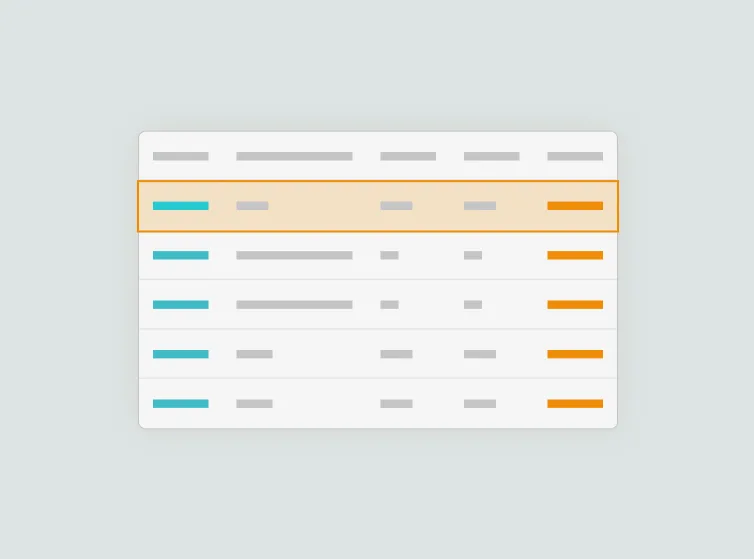
Kharon GraphCast provides curated, continuously maintained datasets aligned to specific risk typologies, going beyond the UFLPA Entity List entities and their affiliated networks to capture hidden risks, designed to power complex global screening and monitoring systems for forced labor compliance and supply chain due diligence.

Kharon api

API

IntegrateScale

The Kharon API enables custom applications and workflows built directly on Kharon insights and risk scores, integrating seamlessly into internal systems to power analysis, automation, and decision-making at scale.

Kharon corestream

CoreStream

DiscoverPrioritize

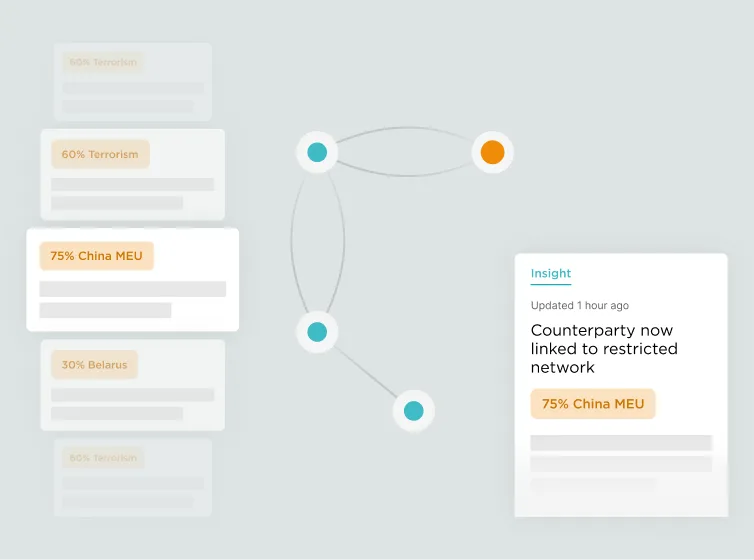
Kharon CoreStream turns fragmented global signals into continuous, personalized streams of insight, establishing a new standard for situational awareness in a complex world.

Solutions by Role

Built for Every Level of Your Supply Chain Compliance Program

Compliance Leadership

SCM Compliance Leadership

Kharon extends due diligence past supplier self-reporting, building defensibility into your forced labor compliance program and daily operations. When CBP demands evidence of your due diligence process, or when OEMs ask how you validated your DDRT submission, Kharon provides the auditable, expert-verified record that demonstrates program rigor.

Sourcing

Responsible Sourcing

Entity-level intelligence that validates what supplier questionnaires and codes of conduct claim. Kharon surfaces the entities that exhibit UFLPA red flags and maps the actual ownership and commercial networks behind your sub-tier suppliers — so your responsible sourcing decisions are grounded in verified data, and not limited to self-certification. When a sourcing decision comes under regulatory scrutiny, the intelligence trail is documented and defensible.

Compliance

Trade Compliance

High-quality entity data via GraphCast reduces false positives in supplier screening. When a shipment is detained, Kharon’s documented entity intelligence supports the evidentiary record CBP demands under the “clear and convincing evidence” standard. Your team responds faster, with documentation detailed enough to meet the highest evidentiary bar in U.S. trade law.

Supply Chain

Supply Chain Risk Management

Continuous monitoring across FLETF priority sectors and UFLPA Entity List changes via CoreStream. Kharon integrates into your risk register so forced labor exposure is tracked alongside geopolitical, financial, and operational supply chain risks — ensuring supplier panel decisions reflect current intelligence, not last quarter’s audit.

FAQ

Common Questions

From supply chain compliance professionals evaluating forced labor due diligence solutions.

The Uyghur Forced Labor Prevention Act (UFLPA) establishes a rebuttable presumption that goods mined, produced, or manufactured wholly or in part in the Xinjiang Uyghur Autonomous Region of China — or by entities on the UFLPA Entity List — are made with forced labor and prohibited from U.S. import. The automotive industry is directly affected because supply chains for vehicles and components routinely touch UFLPA high-priority sectors, including aluminum, lithium, steel, copper, and PVC. CBP has dramatically increased enforcement against automotive shipments, with detentions surging year over year. Importers bear the burden of demonstrating compliance through “clear and convincing evidence” — one of the highest evidentiary standards in U.S. trade law.

The Forced Labor Enforcement Task Force (FLETF) has designated multiple materials critical to automotive manufacturing as high-priority sectors: aluminum, lithium (added in the August 2025 strategy update), steel, copper, and PVC. These sectors were prioritized because of documented forced labor risks in the Xinjiang region, where a significant share of global production is concentrated. A single vehicle can contain materials from several of these sectors simultaneously, each with distinct entity-level supply chain risks. Kharon’s entity intelligence covers entities and their affiliated networks across all FLETF priority sectors, enabling automotive companies to assess exposure at the entity level rather than relying on country-level risk proxies.

The EU Forced Labour Regulation (Regulation 2024/3015), taking full effect in December 2027, prohibits products made with forced labor from being placed on, exported from, or made available in the EU market. Unlike the UFLPA, the EU regulation is not limited to a specific region — it applies to forced labor globally, at any stage of extraction, harvest, production, or manufacturing. For automakers selling into European markets, this creates a parallel compliance obligation alongside the UFLPA. The regulation is complemented by the Corporate Sustainability Due Diligence Directive (CS3D), which — once fully transposed — will require the largest qualifying companies to conduct human rights due diligence across their value chains. Kharon’s entity-level intelligence supports compliance with both U.S. and EU frameworks. All Kharon data is structured and readable by AI and LLM-powered systems, enabling compliance teams to ground AI-assisted analysis in a reliable, verified source of truth.

The UFLPA’s rebuttable presumption means that any goods with a nexus to the Xinjiang region or UFLPA Entity List entities are presumed to be made with forced labor and are prohibited from entry into the United States. The burden falls on the importer to rebut this presumption with “clear and convincing evidence” — requiring comprehensive supply chain mapping down to the raw material level, robust due diligence documentation, and affirmative evidence demonstrating the absence of forced labor at each tier. In practice, CBP has made clear that generic supplier certifications, form letters, and basic invoices are inadequate. Transaction-specific and product-specific documentation is expected, including detailed bills of materials, processing flowcharts, and supplier-level evidence tracing inputs back to origin.

Supplier questionnaires and social audits rely on self-reported data and periodic facility inspections — approaches that consistently fail to reach sub-tier suppliers where forced labor risk is most concentrated. State-imposed forced labor, particularly tied to the Xinjiang region, is specifically designed to evade announced audit programs. Kharon provides entity-level, expert-verified intelligence that aligns with regulatory red flag indicators and maps the actual ownership networks, affiliate relationships, and corporate structures connecting supply chain participants to UFLPA Entity List entities. This intelligence is sourced, documented, and traceable — not self-reported. It reaches risk and tiers of the supply chain that questionnaires and audits structurally cannot access.

When CBP detains a shipment under the UFLPA, the importer has the opportunity to present evidence rebutting the forced labor presumption. CBP expects transaction-specific, product-specific documentation: detailed bills of materials identifying every input and its origin, processing flowcharts showing the complete chain of custody, technical specifications, and supplier-level evidence tracing each input to its source. The evidentiary bar is “clear and convincing evidence,” and CBP has explicitly stated that generic certifications and form letters are insufficient. Kharon’s entity-level intelligence and documented network analysis can support the evidentiary record by providing verified data on entity relationships, ownership structures, and affiliate networks relevant to the detained shipment.

Major automotive OEMs — including Ford, GM, Honda, Nissan, Stellantis, and Toyota — now require suppliers to submit forced labor due diligence documentation through standardized frameworks like the AIAG Forced Labor Due Diligence Reporting Template (DDRT). Meeting these requirements means going beyond codes of conduct and self-certification to demonstrate actual visibility into sub-tier supply chain risks. Kharon’s entity intelligence enables Tier 1 and Tier 2 suppliers to screen their own supplier networks against UFLPA Entity List entities and affiliated networks, supporting both DDRT submissions and the broader due diligence evidence that OEMs and regulators expect. Staying on an OEM supplier panel increasingly depends on demonstrating this level of compliance rigor.

Kharon is designed to enhance, not replace, existing supply chain compliance infrastructure. GraphCast delivers curated datasets that integrate directly into existing screening and supplier management systems via standard data feeds. The Kharon API enables custom workflows and applications built directly on Kharon entity intelligence and risk scores, integrating seamlessly into ERP, GRC, and supply chain platforms. ClearView provides a standalone web-based interface for investigation and analysis that requires no integration. This means compliance teams can layer Kharon’s entity-level intelligence onto whatever systems they already operate.

The DDRT is a standardized reporting template developed by the Automotive Industry Action Group (AIAG) as part of its Forced Labor Due Diligence Program. Beginning in September 2025, major OEMs including Ford, GM, Honda, Nissan, Stellantis, and Toyota began requiring suppliers to submit DDRT responses as part of their forced labor compliance programs. The template provides a structured framework for suppliers to document their due diligence processes, supply chain mapping, and risk assessment activities. Kharon’s entity-level intelligence complements the DDRT by enabling suppliers to validate their self-reported data against independently verified entity information — strengthening both the submission and the underlying compliance program.

The most advanced automotive compliance programs are moving beyond periodic audits and questionnaire-based approaches toward continuous, data-driven risk monitoring. Entity-level intelligence platforms like Kharon enable real-time screening of supplier networks against verified forced labor risk data, while network analysis tools map the ownership structures and affiliate relationships that connect supply chain participants to flagged entities. Kharon’s data is structured and readable by AI and LLM-powered systems, enabling compliance teams to ground AI-assisted analysis in a reliable source of truth rather than unverified public data. As enforcement intensity increases and regulatory frameworks multiply across jurisdictions, this shift from periodic assessment to continuous intelligence is becoming a baseline expectation.

Many platforms in the supply chain compliance space aggregate corporate filings, trade records, shipping data, and public registries into searchable databases. These tools ingest millions of records and return probabilistic matches — often flagging entities as “possibly same as” without verifying whether the match represents actual risk. The investigator is left to determine which hits are genuinely connected to forced labor concerns, which are noise, and whether two records that look similar are actually the same entity. Kharon takes a fundamentally different approach: subject matter experts lead the research, verify entity relationships against source documents, and map the ownership networks and affiliate structures that connect supply chain participants to UFLPA Entity List entities. Every entity in Kharon’s database is there because it has been identified as relevant to a risk concern — the result is verified intelligence, not a data dump that requires your team to do the analytical work themselves. For automotive compliance teams already stretched across multiple FLETF priority sectors, this distinction is the difference between a tool that creates more work and one that delivers actionable answers.

Get Started

See How Kharon Fits Your Forced Labor Compliance Program

Talk to our team about your supply chain due diligence challenges — and see how Kharon’s data and technology can strengthen what you’ve already built.

Automotive Forced Labor & UFLPA Compliance | Kharon