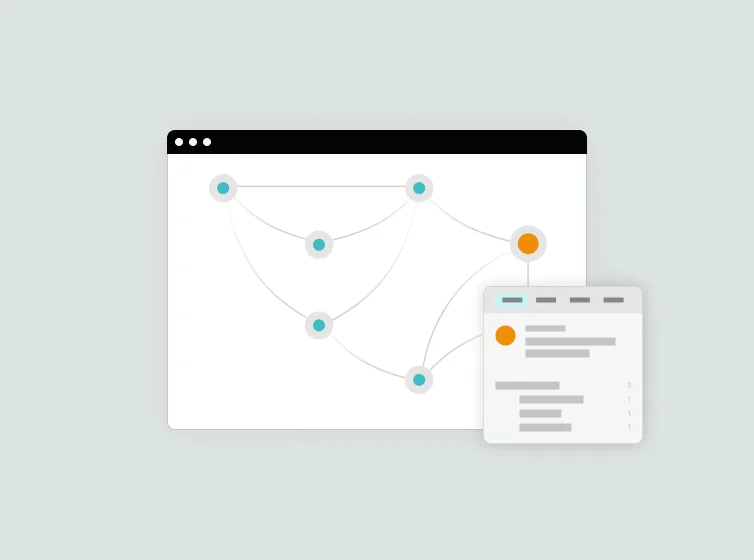
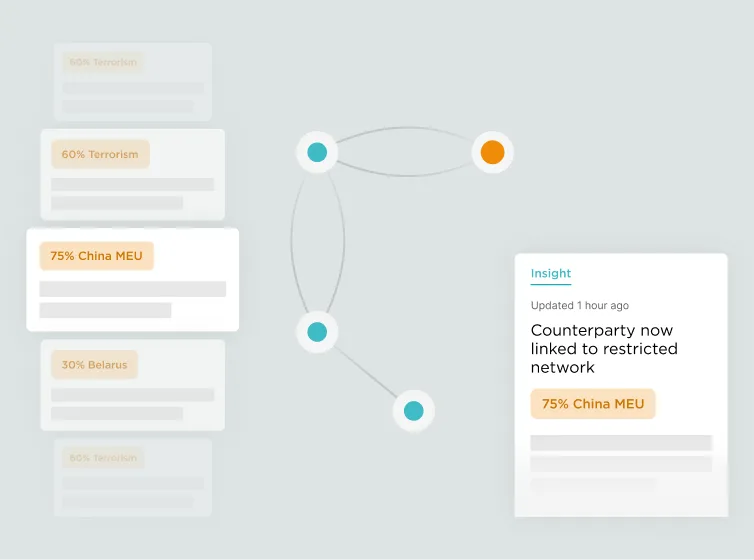
Most supply chain compliance tools scrape corporate registration records, geolocation data, addresses, and trade shipment data — public datasets that are vast but unverified — and surface the results to your team. The output may appear comprehensive, but it's largely raw data: unresolved corporate filings, bulk shipment records, and algorithmically generated flags that no subject matter expert has guided. Your compliance team inherits all of this data — and all of the work of resolving whether flagged entities are genuine matches, determining what the results actually mean. Some tools deliberately under-resolve, grouping entities conservatively and leaving your analysts to confirm or deny whether matches reflect real-world connections. That approach shifts the most time-intensive part of compliance — entity resolution — from the data provider to your team. On the export side, standard denied party screening tools match names against government watchlists but cannot map the ownership networks behind listed entities. They screen against published lists and known aliases; they do not identify unlisted affiliates, beneficial owners, or network connections that may trigger the same restrictions. Kharon's intelligence is built differently. Our research methodology aligns to the regulatory red flags that enforcement agencies themselves use — labor transfer programs, associated euphemisms, behavioral indicators, military end use profiles — to identify risk entities and their networks, including entities that don't appear on any published government list. Our experts conduct investigations that map ownership and supply chain networks, verify entity relationships against source documents, and document the specific risk basis for every entity in the database. Entity relationships are resolved before they reach your team — verified by subject matter experts as relevant to specific risk topics, not surfaced by an unsophisticated algorithm and left for your analysts to adjudicate. The result is intelligence your team can act on immediately across both sides of trade compliance — not an unverified data set that consumes analyst hours before it becomes usable. All data is structured and readable by AI and LLM-powered systems to ground results in a reliable source of truth.










 Inbound


 Outbound