banner

Industry Solutions

Retail & Apparel Forced Labor Compliance

Forced Labor Risk Intelligence That Keeps Pace with a Shifting Enforcement Landscape

The forced labor risk landscape facing retail and apparel brands doesn’t stand still. Enforcement priorities expand, the UFLPA Entity List grows, supplier networks restructure, and transshipment routes shift—often faster than compliance programs can track. Kharon delivers entity-level risk intelligence built through expert-led investigations that align to regulatory red flags and map the ownership networks, subsidiaries, supplier relationships, and related parties tied to restricted entities and forced-labor-linked jurisdictions. Where standard screening tools surface possible matches and leave the analytical burden to your team, Kharon provides verified, sourced intelligence that compliance and sourcing professionals can act on. The world’s largest retail and apparel brands rely on Kharon to build forced labor due diligence programs that are defensible today and adaptable as the regulatory environment evolves.
How it works

Proven at Scale

3 of the 5

Largest U.S. clothing companies

12+

Supply chain technology partners in the Kharon Activation Network

35+

Fortune 100 companies

U.S. Customs and Border Protection

Trusted by

The Problem

The Risk Landscape Is Moving Faster Than Your Compliance Program

Regulators expect retail and apparel companies to demonstrate forced labor due diligence across supply chains that can span dozens of countries and processing stages. But the challenge isn’t just depth—it’s velocity. Enforcement targets shift, restricted entity networks restructure, and the tools most companies rely on weren’t designed for a risk environment that can be opaque and changes this fast.

Risk in retail and apparel supply chains

01

Forced Labor Risk Lives Where Your Audits Don’t Reach

The risk in retail and apparel supply chains rarely sits at the finished-garment factory. It concentrates in raw material processing—cotton gins, spinning mills, dyeing facilities, chemical intermediaries, and the farms themselves—tiers that factory audits and supplier self-certification questionnaires were never designed to cover. Raw materials from the Xinjiang Uyghur Autonomous Region can pass through multiple processing stages and countries before arriving in a finished product, and chemical inputs like caustic soda can enter textile supply chains in ways that are nearly invisible to conventional compliance tools. The UFLPA’s rebuttable presumption means any goods with inputs traceable to the XUAR are presumed to involve forced labor unless the importer proves otherwise with clear and convincing evidence.

The Enforcement Landscape Shifts Faster

02

The Enforcement Landscape Shifts Faster Than Point-in-Time Screening Can Follow

The UFLPA Entity List isn’t static—it’s expanding. In January 2025 alone, DHS added 37 entities in a single action—including cotton, silicon, solar, and mining companies. Among them were Huafu Fashion Co.—one of the world’s largest cotton yarn producers—and 25 of its subsidiaries. As of mid-2025, the list had grown to 144 entities and continues to grow, with cotton and textile companies representing one of the largest sectoral concentrations. But listed entities are only part of the picture. Restricted networks restructure: entities spin off subsidiaries, shift operations to new jurisdictions, and route goods through transshipment hubs designed to obscure their origin. Point-in-time screening against yesterday’s list cannot track networks that are actively working to stay ahead of enforcement.

Compliance Tools

03

Most Compliance Tools Create More Work Than They Solve

A growing number of supply chain risk platforms now offer forced labor risk identification, but their approach creates its own compliance burden. These tools typically scrape corporate registration records, geolocation data and trade shipment data—public datasets that are vast but unverified and limited—and dump the results on your team to make sense of. The output is voluminous: bulk entity records, unresolved corporate filings, raw shipment manifests, and algorithmically generated flags with no expert verification behind them. Your compliance team inherits all the data and all of the analytical work of making sense of it. Many of these flags are “possibly same as” a restricted entity—but the tool can’t tell you whether a match is the listed entity, a subsidiary, a coincidental name overlap, or an entirely unrelated company. For retail and apparel companies managing thousands of suppliers across dozens of countries, the burden of sorting through unverified data heaps can overwhelm compliance resources—and still leave genuine exposure undetected beneath the noise. The tool surfaced data; it didn’t deliver insight.

The Kharon Approach

Verified Risk Intelligence for Forced Labor Due Diligence

Kharon’s approach starts where other tools stop. Rather than surfacing possible matches and leaving your team to figure out whether they matter, Kharon provides entity-level intelligence—built through expert-led investigations aligned to regulatory red flags—that identifies who is actually connected to forced labor risk, how, and through what corporate relationships. The intelligence is verified, sourced, and documented before it reaches your team.

All research in the Kharon Core is led and verified by subject matter experts with backgrounds in global security regulations and open source investigations. Entity relationships are sourced, documented, and traceable. Relationships in the Kharon Core are there because experts have identified them as relevant to specific risk topics—not because an algorithm surfaced a possible name match. The result: intelligence that compliance and sourcing teams can act on directly, and evidence that meets the standard CBP and EU regulators expect.

Network Intelligence

Network Intelligence

Expert-led mapping of ownership networks, supply chains, and related parties tied to UFLPA Entity List entities, entities that align with regulatory red flag indicators, and their broader networks. When a cotton processor in Xinjiang restructures its corporate hierarchy or routes product through a new intermediary, Kharon’s network analysis tracks the change—connecting the dots between the restricted entity and the supplier in your chain.

Expert Research

Expert Research, Verified Data

Kharon’s research is built by subject matter experts, not scraped by algorithms. Company relationships are validated against source documents. Ownership linkages are sourced and documented. Aliases are confirmed. The difference matters when CBP asks how you determined a supplier was permitted—or when a detention event requires auditable evidence within days.

Unified Platform

Unified Platform

ClearView, GraphCast, CoreStream, and API work as a connected ecosystem. Screen your supplier base against verified risk data. Investigate flagged entities with enriched profiles and network visualization. Monitor for new designations and enforcement developments. Automate screening at scale through direct API integration.

Government trusted

Government Trusted

Used operationally by U.S. Customs and Border Protection, Department of Homeland Security, U.S. Department of the Treasury, and dozens of other U.S. and international government partners. The agencies enforcing forced labor regulations at the border rely on Kharon’s data.

Compliance Workflows

How Retail & Apparel Brands Work with Kharon

ScreeningSupplier & Entity Screening

UFLPA ENTITY LIST SCREENING & RISK IDENTIFICATION

GraphCast delivers curated, continuously maintained datasets built around forced labor red flags and risk typologies—including UFLPA Entity List entities and their broader networks of subsidiaries, affiliates, and related parties. The data integrates directly into existing supply chain visibility platforms, screening infrastructure, and proprietary systems. Because Kharon data is entity-resolved and expert-verified, compliance teams spend less time clearing false positives and bad leads, and more time on genuine risk—a critical difference when you’re screening thousands of suppliers across a global sourcing footprint.


Outcome: Defensible screening documented for CBP, compliance burden reduced, genuine risk exposure identified before goods ship.
InvestigationInvestigation & Due Diligence

ENTITY-LEVEL SUPPLY CHAIN RISK ANALYSIS

ClearView presents enriched entity profiles, risk indicators, and ownership data in a single, powerful tool for investigating flagged suppliers and tracing their upstream networks. When screening surfaces a potential connection to a UFLPA Entity List entity—or when a supplier’s corporate structure raises questions—ClearView enables compliance teams to see the whole picture: who owns what, which entities are linked, and what the specific risk basis is. Findings are documented in the platform, building the kind of evidence trail that matters when CBP asks for clear and convincing proof.


Outcome: Supplier investigations resolved faster, with sourced documentation that supports the evidentiary standard CBP requires.
Supply chainImport Compliance & Detention Response

UFLPA DETENTION PREPAREDNESS & RESPONSE

When CBP detains a shipment, the clock starts. Importers have 30 days under 19 U.S.C. §1499 to assemble an evidentiary record that traces goods from raw material through every processing stage—and the standard is “clear and convincing evidence,” one of the highest thresholds in U.S. trade law. Kharon’s entity-level intelligence and documented ownership chains provide sourced, auditable evidence connecting specific entities to specific risk bases. GraphCast and ClearView give trade compliance teams the tools to screen proactively before goods leave origin—and to respond with defensible evidence when detentions do occur.


Outcome: Proactive screening reduces detention exposure; when detentions occur, your response is faster, better documented, and built on verifiable intelligence.
ComplianceContinuous Compliance Across Your Platform Ecosystem

MONITORING & INTEGRATION THROUGH THE KHARON ACTIVATION NETWORK

Forced labor compliance isn’t a one-time screening exercise—it’s continuous. As the UFLPA Entity List expands, enforcement priorities shift, and the EU Forced Labour Regulation comes into force, your compliance program needs to adapt without requiring your team to rebuild workflows from scratch. Through the Kharon Activation Network—a growing community of 12+ supply chain technology partners—Kharon’s risk insights can be accessed directly within the platforms retail and apparel companies already use, including TrusTrace, Retraced, TradeBeyond, TransparencyOne, Sourcemap, Altana, Prewave, and Everstream. New entity risk developments surface within your existing workflow. CoreStream provides an additional layer of tailored risk intelligence for teams that want continuous, personalized monitoring aligned to their specific supply chain exposure.


Outcome: Continuous compliance coverage embedded in your existing workflow, with new risks surfaced as they emerge—not after a detention or enforcement action.

The Kharon Platform

Built for the Most Demanding Compliance Workflows

Each tool is optimized for seamless integration within your workflow: from detection, to deep investigation, to operational screening, to automation at scale. Together, our technology allows teams to move fluidly from signal to understanding to action.

Kharon clearview

ClearView

SearchInvestigate

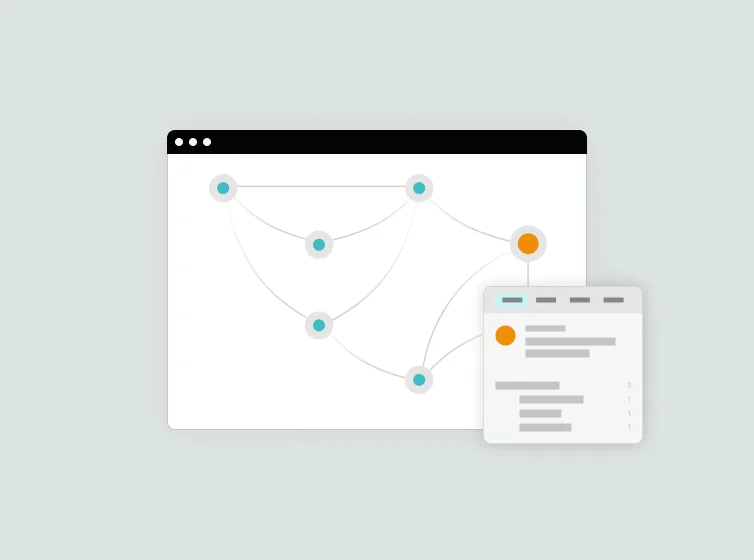
Kharon ClearView is a powerful tool for analyzing and visualizing complex entity relationships and associated risk at global scale, supporting the most demanding due diligence and investigative workflows.

Kharon graphcast

GraphCast

ScreenAlert

Kharon GraphCast provides curated, continuously maintained datasets aligned to specific risk typologies, including forced labor and trade-restricted entity networks, designed to power complex global screening and monitoring systems for forced labor compliance, supply chain due diligence, and trade controls.

Kharon api

API

IntegrateScale

The Kharon API enables custom applications and workflows built directly on Kharon insights and risk scores, integrating seamlessly into internal systems to power analysis, automation, and decision-making at scale.

Kharon corestream

CoreStream

DiscoverPrioritize

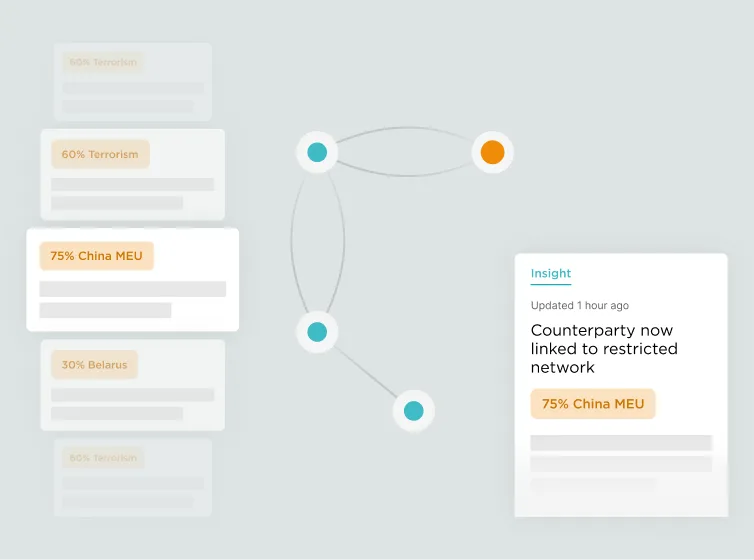
Kharon CoreStream turns fragmented global signals into continuous, personalized streams of insight, establishing a new standard for situational awareness in a complex world.

Solutions by Role

Built to Strengthen Forced Labor Due Diligence Across Your Organization

Compliance Leadership

Responsible Sourcing Leadership

Kharon extends due diligence past factory-level audits into the raw material and processing tiers where forced labor risk actually concentrates. When regulators, investors, or the board ask what intelligence your due diligence program relies on, Kharon is a name CBP recognizes—because they use it themselves.

Compliance

Trade Compliance & Customs

Entity-resolved data via GraphCast means your UFLPA screening surfaces genuine risk, not a stack of possible matches requiring manual investigation. ClearView enables rapid, documented investigation when suppliers or shipments are flagged. Your team resolves detentions faster with sourced evidence that meets the clear and convincing standard—built before the clock starts, not after.

Eco

Sustainability & ESG

Defensible, entity-level intelligence for public reporting on forced labor due diligence—grounded in verified expert research, not supplier self-assessments. The kind of evidence that supports credible regulatory disclosures across jurisdictions, from the California Transparency in Supply Chains Act to the EU Corporate Sustainability Reporting Directive to Canada's Fighting Against Forced Labour and Child Labour in Supply Chains Act (Bill S-211) to the UK Modern Slavery Act.

Supply Chain

Supply Chain Risk & Procurement

Kharon's platform enables sourcing teams to evaluate suppliers and their upstream networks before placing orders. Kharon insights can be accessed within the supply chain platforms your team already uses through the Activation Network—so due diligence happens where sourcing decisions are made, not in a separate compliance workflow your team has to context-switch into.

FAQ

Common Questions

From compliance and sourcing professionals evaluating forced labor risk intelligence solutions.

The Uyghur Forced Labor Prevention Act establishes a rebuttable presumption: all goods produced wholly or in part in the Xinjiang Uyghur Autonomous Region of China are presumed to involve forced labor and are banned from U.S. import. To release detained goods, importers must present “clear and convincing evidence” that no forced labor was involved—one of the highest evidentiary standards in U.S. trade law. For retail and apparel companies, this means any product containing inputs traceable to the XUAR—whether cotton, textiles, chemicals, or other raw materials—can be stopped at the U.S. border. The UFLPA Entity List identifies specific entities subject to the rebuttable presumption, and that list has grown rapidly in the textiles sector.

The UFLPA Entity List is maintained by the Forced Labor Enforcement Task Force (FLETF) and identifies entities connected to the use of forced labor in or linked to the Xinjiang Uyghur Autonomous Region—including entities headquartered elsewhere in China that are connected through corporate ownership, sourcing, or labor recruitment. As of mid-2025, the list included 144 entities—a number that continues to grow—with cotton and textile companies representing one of the largest sectoral concentrations. The January 2025 addition of Huafu Fashion Co.—one of the world’s largest cotton yarn producers—and 25 of its subsidiaries was the largest single Entity List expansion to date. Any goods produced by a listed entity or containing inputs from one are subject to the rebuttable presumption. Kharon tracks not only listed entities but their subsidiaries, affiliates, and connected parties—the broader networks that name-matching against the published list alone will miss.

Most supply chain compliance tools scrape corporate registration records, geolocation data and trade shipment data—public datasets that are vast but unverified—and surface the results to your team. The output can feel comprehensive, but it’s largely raw data: unresolved corporate filings, bulk shipment records, and algorithmically generated flags that no expert can stand behind. Your compliance team inherits all of this data and all of the work of determining what it means—including whether flagged entities are genuinely connected to restricted networks, are subsidiaries, or are simply coincidental name overlaps. The tools create more analytical work than they resolve, and there’s only so much actionable insight you can extract from corporate filings, addresses and bills of lading alone. Kharon’s intelligence is built differently. Our experts conduct investigations that map ownership and supply chain networks, verify entity relationships against source documents, and document the specific risk basis for every entity in the database. Critically, Kharon’s approach goes beyond the UFLPA Entity List itself. Kharon’s research methodology aligns to the regulatory red flags — such as labor transfer programs and associated euphemisms — that signal forced labor risk, then uses all publicly available information to identify companies displaying those behaviors and maps their networks. This means Kharon’s coverage extends to red flag entities and relationships that no published list captures. Relationships in Kharon’s database are there because they have been identified as relevant to risk topics—not because an algorithm surfaced a possible match. The result is intelligence your team can act on, not an unverified data heap to sort through. All data is structured and readable by AI and LLM-powered systems to ground results in a reliable source of truth.


When CBP flags a shipment as potentially subject to the UFLPA, it is detained at the port of entry. The importer then has 30 days under 19 U.S.C. §1499 to assemble evidence demonstrating that the goods were not produced with forced labor. This evidence must meet the “clear and convincing” standard—requiring detailed, traceable documentation of the supply chain from raw material through every processing stage to the finished product. If the importer cannot meet this threshold, goods are denied entry or must be re-exported. Releasing detained shipments requires meticulous documentation, and CBP review has grown increasingly rigorous. Kharon’s entity-level intelligence and documented ownership chains provide the kind of sourced, auditable evidence that supports detention response.

Clear and convincing evidence is the evidentiary threshold importers must meet to release goods detained under the UFLPA. It requires that the evidence be substantially more likely than not to be true—a higher standard than the preponderance standard used in most civil proceedings. For apparel importers, this means providing supply chain documentation that specifically traces raw materials through every processing stage and demonstrates that no input originated with a UFLPA Entity List entity or the XUAR. Generic supplier certifications and factory audit reports are rarely sufficient. Kharon’s entity-level intelligence and documented ownership chains help build the kind of specific, sourced evidence CBP expects.

The UFLPA is a U.S. import ban with a rebuttable presumption specific to the Xinjiang region—goods are stopped at the border and importers must prove their supply chain is free from forced labor. The EU Forced Labour Regulation (Regulation 2024/3015), taking full effect in December 2027, establishes a fundamentally different model: it is not region-specific, applies to forced labor globally, and operates through investigation-driven enforcement and product withdrawal from the EU market rather than border detention. For brands selling in both the U.S. and EU, this creates dual-jurisdiction obligations with different regulatory frameworks, enforcement mechanisms, and evidentiary expectations. Kharon’s entity-level intelligence supports compliance under both regimes.

Yes. Through the Kharon Activation Network, verified risk intelligence is embedded directly within supply chain compliance and traceability platforms including TrusTrace, Retraced, TradeBeyond, TransparencyOne, Sourcemap, and Altana—enabling compliance teams to access Kharon’s entity-level data without leaving their existing workflow. The Activation Network is continuously expanding; if your organization uses a supply chain platform that isn’t yet part of the network, we welcome the opportunity to explore how we can support your compliance needs. GraphCast data files and the Kharon API also support direct integration into proprietary compliance systems, screening infrastructure, and automated data pipelines.

Supply chain traceability—mapping the physical flow of goods from raw material to finished product—is essential to UFLPA compliance, but it addresses a different dimension than risk intelligence. Traceability tells you where your materials traveled; risk intelligence tells you whether the entities in that chain are connected to restricted or high-risk networks. Both are necessary, and they’re complementary. Kharon provides the risk intelligence layer: investigating entities that appear on the UFLPA Entity List, mapping their ownership networks and related parties, and monitoring unlisted risks, like labor transfers and sourcing from XUAR, that could nonetheless lead to a detention. Kharon’s traceability partners—such as TrusTrace, Sourcemap, and Altana—provide physical supply chain mapping. Together, they form a complete compliance picture that covers both “where did this come from” and “who is connected to risk.”

Supply chain mapping is the process of identifying and documenting the entities, facilities, and relationships across every tier of a product’s supply chain—from raw material extraction through processing, manufacturing, and assembly to the finished goods. For forced labor compliance, mapping is how organizations build visibility into the upstream tiers where risk concentrates: the cotton gins, spinning mills, and chemical processors that factory-level audits don’t reach. Mapping tells you who is in your supply chain; risk intelligence tells you which of those entities are connected to restricted or high-risk networks. Kharon partners with leading supply chain mapping platforms—including Altana, Sourcemap, and TrusTrace—to combine physical supply chain visibility with entity-level risk intelligence. The result is a compliance picture that covers both the structure of your supply chain and the risk profile of the entities within it.

Leading retail and apparel companies are moving beyond manual supplier questionnaires and periodic audits toward intelligence-driven compliance programs that identify, monitor, and manage forced labor risk continuously. The shift matters because the threat landscape moves quickly—new UFLPA Entity List additions, enforcement priority expansions, supplier restructuring—and point-in-time assessments go stale. Kharon’s platform is built for this model: all data is structured, documented, and readable by AI and LLM-powered systems to ground results in a reliable source of truth. Compliance teams can integrate Kharon intelligence into automated screening pipelines, AI-assisted investigations, and real-time monitoring—making the shift from reactive to proactive due diligence operationally achievable.
Start with data quality: does the provider verify entities through expert-led research, or does it scrape corporate registration records, location and trade data and pass the analytical burden to your team? Ask whether the solution maps ownership networks and related parties—not just listed entities—and whether the intelligence is sourced and documented at a level that supports CBP’s evidentiary standard. Look for a provider whose methodology aligns to regulatory red flags—not just designated entity lists—and that leverages all available sources of data to identify risk behaviors before they result in formal enforcement action. Evaluate the burden the tool creates: does it deliver actionable intelligence, or does it generate a heap of unverified data—including “possibly same as” flags—that your compliance team has to resolve? Integration matters too—the solution should work within your existing supply chain platforms rather than adding another portal. And consider how good your provider is at identifying risk before an entity is formally designated. Kharon has repeatedly identified entities as relevant to forced labor risk before they were added to the UFLPA Entity List—because our intelligence is built through proactive investigation, not reactive list-matching. Kharon’s data is used operationally by CBP, DHS, and Treasury.

Factory audits and supplier codes of conduct typically cover direct Tier 1 suppliers but lack visibility into the deeper tiers where forced labor risk concentrates—cotton processors, spinning mills, chemical intermediaries, and raw material extractors. Kharon’s approach is entity-centric, not tier-dependent: our intelligence maps the ownership networks, trade and corporate relationships behind restricted entities regardless of where those entities sit in the supply chain. A retail brand can identify whether a cotton processor three tiers deep is a subsidiary or affiliate of a UFLPA Entity List entity—without relying on that entity to self-report the connection through a supplier questionnaire.

Get Started

See How Kharon Fits Your Forced Labor Due Diligence Program

Talk to our team about your supply chain risk, UFLPA compliance requirements, and due diligence priorities—and see how Kharon’s data, technology, and partner ecosystem can strengthen what you’ve already built.

Retail & Apparel Forced Labor & UFLPA Compliance | Kharon