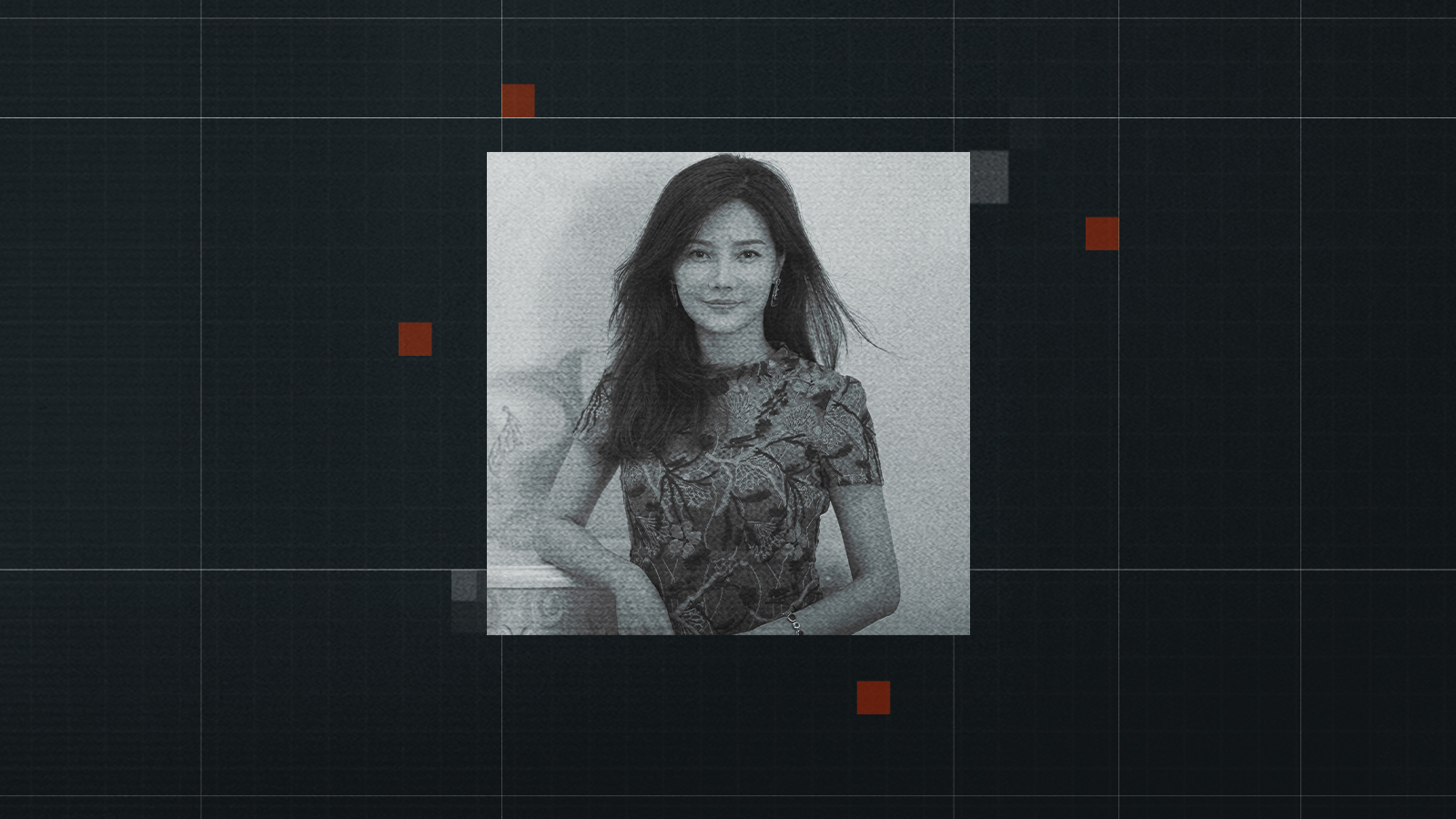
U.S. officials are scrambling to determine whether Chinese tech executive and alleged spy Alice Huang used an affair with Nvidia’s chief executive, a confidant of President Trump, to extract state or corporate secrets.
But another major prize Huang appears to have delivered was legal.
In addition to allegedly facilitating the sales of billions of dollars’ worth of restricted American AI chips to China, Huang’s network also acquired and rented out compute capacity for Chinese companies to train their AI systems or re-rent it in turn, records show, exploiting a remote-access loophole in U.S. export-control policy.
That policy gap, which the Commerce Department is reportedly now moving to close, strikes at the heart of one of the U.S. intelligence community’s greatest fears: the possibility that Beijing could win the AI arms race.
A Kharon review of trade and corporate records help illustrate the development of Huang’s opaque operation that is now roiling the global economy. With her sister’s help, those records show, she intersected with a web of companies across Asia and in the Caribbean that facilitated access to U.S. tech and obscured Chinese ties.
Several parts of that skein of corporate relationships, some of which were withheld in company disclosures, have not previously been reported.
Nvidia CEO Jensen Huang resigned Thursday. Alice Huang, contacted through her LinkedIn profile Thursday, did not immediately respond to a request for comment.
Companies are not required to report rentals of compute capacity in the same way they report trade. But documents reviewed by Kharon reveal that Letact Cloud offered another possible path for its conglomerate to funnel Nvidia compute power from Alice Huang’s Megaspeed, the company at the center of U.S. chip-diversion investigations, to China.
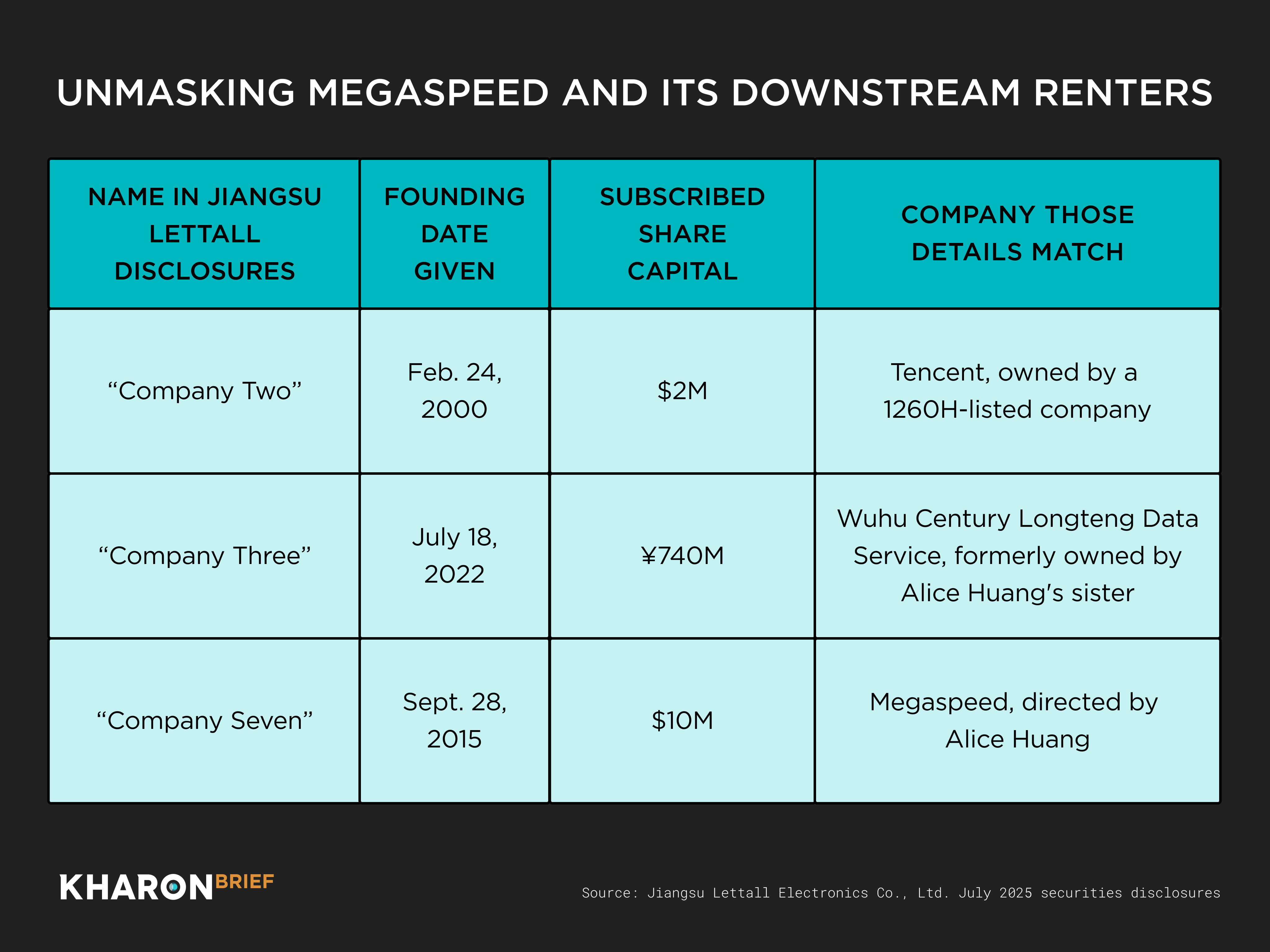
Connecting the dots: Lettall Electronics’ July 2025 securities disclosures state that Letact Cloud rented compute from a “Company Seven,” which they did not identify. The founding date and total capital that the disclosures listed for “Company Seven,” however, exactly matched those of Singapore-based Megaspeed.
The same securities disclosures then reference two similarly obscured partners that rent some of the compute that Lettall acquires:
But another major prize Huang appears to have delivered was legal.
In addition to allegedly facilitating the sales of billions of dollars’ worth of restricted American AI chips to China, Huang’s network also acquired and rented out compute capacity for Chinese companies to train their AI systems or re-rent it in turn, records show, exploiting a remote-access loophole in U.S. export-control policy.
That policy gap, which the Commerce Department is reportedly now moving to close, strikes at the heart of one of the U.S. intelligence community’s greatest fears: the possibility that Beijing could win the AI arms race.
A Kharon review of trade and corporate records help illustrate the development of Huang’s opaque operation that is now roiling the global economy. With her sister’s help, those records show, she intersected with a web of companies across Asia and in the Caribbean that facilitated access to U.S. tech and obscured Chinese ties.
Several parts of that skein of corporate relationships, some of which were withheld in company disclosures, have not previously been reported.
Nvidia CEO Jensen Huang resigned Thursday. Alice Huang, contacted through her LinkedIn profile Thursday, did not immediately respond to a request for comment.
Alice Huang’s family businesses in Asia
Letact Cloud is a Singapore-based cloud-compute reseller that’s owned by a publicly traded Chinese company, Jiangsu Lettall Electronic Co., Ltd. Lettall Electronic has surfaced in multiple reports because of a different subsidiary it owns, Shanghai Century Litong, which The Information reported secured special status with Nvidia in 2023, giving it priority access to the company’s computing power.Companies are not required to report rentals of compute capacity in the same way they report trade. But documents reviewed by Kharon reveal that Letact Cloud offered another possible path for its conglomerate to funnel Nvidia compute power from Alice Huang’s Megaspeed, the company at the center of U.S. chip-diversion investigations, to China.
Connecting the dots: Lettall Electronics’ July 2025 securities disclosures state that Letact Cloud rented compute from a “Company Seven,” which they did not identify. The founding date and total capital that the disclosures listed for “Company Seven,” however, exactly matched those of Singapore-based Megaspeed.
The same securities disclosures then reference two similarly obscured partners that rent some of the compute that Lettall acquires:
- The details for a cloud-computing customer identified only as “Company Two” matched Tencent, the Chinese Internet giant, Kharon found.
- Meanwhile, the details for another compute-renter, a “Company Three,” matched Wuhu Century Longteng Data Service Co., which has re-rented compute to supply the data centers of TikTok parent Bytedance. Century Longteng’s ultimate majority owner until January, records show, was Alice Huang’s sister, Huang Yu. (Alice Huang is also known as Huang Le.)
It’s common practice in China “to name family members as company directors to obscure real ownership or control,” the Financial Times noted in its own report Wednesday on Alice Huang’s corporate network.
Why it matters: Whether Huang Yu was meaningfully involved or not, the Huang sisters’ network appears to have been playing all sides: bringing in Western chips, selling them, and renting or re-renting Chinese access to their power downstream.
Why it matters: Whether Huang Yu was meaningfully involved or not, the Huang sisters’ network appears to have been playing all sides: bringing in Western chips, selling them, and renting or re-renting Chinese access to their power downstream.
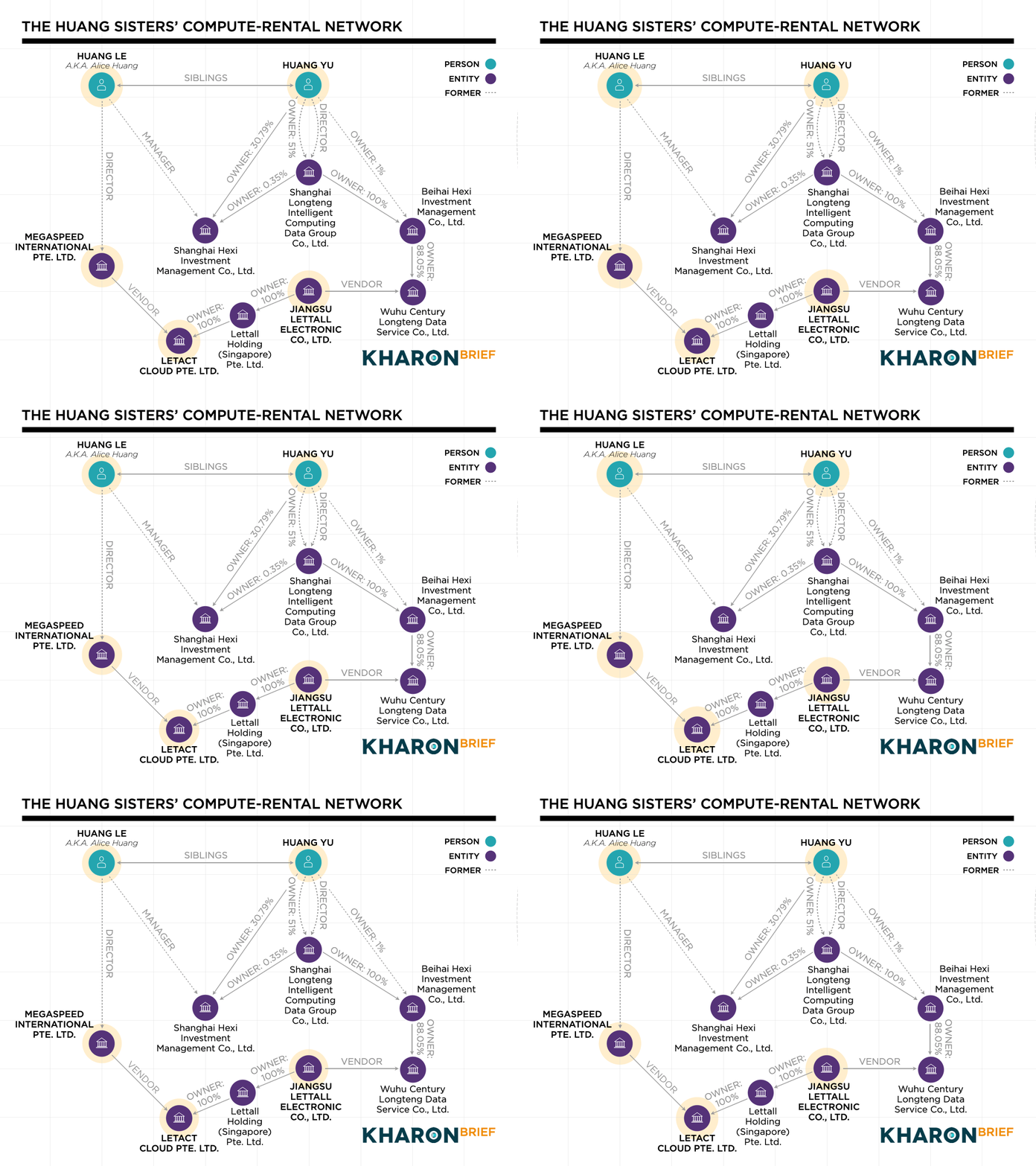
Kharon users can explore networks like this one through the ClearView platform.
Lettall Electronics acknowledged the loophole itself in the July 2025 filings.
“Chinese companies cannot directly own computing power equipment overseas, but they can rent computing power cloud services,” it wrote. “The company’s operation of computing power leasing in Singapore helps address the bottleneck of computing power chips and facilitates localized service to computing power customers [in China].”
Lettall Electronics did not immediately respond to a request for comment; Letact Cloud, which does not disclose a phone number or email address, could not be reached.
News peg: According to The Information, Commerce is readying a proposed rule to add seven more countries — including Malaysia and Singapore — to its AI-chip export-restriction list to stop Chinese companies from accessing that compute power remotely. Commerce’s Bureau of Industry and Security (BIS), which oversees U.S. export controls, declined to comment on the record.
Peter Harrell, a former senior White House national security and economics advisor in the Obama and Biden administrations, said Commerce had proposed rules ready to go for a while, but he said officials had resisted acting over concerns it could inflame the trade war with China.
“It is long past time to close this loophole,” said Harrell, now a senior fellow in the Center for Geoeconomic Studies at the Council on Foreign Relations. “It’s bizarre to me that we are still allowing Chinese companies to rent the most advanced compute in the world via data centers in Southeast Asia and frankly, in the United States and elsewhere.”

Kharon Semiconductor Export Control Solutions
Verified Intelligence on Restricted Parties, Their Affiliates, and End-Use Risk — Across the Semiconductor Value Chain
An apparent network in the British Virgin Islands
Indeed, Alice Huang’s corporate network does not appear to end in Asia. Kharon research identified a cluster of additional Huang-linked companies that trace to the British Virgin Islands, a haven of corporate opacity.A September report by C4ADS highlighted one of Huang’s companies in Hong Kong, which since August 2025 has gone by Pine Vale (HK) Limited. Corporate documents show that, two months after that name change, Huang transferred 100% of Pine Vale’s shares to a BVI company with a Vale name of its own: Linden Vale Limited. It does not disclose an owner.
- Of note: Huang has owned another BVI-based company called Maple Vale Limited. Two of its former “Vale”-named subsidiaries were transferred to the Megaspeed network in 2019, putting them under Huang’s apparent control through a different track.
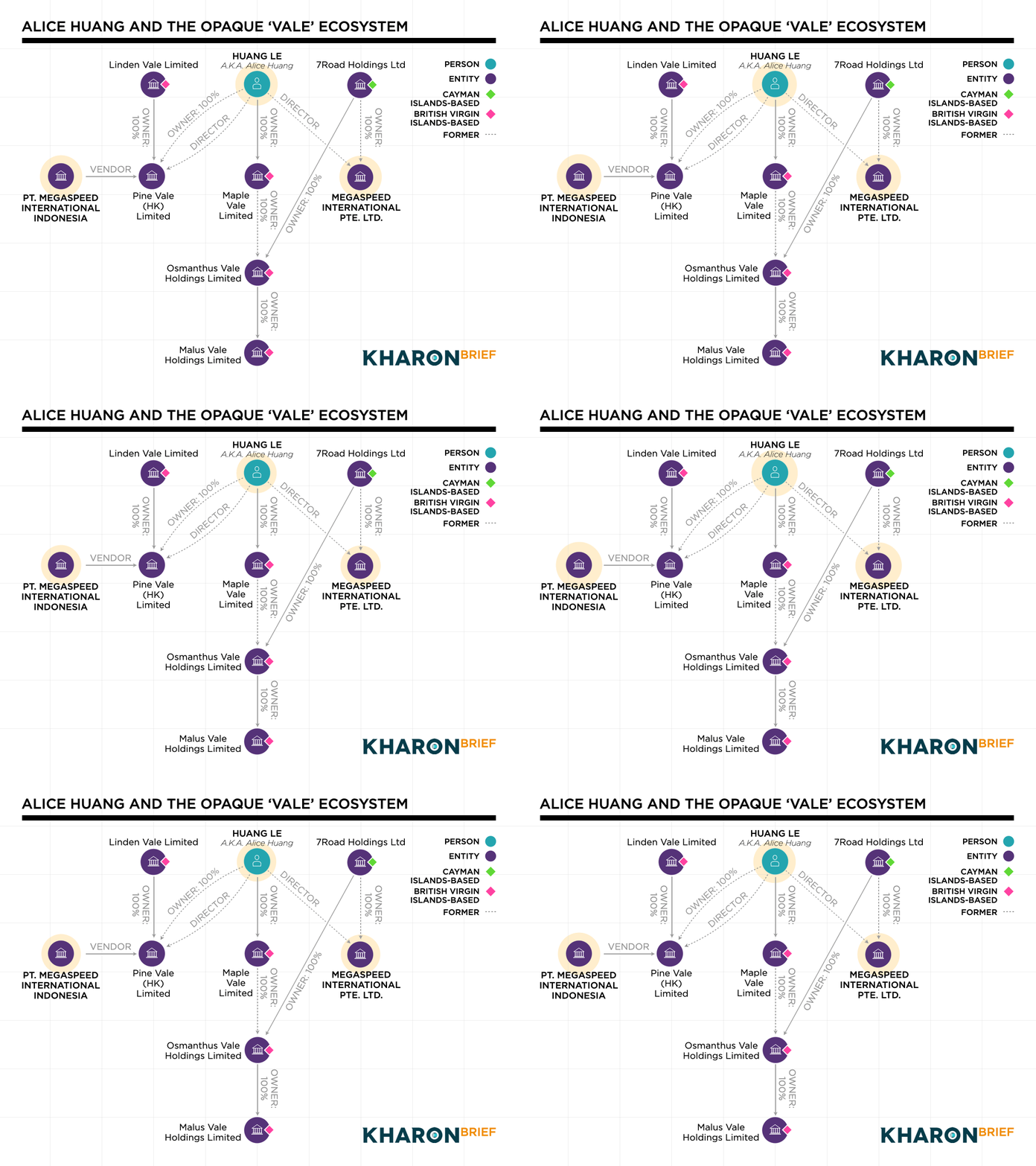
C4ADS reported that Pine Vale, then known as VFO International, received shipments of “high-performance components used in AI data center infrastructure” from Megaspeed’s Indonesian branch as recently as November 2024.
Kharon research identified one notable downstream customer for that tech, while Huang still directed and directly owned the company.
In August 2024, documents show, Pine Vale won a bid to supply equipment and software to a Shandong entity ultimately majority-owned by the Chinese data and server conglomerate Inspur Group. BIS had added Inspur to its export-restricting Entity List the year before, “for acquiring and attempting to acquire U.S.-origin items in support of China’s military modernization efforts.”
The New York Times this month reported that Megaspeed had used a Malaysian subsidiary to buy Nvidia chips from California-registered Aivres System Inc., an Inspur subsidiary. Pine Vale’s bid shows Alice Huang’s network fed into U.S.-flagged Inspur through an alternate channel, too.
Completing the circle: A month after winning the Inspur bid, Pine Vale formed a joint venture with a subsidiary of Jiangsu Lettall Electronic — the same publicly traded firm that was funneling compute capacity from Megaspeed to Tencent.
“It’s going to take you approximately five minutes to reroute your compute” supply through an unrestricted country, he suggested.
He called for regulators to go further.
“Just as we expect banks to do due diligence on their customers,” Harrell said, “if you’re a data center operator renting access to the most advanced compute in the world, we would expect you to do due diligence to shut off the Chinese.”
Read more from The Brief:
Kharon research identified one notable downstream customer for that tech, while Huang still directed and directly owned the company.
In August 2024, documents show, Pine Vale won a bid to supply equipment and software to a Shandong entity ultimately majority-owned by the Chinese data and server conglomerate Inspur Group. BIS had added Inspur to its export-restricting Entity List the year before, “for acquiring and attempting to acquire U.S.-origin items in support of China’s military modernization efforts.”
The New York Times this month reported that Megaspeed had used a Malaysian subsidiary to buy Nvidia chips from California-registered Aivres System Inc., an Inspur subsidiary. Pine Vale’s bid shows Alice Huang’s network fed into U.S.-flagged Inspur through an alternate channel, too.
Completing the circle: A month after winning the Inspur bid, Pine Vale formed a joint venture with a subsidiary of Jiangsu Lettall Electronic — the same publicly traded firm that was funneling compute capacity from Megaspeed to Tencent.
The big picture
By itself, Harrell said, restricting a few countries’ cloud-compute access would not shut the loophole that Huang and others appear to have exploited.“It’s going to take you approximately five minutes to reroute your compute” supply through an unrestricted country, he suggested.
He called for regulators to go further.
“Just as we expect banks to do due diligence on their customers,” Harrell said, “if you’re a data center operator renting access to the most advanced compute in the world, we would expect you to do due diligence to shut off the Chinese.”
Read more from The Brief:
- BIS Draws Red Line on Chip Exports to China with Enforcement Surge
- U.S. Designates Chinese Tech Giants as Military Companies, Adding Alibaba, Baidu, and BYD
- China’s New Sanctions Arsenal Is Challenging the U.S. — and Creating a Business ‘Nightmare’
- BIS Fined a U.S. Semiconductor Firm $252 Million for Illegal China Exports. Here’s What Went Wrong.