When the Pentagon added 65 more Chinese companies to its military blacklist in June, Beijing responded in the way that is quickly becoming its new normal: with formal economic retaliation.
Since the Defense Department first published the Section 1260H list in 2021, each update had drawn diplomatic protests from Beijing or denials from some companies involved. None had prompted formal trade measures, such as export controls or government procurement restrictions.
That changed on June 22. China's Commerce Ministry barred exports of dual-use items to 10 U.S. companies, including the drone-maker Red Cat Holdings and MP Materials, a U.S.-supported rare-earths producer. The same day, China’s Finance Ministry barred 46 U.S. defense contractors, including Lockheed Martin and Boeing Defense, from Chinese government procurement.
The measures were narrowly targeted, and most of the companies had little commercial exposure to China. But experts say the countermeasures reflect a broader, and accelerating, Chinese shift in response to U.S. tariffs, expanding export controls, and other regulatory measures that Washington had for years imposed to limited pushback.
Since the Defense Department first published the Section 1260H list in 2021, each update had drawn diplomatic protests from Beijing or denials from some companies involved. None had prompted formal trade measures, such as export controls or government procurement restrictions.
That changed on June 22. China's Commerce Ministry barred exports of dual-use items to 10 U.S. companies, including the drone-maker Red Cat Holdings and MP Materials, a U.S.-supported rare-earths producer. The same day, China’s Finance Ministry barred 46 U.S. defense contractors, including Lockheed Martin and Boeing Defense, from Chinese government procurement.
The measures were narrowly targeted, and most of the companies had little commercial exposure to China. But experts say the countermeasures reflect a broader, and accelerating, Chinese shift in response to U.S. tariffs, expanding export controls, and other regulatory measures that Washington had for years imposed to limited pushback.
Now, a more confident Beijing increasingly is seeking to exploit its own leverage — and complicating decisions both for other governments weighing their next moves and for multinational companies caught in the middle.
“Since President Trump first came into office, China has been searching for an effective way to push back against U.S. pressure,” said Leland Miller, a commissioner at the U.S.-China Economic and Security Review Commission. “I think Beijing believes it has found that formula by transforming what used to be called the trade war into a much broader supply chain war.”
Within months, China announced plans for an Unreliable Entity List. A Ministry of Commerce spokesman described it as a mechanism to target foreign companies that block supplies or “take other discriminatory measures” against Chinese firms that “endanger China’s national security and interests.”
At the time, Beijing had little to answer U.S. restrictions beyond customs delays and consumer boycotts. Over the next two years, however, it rolled out an export-control law and an anti-foreign sanctions law, laying the legal foundation for a new form of economic statecraft.
“Today, it has an increasingly sophisticated toolkit,” Miller said.
“Since President Trump first came into office, China has been searching for an effective way to push back against U.S. pressure,” said Leland Miller, a commissioner at the U.S.-China Economic and Security Review Commission. “I think Beijing believes it has found that formula by transforming what used to be called the trade war into a much broader supply chain war.”
How China Built its Economic ‘Toolkit’
Beijing’s shift toward building a legal framework for economic retaliation began in earnest after the Trump administration blacklisted Huawei in 2019.Within months, China announced plans for an Unreliable Entity List. A Ministry of Commerce spokesman described it as a mechanism to target foreign companies that block supplies or “take other discriminatory measures” against Chinese firms that “endanger China’s national security and interests.”
At the time, Beijing had little to answer U.S. restrictions beyond customs delays and consumer boycotts. Over the next two years, however, it rolled out an export-control law and an anti-foreign sanctions law, laying the legal foundation for a new form of economic statecraft.
“Today, it has an increasingly sophisticated toolkit,” Miller said.
Many of these tools, experts say, are still more symbolic than substantive. The Unreliable Entity List is a case in point: China did not name a company to it until 2023, and even then, the targets — Lockheed Martin and Raytheon’s missile-defense unit — had little business in China to lose.
But 2023 was another turning point, centered on critical minerals. Beijing imposed export controls on gallium and germanium, before expanding them to include graphite, antimony, and rare earths, essential to AI chips, advanced magnets, lasers, and other high-tech applications.
That May, meanwhile, it concluded a cybersecurity review that effectively shut the U.S. semiconductor manufacturer Micron Technology out of China’s critical infrastructure market.
By 2025, experts say, Beijing had grown more adept at coordinating these tools. Export controls, sanctions laws, procurement restrictions, and supply-chain regulations increasingly worked together, giving Beijing multiple ways to impose costs while retaining flexibility over when and how aggressively to act.
“It’s a much broader approach than simply maintaining blacklists,” said Audrye Wong, a senior fellow at the American Enterprise Institute and the author of “Subversion and Seduction: China’s Economic Statecraft.”
But 2023 was another turning point, centered on critical minerals. Beijing imposed export controls on gallium and germanium, before expanding them to include graphite, antimony, and rare earths, essential to AI chips, advanced magnets, lasers, and other high-tech applications.
That May, meanwhile, it concluded a cybersecurity review that effectively shut the U.S. semiconductor manufacturer Micron Technology out of China’s critical infrastructure market.
By 2025, experts say, Beijing had grown more adept at coordinating these tools. Export controls, sanctions laws, procurement restrictions, and supply-chain regulations increasingly worked together, giving Beijing multiple ways to impose costs while retaining flexibility over when and how aggressively to act.
“It’s a much broader approach than simply maintaining blacklists,” said Audrye Wong, a senior fellow at the American Enterprise Institute and the author of “Subversion and Seduction: China’s Economic Statecraft.”
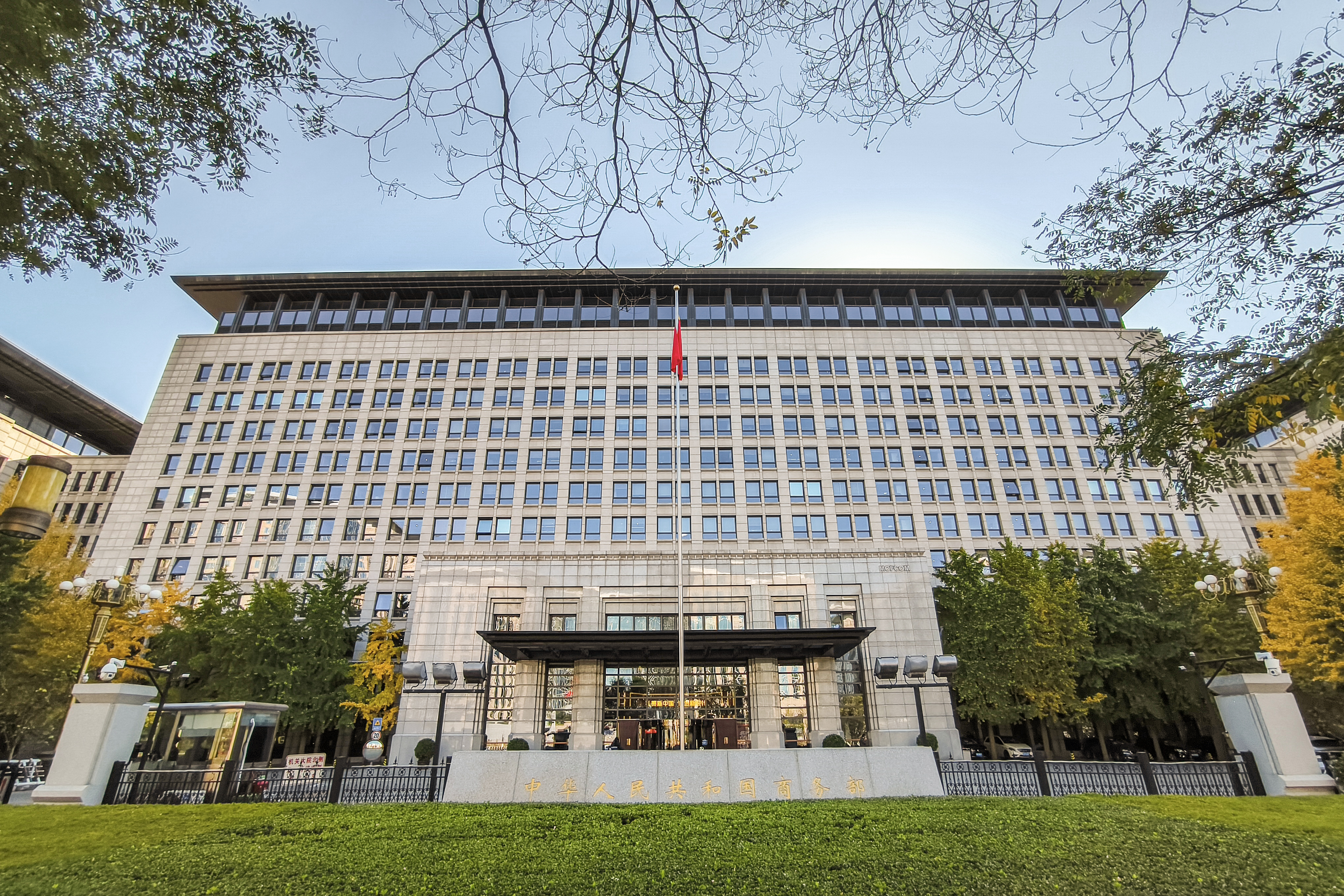
China’s Ministry of Commerce building, as seen in November 2024. (VCG via Getty Images)
Beijing, she said, has deliberately built institutions that resemble U.S. sanctions and export-control regimes while preserving wide discretion over how they are enforced.
It also is creating supply-chain uncertainties — particularly in Europe.
European officials are now setting up a crisis-response group to prepare for a possible escalation when an export-control truce with Beijing expires in October.
The episode highlighted Europe’s central dilemma: policymakers have spent years warning about strategic dependence on China, but many industries remain exposed to supply chains where Beijing holds significant leverage.
Sam Goodman, senior policy director at the London-based China Strategic Risks Institute, said Europe’s supply-chain dependence had been visible for years, especially around critical minerals. But whenever Western tensions with China have eased, like after last fall’s Trump-Xi summit in Busan, South Korea, efforts to reduce that dependence have slowed again.
“Once the [Busan] ceasefire was negotiated, many companies breathed a sigh of relief and thought, ‘Good, we don’t have to think about this for another year,’” he said.
- One example: China’s unwinding in April of Meta’s $2 billion acquisition of the AI startup Manus. The move, which came five months after the deal’s announcement, signaled China’s willingness to use regulatory scrutiny as a lever to keep control over strategically important tech.
It also is creating supply-chain uncertainties — particularly in Europe.
Competing Regulations Mean Companies ‘May Have To Choose Sides’
During the latest trade discussions between China and the EU, in June, securing access to rare earths emerged as one of Brussels’s key priorities, according to China’s state-controlled Global Times. The newspaper reported after the talks that Chinese officials viewed the EU as “lacking sincerity” and warned that China “was prepared to retaliate” if Brussels refused to make key concessions, particularly with tariffs on Chinese electric vehicles.European officials are now setting up a crisis-response group to prepare for a possible escalation when an export-control truce with Beijing expires in October.
The episode highlighted Europe’s central dilemma: policymakers have spent years warning about strategic dependence on China, but many industries remain exposed to supply chains where Beijing holds significant leverage.
Sam Goodman, senior policy director at the London-based China Strategic Risks Institute, said Europe’s supply-chain dependence had been visible for years, especially around critical minerals. But whenever Western tensions with China have eased, like after last fall’s Trump-Xi summit in Busan, South Korea, efforts to reduce that dependence have slowed again.
“Once the [Busan] ceasefire was negotiated, many companies breathed a sigh of relief and thought, ‘Good, we don’t have to think about this for another year,’” he said.
Officials both in China and the U.S. “have received a clear message from the top: Don’t do anything that would break the current truce.”
— Leland Miller, U.S.-China Economic and Security Review Commission
But the emergence now of two competing regulatory systems poses for businesses a different and, in some cases, existential challenge.
“Companies increasingly face operational dilemmas where they may have to choose sides” between the legal regimes of the U.S. and China, said Wong, the AEI fellow. “It’s becoming a genuine Catch-22.”
Other firms ultimately may have to “separate their China and non-China businesses,” Goodman said.
“For many European companies,” he said, “this is becoming a nightmare scenario.”
Since last fall, when Japanese Prime Minister Sanae Takaichi spoke out about mobilizing if China were to attack Taiwan, Beijing has steadily escalated a pressure campaign. It has included warnings against travel to Japan, restrictions on seafood imports, delayed film releases, and, later, formal export-control actions that have targeted defense-related Japanese research institutions and companies in its drone industry.
So far, European governments have been watching closely but, under Chinese pressure, responding cautiously.
It’s a notable contrast with Europe’s outspoken support for Australia several years ago, when a less well-leveraged China had imposed restrictions in response to Canberra’s efforts to diversify trade.
“That suggests there isn’t necessarily a unified democratic response when one partner becomes the target of Chinese economic pressure,” Goodman said.
June’s exchange aside, the Trump administration has mostly sought to keep tensions low, too. Despite mounting pressure from Capitol Hill in the face of China’s rapid AI gains, the Bureau of Industry and Security (BIS) has kept its Entity List frozen for eight months, the longest period without additions to that export-controls list since 2008.
“Companies increasingly face operational dilemmas where they may have to choose sides” between the legal regimes of the U.S. and China, said Wong, the AEI fellow. “It’s becoming a genuine Catch-22.”
Other firms ultimately may have to “separate their China and non-China businesses,” Goodman said.
“For many European companies,” he said, “this is becoming a nightmare scenario.”
From Trade Wars to Pressure Tools
Japan may offer the clearest view of where China’s use of economic statecraft is heading.Since last fall, when Japanese Prime Minister Sanae Takaichi spoke out about mobilizing if China were to attack Taiwan, Beijing has steadily escalated a pressure campaign. It has included warnings against travel to Japan, restrictions on seafood imports, delayed film releases, and, later, formal export-control actions that have targeted defense-related Japanese research institutions and companies in its drone industry.
- Last month, Japan's government confirmed that Chinese authorities had detained two Japanese nationals in Dalian since May on suspicion of rare-earth smuggling. It is among the first known cases of a foreign national detained by China on suspicion of violating its export-control rules.
So far, European governments have been watching closely but, under Chinese pressure, responding cautiously.
It’s a notable contrast with Europe’s outspoken support for Australia several years ago, when a less well-leveraged China had imposed restrictions in response to Canberra’s efforts to diversify trade.
“That suggests there isn’t necessarily a unified democratic response when one partner becomes the target of Chinese economic pressure,” Goodman said.
June’s exchange aside, the Trump administration has mostly sought to keep tensions low, too. Despite mounting pressure from Capitol Hill in the face of China’s rapid AI gains, the Bureau of Industry and Security (BIS) has kept its Entity List frozen for eight months, the longest period without additions to that export-controls list since 2008.
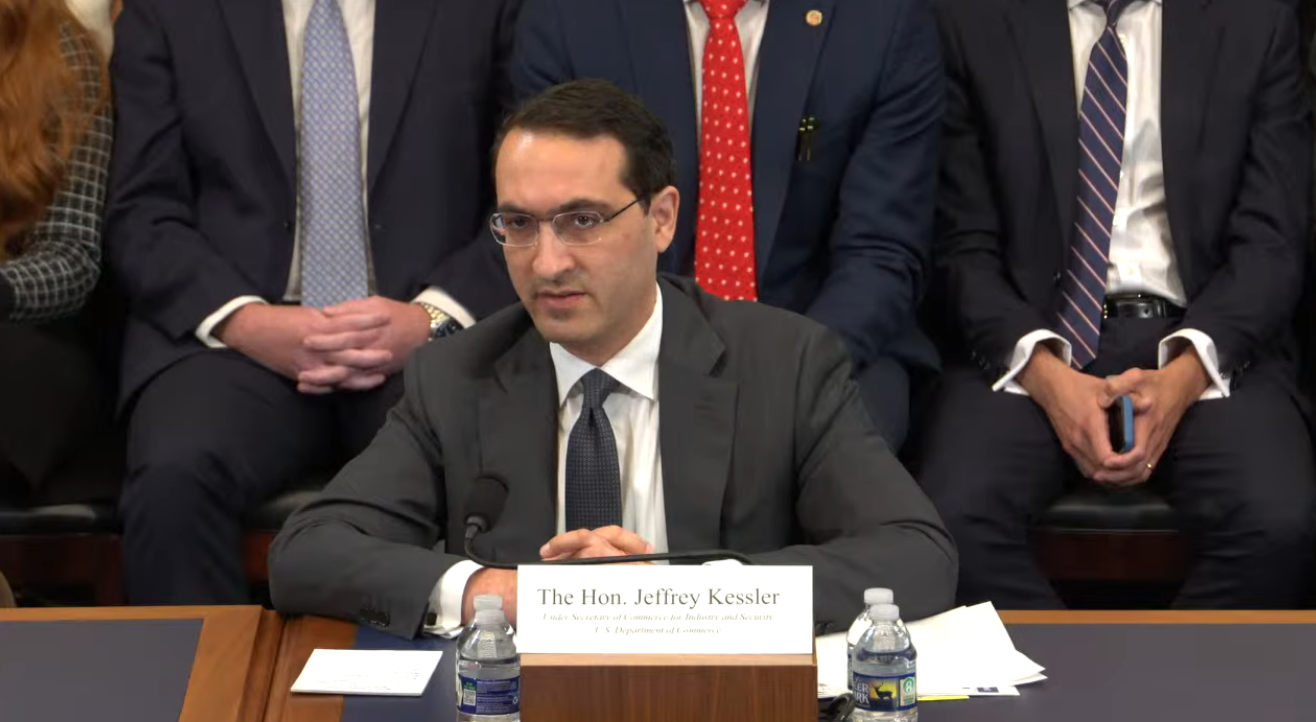
BIS chief Jeffrey Kessler responds to questions from lawmakers during a House Foreign Affairs Committee hearing Tuesday on the AI race and the agency’s FY 2027 budget. (Screengrab)
Officials both in China and the U.S. “have received a clear message from the top: Don’t do anything that would break the current truce,” Miller said. “They are testing the boundaries, taking actions they believe remain within acceptable limits.”
Which is to say that China’s nascent regulatory arsenal appears to be having its intended effect — perhaps ahead of schedule.
“Announcing a mechanism and enforcing it are two very different things,” Miller said, noting that China’s export-controls agency remains considerably smaller than understaffed BIS.
“What Beijing is doing now is gradually building enforcement capacity,” he added. “Over time, it wants to develop the ability to implement these controls on a global scale, in the same way the United States does.”
Read more from The Brief:
Which is to say that China’s nascent regulatory arsenal appears to be having its intended effect — perhaps ahead of schedule.
“Announcing a mechanism and enforcing it are two very different things,” Miller said, noting that China’s export-controls agency remains considerably smaller than understaffed BIS.
“What Beijing is doing now is gradually building enforcement capacity,” he added. “Over time, it wants to develop the ability to implement these controls on a global scale, in the same way the United States does.”
Read more from The Brief: