
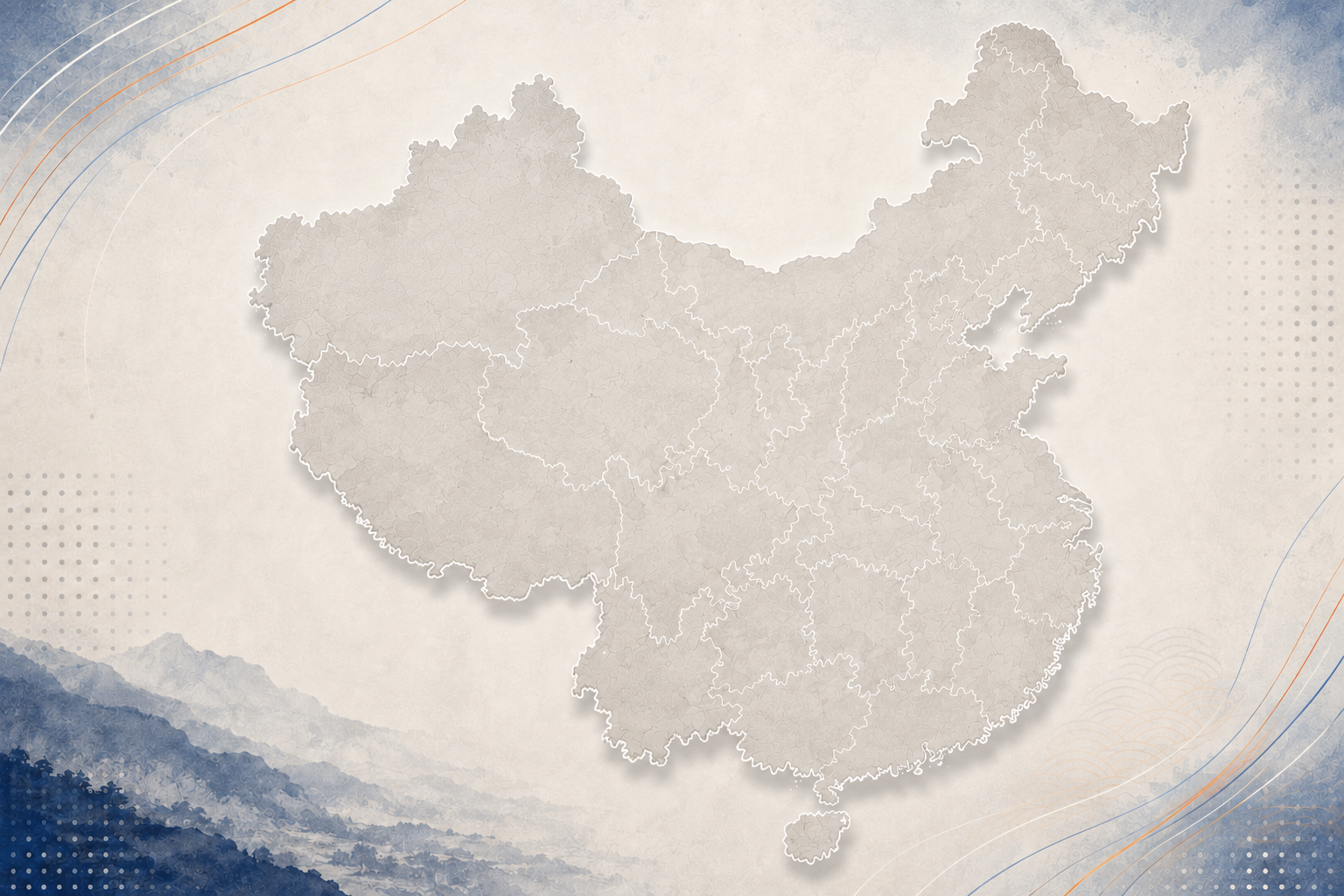
Announced on July 31 and taking effect on August 3, 2026, the U.S. Department of Homeland Security, acting as chair of the Forced Labor Enforcement Task Force (FLETF), added 43 Chinese companies to the UFLPA Entity List under the Uyghur Forced Labor Prevention Act. The additions were made under two UFLPA provisions — four entities were listed for participating in Xinjiang Uyghur Autonomous Region (XUAR) government labor transfer programs, and 41 for sourcing material from the XUAR or cooperating with the local government or the Xinjiang Production and Construction Corps (XPCC) on “poverty alleviation” or “pairing assistance” labor programs, with two entities appearing under both. The action brings the total list to 187 companies. Goods produced by these entities are subject to the UFLPA's rebuttable presumption that they were made wholly or in part with forced labor and are barred from entry into the United States.
Kharon connected 41 of the 43 newly listed entities to Xinjiang forced labor risk before the FLETF’s action, in several cases years earlier. Tianshan Aluminum Group Co., Ltd. — the Shenzhen-listed parent for XPCC 8th Division aluminum operations and one of the largest aluminum producers in Xinjiang — was added to Kharon’s data on May 4, 2022, more than four years before the UFLPA listing. Xinjiang Tianshan Lotus Pharmaceutical Co., Ltd. — the Changji-based producer of snow lotus and grape-derived medicines — was added September 20, 2022.
Inside the Network
The 43 additions span the sectors where Xinjiang forced-labor inputs and XPCC production have concentrated.
Aluminum and battery aluminum foil. Six aluminum-related entities were added — Tianshan Aluminum Group Co., Ltd. (which covers XPCC 8th Division operations from its Shihezi base), Jiangyin Xinren Aluminum Technology Co., Ltd., Jiangyin Xinren Aluminum Foil Technology Co., Ltd., Shihezi Xinren Battery Aluminum Foil Technology Co., Ltd., and Xinjiang Tianzhan New Material Technology Co., Ltd. — plus TBEA Co., Ltd., the Changji-based conglomerate whose aluminum, polysilicon, and coal operations run through its Xinjiang base. The battery-aluminum-foil subset touches the electric vehicle supply chain directly.
Cotton and textiles. Shandong Weiqiao Pioneering Group Co., Ltd. — one of the world’s largest cotton and aluminum producers — and its subsidiary Shandong Weiqiao Textile Technology Co., Ltd. are on the list, alongside Henan Tongzhou Cotton Industry Co., Ltd. and Fujian Septwolves Industry Co., Ltd. (apparel and cotton textiles).
Gold and mining. Shandong Gold Mining Co., Ltd. and Shandong Gold Smelting Co., Ltd. cover the gold supply chain from Shandong smelting; Xinjiang Jinchuan Mining Co., Ltd. operates the Jinshan Gold Mine in XUAR. Baiyin Nonferrous Group Co., Ltd. and Xinjiang Baiyin Mining Development Co., Ltd. cover copper and molybdenum.
Pharmaceuticals. Nine entities produce active pharmaceutical ingredients, herbal medicines, and finished drug products — including Xinjiang Nuziline Bio-Pharmaceutical Co., Ltd. and Nanjing Lilai Pharmaceutical Technology Co., Ltd. (both linked to conjugated estrogens), Guangxi Kelun Pharmaceutical Co., Ltd. (cephalosporin antibiotics), Yili Chuanning Biotechnology Co., Ltd. (antibiotic intermediates), and Xinjiang-based Tianshan Lotus Pharmaceutical, Huashidan Pharmaceutical, Biochemical Pharmaceutical, Tefeng Pharmaceutical, and Tefeng Pharmaceutical Industry.
Food and agriculture. Zhengzhou Synear Food Co., Ltd. (frozen dumplings, buns, wontons), Chacha Food Company, Limited (nuts and seeds), Chalkis Health Industry Co., Ltd. (tomato products from XPCC’s 6th Division), Kashgar Jiang Guoguo Agricultural Technology Co., Ltd. (nuts and fruits), the two Aodu Sugar entities in Aksu and Kashgar, and Xinjiang Tianyun Organic Agriculture Co., Ltd. (salmon and fish).
Titanium, carbon, capacitors, and other materials. Baoji Jucheng Titanium Industry Co., Ltd. and Jiangsu Tiangong Technology Co., Ltd. cover titanium. Alar Nanjiang Carbon, Xinjiang Tianshan Yingda Carbon, and Xinjiang Tianhongji Technology cover carbon and battery-anode materials. Hunan Aihua Group Co., Ltd. and Henan Guorong Electronic Technology Co., Ltd. cover aluminum electrolytic capacitors and chemical foil. SDIC Xinjiang Lithium Industry and SDIC Xinjiang Luobupo Potash cover lithium carbonate and potassium sulfate. Xinjiang Tianchi Energy Co., Ltd. covers coal and power. Xinjiang Communications Construction Group Co., Ltd. covers transportation infrastructure and warehousing.
Kharon's coverage of these networks draws on local media reporting and social media posts, company press releases, corporate records and financial disclosures, and other primary sources.
What This Triggers
Beginning August 3, 2026, U.S. Customs and Border Protection will apply the UFLPA’s rebuttable presumption to goods produced by the 43 newly listed entities. Importers seeking entry of any such goods must submit clear and convincing evidence that the goods were not produced with forced labor, along with complete upstream supply chain documentation.
The compliance impact runs across sectors. U.S. importers of aluminum products, EV batteries, cotton apparel, gold jewelry, pharmaceuticals, canned tomatoes, frozen foods, nuts and snacks, or industrial and construction materials from Chinese suppliers need to audit their upstream inputs against these 43 entities — and against any majority-owned subsidiaries that fall under the presumption. Bill-of-materials tracing and supplier certifications are the first line; entity-by-entity screening of manufacturers, tier-2 suppliers, and raw-material providers is the second.
For companies monitoring exposure through Kharon, none of this work begins from scratch. Kharon had already mapped 41 of the 43 entities to Xinjiang forced-labor risk — Tianshan Aluminum operations since May 2022, Xinjiang pharmaceutical operations since September 2022, and dozens more spanning the four intervening years. For those companies already monitoring their supply chains with Kharon, today’s news was not a surprise.
The Bigger Picture
The recent UFLPA update isn’t the ceiling. Kharon continuously identifies Xinjiang-based operations and downstream sourcing entities exposed to companies participating in high-risk Xinjiang labor programs and their downstream supply chains — the pattern the UFLPA presumption is designed to catch. The next entity like Tianshan Aluminum Group is already in the data.Kharon continuously monitors the networks that matter — flagging exposure before it reaches your desk. Request a briefing to learn more today.