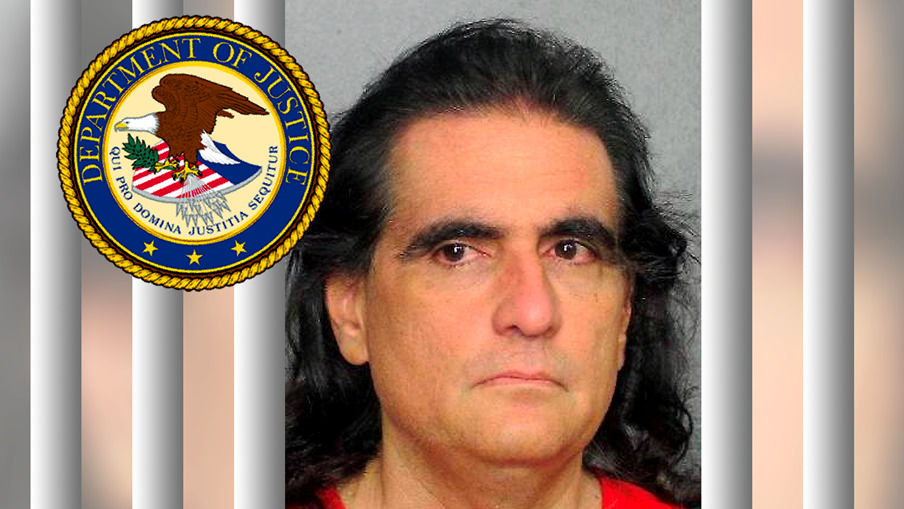
After serving as a U.S. informant, a Colombian businessman failed to surrender by an agreed-upon date, leading federal prosecutors to indict him on corruption charges and the U.S. to impose sanctions on him, according to a filing unsealed Wednesday in the case.
Alex Nain Saab Moran, who is closely associated with Venezuelan leader Nicolas Maduro, was extradited in October 2021 from the island of Cabo Verde to face U.S. charges that he laundered the proceeds of a foreign bribery scheme. Saab was indicted and sanctioned in July 2019 along with a business partner, Alvaro Enrique Pulido Vargas, and their corporate network.
The sanctions were tightened months later, and the U.K. designated them in July 2021.
Saab had laundered funds relating to a Venezuelan government-issued housing contract and the U.S. sought the forfeiture of more than USD 350 million associated with the matter, prosecutors said at the time of his indictment. He was arrested in 2020 in Cabo Verde as his aircraft was refueling and fought his extradition in part by claiming diplomatic immunity. The immunity claim is the subject of litigation in the U.S. Court of Appeals for the 11th Circuit.
However, Saab also began meeting with U.S. officials in August 2016 and signed a cooperating source agreement in June 2018 with the Drug Enforcement Administration (DEA), according to the unsealed filing. Thereafter, he became an active law enforcement source, communicating with DEA agents and agreeing to disgorge profits from his illicit activity, the unsealed filing said. But the relationship would end after he received a date to surrender, according to the filing.
The record had been kept under seal due to U.S. concerns about the safety and security of Saab and his family should the information be disclosed to Maduro’s government, the filing said.
Saab has pleaded not guilty. A lawyer for Saab was cited by Reuters on Wednesday as saying in a statement that his client had only met with U.S. authorities to explain that his companies had done nothing wrong, and that Venezuela was fully aware of his engagements.
The matter had come before a sealed hearing during a status conference on Wednesday about setting a date for trial, according to an unsealing order. Both parties “failed to establish compelling reasons” to keep the filing sealed, the judge ruled, noting that Saab’s family couldn’t show any effort made to depart Venezuela and they didn’t take a U.S. offer to help them leave.
“The defendant could not proffer any particularized threats against the defendant’s family which may outweigh the public’s right to access these records,” U.S. District Judge Robert Scola ruled.
The nature of Saab’s cooperation with U.S. authorities is laid out in the unsealed court filing. In 2016 and 2017, before signing the agreement, he debriefed the DEA and the FBI on multiple occasions. By June 2018, he’d provided a proffer document that said he’d paid bribes to Venezuelan officials in connection with contracts he received to provide food to the country.
The food program, known as CLAP, was cited in a 2019 U.S. advisory about Venezuelan corruption. A separate indictment unsealed in October 2021 centers on the role of Saab’s partner Pulido in graft associated with CLAP, including bribes paid to a Venezuelan governor.
Between August 2018 and February 2019, after he’d formally become a cooperating source, Saab made multiple wire transfers, each worth millions of dollars, to bank accounts controlled by the DEA, according to the filing. In April 2019, he met in Europe with the DEA and U.S. prosecutors, where he was given a deadline of May 30, 2019, to surrender to U.S. authorities.
The ultimatum included a warning: If he failed to surrender on May 30, 2019, his status as a cooperating source would end and he would be charged criminally, the filing said. DEA agents reiterated the deadline in subsequent text messages, noting specifically that a failure to surrender also included being placed under U.S. sanctions. The date passed with no further contact from Saab, and the U.S. filed the charges and announced the sanctions in July 2019.
Alex Nain Saab Moran, who is closely associated with Venezuelan leader Nicolas Maduro, was extradited in October 2021 from the island of Cabo Verde to face U.S. charges that he laundered the proceeds of a foreign bribery scheme. Saab was indicted and sanctioned in July 2019 along with a business partner, Alvaro Enrique Pulido Vargas, and their corporate network.
The sanctions were tightened months later, and the U.K. designated them in July 2021.
Saab had laundered funds relating to a Venezuelan government-issued housing contract and the U.S. sought the forfeiture of more than USD 350 million associated with the matter, prosecutors said at the time of his indictment. He was arrested in 2020 in Cabo Verde as his aircraft was refueling and fought his extradition in part by claiming diplomatic immunity. The immunity claim is the subject of litigation in the U.S. Court of Appeals for the 11th Circuit.
However, Saab also began meeting with U.S. officials in August 2016 and signed a cooperating source agreement in June 2018 with the Drug Enforcement Administration (DEA), according to the unsealed filing. Thereafter, he became an active law enforcement source, communicating with DEA agents and agreeing to disgorge profits from his illicit activity, the unsealed filing said. But the relationship would end after he received a date to surrender, according to the filing.
The record had been kept under seal due to U.S. concerns about the safety and security of Saab and his family should the information be disclosed to Maduro’s government, the filing said.
Saab has pleaded not guilty. A lawyer for Saab was cited by Reuters on Wednesday as saying in a statement that his client had only met with U.S. authorities to explain that his companies had done nothing wrong, and that Venezuela was fully aware of his engagements.
The matter had come before a sealed hearing during a status conference on Wednesday about setting a date for trial, according to an unsealing order. Both parties “failed to establish compelling reasons” to keep the filing sealed, the judge ruled, noting that Saab’s family couldn’t show any effort made to depart Venezuela and they didn’t take a U.S. offer to help them leave.
“The defendant could not proffer any particularized threats against the defendant’s family which may outweigh the public’s right to access these records,” U.S. District Judge Robert Scola ruled.
The nature of Saab’s cooperation with U.S. authorities is laid out in the unsealed court filing. In 2016 and 2017, before signing the agreement, he debriefed the DEA and the FBI on multiple occasions. By June 2018, he’d provided a proffer document that said he’d paid bribes to Venezuelan officials in connection with contracts he received to provide food to the country.
The food program, known as CLAP, was cited in a 2019 U.S. advisory about Venezuelan corruption. A separate indictment unsealed in October 2021 centers on the role of Saab’s partner Pulido in graft associated with CLAP, including bribes paid to a Venezuelan governor.
Between August 2018 and February 2019, after he’d formally become a cooperating source, Saab made multiple wire transfers, each worth millions of dollars, to bank accounts controlled by the DEA, according to the filing. In April 2019, he met in Europe with the DEA and U.S. prosecutors, where he was given a deadline of May 30, 2019, to surrender to U.S. authorities.
The ultimatum included a warning: If he failed to surrender on May 30, 2019, his status as a cooperating source would end and he would be charged criminally, the filing said. DEA agents reiterated the deadline in subsequent text messages, noting specifically that a failure to surrender also included being placed under U.S. sanctions. The date passed with no further contact from Saab, and the U.S. filed the charges and announced the sanctions in July 2019.