Before Unitree Robotics filed for its initial public offering in Shanghai last month, seeking to raise RMB 4.2 billion ($610 million), it had spent the past few years becoming the most visible face of China’s robotics rise.
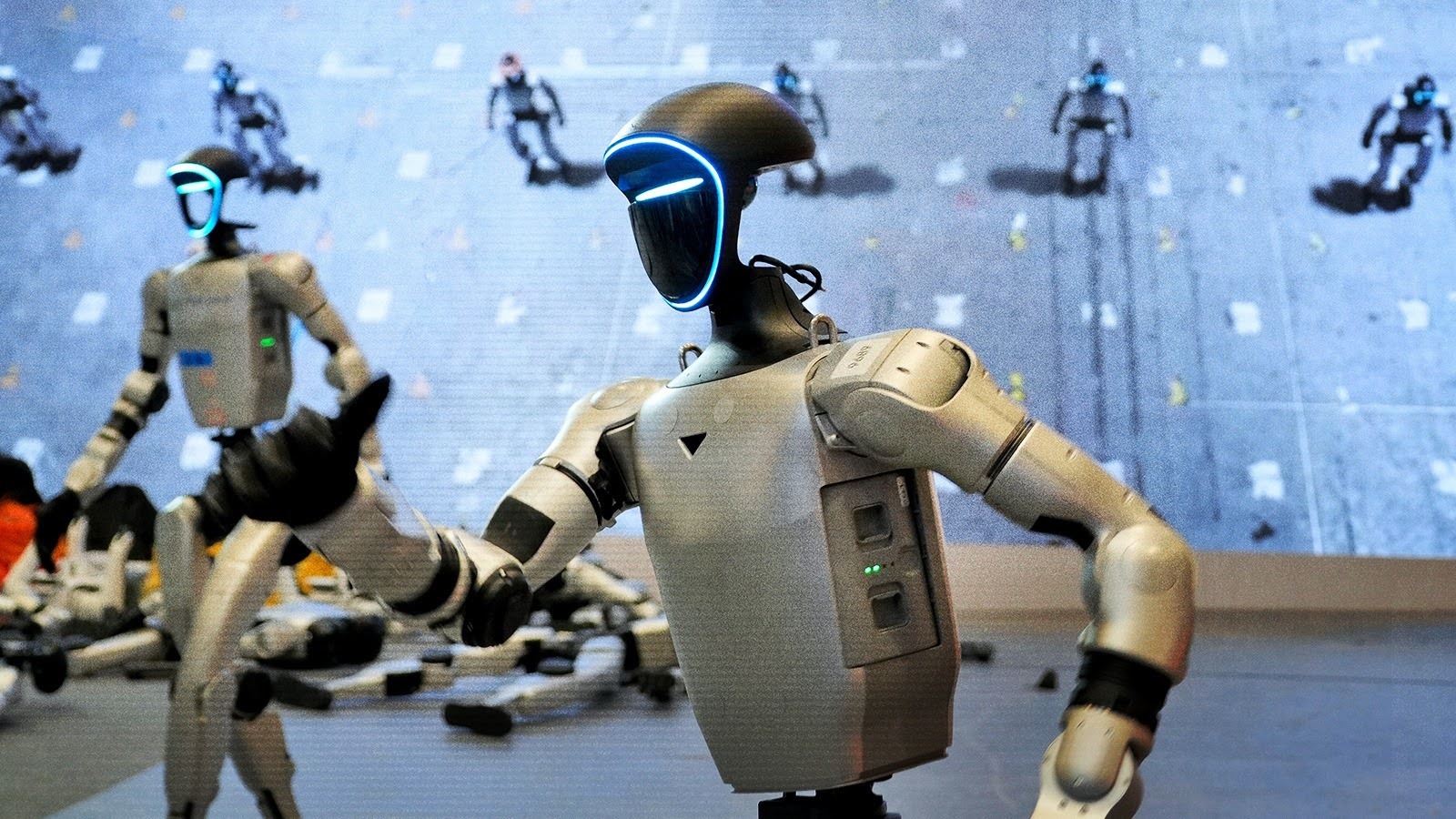
Its four-legged robots had drilled alongside People’s Liberation Army soldiers, patrolled factory floors, and performed before the 2023 Super Bowl. Its humanoid versions had danced before hundreds of millions of Chinese television viewers for this year’s Spring Festival Gala.
Unitree’s IPO filings tell the story of a homegrown champion, benefiting from “favorable policies” that give Chinese robotics firms “a significant advantage in production speed and cost control” over their U.S. rivals. But a Kharon review tells another story: that of a company whose supply chain, at least for now, depends on Western technology it does not control, raising capital just as Washington debates cutting off that access.
Its IPO “is not merely a commercial milestone,” Cheung said, “but part of China’s broader positioning in the global race for physical AI.”
Unmentioned in Unitree’s filings: Its military ties. But new Kharon research into Unitree’s partner network found connections to a weapons platform built for the PLA’s front lines.
Its four-legged robots had drilled alongside People’s Liberation Army soldiers, patrolled factory floors, and performed before the 2023 Super Bowl. Its humanoid versions had danced before hundreds of millions of Chinese television viewers for this year’s Spring Festival Gala.
Unitree’s IPO filings tell the story of a homegrown champion, benefiting from “favorable policies” that give Chinese robotics firms “a significant advantage in production speed and cost control” over their U.S. rivals. But a Kharon review tells another story: that of a company whose supply chain, at least for now, depends on Western technology it does not control, raising capital just as Washington debates cutting off that access.
- Just in recent weeks, Unitree was called out in a congressional hearing on national security risks and briefly listed by the Pentagon as an alleged Chinese military company, all while it’s caught in the U.S. push for a national robotics strategy bill.
Its IPO “is not merely a commercial milestone,” Cheung said, “but part of China’s broader positioning in the global race for physical AI.”
Unmentioned in Unitree’s filings: Its military ties. But new Kharon research into Unitree’s partner network found connections to a weapons platform built for the PLA’s front lines.
- This time, it’s not about robot dogs. It’s about those robot wolves.
A Robot Revenue Surge—and What Drove It
Unitree, founded in 2016, reported a rapid revenue increase over the past few years, jumping to RMB 1.15 billion ($164 million) across the first three quarters of 2025. Overseas sales have driven much of that expansion.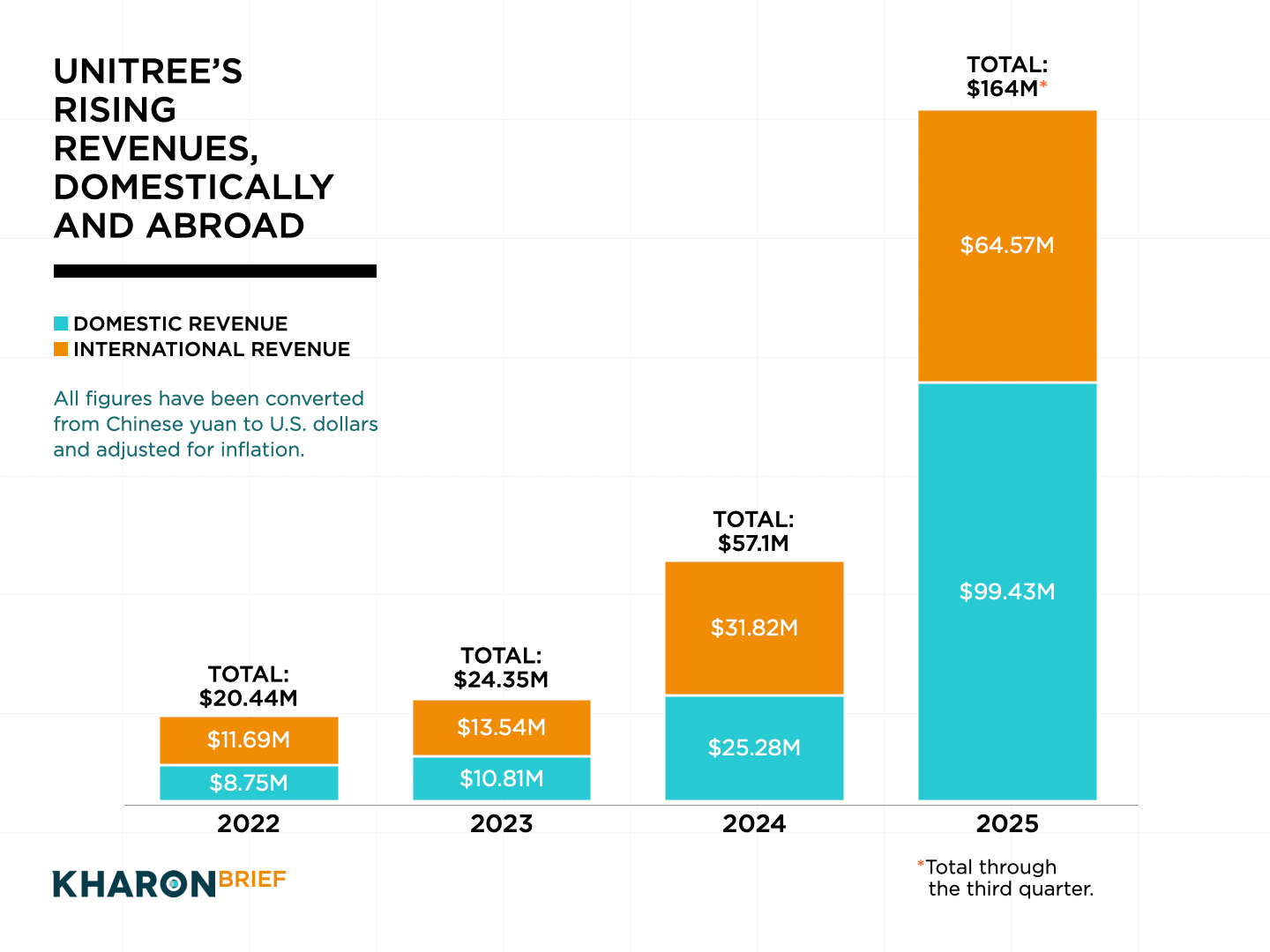
Unitree’s revenue from abroad continued to show growth through the first three quarters of 2025, even while dropping in terms of overall share; the robotics firm said domestic orders had surged because of “increased nationwide brand recognition” following the Spring Festival event and “the rapid development and policy support of China’s AI and robotics industry.”
Unitree’s product mix has also shifted sharply. Quadruped robots had long been the company’s backbone, but humanoid systems—which accounted for less than 2% of revenue in 2023—made up more than half by last year.
Unitree doesn’t say what, exactly, it is importing. But its disclosed supplier relationships connect the dots to a few major Western players.
They also “happen to be the hardest to replace,” she said.
That leads Cheung, at the Jamestown Foundation, to believe Unitree’s 20% figure understates the extent of its foreign exposure. Research he published last year pointed to Unitree dependencies that extend well beyond U.S. chips, to include critical components from Japanese and German suppliers, none of them disclosed in the prospectus.
“You can say 80% is made in China, but if the machines, the key parts, and the underlying technology are still coming from Japan, Germany, or the U.S., then using country of origin to define supply chain independence is frankly delusional,” Cheung said.
Unitree’s product mix has also shifted sharply. Quadruped robots had long been the company’s backbone, but humanoid systems—which accounted for less than 2% of revenue in 2023—made up more than half by last year.
- The company said advances in AI “drove demand from research and education customers,” accelerating that change.
Built in China, Dependent on the West
Unitree vows in its prospectus to build a “full-stack domestic infrastructure,” but imported materials, sometimes purchased through domestic intermediaries, for now account for roughly 20% of its total procurement. Geopolitical tensions, trade restrictions, and export controls “may have an adverse impact” on its access to those supplies, it acknowledges.Unitree doesn’t say what, exactly, it is importing. But its disclosed supplier relationships connect the dots to a few major Western players.
- Unitree’s prospectus says Beijing Plink AI Technology Co., Ltd., one of its top electrical-component vendors, supplies it with “certain international-brand” modules and development boards. Plink’s related product listings online carry only one such international brand: Nvidia’s Jetson platform, which enables robots to process information in real time and interact with humans and the physical world. Nvidia had confirmed in a Chinese-language press release last year that Unitree was an early adopter of its Jetson AGX Thor, a developer kit and production-grade module launched in August.
- Shanghai Yaoli Electronic Technology Co., Ltd. provides “cameras and core boards” to Unitree “as a distributor for a certain international brand,” the prospectus says. A 2025 Chinese drone-industry media post described Yaoli as a “distributor of Intel RealSense and NUC series products,” holding an authorized Intel distribution license and gold-level Intel Partner Alliance membership, and as “a vital bridge” between Intel and China’s AI enterprises. An archived Intel webpage from 2025 also listed Yaoli as a RealSense reseller.
- Weikeng International Trade (Shanghai) Co., another listed supplier to Unitree of electronic components, sources chips and power components from U.S. and European semiconductor firms, its website says. Among those components are the semiconductor switches, known as MOSFETS, that control how power flows through a robot’s motors.
They also “happen to be the hardest to replace,” she said.
That leads Cheung, at the Jamestown Foundation, to believe Unitree’s 20% figure understates the extent of its foreign exposure. Research he published last year pointed to Unitree dependencies that extend well beyond U.S. chips, to include critical components from Japanese and German suppliers, none of them disclosed in the prospectus.
“You can say 80% is made in China, but if the machines, the key parts, and the underlying technology are still coming from Japan, Germany, or the U.S., then using country of origin to define supply chain independence is frankly delusional,” Cheung said.
China’s Bet on Embodied AI and Unitree’s Ties to Robot Wolves
Unitree plans to devote substantial capital from its IPO to research and development, which could shift that supply chain mix. Its filing earmarks nearly half of its $610 million fundraising target for “embodied AI,” meaning the integration of software, data, and hardware into machines that operate in the physical world.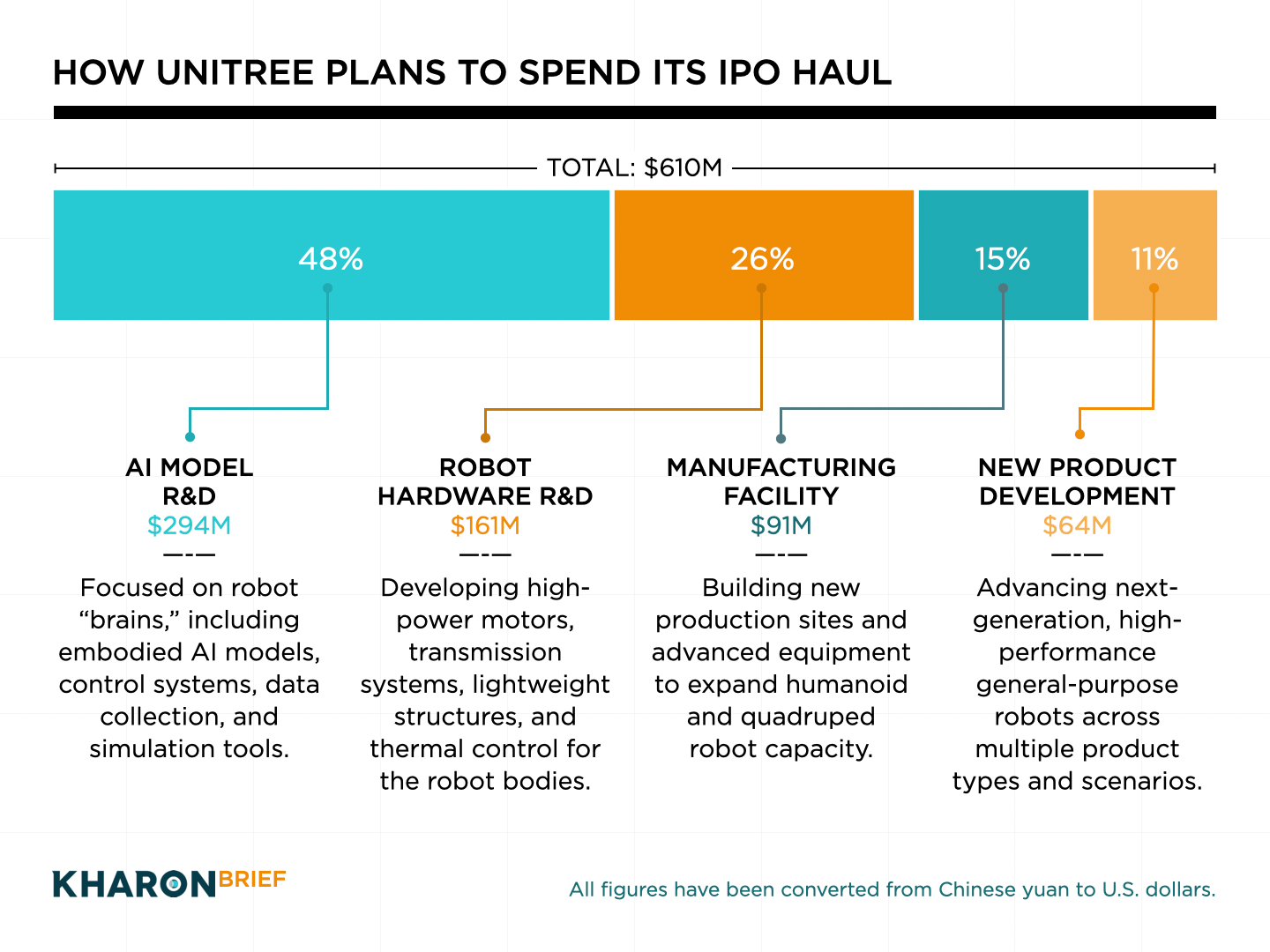
Bigger picture: China’s 15th Five-Year Plan lists embodied AI as a priority “future industry,” and Beijing has made clear it intends to lead it.
- “Unitree is not just another robotics company,” Cheung said. “It’s part of a broader effort to integrate China’s capabilities across AI, chips, and advanced manufacturing.”
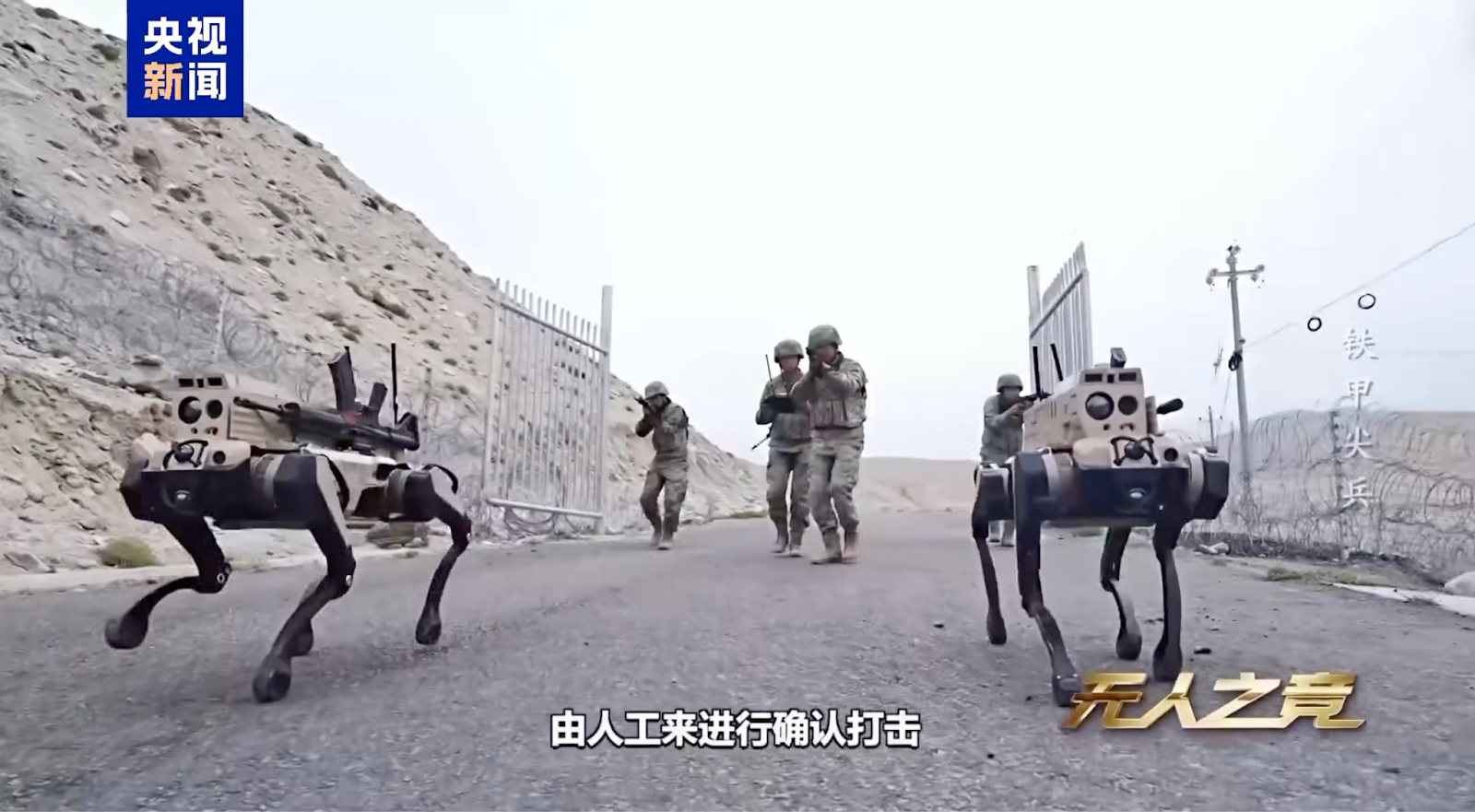
PLA soldiers operate alongside “robotic wolf” units during an urban warfare training exercise, in footage released March 26 by China Central Television. (CCTV)
In action: CCTV last month broadcasted footage of the “Robot Wolf,” a combat platform that first appeared in PLA parades last year, conducting “PLA urban warfare drills.”
The latest version of the wolf, CCTV reported, comes with what it called a “smarter brain” that can “autonomously identify and aim at targets,” leaving only the final strike decision to humans. It can carry miniature missiles and grenade launchers. The same footage unveiled a variant called “Dark Shadow,” described as built to “charge the front lines for reconnaissance and detection.”
Unitree, which pledged in 2022 “not to weaponize our robots or enable others to do so,” makes no reference to military applications in its prospectus. But Kharon research traced recent Unitree connections to Wuba Intelligent Technology (Hangzhou) Co., the robotics company behind the wolves:
Read more from The Brief:
The latest version of the wolf, CCTV reported, comes with what it called a “smarter brain” that can “autonomously identify and aim at targets,” leaving only the final strike decision to humans. It can carry miniature missiles and grenade launchers. The same footage unveiled a variant called “Dark Shadow,” described as built to “charge the front lines for reconnaissance and detection.”
Unitree, which pledged in 2022 “not to weaponize our robots or enable others to do so,” makes no reference to military applications in its prospectus. But Kharon research traced recent Unitree connections to Wuba Intelligent Technology (Hangzhou) Co., the robotics company behind the wolves:
- In March, Unitree partnered with Hangzhou-based Baweitong Technology Co., Ltd., a transportation data and AI firm, to release a “firefighting reconnaissance robot dog,” according to a Baweitong press release. Baweitong was founded in 2017 with investment from state-owned enterprises, including CRRC Corporation, which the Pentagon designated as a Chinese military company in 2021.
- In February, Baweitong signed a strategic cooperation agreement with Wuba Intelligent Technology. The Robot Wolf maker is a subsidiary of China South Industries Group Automation Research Institute Co., Ltd., one of the country’s largest state-owned defense conglomerates.
Read more from The Brief:
- ‘The Robot Dog’s Time to Kill’: At China’s Star Robotics Firm, the Military Ties Keep Mounting
- A Chinese AI Startup Said It Tracked U.S. Stealth Bombers Over Iran. It Wasn’t What It Seemed.
- The U.S. Restricted China’s Chipmaking-Tech Champion. Its New Spinoff Is Another Story.
- U.S. Briefly Adds Alibaba, BYD and Other High-Profile Firms to List of Chinese Military Companies