Several major Chinese pharmaceutical companies have obtained drug ingredients from biotech firms that have participated in government-sponsored labor transfers or are based in Xinjiang, a region of China subject to stringent U.S. import bans due to forced labor concerns.
These pharmaceutical firms, including subsidiaries of large Chinese enterprises such as Sinopharm, have previously received hundreds of millions of dollars of Xinjiang-origin chemical and pharmaceutical products from biotech firms like Yili Chuanning Biotechnology.
A publicly listed company on the Shenzhen Stock Exchange, Yili Chuanning manufactures and distributes biotechnology products, and is active in the research, development, and industrialization of biological fermentation technology in China. According to its corporate disclosures, the company is located in the Khorgos Economic Development Zone, a Xinjiang industrial park.
In 2021, Chinese media reported that a Chinese Communist Party (CCP) committee organized a government-sponsored labor transfer to the Khorgos Economic Zone.
The U.S. government’s Xinjiang Supply Chain Business Advisory warns that companies located within industrial parks that have received government-sponsored labor transfers or poverty alleviation subsidies may pose forced labor risk.
Between 2019 and 2021, the most recent available range for which data is available, Yili Chuanning received roughly a third of its total purchases from Yili Guantong Biological Group, a Xinjiang-based biotechnology manufacturer. In a product catalog published by the Chinese government, Yili Guantong was listed as a company engaged in “poverty alleviation activities.” Yili Chuanning received products valued at close to one hundred million dollars per year from Yili Guantong.
Kharon has published several stories in the past two years identifying forced labor exposure through supply chains in different industries. Some of those stories include insights on Chinese sportswear companies, footwear manufacturing, and beer imports, amongst others.
The U.S. government is reportedly planning to announce new additions to the list of companies subject to U.S. import bans over forced labor concerns ahead of the second anniversary of the implementation of the Uyghur Forced Labor Prevention Act (UFLPA).
Last month, the European Parliament passed a law that would ban products made with forced labor from entering the EU market, including products sold online.
These pharmaceutical firms, including subsidiaries of large Chinese enterprises such as Sinopharm, have previously received hundreds of millions of dollars of Xinjiang-origin chemical and pharmaceutical products from biotech firms like Yili Chuanning Biotechnology.
A publicly listed company on the Shenzhen Stock Exchange, Yili Chuanning manufactures and distributes biotechnology products, and is active in the research, development, and industrialization of biological fermentation technology in China. According to its corporate disclosures, the company is located in the Khorgos Economic Development Zone, a Xinjiang industrial park.
In 2021, Chinese media reported that a Chinese Communist Party (CCP) committee organized a government-sponsored labor transfer to the Khorgos Economic Zone.
The U.S. government’s Xinjiang Supply Chain Business Advisory warns that companies located within industrial parks that have received government-sponsored labor transfers or poverty alleviation subsidies may pose forced labor risk.
Between 2019 and 2021, the most recent available range for which data is available, Yili Chuanning received roughly a third of its total purchases from Yili Guantong Biological Group, a Xinjiang-based biotechnology manufacturer. In a product catalog published by the Chinese government, Yili Guantong was listed as a company engaged in “poverty alleviation activities.” Yili Chuanning received products valued at close to one hundred million dollars per year from Yili Guantong.
Kharon has published several stories in the past two years identifying forced labor exposure through supply chains in different industries. Some of those stories include insights on Chinese sportswear companies, footwear manufacturing, and beer imports, amongst others.
The U.S. government is reportedly planning to announce new additions to the list of companies subject to U.S. import bans over forced labor concerns ahead of the second anniversary of the implementation of the Uyghur Forced Labor Prevention Act (UFLPA).
Last month, the European Parliament passed a law that would ban products made with forced labor from entering the EU market, including products sold online.
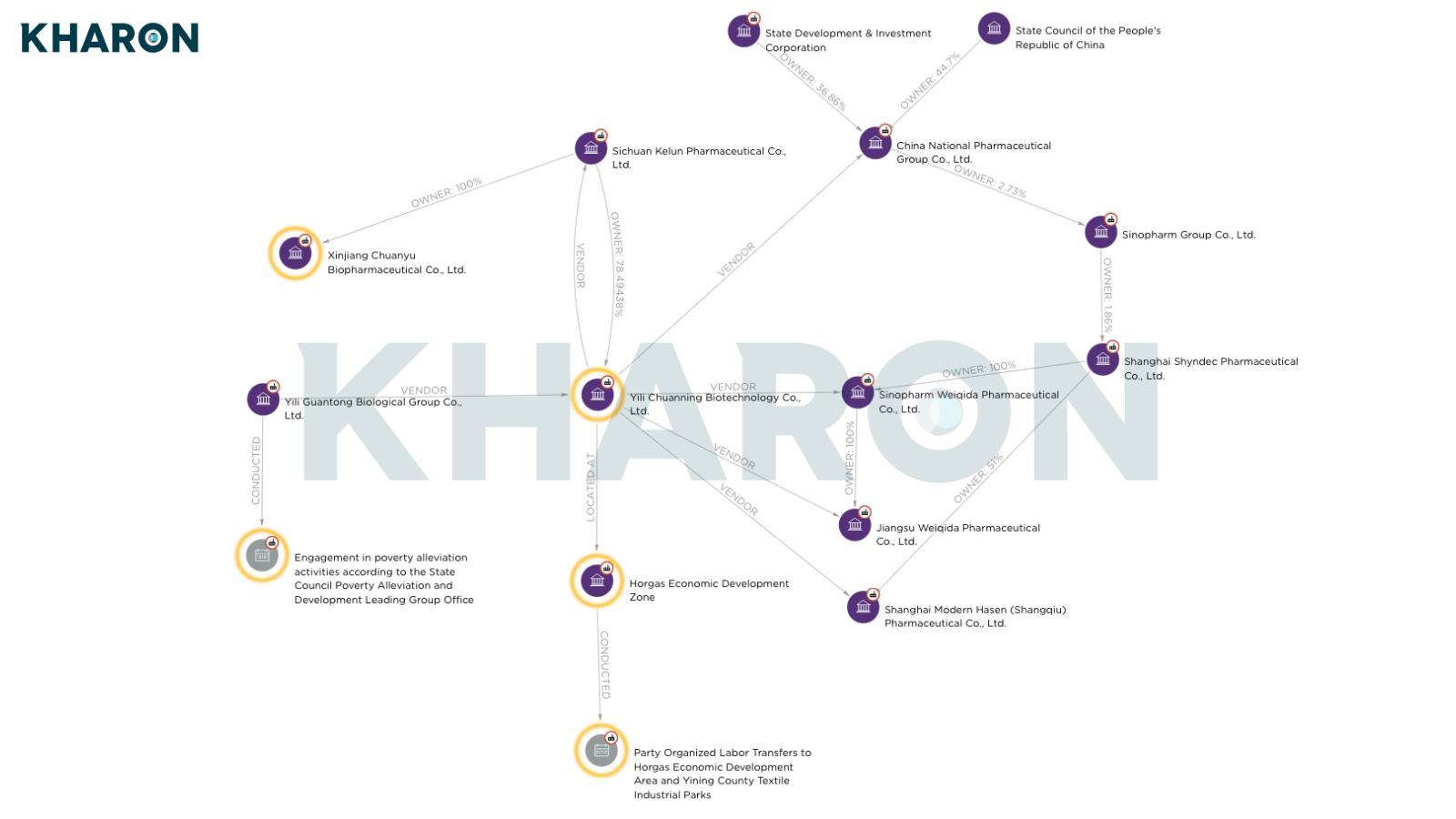
Kharon users can explore this insight on ClearView. Click here to view.