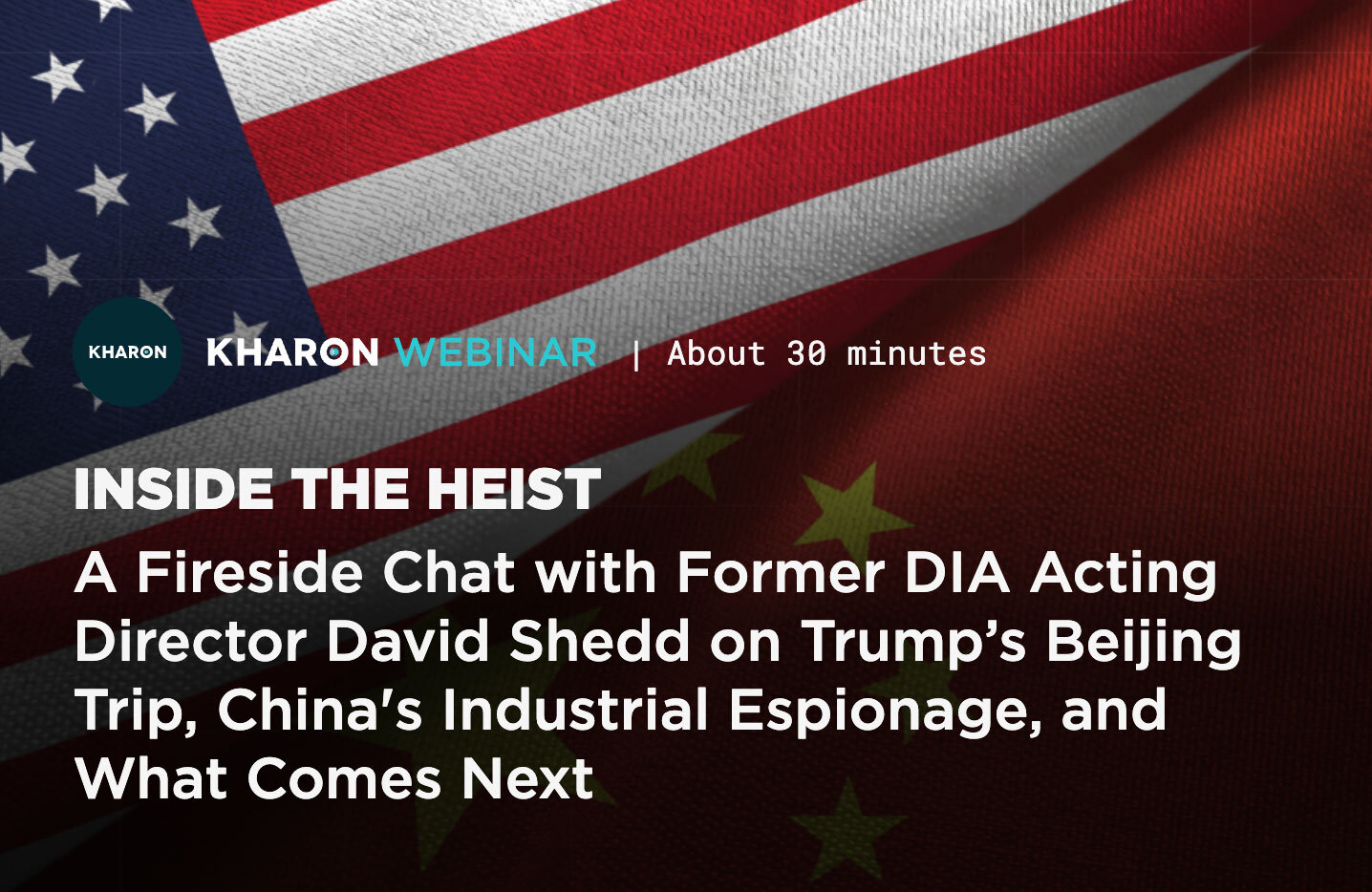
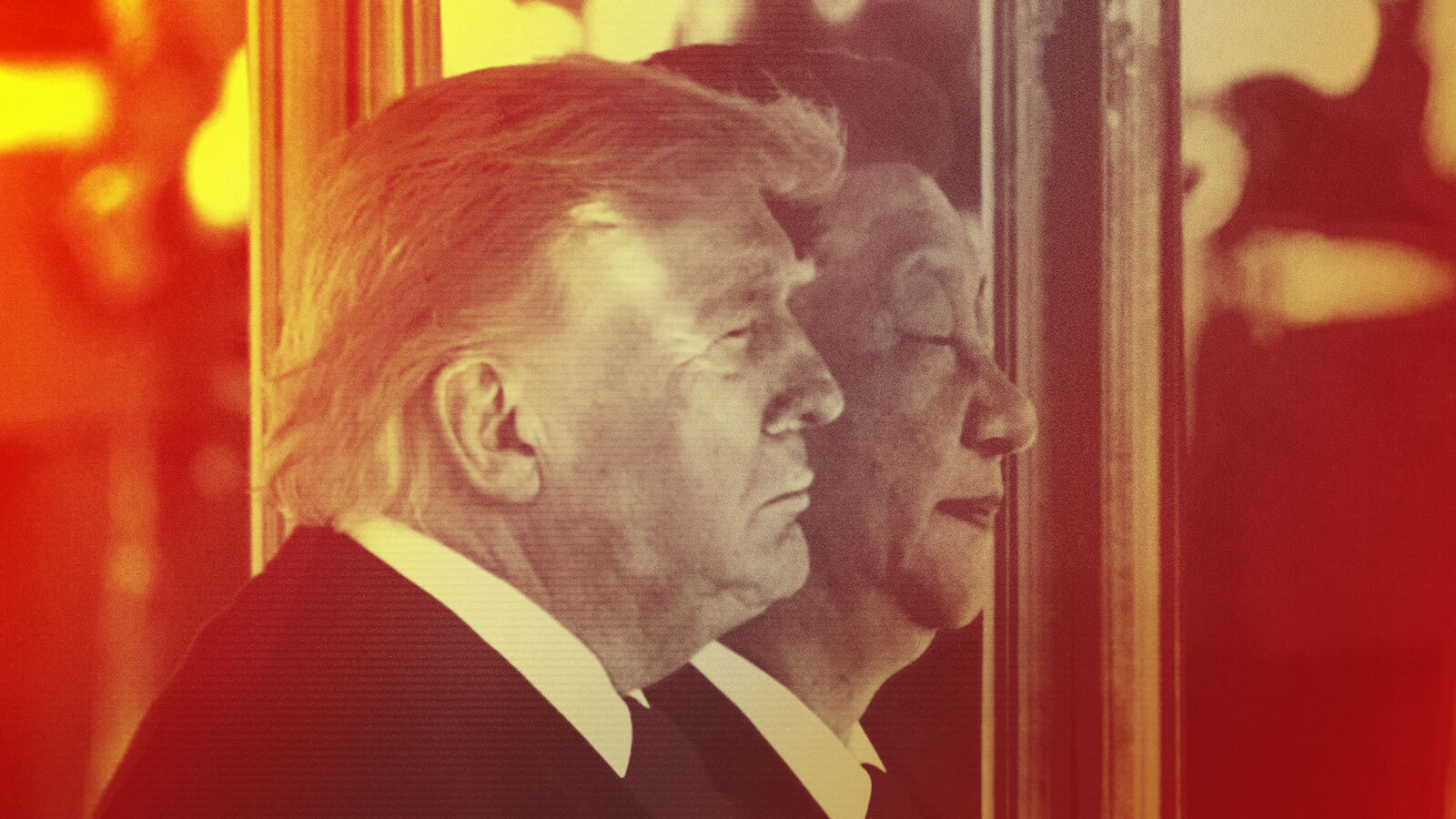
Both sides declared this month’s summit between President Trump and Chinese leader Xi Jinping a success, using the same phrase to characterize their efforts: “strategic stability.” But less than three days after Air Force One departed Beijing, the follow-through began to diverge from the rhetoric.
On Tuesday, the U.S. Department of Justice announced indictments against four of the largest Chinese shipping container firms and seven Chinese executives tied to alleged cartel and price-fixing activity. On Wednesday, the Financial Times reported that China had moved to ban Nvidia gaming chips.
David Shedd, former acting director of the Defense Intelligence Agency, told Kharon in an interview Wednesday that the most important signals from the summit may be found not in the diplomatic messaging itself but in the enforcement actions that followed.
“Sometimes you have to look for what didn’t happen as much as what was announced in terms of the pomp and circumstance,” said Shedd, who spent more than three decades inside the U.S. intelligence and national security community, including at the White House National Security Council. “There was no joint statement at the end of the meetings. That tells me a lot.”
The gap between rhetoric and execution is now the defining feature of the post-summit environment, and the lens through which U.S.-China risk should be read. Here are three things Shedd says to note in the post-summit environment.
The White House framed the summit as a “deal.” Its fact sheet emphasized Boeing aircraft orders, agricultural purchases, and the creation of a U.S.-China Board of Trade and a Board of Investment as the agreement’s “cornerstone.”
China’s readout, by contrast, was doctrinal: It reflected a Xi-led party worldview of managed great-power relations, in which “strategic stability” was framed less as a transactional outcome than as a political framework. In Beijing’s telling, “strategic stability” carries explicit political conditions: The United States must respect China’s “core interests” and acknowledge each side’s development path. Taiwan, which Xi called the “most important issue” in the relationship, is central; the White House fact sheet, for its part, did not mention Taiwan at all.
And while Washington framed the summit as coordination on global security issues, including Iran and the Strait of Hormuz, Beijing’s readout omitted Iran entirely, a notable divergence given the conflict’s global economic effects and threat to regional stability.
Shedd’s readout is shared by some China analysts in Washington. Zongyuan Zoe Liu, of the Council on Foreign Relations, described the outcome as “a mutually useful ambiguity.”
The broader signal, he said, is that U.S. agencies are increasingly “speaking with one voice” on reducing strategic dependence on China.
That track was already visible before the summit. In recent weeks, the White House accused China of industrial-scale AI theft, the Federal Communications Commission expanded actions targeting Chinese telecom infrastructure, and federal prosecutors continued espionage-related indictments tied to China.
The scale behind that enforcement posture is structural, with Shedd arguing that U.S. actions are in part a response to China’s expanding state-directed intelligence and cyber apparatus. He pointed to China's 2017 National Intelligence Law requiring every Chinese citizen and legal entity to support the Communist Party when called upon, as well as to “a reported 50-to-1 cyber-capacity ratio over U.S. government resources.”
“There is such a huge amount of industrial espionage on the part of the Chinese inside the United States against corporate America,” Shedd said. “You’ll wake up tomorrow to another headline, and yet another one after that.”
Three areas stand out as early indicators of where the U.S.-China competition is heading next.
The 1260H list: One of the clearest enforcement signals Shedd pointed to is the Pentagon’s expanding 1260H list, which identifies Chinese companies linked to the People’s Liberation Army and restricts their participation in parts of the U.S. defense industrial base.
Enforcement tied to the list is set to intensify beginning June 30, increasing pressure on U.S. defense contractors and suppliers to further vet exposure to Chinese military-linked entities across their commercial relationships and supply chains.
The list currently includes 134 entities, but Shedd said he expects “a significant addition” of companies in the next update as Washington broadens scrutiny of Chinese-linked supply-chain exposure. Calling the mechanism “very, very important,” Shedd described the list as part of a broader effort to identify Chinese entities embedded in commercial relationships tied to U.S. defense contractors and critical technologies.
Export controls and AI enforcement: Semiconductor export controls and AI governance were largely absent from the summit’s formal messaging—a gap that Shedd said should not be misread as resolution.
“The greatest mistake is to assume these issues are being resolved elsewhere,” he said. “If they were, they would have been part of the discussions.”
Liza Tobin, a former China director at the National Security Council, said the administration’s real posture will become visible through three enforcement fronts: whether Washington expands Iran sanctions enforcement on Chinese entities, whether AI export controls tighten again after stalling over the past year, and whether China tariffs are preserved to support long-term supply-chain diversification.
Taiwan and operational signaling: Taiwan remains the clearest geopolitical watchpoint. A $14 billion Taiwan military package is approaching Trump’s desk, while his post-summit comments raised fresh questions about U.S. deterrence posture.
“What I’ll be watching for,” Shedd said, “is the pace of Taiwan arms sales, Indo-Pacific military planning, and coordination exercises with allies including Japan, Australia, South Korea, and India.”
On Tuesday, the U.S. Department of Justice announced indictments against four of the largest Chinese shipping container firms and seven Chinese executives tied to alleged cartel and price-fixing activity. On Wednesday, the Financial Times reported that China had moved to ban Nvidia gaming chips.
David Shedd, former acting director of the Defense Intelligence Agency, told Kharon in an interview Wednesday that the most important signals from the summit may be found not in the diplomatic messaging itself but in the enforcement actions that followed.
“Sometimes you have to look for what didn’t happen as much as what was announced in terms of the pomp and circumstance,” said Shedd, who spent more than three decades inside the U.S. intelligence and national security community, including at the White House National Security Council. “There was no joint statement at the end of the meetings. That tells me a lot.”
The gap between rhetoric and execution is now the defining feature of the post-summit environment, and the lens through which U.S.-China risk should be read. Here are three things Shedd says to note in the post-summit environment.
'Strategic stability' — but different definitions
While Washington and Beijing may have converged on citing “strategic stability,” their official readouts told two different stories.The White House framed the summit as a “deal.” Its fact sheet emphasized Boeing aircraft orders, agricultural purchases, and the creation of a U.S.-China Board of Trade and a Board of Investment as the agreement’s “cornerstone.”
China’s readout, by contrast, was doctrinal: It reflected a Xi-led party worldview of managed great-power relations, in which “strategic stability” was framed less as a transactional outcome than as a political framework. In Beijing’s telling, “strategic stability” carries explicit political conditions: The United States must respect China’s “core interests” and acknowledge each side’s development path. Taiwan, which Xi called the “most important issue” in the relationship, is central; the White House fact sheet, for its part, did not mention Taiwan at all.
And while Washington framed the summit as coordination on global security issues, including Iran and the Strait of Hormuz, Beijing’s readout omitted Iran entirely, a notable divergence given the conflict’s global economic effects and threat to regional stability.
Shedd’s readout is shared by some China analysts in Washington. Zongyuan Zoe Liu, of the Council on Foreign Relations, described the outcome as “a mutually useful ambiguity.”
A Two-Track Relationship
Shedd argues that Washington is now operating on two parallel tracks with China.- The first is public: “strategic stability,” in which leader-level engagement is aimed at managing competition between the world’s two largest economies and preventing tensions from escalating in ways that could destabilize global security and markets.
- The second is operational: sustained pressure on key areas of national and economic security through enforcement actions, including export controls, entity restrictions, and supply-chain scrutiny.
The broader signal, he said, is that U.S. agencies are increasingly “speaking with one voice” on reducing strategic dependence on China.
That track was already visible before the summit. In recent weeks, the White House accused China of industrial-scale AI theft, the Federal Communications Commission expanded actions targeting Chinese telecom infrastructure, and federal prosecutors continued espionage-related indictments tied to China.
The scale behind that enforcement posture is structural, with Shedd arguing that U.S. actions are in part a response to China’s expanding state-directed intelligence and cyber apparatus. He pointed to China's 2017 National Intelligence Law requiring every Chinese citizen and legal entity to support the Communist Party when called upon, as well as to “a reported 50-to-1 cyber-capacity ratio over U.S. government resources.”
“There is such a huge amount of industrial espionage on the part of the Chinese inside the United States against corporate America,” Shedd said. “You’ll wake up tomorrow to another headline, and yet another one after that.”
Enforcement and Geopolitical Triggers
Xi is expected to visit Washington in September at Trump’s invitation, offering another gauge of the “strategic stability” framework. Experts say the real test will be seen in enforcement actions.Three areas stand out as early indicators of where the U.S.-China competition is heading next.
The 1260H list: One of the clearest enforcement signals Shedd pointed to is the Pentagon’s expanding 1260H list, which identifies Chinese companies linked to the People’s Liberation Army and restricts their participation in parts of the U.S. defense industrial base.
Enforcement tied to the list is set to intensify beginning June 30, increasing pressure on U.S. defense contractors and suppliers to further vet exposure to Chinese military-linked entities across their commercial relationships and supply chains.
The list currently includes 134 entities, but Shedd said he expects “a significant addition” of companies in the next update as Washington broadens scrutiny of Chinese-linked supply-chain exposure. Calling the mechanism “very, very important,” Shedd described the list as part of a broader effort to identify Chinese entities embedded in commercial relationships tied to U.S. defense contractors and critical technologies.
Export controls and AI enforcement: Semiconductor export controls and AI governance were largely absent from the summit’s formal messaging—a gap that Shedd said should not be misread as resolution.
“The greatest mistake is to assume these issues are being resolved elsewhere,” he said. “If they were, they would have been part of the discussions.”
Liza Tobin, a former China director at the National Security Council, said the administration’s real posture will become visible through three enforcement fronts: whether Washington expands Iran sanctions enforcement on Chinese entities, whether AI export controls tighten again after stalling over the past year, and whether China tariffs are preserved to support long-term supply-chain diversification.
Taiwan and operational signaling: Taiwan remains the clearest geopolitical watchpoint. A $14 billion Taiwan military package is approaching Trump’s desk, while his post-summit comments raised fresh questions about U.S. deterrence posture.
“What I’ll be watching for,” Shedd said, “is the pace of Taiwan arms sales, Indo-Pacific military planning, and coordination exercises with allies including Japan, Australia, South Korea, and India.”