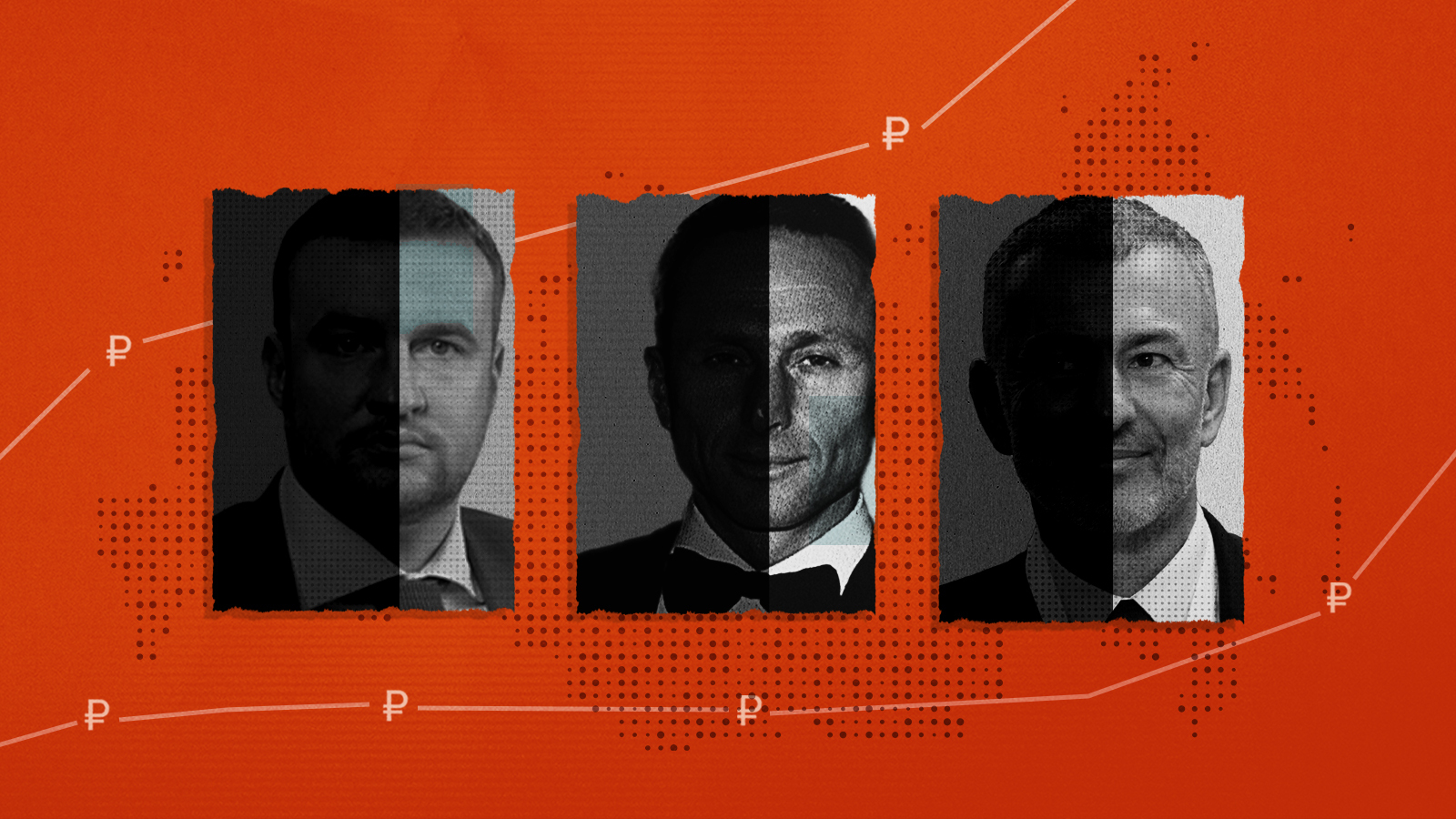
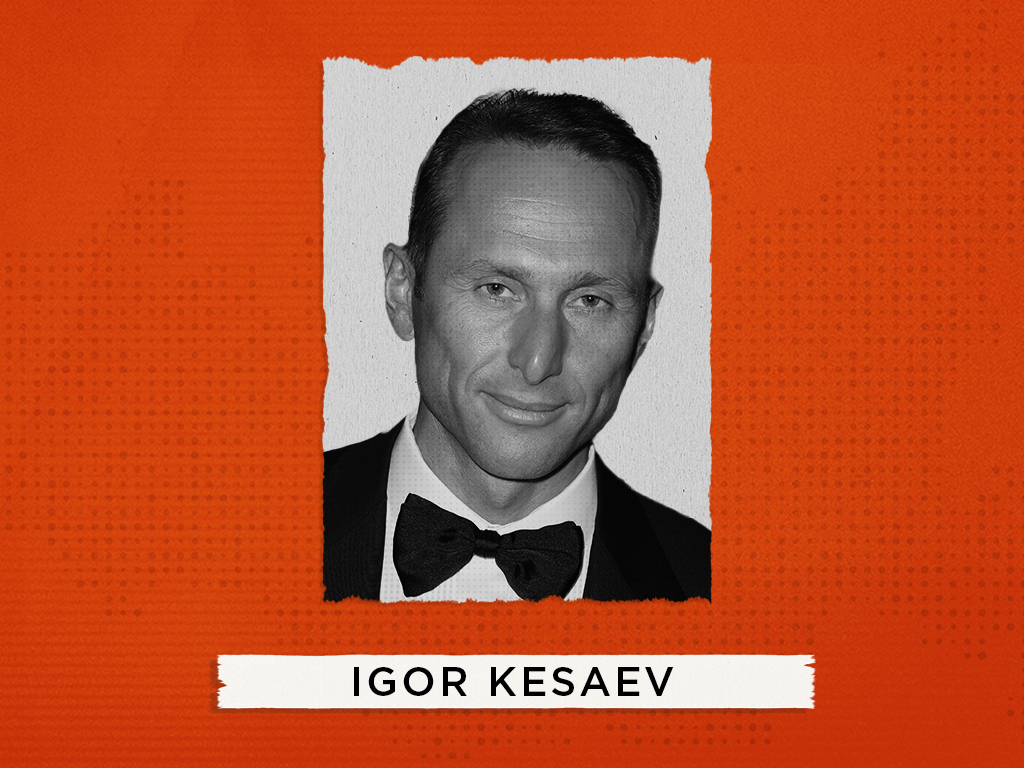
By the time the last of seven different Western jurisdictions had sanctioned Russia’s cigarette king, Megapolis and Mercury Group founder Igor Kesaev, in 2023, his retail empire was beginning to split up.
And a novel type of Russian nonprofit — in what would become a core argument in Kesaev’s drive to overturn his EU sanctions — was taking that empire over.
That December, Personal Foundation Mercury, a new Moscow-based fund with no disclosed beneficiary, assumed majority ownership of Kesaev’s group of major Russian alcohol and convenience store chains. The same trust-like foundation later added a Kesaev real estate firm and, this past May, his health resort along the Black Sea.
A second personal foundation with no previous holdings took over a different Kesaev company in December 2025. Then, in a flurry between April and July of this year, a third such opaque fund successively acquired three more of his firms.
None of the three personal foundations mentions Kesaev. But each one, Kharon found, lists the same individual as its manager: Aleksandr Brodyagin, a veteran Kesaev corporate lieutenant.
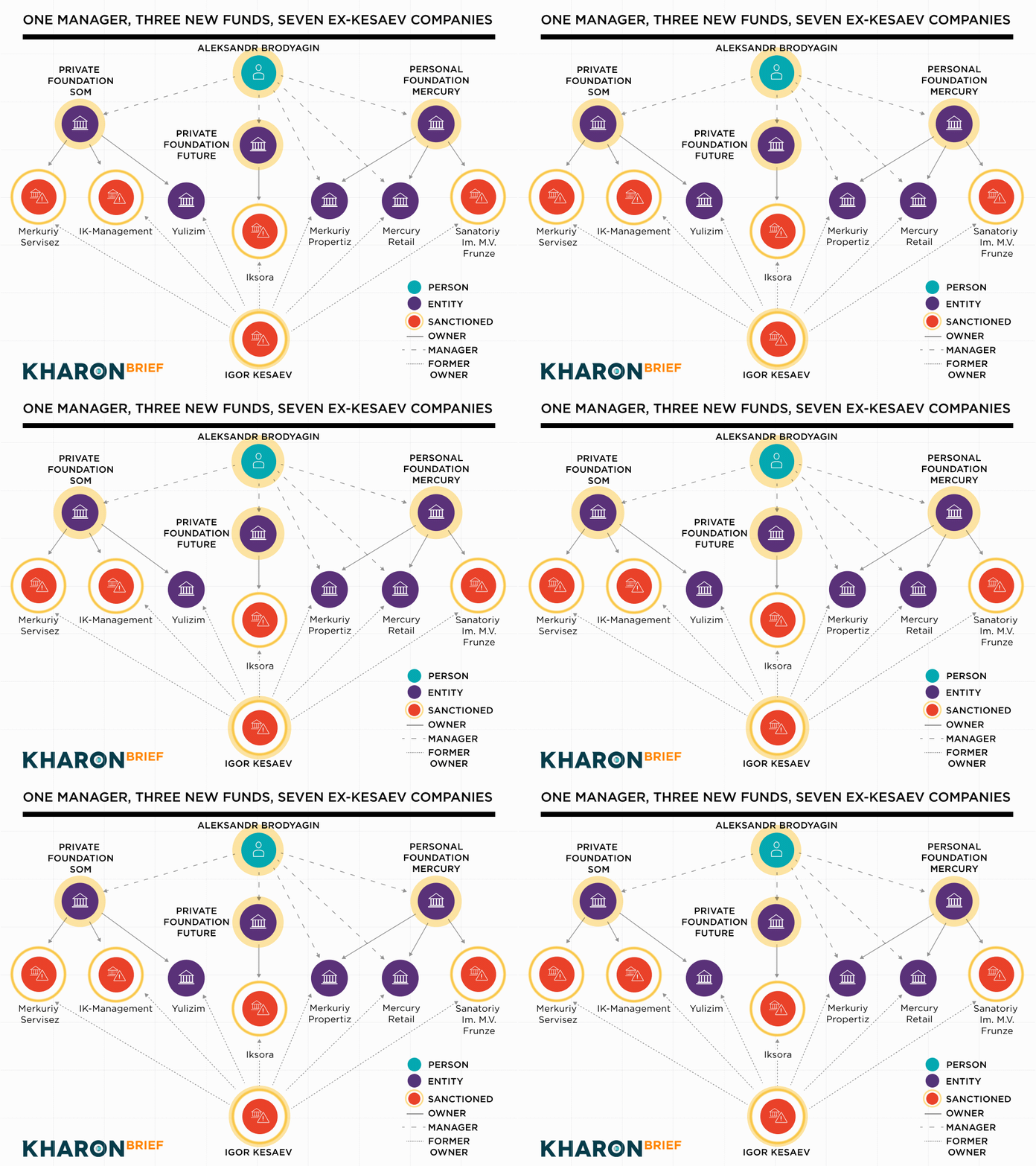
Kharon users can explore this network in greater detail on the ClearView platform.
For Russia’s wealthy elite, including sanctioned oligarchs whose assets risk seizures by the West and their own government alike, the personal foundations appear to be an increasingly popular and recognized shield. “Lawyers note that such funds make asset ownership more confidential, which will help protect the partners of sanctioned entrepreneurs,” the Russian business daily Kommersant wrote in a brief on the Kesaev chains’ takeover.
A Kharon analysis identified close to 900 personal foundations now operating in Russia — a number that’s exploded since 2024, when the state cut off public visibility into who owns them. Several of the funds that Kharon identified were incorporated shortly before taking over the holdings of freshly sanctioned oligarchs; most of these, like with Kesaev and Brodyagin, list a close business associate of the oligarch as their manager.
It fits into a larger wartime trend of oligarchs’ “trying to find ways to control their funds without actually formally appearing as controlling their funds,” said Ruslan Stefanov, program director and chief economist at the Center for the Study of Democracy, a Bulgaria-based think tank.
What matters, Stefanov said, is that “if you control the board, in whatever way, you control the money within the foundation.”
That left a question before the EU court deciding Kesaev’s sanctions case last month, and for other Western authorities and foreign businesses going forward: When powerful Russian businessmen are involved, what does a personal-foundation shell game actually change?
The West’s campaign of wartime sanctions then put oligarchs, as Stefanov put it, “between a hard place and a rock.”
“Suddenly they got squeezed from two sides,” he said. “Ever since 2022 … they’ve been trying to find a way to safeguard their assets.”
A Kharon analysis identified close to 900 personal foundations now operating in Russia — a number that’s exploded since 2024, when the state cut off public visibility into who owns them. Several of the funds that Kharon identified were incorporated shortly before taking over the holdings of freshly sanctioned oligarchs; most of these, like with Kesaev and Brodyagin, list a close business associate of the oligarch as their manager.
It fits into a larger wartime trend of oligarchs’ “trying to find ways to control their funds without actually formally appearing as controlling their funds,” said Ruslan Stefanov, program director and chief economist at the Center for the Study of Democracy, a Bulgaria-based think tank.
What matters, Stefanov said, is that “if you control the board, in whatever way, you control the money within the foundation.”
That left a question before the EU court deciding Kesaev’s sanctions case last month, and for other Western authorities and foreign businesses going forward: When powerful Russian businessmen are involved, what does a personal-foundation shell game actually change?
From four foundations to hundreds
Major Russian businesses had faced a significant tightening of state pressure under Vladimir Putin even before its full-scale invasion of Ukraine battered its economy.The West’s campaign of wartime sanctions then put oligarchs, as Stefanov put it, “between a hard place and a rock.”
“Suddenly they got squeezed from two sides,” he said. “Ever since 2022 … they’ve been trying to find a way to safeguard their assets.”
The Office of Foreign Assets Control’s (OFAC) 50% rule extends sanctions to cover entities that are majority-owned by sanctioned actors, even if they don’t appear on any list themselves. Here’s how it works.
The arrival of the nonprofit personal foundations (lichnye fondy, in Russian) did not immediately appear to offer any sanctions-proofing benefits. Russia introduced them in March 2022 as passive structures meant to manage a person or couple’s assets for inheritance purposes, with favorable tax benefits. At their inception, the funds had to disclose those founders publicly, like a charitable nonprofit would.
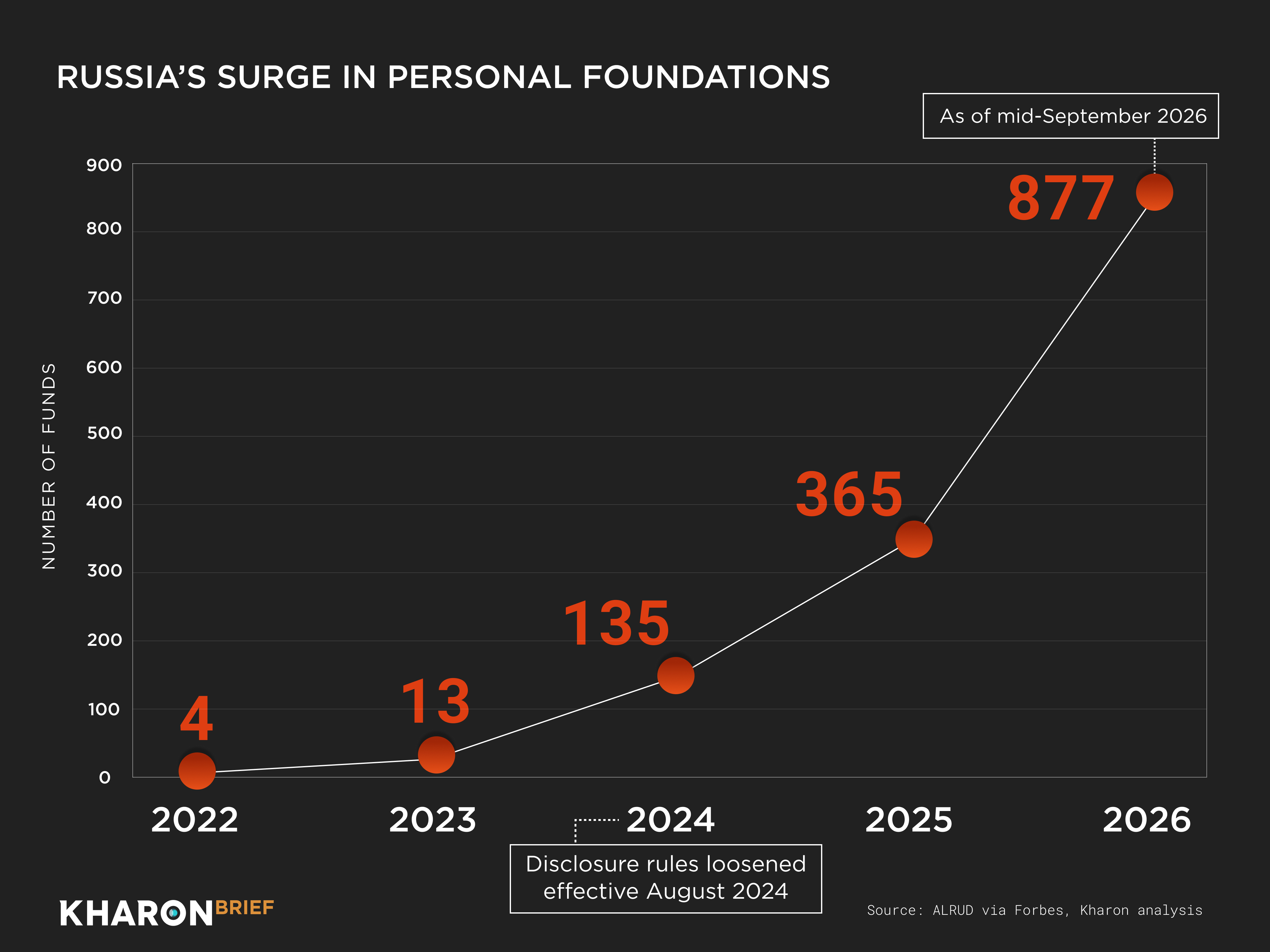
- Russia registered only four personal foundations that first year, according to a report by the Russian law firm ALRUD that was obtained by Forbes.
- Just 13 more were registered in 2023.
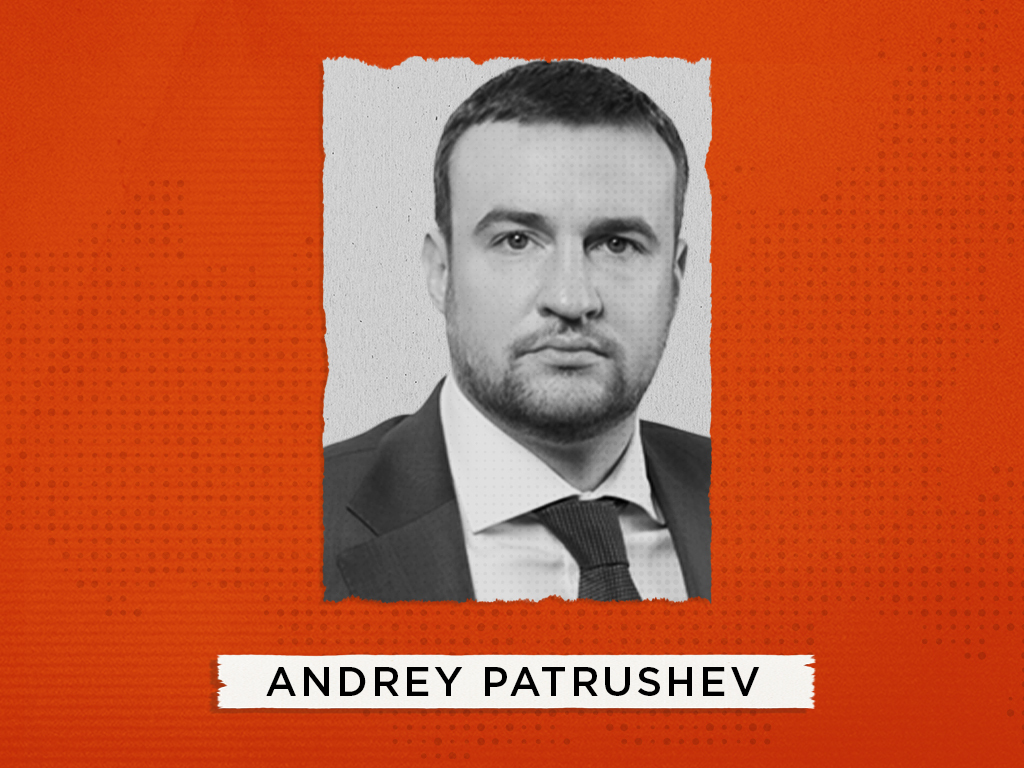
The U.S. Treasury Department designated Andrey, a major player in Arctic energy and a former Rosneft executive, in February 2022, on the first day of the war. He sold his 37.8% stake in a Russian geophysical-analysis company a few weeks later; a private foundation managed by one of his business associates took it over.
According to corporate records, the same fund now also indirectly owns a stake in a Gazprom offshore oil and gas service contractor, which previously listed Andrey Patrushev as its beneficial owner.
That August, among other tweaks, Russia relaxed the personal foundations’ disclosure requirements so that their founders could now remain hidden.
Registrations shot up.
“There’s no secret” behind that growth, said Alexander Baranov, the principal of a Barcelona-based corporate consultancy, who has advised dozens of Russians on the use of personal foundations. “It’s because business founders are moving back to Russia from other countries which are so-called here in Russian law ‘unfriendly’ ... like Cyprus, like [the] United Kingdom. So, they are moving money back from foundations in these countries, from trusts.”
The foundations’ tax-optimization, inheritance, and corporate structuring benefits appear to be a primary draw, analysts told The Brief, at a time when Russia is pushing its wealthy to repatriate their fortunes.
At the same time, according to Baranov, the top risk the foundations can protect assets against is possible sanctions.
Among the first big wave: a takeover of companies that had belonged to Yusuf Alekperov, the man considered to be Russia’s richest heir.
In January 2025, the Treasury Department sanctioned Alekperov, the son of longtime Lukoil chief Vagit Alekperov. Yusuf Alekperov, now 36, had been running a budding Russian oil empire of his own, as the founder and ultimate owner of the oilfield services company Welltech LLC. Treasury hit that, too.
Two months later, Russian corporate records show, Alekperov divested his 100% stake in his massive holding company that directly owned Welltech and a host of his other companies, EKTO OOO; Kommersant reported at the time that it held assets worth 62 billion rubles ($737 million today). The newly formed Personal Fund YVS, which the outlet called “his personal foundation” and whose first two initials match Yusuf Alekperov’s, took control.
- Its appointed manager, according to corporate records, is an established Alekperov subordinate: EKTO director Konstantin Sanin.
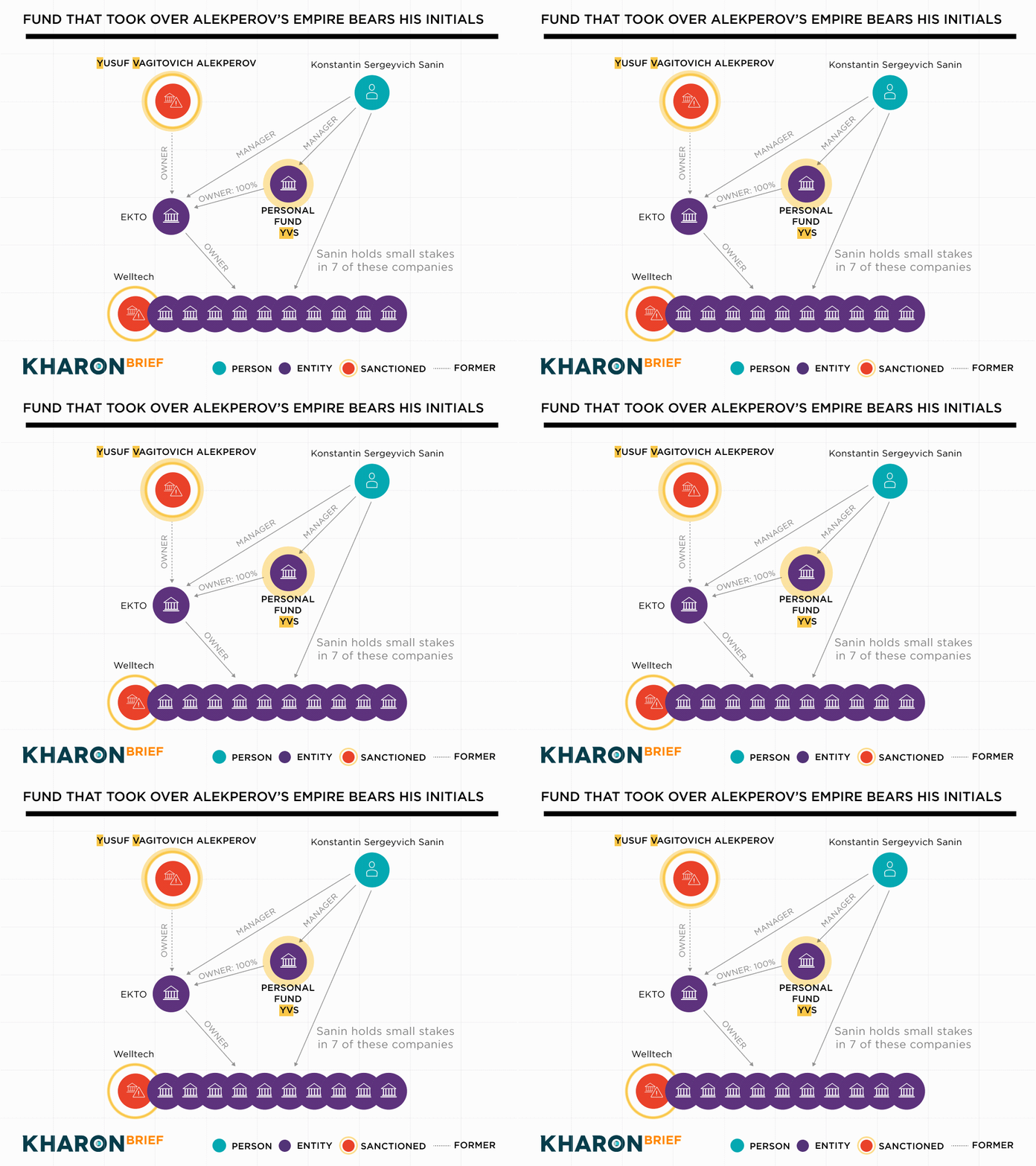
Alekperov did not respond to requests for comment sent through his investment company about his current relationship to EKTO, the personal foundation, or his former companies that now sit under it. EKTO also did not respond.
In the meantime: Kesaev had already petitioned the EU once for his sanctions to be removed and, in September of 2024, was denied. He appealed.
Then, while Igor Albertovich Kesaev v Council of the European Union awaited resolution, he continued to shed holdings — at least on paper.
But his corporate reach is vast.
In the meantime: Kesaev had already petitioned the EU once for his sanctions to be removed and, in September of 2024, was denied. He appealed.
Then, while Igor Albertovich Kesaev v Council of the European Union awaited resolution, he continued to shed holdings — at least on paper.
A network of cigarettes, liquor, guns, and Italian TV
Kesaev, 59, built his wealth primarily through Megapolis, Russia’s dominant cigarette distributor and a partner of the American tobacco titan Philip Morris International. (Kesaev resigned from the Megapolis board after the EU sanctioned him, in April 2022.)But his corporate reach is vast.
- His Mercury Retail Group, the parent company of Russia’s Krasnoye & Beloye (Red & White) chain of liquor and convenience stores, was the first of his holdings that Personal Foundation Mercury took over.
- The EU, in designating Kesaev, noted also that he was “the major shareholder of Degtyarev Plant,” a producer of Kalashnikov machine guns for the Russian armed forces. A spokesman told Reuters later that month that Kesaev “currently is not a shareholder”; a Kharon review could not find evidence of Kesaev’s divestment.
- Farther afield, Kesaev owned the Russian parent company of the Italy-based World Fashion Channel Europe, a satellite TV network that broadcasts fashion and lifestyle coverage around the world in English and Russian. According to corporate records, the channel’s sole administrator took over Kesaev’s 100% stake in its parent company in May 2022, a month after his EU designation. A new personal foundation — connected to two other Kesaev associates — then took control of that, too, last December.
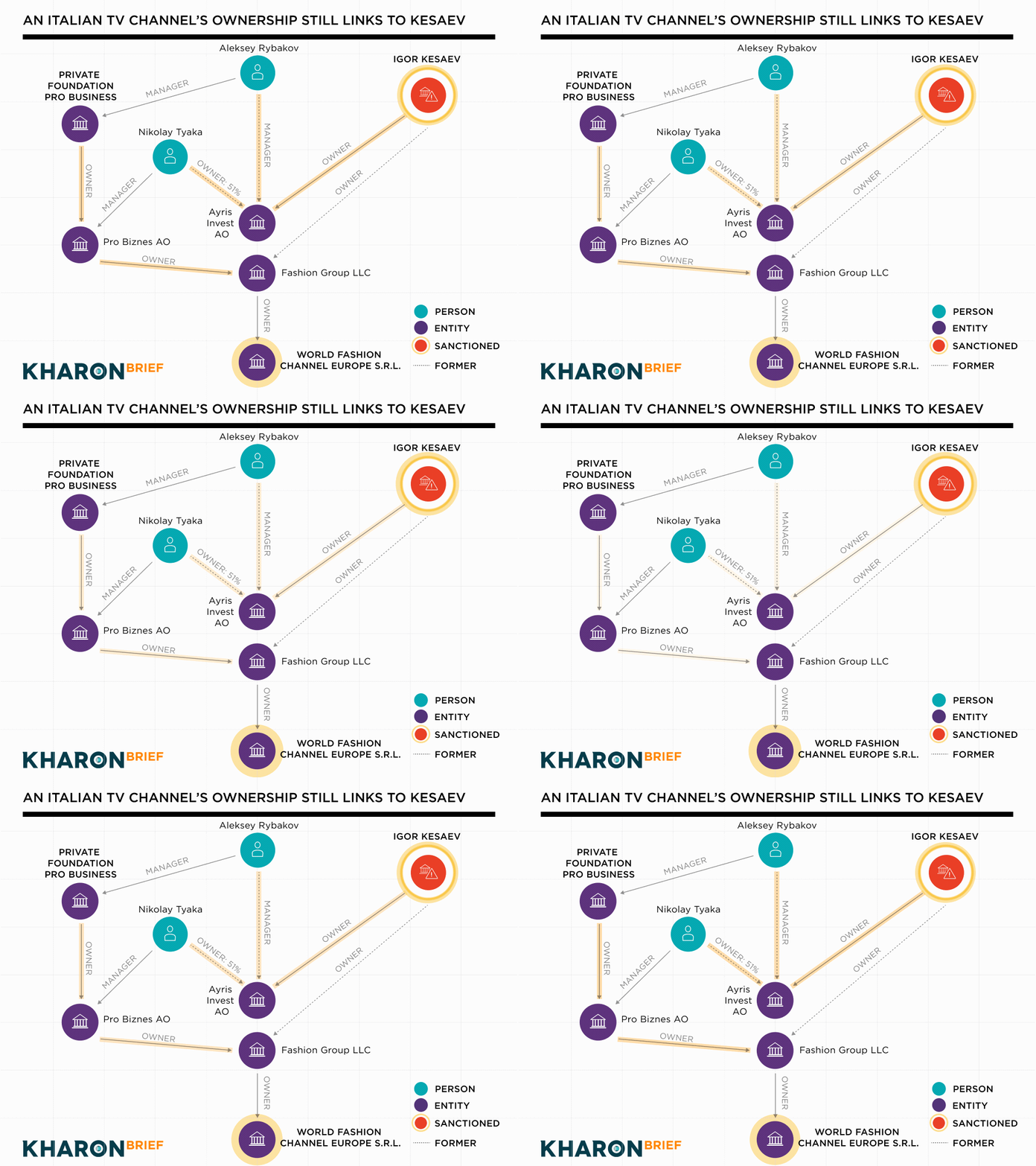
Kesaev “is a leading businessperson involved in economic sectors providing a substantial source of revenue to the Government of the Russian Federation,” the EU asserted in his designation.
Kesaev’s lawyer in his EU case, Roeland Moeyersons, said he declined to answer questions sent by The Brief. Mercury Retail and the World Fashion Channel did not respond to questions about their current ownership or relationship to Kesaev.
Brodyagin, the listed manager for the first three Kesaev-linked foundations, has had a hand in several corners of Kesaev’s empire. According to Russian media reporting and corporate disclosures, he has served variously as vice president for legal affairs at Megapolis, head of the presidential administration of Mercury Group, a director at the Degtyarev Plant, and VP for legal affairs at Dixy, a formerly Kesaev-owned supermarket chain.
The case: Kesaev’s legal team attacked his sanctioning on every ground, including that he was not a “leading businessperson” in Russia, that the tobacco sector was not a “substantial source of revenue” for the government, and that the measures were “based on discrimination” against him for being a rich, politically neutral Russian businessman.
According to an EU legal filing, Kesaev’s team amended one more argument later: that he had “transferred his 40% stake in Megapolis Holding BV to a foundation in December 2023, and is therefore no longer a shareholder of that company.”
He maintains, it said, “that he is now only an indirect, passive, and, moreover, minority shareholder of Megapolis Group.”
Precedents: The EU and the U.S. Treasury Department did not respond to requests for comment about the use of Russian personal foundations. But Treasury’s Office of Foreign Assets Control (OFAC) issued guidance in March on “sham transactions” and sanctions evasion, which included an example of a blocked oligarch who “transferred ownership of his private jet to a trust, whose sole beneficiary was his unsanctioned wife, while the oligarch continued to use the jet for travel.”
Erik Woodhouse, who formerly led the State Department’s offices on sanctions policy and countering threat finance, said that to him that guidance suggests OFAC “would consider that the oligarch still has an interest in those funds, and therefore they’re blocked.”
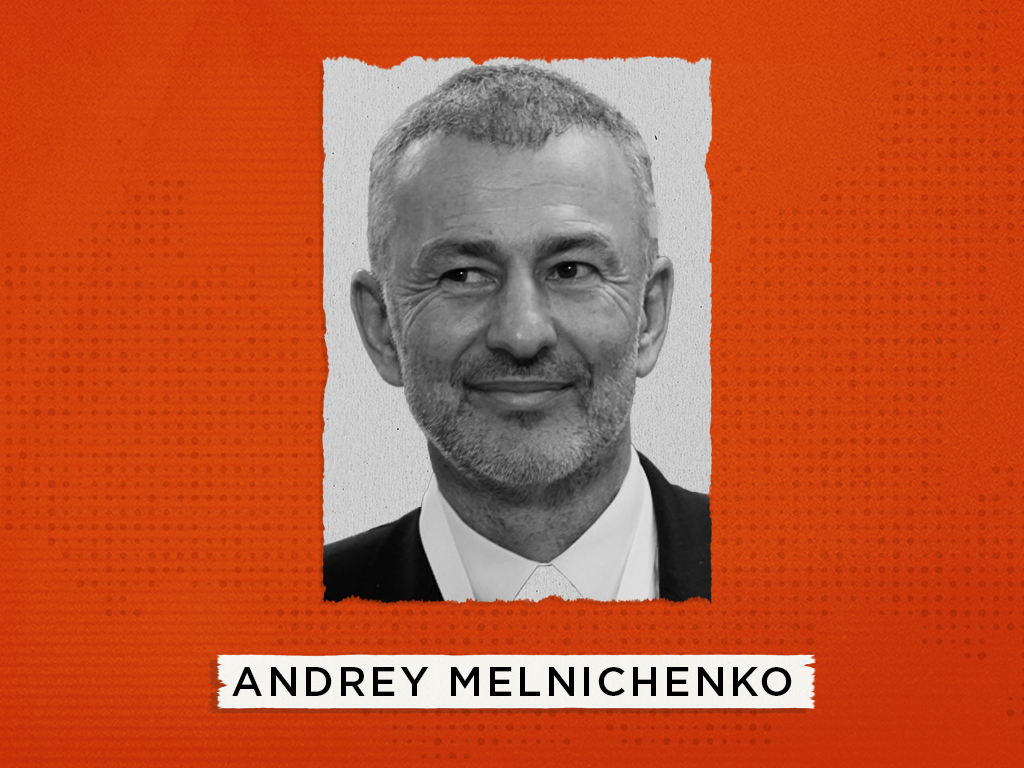
It reminded him, he said, of the case of another Russian tycoon: Andrey Melnichenko, one of the country’s richest men.
Melnichenko, who lives in Switzerland, has repeatedly fought to remove their names from various sanctions lists since.
Erik Woodhouse, who formerly led the State Department’s offices on sanctions policy and countering threat finance, said that to him that guidance suggests OFAC “would consider that the oligarch still has an interest in those funds, and therefore they’re blocked.”
- Businesses that screen only for sanctioned names might not find any risks, said Woodhouse, now a partner at Crowell and Moring who works on economic sanctions matters. “But, of course, the oligarch can continue to engage with the trustee and the beneficiaries on what to do with those assets.”
It reminded him, he said, of the case of another Russian tycoon: Andrey Melnichenko, one of the country’s richest men.
Melnichenko’s corporate reshuffles
The day before the European Union sanctioned him, in March 2022, Melnichenko dropped his ownership stakes in his fertilizer giant, EuroChem Group, and his coal giant, SUEK AO. Through a convoluted Cypriot trust structure, his wife, Aleksandra, became the companies’ new beneficiary; the EU soon sanctioned her as well.Melnichenko, who lives in Switzerland, has repeatedly fought to remove their names from various sanctions lists since.
- An EU court most recently ruled against Melnichenko last December, citing news reports indicating that “the applicant continues to benefit from the interests in SUEK and EuroChem Group transferred to his wife.”
Zoom in: Two years after Melnichenko’s EU designation, SUEK in 2024 divested from the Siberian Generating Company, a major domestic producer of heat and electricity that owns or co-owns 16 companies itself, according to corporate records. A trust branded with Melnichenko’s first two initials, Personal Foundation AI, took over.
That fund doesn’t publicly disclose a controlling party. But it shared both a Moscow address and a former manager with a since-dissolved Personal Foundation IM — which records said was controlled by Melnichenko’s father, Igor Mikhailovich Melnichenko.
That fund doesn’t publicly disclose a controlling party. But it shared both a Moscow address and a former manager with a since-dissolved Personal Foundation IM — which records said was controlled by Melnichenko’s father, Igor Mikhailovich Melnichenko.
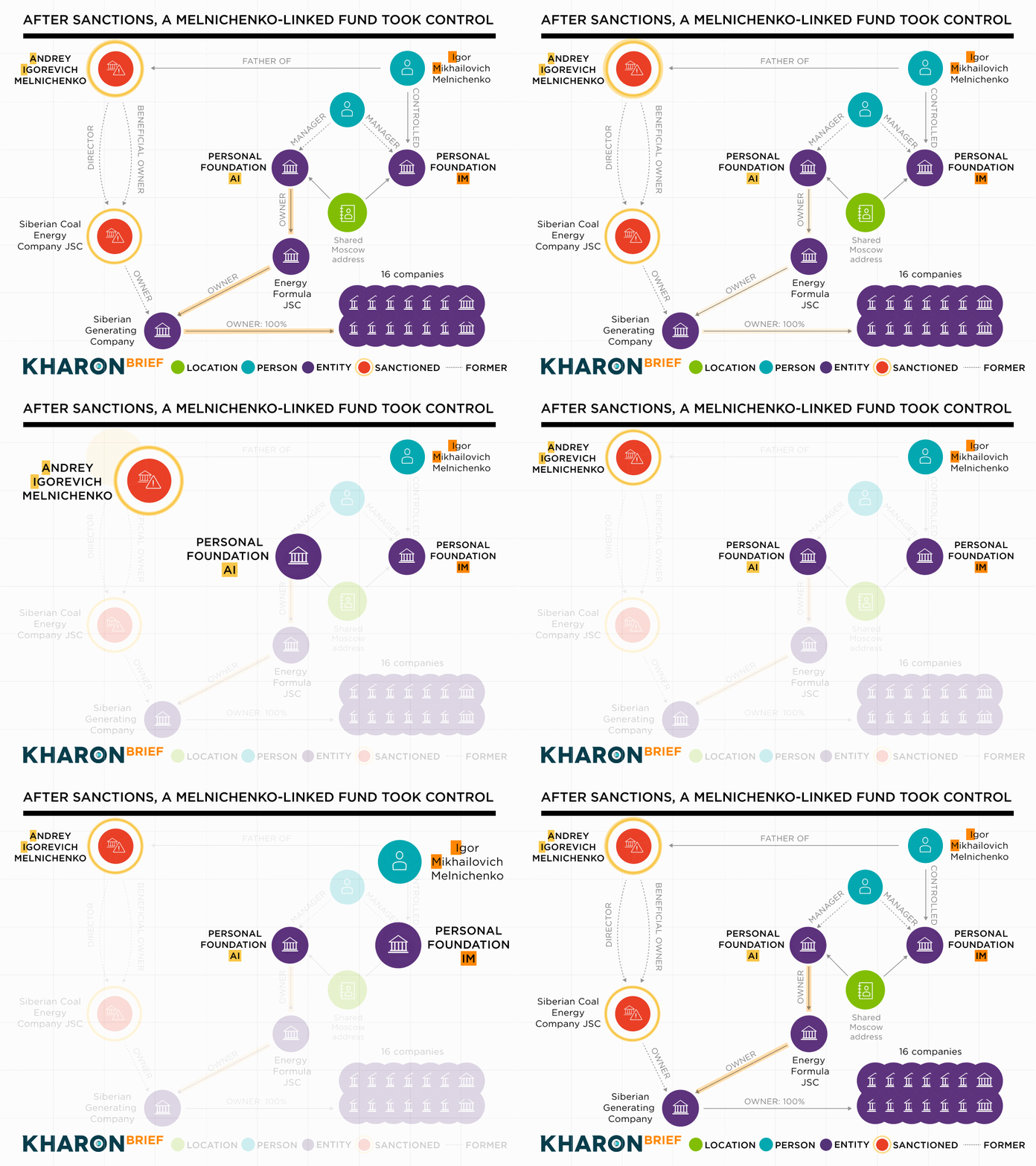
A lawyer for Andrey Melnichenko did not respond to emailed questions about his relationship to the personal foundation or to Siberian Generating Company, which also did not respond.
Analysis: The apparent Melnichenko personal foundation looks less like a sanctions-evasion mechanism and more like a tax-optimization and “asset-protection scenario,” Voloshin said, noting that Russia had tried to nationalize another of the billionaire’s energy companies in 2023.
“In Russia, authorities are currently going after all kinds of people, big and small, and accusing them of different things and trying to expropriate assets,” Voloshin said.
Stefanov, the analyst at the Center for the Study of Democracy, had assessed that even if Western authorities had reasonable grounds to suspect that a sanctioned person was behind a personal foundation, the harder part would be sufficiently proving it.
But with Kesaev’s petition, the court said, the “burden of proof” had fallen on him to demonstrate that his situation had meaningfully changed, including that he had transferred his shareholder rights in Mercury Group and Megapolis to “an independent third party.”
“In the present case,” it concluded, “it must be noted that the applicant has not provided such evidence.”
Referring to the transfer of his majority stake in Mercury Retail to “his personal foundation,” the court wrote, “it should be noted that the mere fact of using an intermediate legal structure, such as a personal foundation in this case, is not sufficient to demonstrate that the applicant has relinquished control of the shareholdings managed by that foundation.”
It considered each additional Kesaev argument and dismissed them in turn.
His sanctions, for now, were upheld.
Read more investigations from The Brief:
Analysis: The apparent Melnichenko personal foundation looks less like a sanctions-evasion mechanism and more like a tax-optimization and “asset-protection scenario,” Voloshin said, noting that Russia had tried to nationalize another of the billionaire’s energy companies in 2023.
“In Russia, authorities are currently going after all kinds of people, big and small, and accusing them of different things and trying to expropriate assets,” Voloshin said.
- In other words: In the same way that a complex foundation structure can obscure holdings from the West, it can also provide wealthy Russians with an extra layer — and extra “breathing room,” Voloshin said — to protect them from the state.
Kesaev’s verdict
The EU’s General Court, a circuit below, issued its ruling on Kesaev’s appeal Sept. 2, more than two years after his initial filing.Stefanov, the analyst at the Center for the Study of Democracy, had assessed that even if Western authorities had reasonable grounds to suspect that a sanctioned person was behind a personal foundation, the harder part would be sufficiently proving it.
But with Kesaev’s petition, the court said, the “burden of proof” had fallen on him to demonstrate that his situation had meaningfully changed, including that he had transferred his shareholder rights in Mercury Group and Megapolis to “an independent third party.”
“In the present case,” it concluded, “it must be noted that the applicant has not provided such evidence.”
Referring to the transfer of his majority stake in Mercury Retail to “his personal foundation,” the court wrote, “it should be noted that the mere fact of using an intermediate legal structure, such as a personal foundation in this case, is not sufficient to demonstrate that the applicant has relinquished control of the shareholdings managed by that foundation.”
It considered each additional Kesaev argument and dismissed them in turn.
His sanctions, for now, were upheld.
Read more investigations from The Brief: