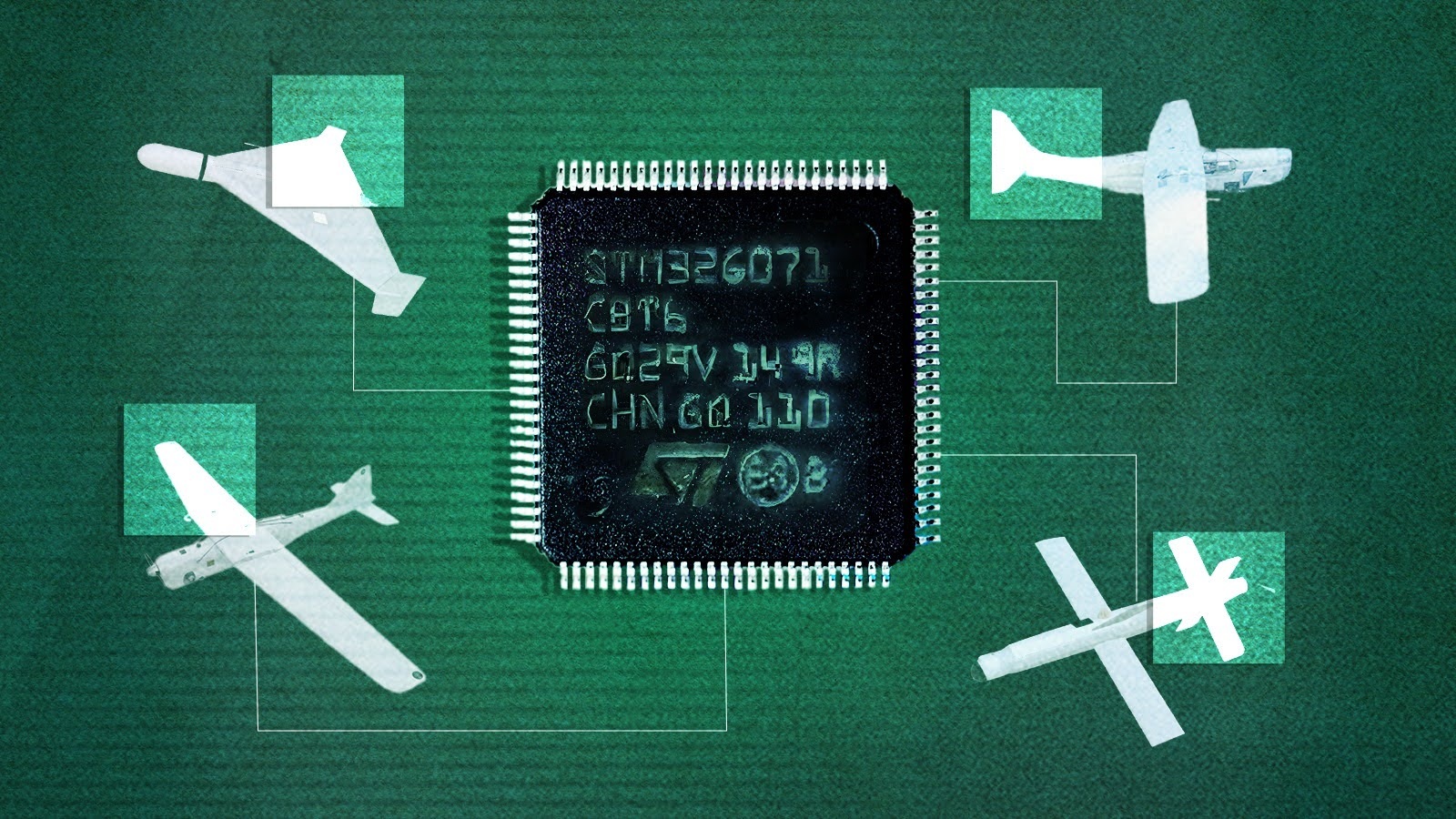
Ukraine had been finding the chip for at least two years inside the Geran-4’s prolific older sibling, the Geran-2. Last year, Russia launched it on 357 of 365 nights. As of May, despite mounting sanctions designed to cut off Moscow’s access to sensitive Western tech, a Ukrainian military database had logged STMicroelectronics parts 270 times across recovered Russian drones, cruise missiles, and electronic warfare systems — more than twice as many as the next European manufacturer.
Russia cannot produce such chips itself at the quality and scale its warfighting requires, experts say, leaving it dependent on foreign supply chains that are difficult to trace by design. But a Kharon review of IPO filings, trade records, and government actions identified two related routes by which STM32 chips could reach Russian drones, including through a distributor and two of China’s largest state-backed drone companies.
“Russia has gotten very good at circumventing sanctions, establishing legal and illegal, and semi-legal pathways to obtain whatever they need,” said Samuel Bendett, an adjunct senior fellow at the Center for a New American Security whose work focuses on Russian military technology. “China plays a major role in this.”
But Kharon’s findings, which follow EU sanctions and warnings last month over China’s alleged support for Russia’s drone program, illustrate the role that Chinese firms nonetheless appear to play in facilitating a smart-weapons pipeline from Europe.
A Chip and the Drones It Powers
The STM32 was not designed for war. STMicroelectronics, one of Europe’s largest semiconductor manufacturers, produces hundreds of millions of the chips annually, marketing them for “smart homes, wearable devices, and smart industry.”In response to questions from The Brief, an STMicro spokesperson said the company complies with all applicable sanctions, practices “vigilance against sanction evasion and shipping diversion,” and “does not authorise nor condone the use of our products outside of their intended purpose.” Kharon’s research uncovered no evidence that STMicro has violated export controls or sanctions.
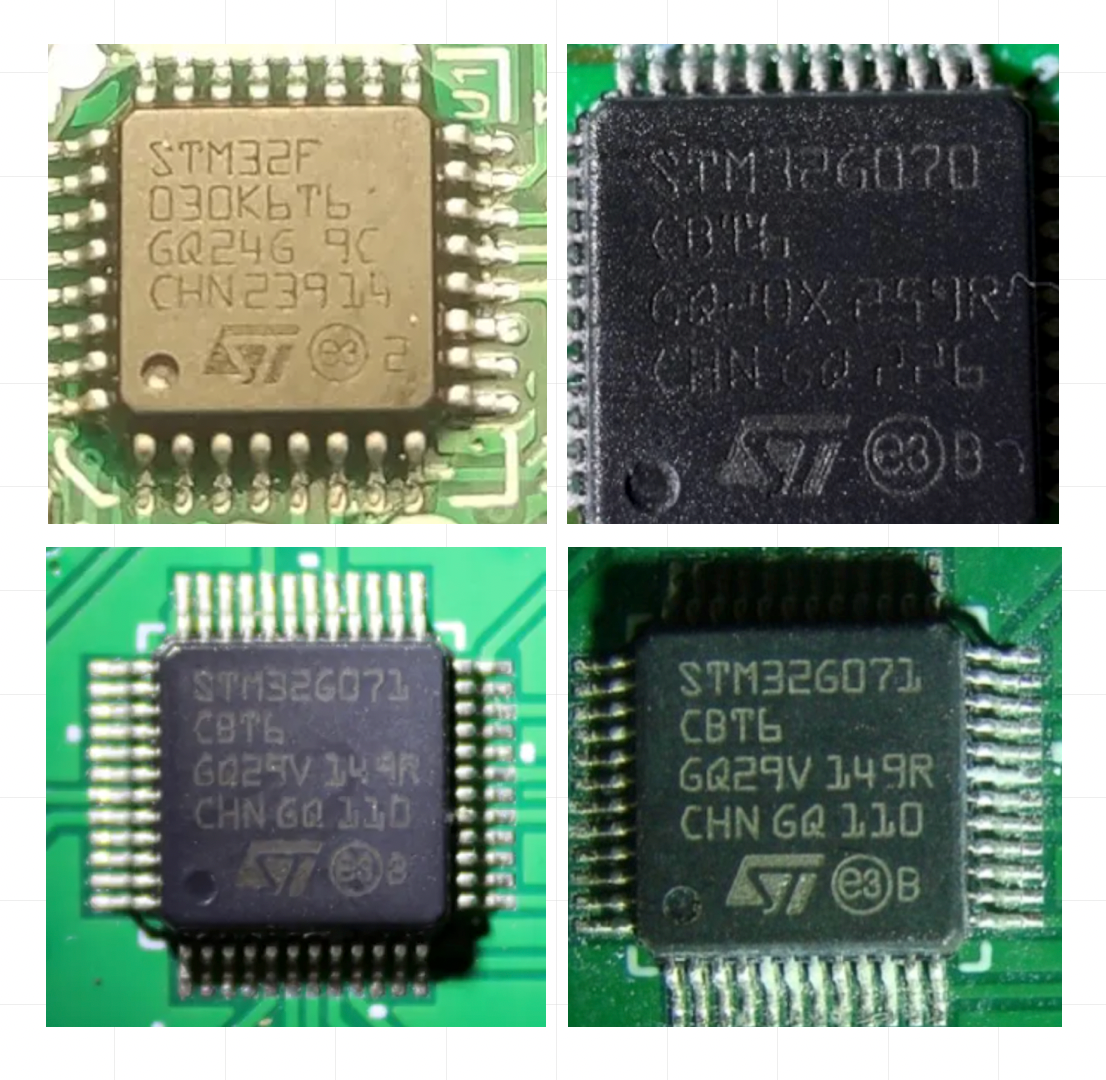
Yet STM32 chips continue to surface in Russian weapons recovered in Ukraine.
Of the 270 STMicro entries in Ukraine’s database, more than half were for microcontrollers in the STM32 family. They have been recovered primarily in the Geran-class strike drones but also in Russian battlefield reconnaissance drones, such as the target-tracking Orlan-10:
A report last year from the Royal United Services Institute called it “the industry standard” chip on drone flight controllers. The reason, drone-industry experts say, is less about the STM32’s raw performance than about system compatibility.
- Modern drones depend on dozens of electronic components communicating seamlessly. Switching to another chip often means having to rewrite software and redesign flight-control systems.
But it’s found workarounds: By 2023, according to U.S. intelligence officials, roughly 90 percent of its imported microelectronics were coming from China.
A Chain Through China
The possible STM32 trails that Kharon’s investigation identified begin with an authorized distributor.On its website, STMicroelectronics names Avnet, a Phoenix-based, Nasdaq-listed electronics distributor, as a “key distributor and partner.” It says their collaboration, including on STM32 microcontrollers, helps customers “access the latest technologies, enabling the creation of cutting-edge products.”
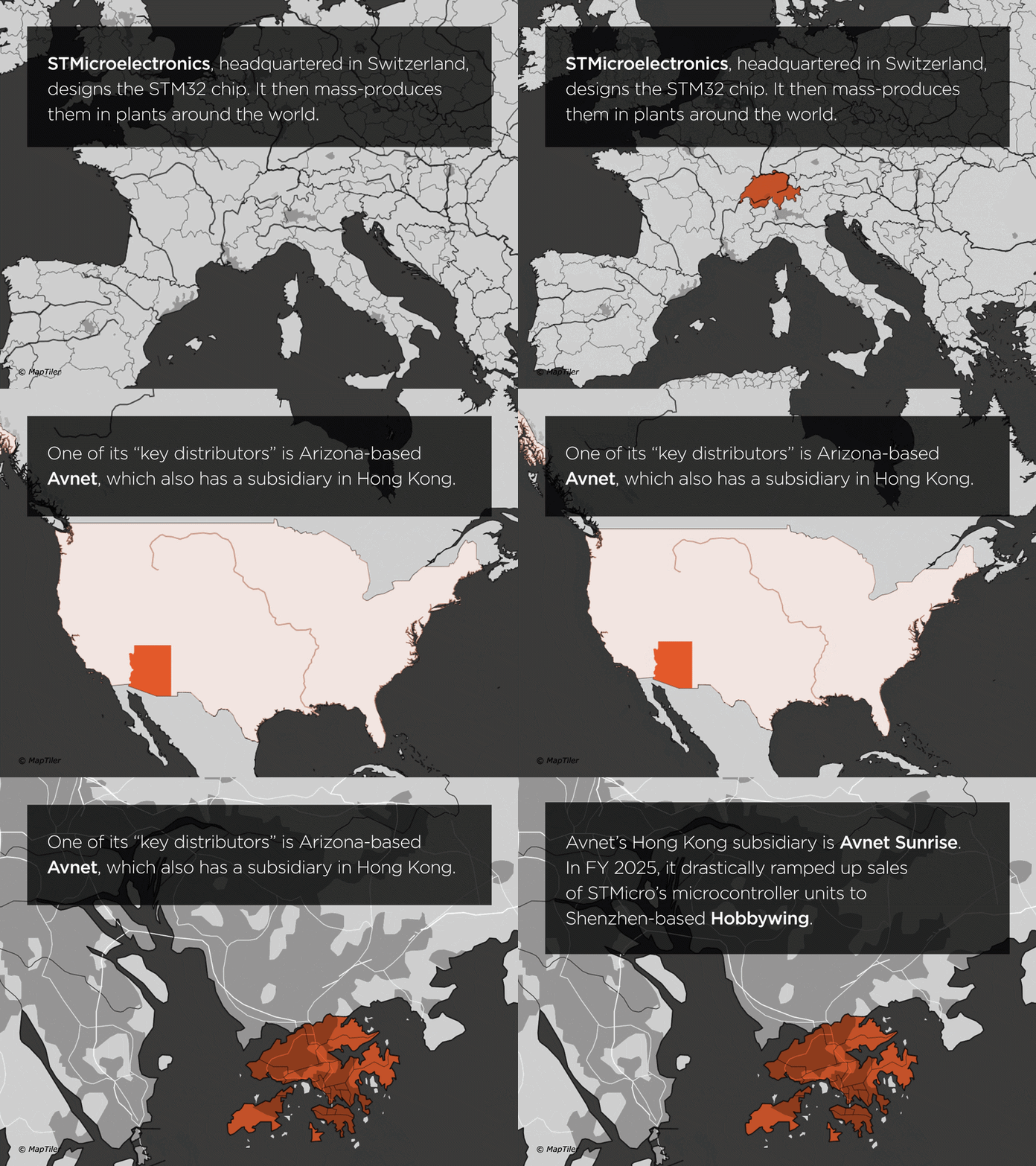
- The Chinese agency overseeing military-civil fusion has designated Hobbywing as a national “Little Giant” enterprise. That status, reserved for strategically important manufacturers, typically comes with policy support, procurement advantages, and government financing.
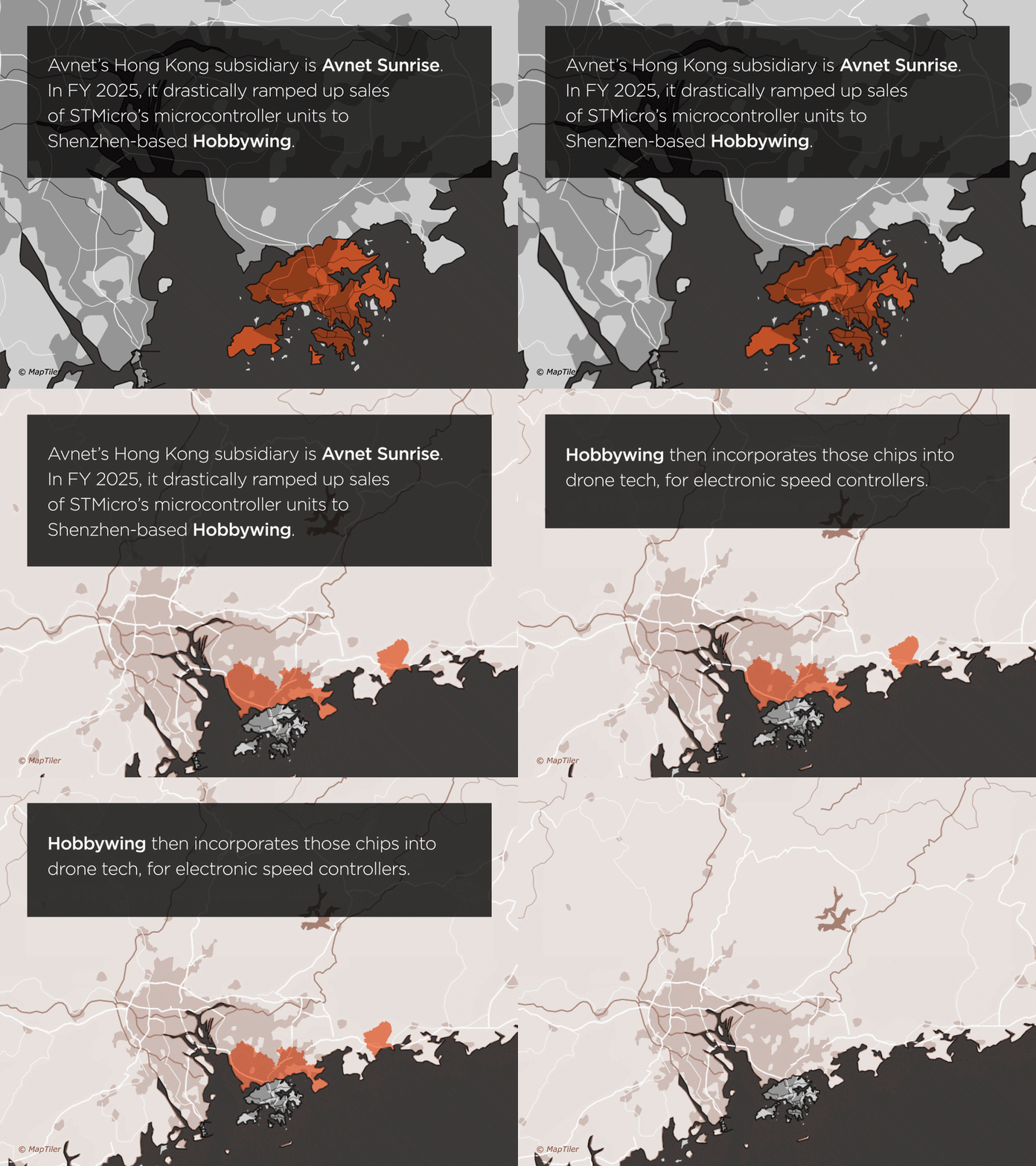
It’s with Hobbywing that the first transformation in the supply chain takes place. As the company describes in its technical documentation and user manuals, it integrates microcontrollers into its electronic speed controllers, or ESCs, which regulate motor speed and form a core part of a drone’s propulsion system.
By the numbers: In its recent prospectus, Hobbywing disclosed that its purchases from the Avnet subsidiary grew from RMB 2.76 million (around $400,000) in 2024 to RMB 13.15 million ($1.95 million) in 2025. It attributed that growth specifically to “a sharp rise in purchases of STMicro microcontroller chips.”
What they said: Reached by The Brief, Avnet declined to comment on its relationship with Hobbywing but said it maintains a “comprehensive global trade compliance program” that includes customer and transaction screening.
Hobbywing, in turn, sells its ESCs to fellow “Little Giant” Nanchang Sanrui Intelligence Technology, one of China’s largest drone propulsion suppliers. Sanrui, the company behind the popular T-Motor brand, disclosed purchasing more than $7 million worth of ESCs from Hobbywing in the first half of 2025 alone.
Product specifications reviewed by Kharon identified STM32 microcontrollers inside at least three T-Motor ESC models.
Such T-Motor products are utilized in drones around the world — including in Russia. That’s what got Sanrui’s subsidiary Jiangxi Xintuo sanctioned.
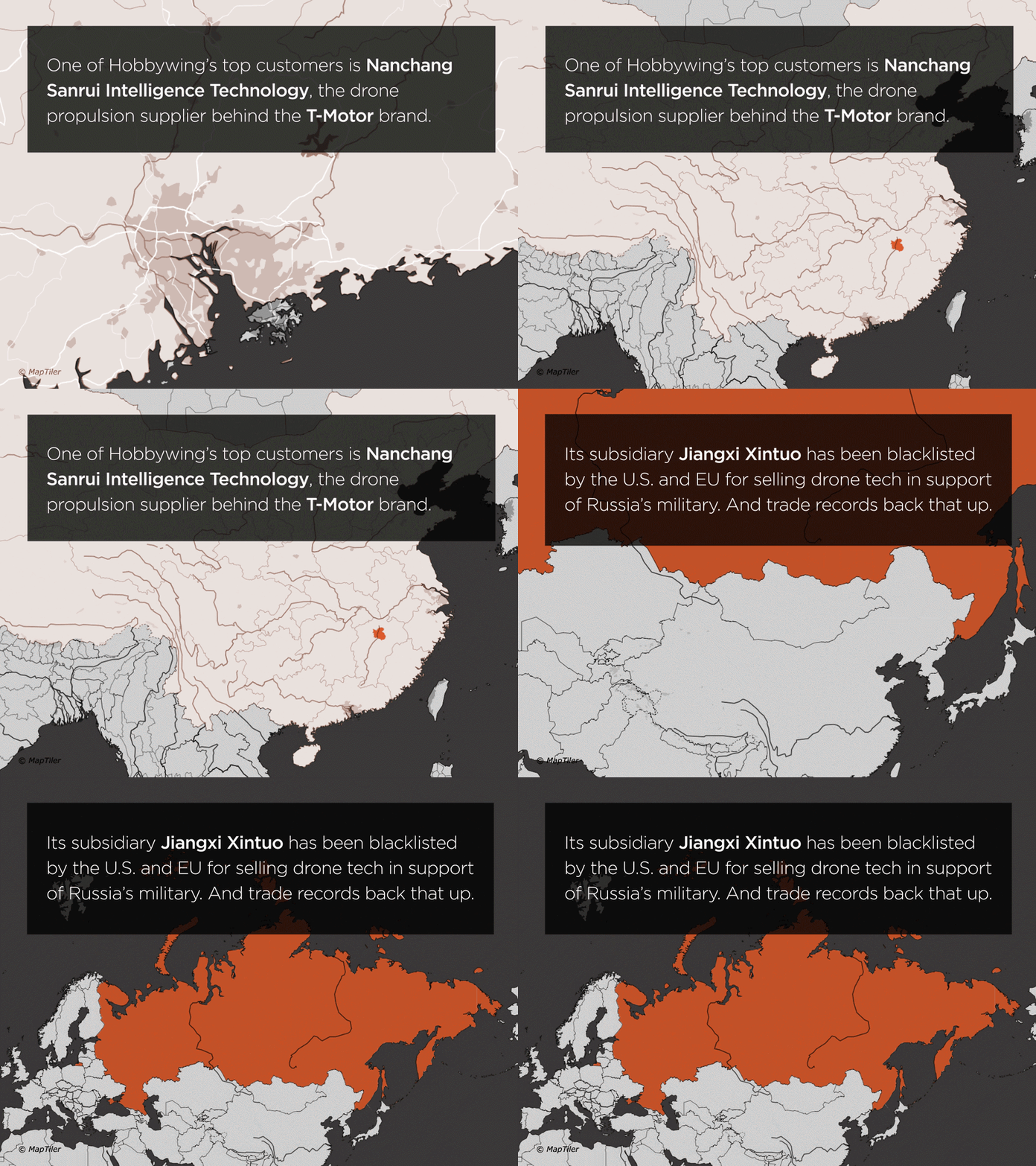
- The U.S. Bureau of Industry and Security added Xintuo to the Entity List in 2024, citing its support for Russia’s military through “the procurement, development, and proliferation of Russian unmanned aerial vehicles.”
- The State Department then designated it last year, citing more than $9 million worth of items it sent to Russia-based companies.
Another path: According to its IPO filings, Hobbywing also supplied more than 2 million yuan worth of drone propulsion systems to Shenzhen Minhuaxin Technology in 2023 and 2024. The EU sanctioned Minhuaxin last month for having supplied “significant volumes of components” to a Russian drone producer.
To be clear: The records do not establish that any individual STM32 microcontroller recovered from a Russian weapon followed one of these exact routes.
But they show how a commercially available European chip can move from a distributor into successive layers of Chinese manufacturers, some tied to Russia, before it resurfaces in weapons on Ukraine’s battlefields.
Why it matters: Once a chip enters China’s supply chain and is built into another component, legal experts say it can undergo what is known as “substantial transformation,” after which tracing its original origin becomes far more difficult.
“There is no straightforward way to stop it,” he said.
An Industry Built to Adapt
Western governments have increasingly tried to stop it through regulatory means. In addition to the U.S. measures against Xintuo, the European Union subjected the Sanrui subsidiary to export restrictions in April.But Sanrui so far has appeared to adapt, Kharon found.
- In its 2025 IPO filings, the company identified two trading firms that had barely appeared in earlier reporting periods but were now significant customers. Sanrui said both had begun exporting to drone manufacturers in “Eastern Europe” through cross-border trading networks. Trade records reviewed by Kharon show that companies within one of those networks shipped motors and electronics to Russian firms.
- Months after the U.S. sanctioned Xintuo, tmotorhobby.com — a website registered to it, according to Chinese regulatory records and IPO filings — was still selling T-Motor-branded drone products to international buyers. As of this month, the site says it accepts Visa, Mastercard, and American Express. But it does not mention sanctioned Xintuo. The site instead lists as its contact a sister company, Jiangxi Chuangyi Intelligent Technology — a name that appeared on the site only after Xintuo’s designation, archived webpages show.
That strategy allows companies like Hobbywing and Sanrui to serve both commercial and military interests, analysts say.
- A larger Chinese civilian drone industry lowers costs, expands manufacturing capacity, and creates technologies that can move between commercial and defense applications.
- And experience from conflicts, such as the war in Ukraine, provides China with operational lessons that feed back into future development.
Read related coverage from The Brief: