The U.K. last month took aim at crypto platforms helping Russia evade Western pressure campaigns, targeting several high-volume exchanges with sanctions intended to stifle Moscow’s shadow financing.
The action against 14 companies and four individuals marked the first use by U.K. authorities of the so-called 17A powers — which ban correspondent banking and payment processing — against crypto platforms, targeting networks that officials said moved more than $90 billion last year.
But a web of unlisted intermediaries linked to those platforms suggests some of their underlying crypto infrastructure remains intact. A Kharon investigation found two entities tied to the sanctioned platforms that continue to openly market services to bypass sanctions and trade controls.
At the center: Moscow-based ABCEX, an alias for Nueva Cryptologia, which the U.K. sanctioned last month for providing material services to two previously designated Russian exchanges, including Garantex.
The action against 14 companies and four individuals marked the first use by U.K. authorities of the so-called 17A powers — which ban correspondent banking and payment processing — against crypto platforms, targeting networks that officials said moved more than $90 billion last year.
But a web of unlisted intermediaries linked to those platforms suggests some of their underlying crypto infrastructure remains intact. A Kharon investigation found two entities tied to the sanctioned platforms that continue to openly market services to bypass sanctions and trade controls.
At the center: Moscow-based ABCEX, an alias for Nueva Cryptologia, which the U.K. sanctioned last month for providing material services to two previously designated Russian exchanges, including Garantex.
- According to Elliptic, it has processed at least $11 billion in cryptoassets, including for a Georgian exchange that the U.K. also sanctioned, Aifory Pro, which has cash-to-crypto transactions in Moscow, Dubai, and Türkiye. ABCEX is housed at the Federation Tower, a financial hub notorious for all the sanctioned Russian financial entities it hosts or has hosted, including Aifory Pro, Garantex, and VTB Bank.
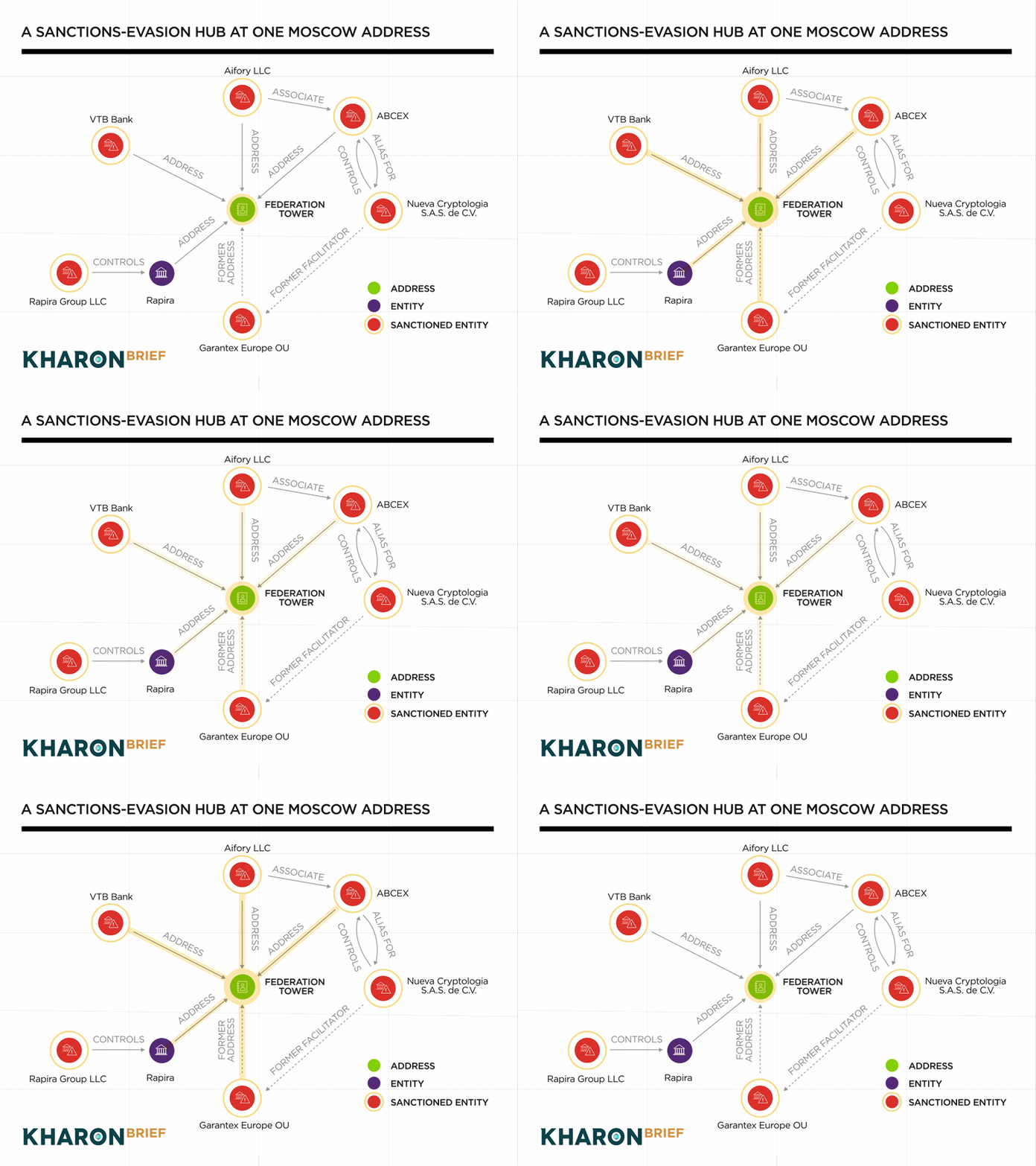
Kharon users can explore networks like this one through the ClearView platform.
How it works: ABCEX is powering other crypto exchanges and expanding its digital footprint, corporate records suggest, through two types of services.
The first involves standard operations for retail clients, including exchange trading, digital asset conversion services, and private (and therefore opaque) peer-to-peer transactions.
But it also allows secondary crypto exchanges, by piggybacking off its technology, to build their own digital storefronts—allowing new entities to offer the same services for which ABCEX was sanctioned.
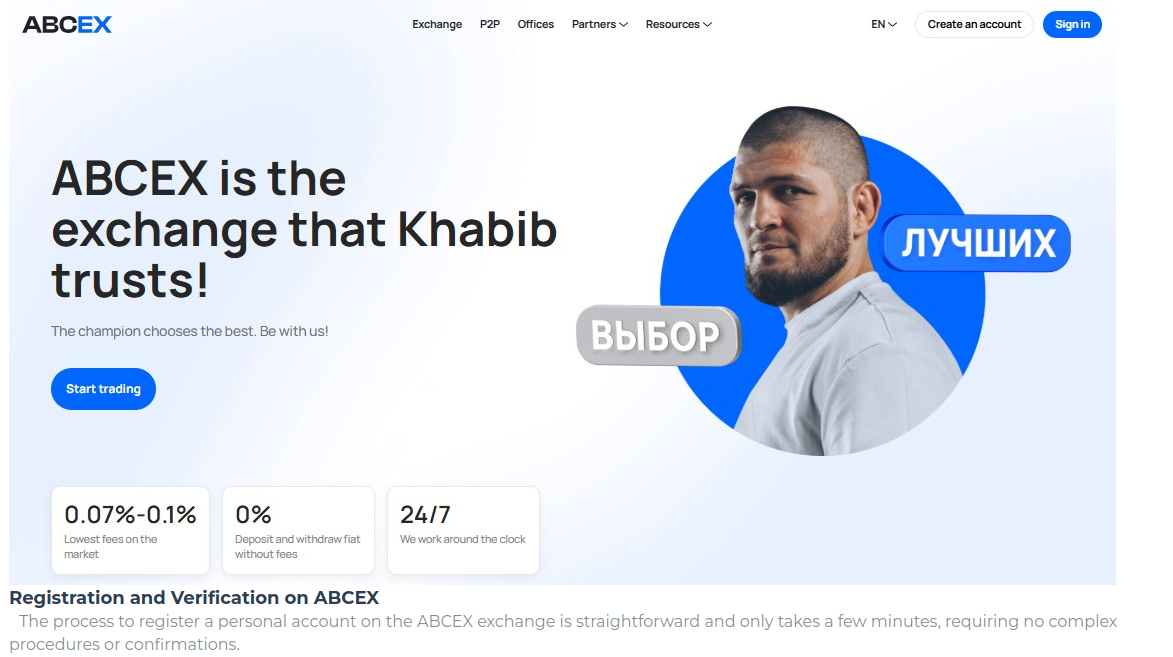
ABCEX uses the star power of Russian former mixed martial arts champion Khabib Nurmagomedov to tout its platform. (Screengrab)
Exhibit No. 1: ABCEX Partner
Yekaterinburg-based Ural.Ex markets itself on its website as an official partner of both ABCEX and Rapira, another Russian crypto firm the U.K. sanctioned last month. Ural.Ex offers clients “full confidentiality” as an offline crypto exchange, it says, handling transactions for customers in person where users can exchange cash for crypto and crypto for cash while obscuring traditional audit trails.
An FAQ on Ural.EX’s website notes its partnership with the ABCEX exchange.
But beyond simply providing access to crypto markets, Ural.Ex also actively markets financial solutions designed to settle “international invoices under sanctions restrictions.”
“In today’s world, Russian businesses often wonder how to pay invoices without delays or rejections from correspondent banks,” it says on its website.
“In today’s world, Russian businesses often wonder how to pay invoices without delays or rejections from correspondent banks,” it says on its website.
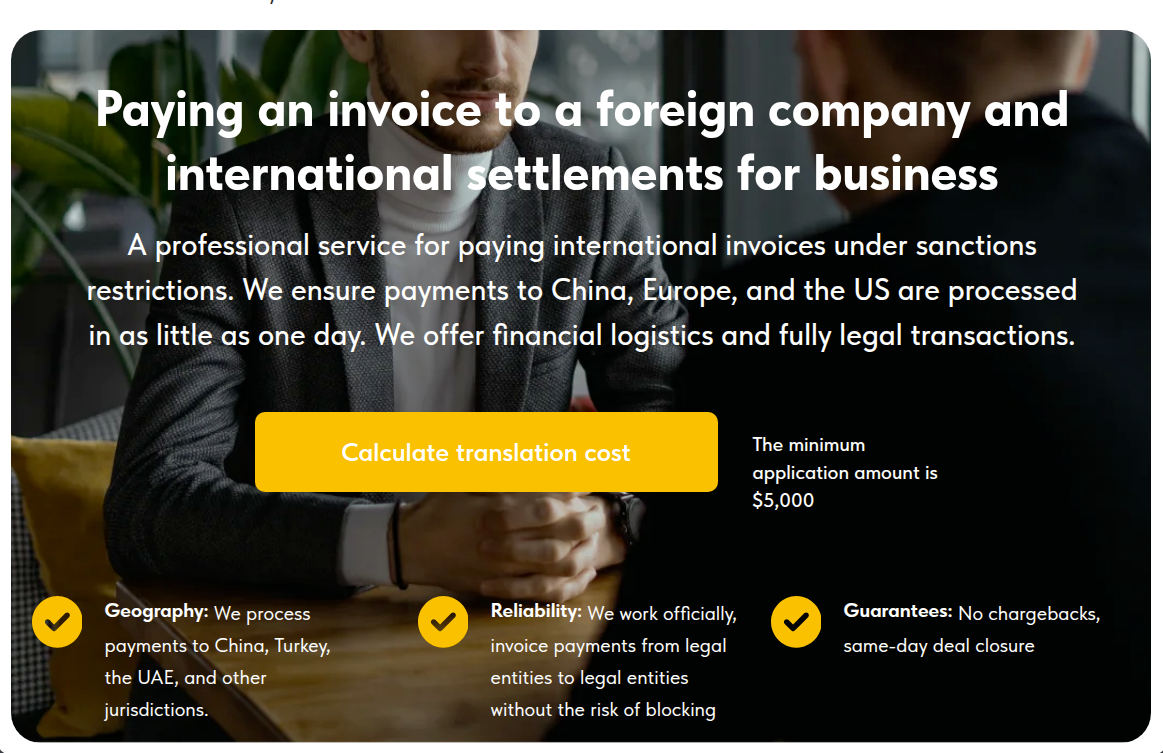
Ural.Ex promises to deliver the payment of “international invoices under sanctions restrictions,” without “the risk of blocking.”
One solution that Ural.Ex’s services advertises is its use of “a system of mutual offsets and accounts in friendly jurisdictions” that, it says, allows Russian clients to purchase vehicles from Germany, despite EU sanctions that prohibit such exports. The company’s website also describes how it can help users move capital worldwide, supporting the purchase of real estate in France and Spain, paying bills in Latvia, or buying Swedish goods.

Exhibit No. 2: THE UAE Loophole
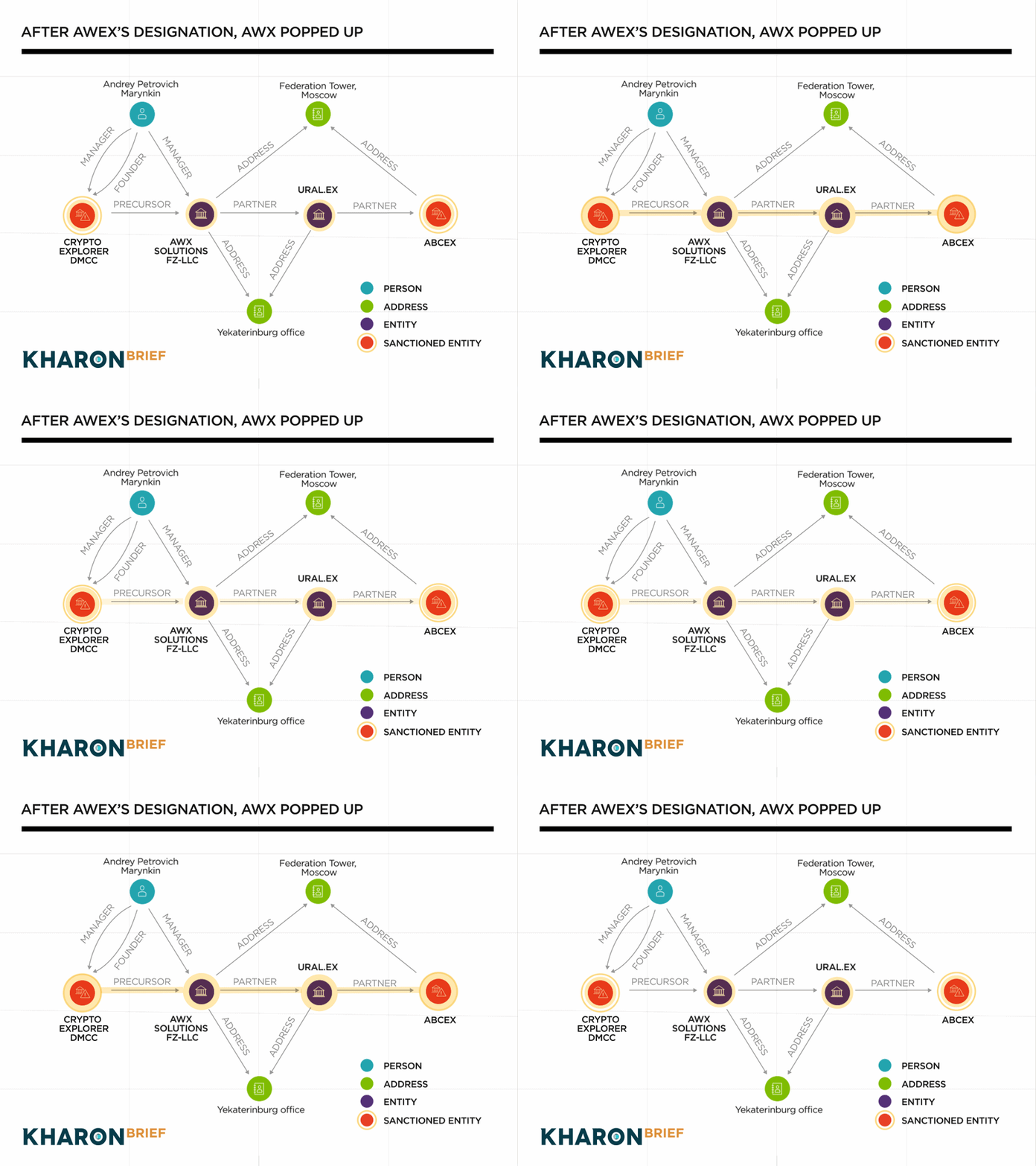
Another Ural.Ex partner is a Dubai-registered platform called AWX Solutions FZ LLC, which Ukraine sanctioned in July for facilitating Russian transactions.Corporate and website data reviewed by Kharon suggest AWX is a rebranding of Crypto Explorer DMCC, a Dubai-registered platform the U.S. had sanctioned in 2024 for operating in Russia’s financial system, including by loading funds onto credit cards associated with Russia’s sanctioned Sberbank and Alfa-Bank.
The links:
- AWX was registered around a month after the designation of Crypto Explorer, which is also known as AWEX.
- AWEX’s website URL automatically redirects users to AWX’s website.
- Corporate records show the companies share the same chief executive, a Russian national.
- The firms offer the same services, often with the exact same language: “Buying and selling for fiat, cash payments, 0% commission on cash deposits, courier delivery.”
Connecting the dots: Like its precursor, AWX is integrated into the Russian cryptocurrency ecosystem: It lists the physical Yekaterinburg over-the-counter office of Ural.Ex on its website as a partner location where AWX customers can deposit cash and arrange high-volume clearings. And it, too, lists an address in Moscow’s Federation Tower.
Risk assessments: AWX’s promotional materials reflect a sophisticated understanding of Western compliance perimeters. The platform’s corporate blog features extensive legal analyses tracking European Union restrictions on Russian virtual asset service providers, positioning AWX to Russian capital holders as a safe harbor insulated from the bloc’s latest round of sanctions.
“AWX is not included in this category: it is under UAE jurisdiction, has an international license, and maintains transparent AML compliance,” one post reads.
The company says on its website that it enforces Know-Your-Customer (KYC) rules and blocks individuals subject to trade restrictions. But by embedding its operations with Russian over-the-counter desks like Ural.Ex, the platform offers itself as an opaque intermediary for sanctioned transactions.
Read more from The Brief:
“AWX is not included in this category: it is under UAE jurisdiction, has an international license, and maintains transparent AML compliance,” one post reads.
The company says on its website that it enforces Know-Your-Customer (KYC) rules and blocks individuals subject to trade restrictions. But by embedding its operations with Russian over-the-counter desks like Ural.Ex, the platform offers itself as an opaque intermediary for sanctioned transactions.
Read more from The Brief: