The sprawling package, originally meant to coincide with February’s fourth anniversary of the full-scale invasion, imposes transaction bans and asset freezes on 120 new individuals and entities, including Russian refineries, banks, and dozens of “shadow fleet” tankers.
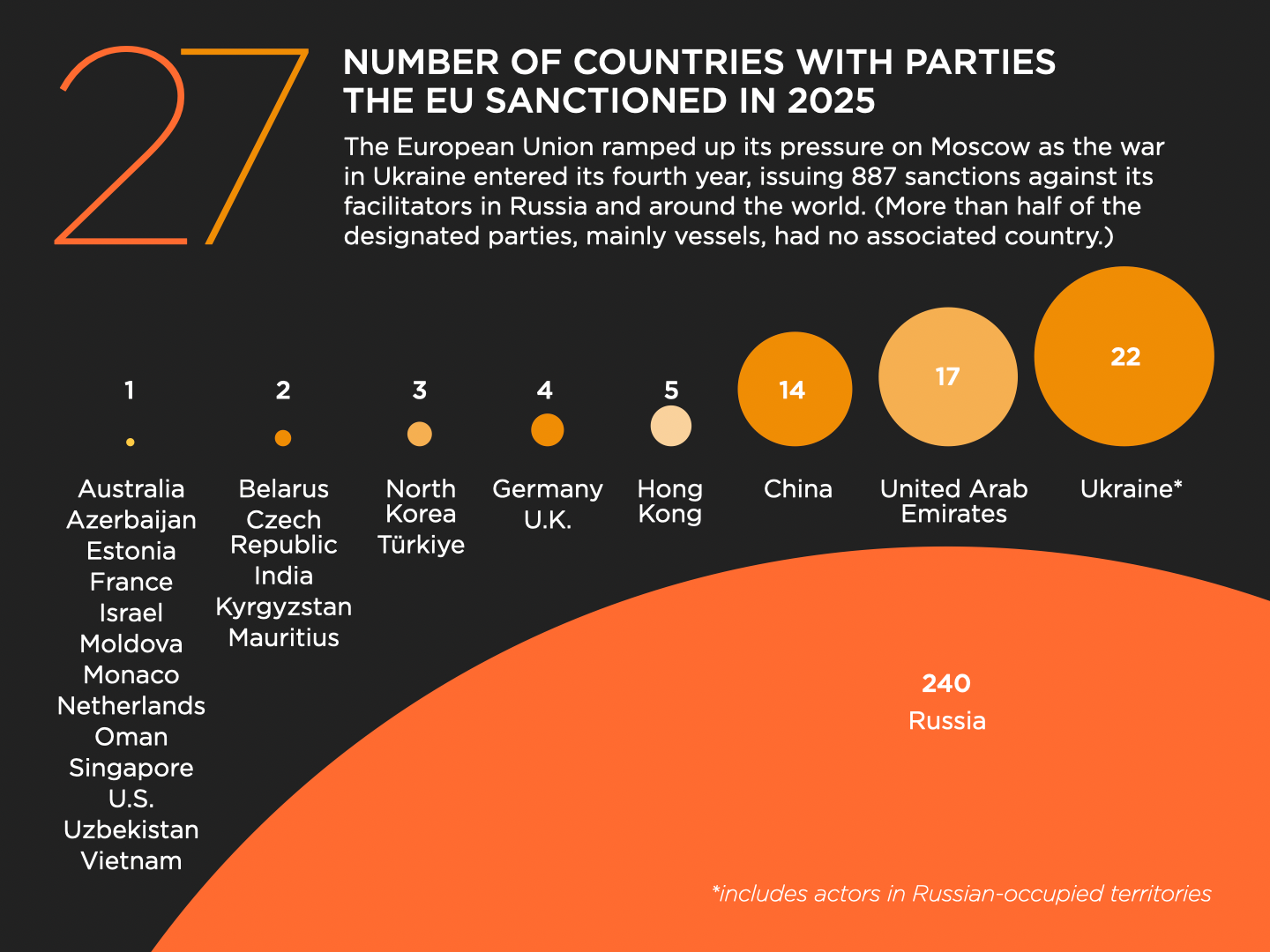
It also ramps up pressure on facilitators in Central Asia, China, and the UAE who allegedly enable Moscow to circumvent restrictions, singling out Kyrgyzstan under a new EU tool.
“Today we have finally broken the deadlock,” Kaja Kallas, the EU’s foreign policy chief, said in a statement. “The EU will provide Ukraine what it needs to hold its ground while we inhibit those enabling Russia’s illegal aggression.”
But the 20th package (and its tortuous process to pass) also highlighted the EU’s fissures over Russian energy perhaps more than any before it.
Here’s what to know.
New oil, gas, and shipping restrictions
Hungary and Slovakia, the package’s two-month holdouts, backed off their opposition this week only after Ukraine resumed the flow of Russian oil through the drone-struck Druzhba pipeline.That stance had presented one side of a stark EU split screen: On the other, countries like France, Germany, and Finland have seized or blocked oil-shipping shadow fleet tankers in recent months.
The new sanctions deal favors that stronger stance, rolling out restrictions throughout Russia’s oil and gas value chain:
- sanctions on seven Russian refineries and on the oil producers Bashneft (a Rosneft subsidiary) and Slavneft (owned by Rosneft and Gazprom Neft).
- sanctions on 46 shadow fleet vessels, bringing the EU’s total to 632, and on three shadow-fleet-tied companies in the UAE.
- the introduction of “mandatory due diligence checks for the sale of tankers,” to restrict Russia’s ability to stock its fleet.
- a ban on providing services for Russia-tied LNG tankers and ice-breakers, plus another ban, starting next year, on providing LNG terminal services to Russian entities and entities that are majority-Russian-owned or -controlled.
- transaction bans on two Russian ports and an Indonesian oil port that the EU said “are used to circumvent the oil price cap.” It’s the first time the EU has targeted a third-country port, after it created the legal conditions for doing so in its 19th package.
- Keep in mind: Another G7 member, the U.S., recently extended its suspension of sanctions on Russian oil amid its war with Iran.
Crypto and bank bans
The EU’s latest rollout notably doubles down on its recent focus on cryptocurrency, which Moscow increasingly has leaned on to get around the formal international banking system.The package bans exchanges with “any Russian crypto asset service provider,” prohibits the use of the ruble-backed RUBx stablecoin, and sanctions a Kyrgyz company operating another crypto exchange. It also preemptively bans the use of the digital ruble, which it says is being set up by the Central Bank of Russia to “enable sanctions circumvention.”
- By the numbers: According to a TRM Labs report released Thursday, Russia is the world’s third-largest market for crypto, with $48 billion worth of transactions in the first quarter of 2026.
New targeted trade restrictions take effect with the 20th package, too, including …
on EU imports from Russia: certain raw materials and minerals; certain metals and scrap metals, including steel; certain chemicals, including ammonia; rubber, and fur skins. All “generate significant revenues for Russia,” the EU said, estimating them at €530 million.
on EU exports to Russia: chemicals, explosives, laboratory glassware, lubricants, tools for industrial tractors, and rubber products again.
A squeeze on Russia’s military production and circumvention
Several steps the EU took on Thursday strive to restrict the Russian military’s access to the EU market, particularly through outside channels:
Sanctions: The package designates 58 companies and individuals—including suppliers in Belarus, China, Kazakhstan, the UAE, and Uzbekistan—that it said have “provided dual-use goods or weapons systems to the Russian military-industrial complex.”
Export restrictions: Chinese and Emirati entities were also among 60 companies that the EU placed under tight export restrictions for providing support to Russia’s military-industrial complex or otherwise being involved in sanctions circumvention. Turkish, Thai, and Russian entities were likewise named to the list, which effectively bans them from buying dual-use goods and technologies from the EU.
A new mechanism: The EU zeroed in on Kyrgyzstan by deploying for the first time its anti-circumvention sanctions, which allow it to prohibit all trade in certain items bound for a specific country. The EU cited Kyrgyzstan’s “systematic and persistent failure” to prevent the flow of computer numerical control (CNC) machines and telecoms equipment to Russia, which the EU said uses them to manufacture drones and missiles.
- The aim, according to the Office of Trade Sanctions Implementation, is to “prevent sanctioned goods and related technology from reaching sanctioned jurisdictions and end users.”
Read more from The Brief: