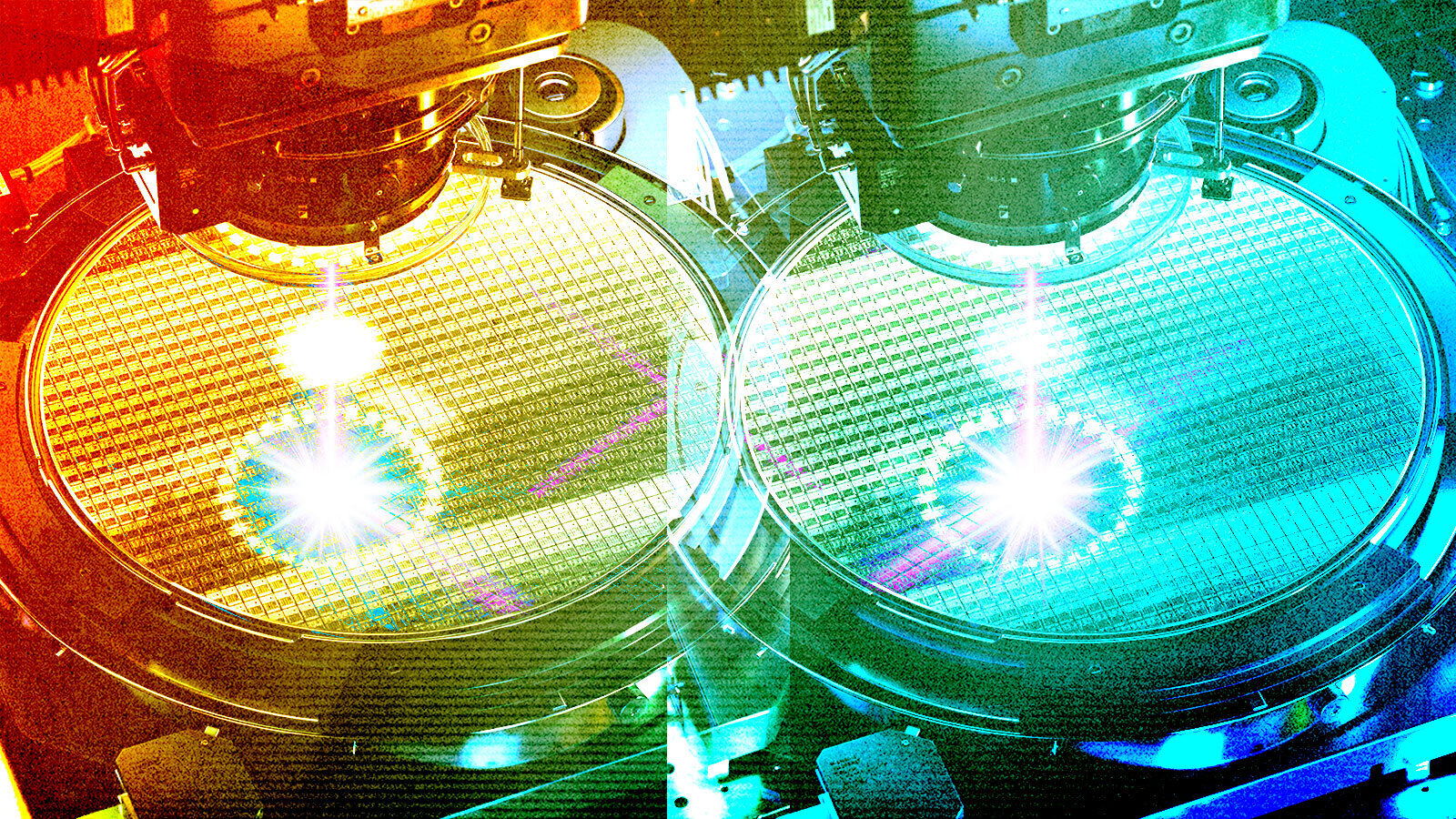
Shanghai Micro Electronics Equipment, known as SMEE, is China’s leading producer of lithography machines, the ultraprecise light-beaming devices needed to make cutting-edge chips.
The U.S. had added SMEE to its Entity List in 2022, subjecting it to heightened export controls over its efforts to acquire U.S.-origin tech “in support of China’s military modernization.” Then, after its business appeared to stall, SMEE last year spun off a new lithography company, AMIES Technology, that was not subject to those same export controls—and that rapidly acquired thousands of SMEE’s patents and two of its subsidiaries, records reviewed by Kharon show.
The spinoff could well have legitimate business motivations, said Jacob Feldgoise, a senior data research analyst at Georgetown University’s Center for Security and Emerging Technology. But the two companies’ close connection, he said, speaks to the maneuvers that some Chinese companies—including in strategically sensitive spaces like semiconductor manufacturing—are employing to “get around” U.S. export restrictions.
“There’s a bit of a cat-and-mouse game here, where BIS will add new companies to the Entity List … and then those companies will take countermeasures to try and circumvent the restriction,” such as by pulling parts of their business down into a subsidiary or by spinning it off entirely, Feldgoise said.
With its spinoff of AMIES, whatever its intentions, “SMEE has created a new entity that is able to purchase U.S.-origin items more easily than otherwise would have been the case,” he said.
AMIES has garnered buzz since. In October, after it showed off its products at a Shenzhen expo, the South China Morning Post called it “China’s new hope in breaking reliance on ASML’s chipmaking machines.”
China’s old hope in that quest had been SMEE. Its less-encumbered new spinoff, it seems, is offering a fresh start.
The U.S. had added SMEE to its Entity List in 2022, subjecting it to heightened export controls over its efforts to acquire U.S.-origin tech “in support of China’s military modernization.” Then, after its business appeared to stall, SMEE last year spun off a new lithography company, AMIES Technology, that was not subject to those same export controls—and that rapidly acquired thousands of SMEE’s patents and two of its subsidiaries, records reviewed by Kharon show.
The spinoff could well have legitimate business motivations, said Jacob Feldgoise, a senior data research analyst at Georgetown University’s Center for Security and Emerging Technology. But the two companies’ close connection, he said, speaks to the maneuvers that some Chinese companies—including in strategically sensitive spaces like semiconductor manufacturing—are employing to “get around” U.S. export restrictions.
“There’s a bit of a cat-and-mouse game here, where BIS will add new companies to the Entity List … and then those companies will take countermeasures to try and circumvent the restriction,” such as by pulling parts of their business down into a subsidiary or by spinning it off entirely, Feldgoise said.
With its spinoff of AMIES, whatever its intentions, “SMEE has created a new entity that is able to purchase U.S.-origin items more easily than otherwise would have been the case,” he said.
AMIES has garnered buzz since. In October, after it showed off its products at a Shenzhen expo, the South China Morning Post called it “China’s new hope in breaking reliance on ASML’s chipmaking machines.”
China’s old hope in that quest had been SMEE. Its less-encumbered new spinoff, it seems, is offering a fresh start.
The Lithography Landscape and SMEE’s Partners
ASML, the Dutch giant, manufactures the world’s most precise lithography machines, capable of etching extreme ultraviolet light to mass-produce chips of 2-nm nodes and below. That’s helped give the West an advantage in chip development that the U.S. has pressed to maintain through export controls.- Still, some openings remain: Reuters reported in December that China had successfully built an advanced lithography prototype, assembled from older ASML machines’ parts procured on secondary markets.
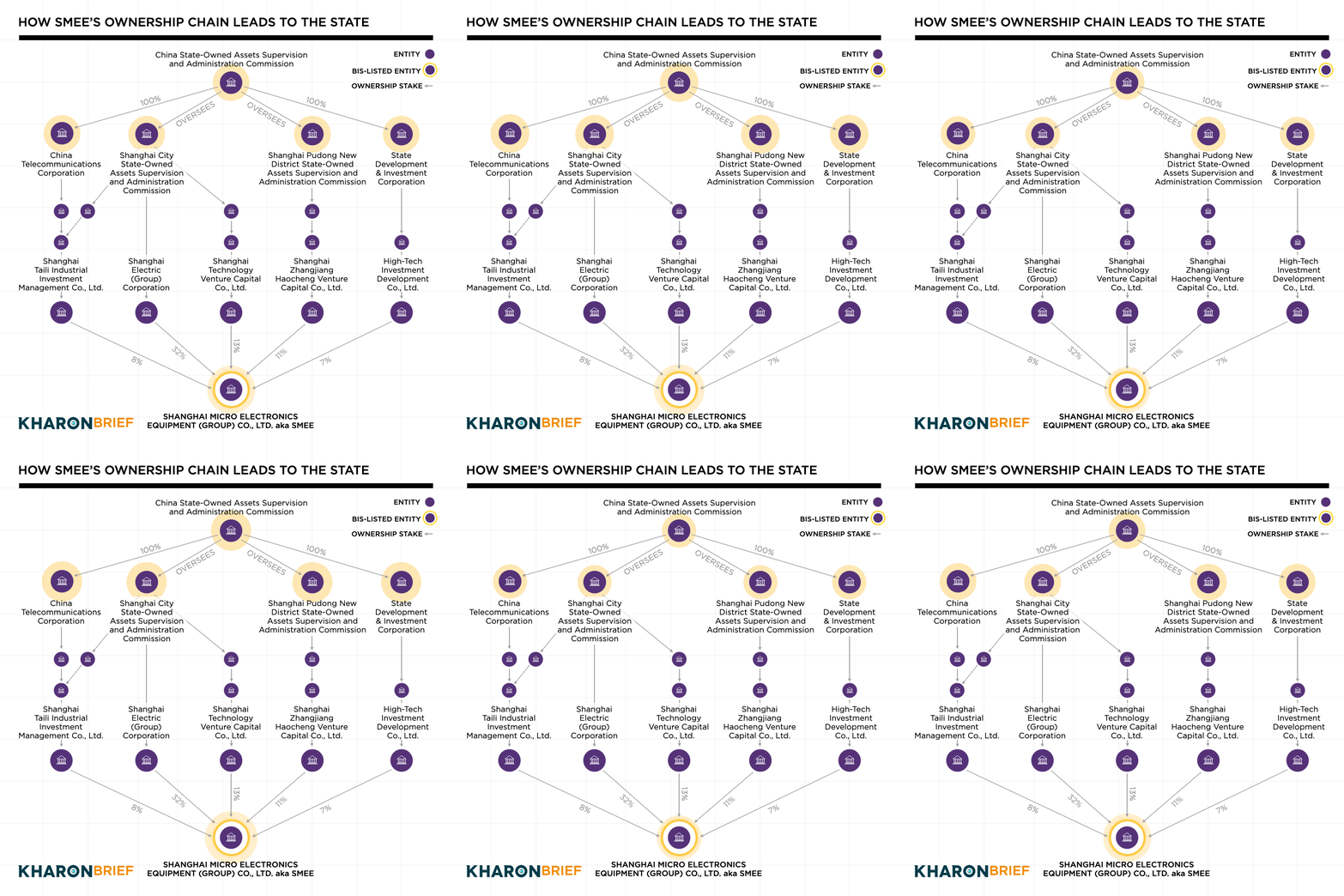
Zoom in: SMEE’s lithography machines are believed to be capable of mass-producing chips only at the 90-nm node level. That’s suitable for use in vehicles and appliances but far short of the level that ASML produces, needed for advanced computing or AI.
Chinese media have cheered that tech and AMIES’s rapid apparent rise over the past year:
But advanced packaging, a core focus for AMIES, is one area where China could advance its microchips’ computing power without needing high-end lithography tools, he added.
And what SMEE has sent to AMIES since the spinoff appears to be helping in that regard.
Two that the U.S. didn’t target were a metals-processing firm, Shanghai Weiyao Industrial Co., and an investment company, Shanghai Dongshu Investment Development. Starting last December, a month after the suspension of BIS’s Affiliates Rule, which would have covered any majority-owned SMEE subsidiaries, it sold its 100% ownership stakes in both companies to AMIES.
- One SMEE shareholder declared in December 2023 that the company had “successfully developed a 28-nm lithography machine,” which would represent a significant jump, though the post was later taken down.
AMIES’s Rapid Rise and Old Ties
AMIES Technology, which is based in Shanghai like SMEE, was founded in February 2025. A report by China’s STAR Market Daily later quoted an AMIES employee who said its “core personnel and technical assets came from Shanghai Microelectronics Group.” The company was spun off from SMEE as an independent entity “targeting fast-to-market equipment,” the employee said.- But the companies’ upstreams are linked. According to Chinese corporate records, SMEE and AMIES share two direct minority owners, as well as a number of common state-owned or -controlled parents higher up their ownership chains. They share board members as a result.
Chinese media have cheered that tech and AMIES’s rapid apparent rise over the past year:
- EET China reported in August that AMIES had “held a delivery ceremony for its 500th stepper lithography machine, marking a key breakthrough for China's high-end semiconductor equipment industry.” That machine, it said, was bound for SJ Semiconductor, which the U.S. in 2020 added to the Entity List for its ties to China’s military-industrial complex.
- The South China Morning Post story from October said AMIES had received an award at the China International Industry Fair “for its ‘next-generation fan-out packaging lithography system.’”
But advanced packaging, a core focus for AMIES, is one area where China could advance its microchips’ computing power without needing high-end lithography tools, he added.
And what SMEE has sent to AMIES since the spinoff appears to be helping in that regard.
The SMEE-AMIES transfers
Since AMIES’s early-2025 founding, SMEE has transferred to it either full or co-assignment of several thousand of its patents, according to a Kharon review of patent data.- Many of the patents concern the chip-making techniques and tools that now underpin AMIES’s business: laser heating, silicon wafer alignment and lithography machines.
Two that the U.S. didn’t target were a metals-processing firm, Shanghai Weiyao Industrial Co., and an investment company, Shanghai Dongshu Investment Development. Starting last December, a month after the suspension of BIS’s Affiliates Rule, which would have covered any majority-owned SMEE subsidiaries, it sold its 100% ownership stakes in both companies to AMIES.
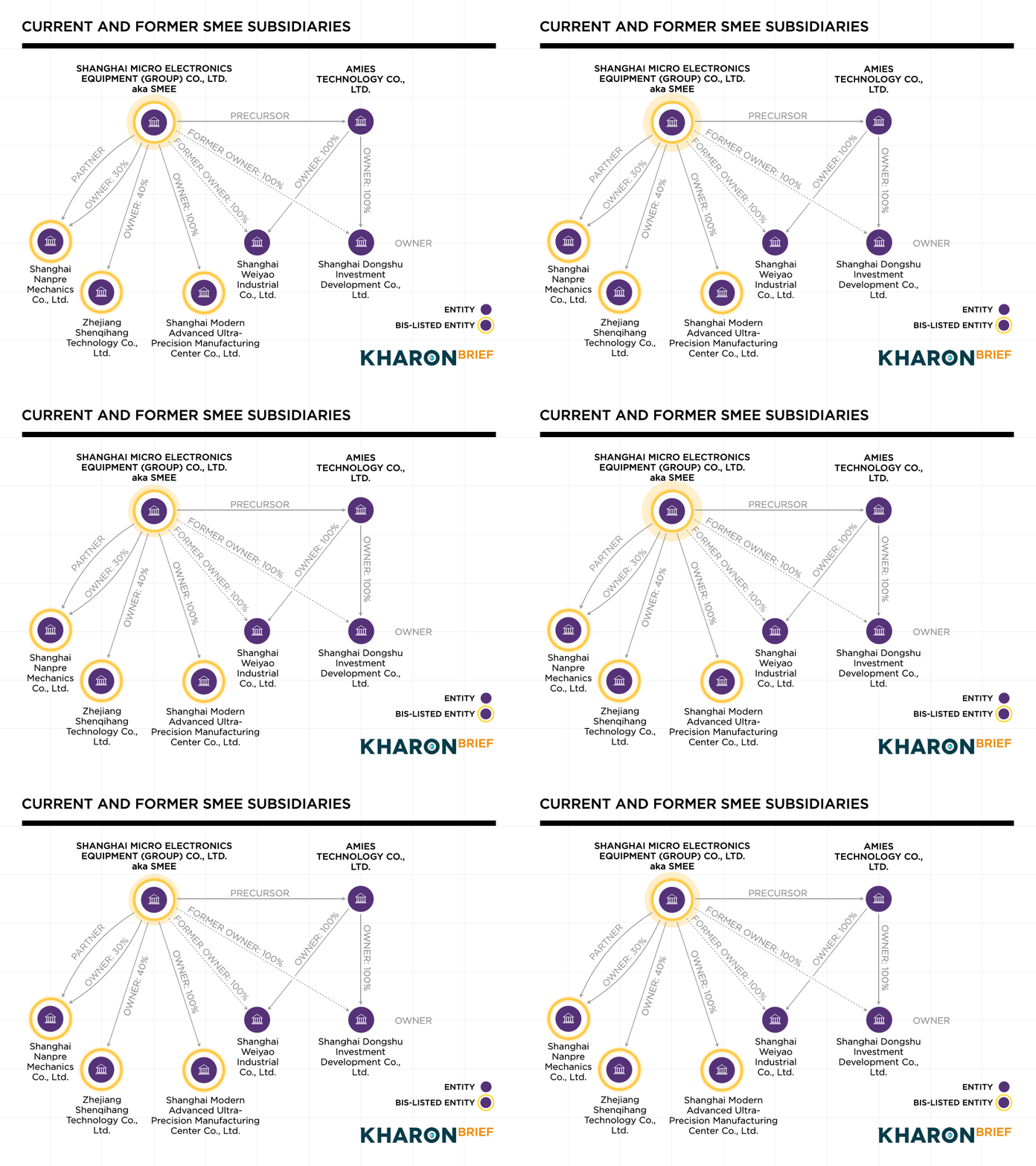
It’s just one more way the SMEE and AMIES networks entangle—with U.S. restrictions falling only on one side of it.
Read more from The Brief:
The BIS Compliance and Diversion Risks
SMEE’s and AMIES’s shared roots and extensive spinoff add up to a tricky case study for U.S. exporters and regulators to consider.- Regardless of the Affiliates Rule’s status, BIS’s FAQ states that if a company “acts as an agent, a front, or a shell company for the listed entity in order to facilitate transactions that would not otherwise be permissible with the listed entity,” that would likely violate U.S. export controls.
Read more from The Brief: