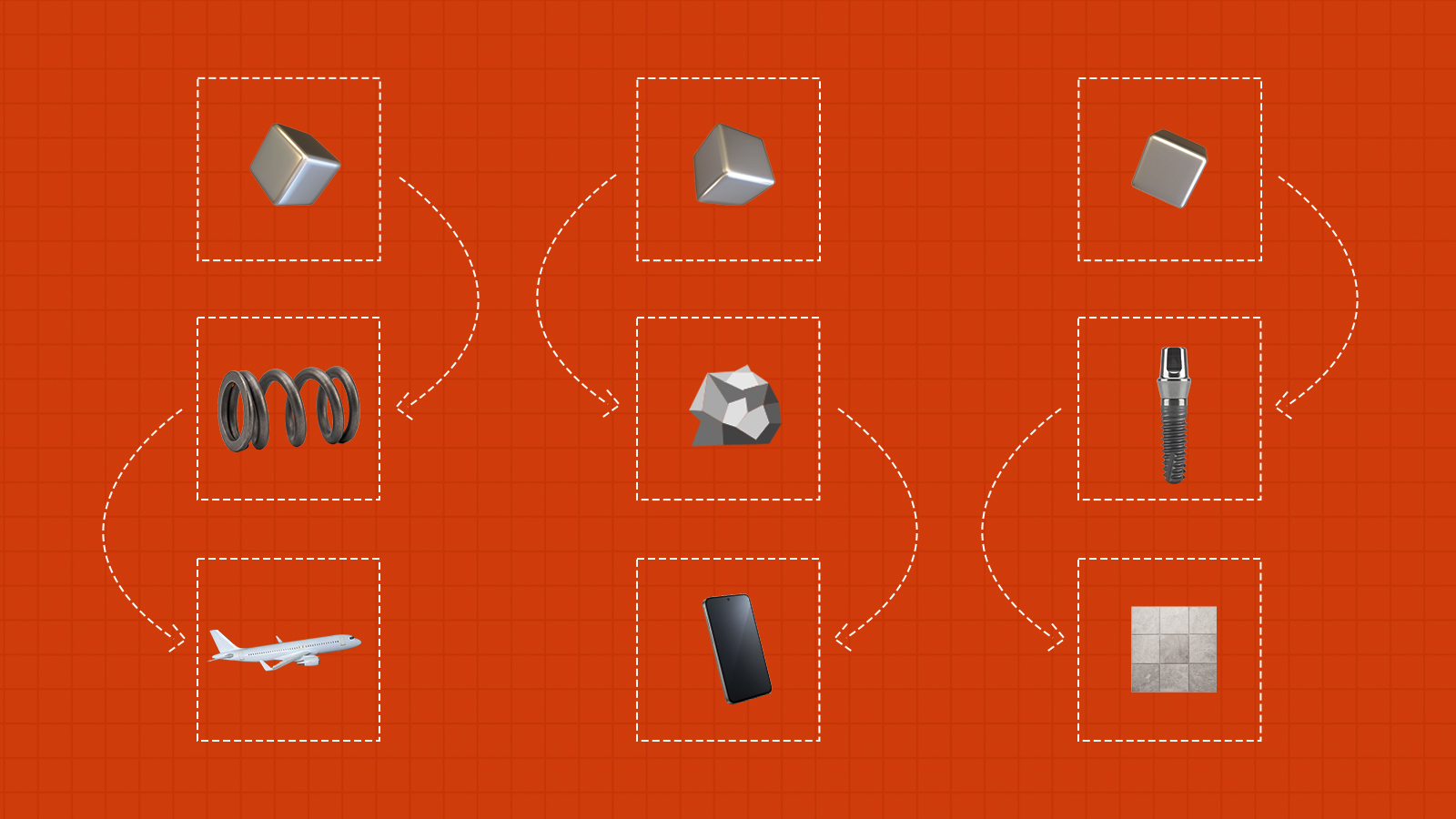
Titanium products sourced from China’s forced-labor hotbed have entered the global electronics, industrial equipment, and building-materials sectors, Kharon research found — including supply chains connected to defense, home flooring, and the smartphone you might be reading this on.
Titanium has not been a named priority sector for U.S. enforcement under the Uyghur Forced Labor Prevention Act (UFLPA) to date. But the findings highlight how materials originating from the Xinjiang region, which a report last year found accounts for close to 12% of the world’s production of raw titanium minerals, can get lost through layers of processing and manufacturing before flowing out into international markets.
The UFLPA presumes that any imported goods are made with forced labor, and will be detained, if they are mined, produced, or manufactured even partly in Xinjiang.
Kharon identified two producers in particular, Xinjiang Xiangrun New Material Technology and Tinergy Chemical Co., Ltd., that appear to offer global gateways.
The U.S. has not named Xiangrun itself to its UFLPA blacklist. But the company has served as an upstream supplier to two others that the U.S. listed in August for having “sourc[ing] titanium sponge from an XUAR-based titanium supplier,” using an acronym for the Xinjiang Uygur Autonomous Region.
Titanium has not been a named priority sector for U.S. enforcement under the Uyghur Forced Labor Prevention Act (UFLPA) to date. But the findings highlight how materials originating from the Xinjiang region, which a report last year found accounts for close to 12% of the world’s production of raw titanium minerals, can get lost through layers of processing and manufacturing before flowing out into international markets.
The UFLPA presumes that any imported goods are made with forced labor, and will be detained, if they are mined, produced, or manufactured even partly in Xinjiang.
Kharon identified two producers in particular, Xinjiang Xiangrun New Material Technology and Tinergy Chemical Co., Ltd., that appear to offer global gateways.
Risks in smartphones, jets, and HVAC systems
Xinjiang Xiangrun is a producer of titanium sponge and alloys used in products ranging from smartphones to aircraft components.The U.S. has not named Xiangrun itself to its UFLPA blacklist. But the company has served as an upstream supplier to two others that the U.S. listed in August for having “sourc[ing] titanium sponge from an XUAR-based titanium supplier,” using an acronym for the Xinjiang Uygur Autonomous Region.
- Xiangrun did not respond to emailed questions from The Brief about its titanium sourcing or supply chains.
- Publicly traded on the Beijing Stock Exchange, Tiangong Technology has also sold to and partnered with defense-tied Chinese actors, according to trade records and corporate disclosures.
- Through layers of intermediaries, Kharon found, its wares also appear to have ended up in smartphones sold worldwide.
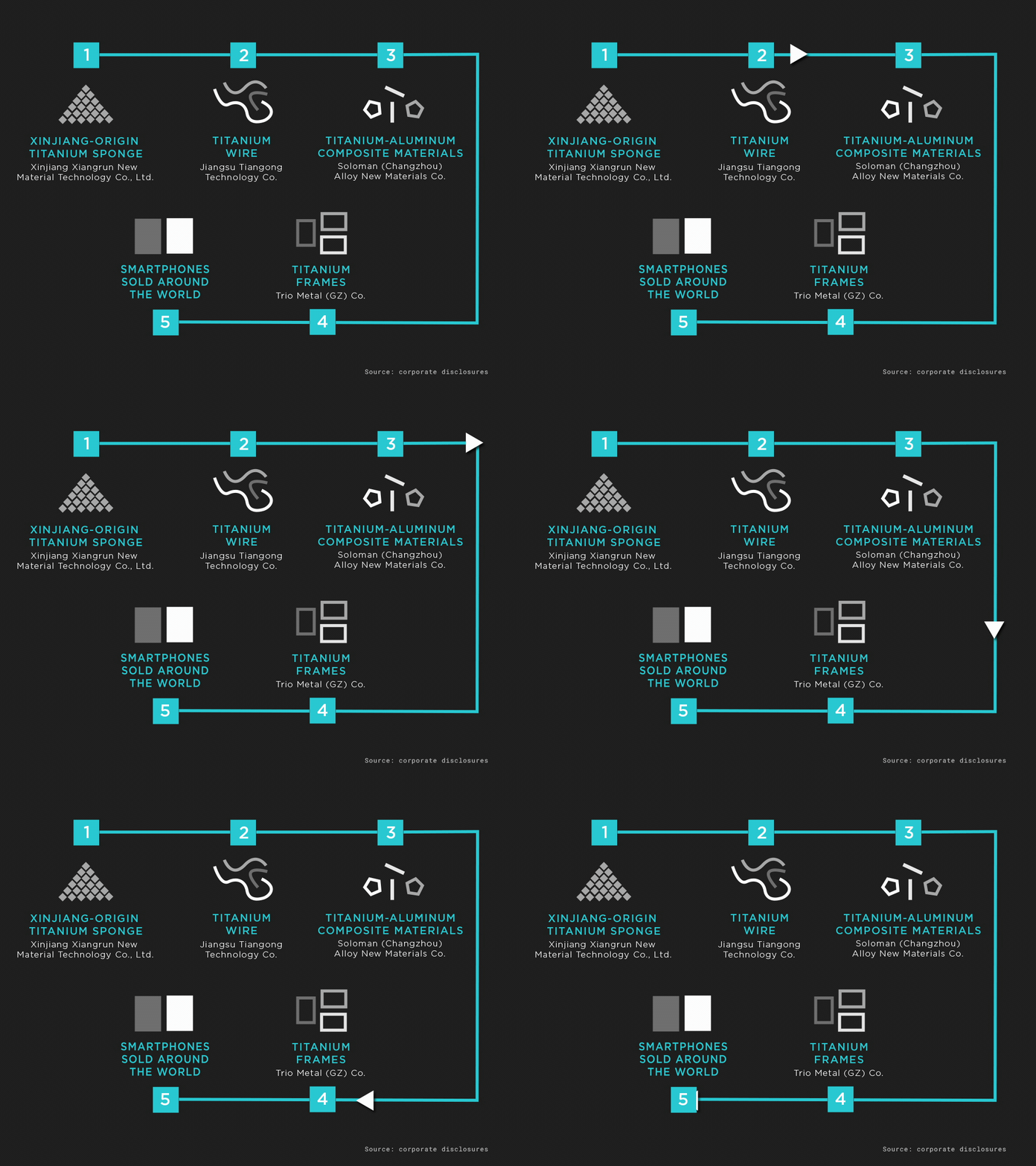
That supply-chain relationship has proved valuable for all three companies. In 2024, two years before its UFLPA blacklisting, Tiangong reported a revenue boom that it linked to Trio Metal’s growing sales into the international smartphone supply chains of an unnamed “Company A” and “Company S.”
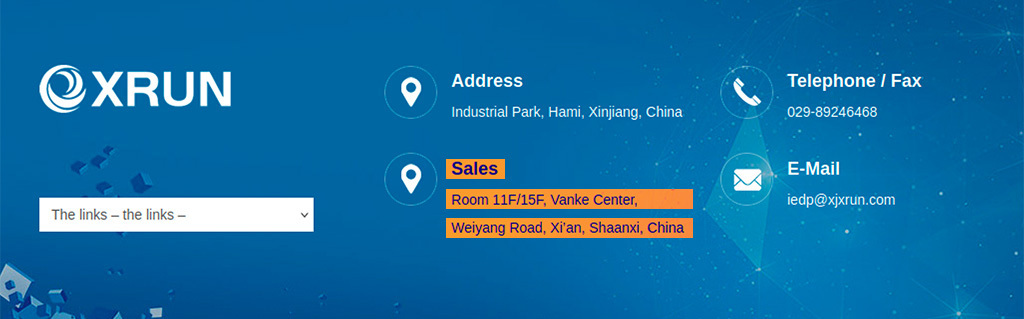
Branch 2: On its website, Xinjiang Xiangrun lists its company base in Hami, Xinjiang, but identifies an address in Xi’an as its “sales center.” It matches the registered address in corporate records for the similarly named Xi’an Xiangrun New Materials Co., Ltd., which sells widely abroad.
Branch 2: On its website, Xinjiang Xiangrun lists its company base in Hami, Xinjiang, but identifies an address in Xi’an as its “sales center.” It matches the registered address in corporate records for the similarly named Xi’an Xiangrun New Materials Co., Ltd., which sells widely abroad.
According to trade data, Xi’an Xiangrun has supplied:
That’s because NEOTISS, whose primary products include titanium welded tubes for heat exchangers and other industrial applications, serves customers or end users across the power, industrial, HVAC, defense, and aerospace sectors. An industry group’s press release in July touted how NEOTISS’s tubes were “at work in commercial and defense jet aircraft.”
- large quantities of titanium sheet, plate, and coil to multiple Indian companies, including Ratnamani Metals & Tubes, a major Indian manufacturer of metal tubes and pipes, and Kelvion India, a manufacturer of industrial heat exchangers whose products are supplied to customers in the United States;
- customized titanium coil to Connecticut-based Landsdowne Labs, a company spun out of MIT’s Langer Lab;
- and titanium coil also to Tennessee-based NEOTISS Inc., including shipments as recently as August.
That’s because NEOTISS, whose primary products include titanium welded tubes for heat exchangers and other industrial applications, serves customers or end users across the power, industrial, HVAC, defense, and aerospace sectors. An industry group’s press release in July touted how NEOTISS’s tubes were “at work in commercial and defense jet aircraft.”
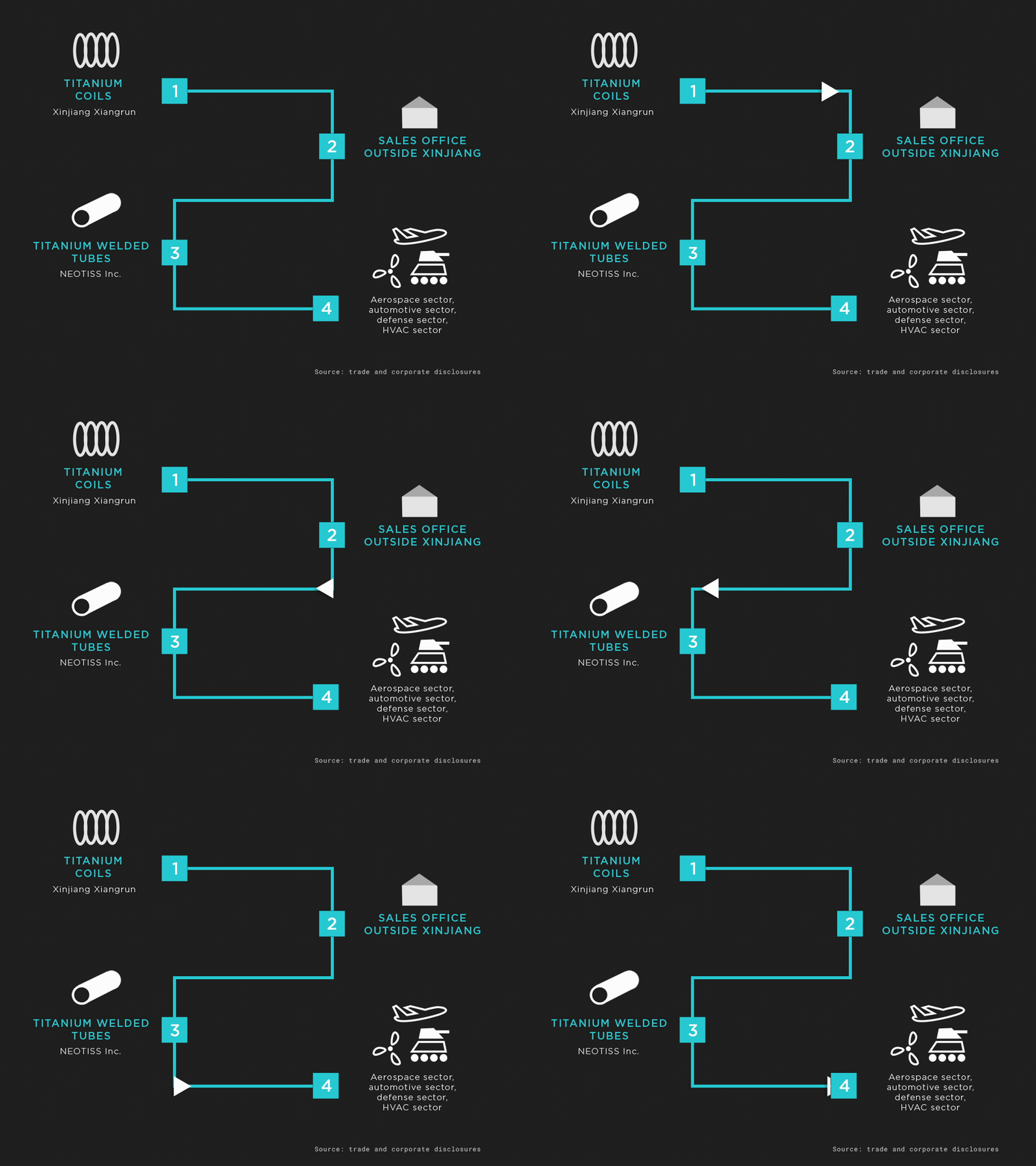
NEOTISS did not respond to emailed questions.
Tinergy, which produces titanium dioxides widely used as a white pigment in paints, coatings, and decorative materials, is based in Gansu province, to Xinjiang’s east. But its documented sourcing ties to Xinjiang are extensive:
Risks in paint and wood flooring
It’s not just Xinjiang Xiangrun that appears to be exposing global titanium supply chains to the region’s forced-labor risks. Tinergy Chemical, a supplier to global paint giants, is another example. (It also did not respond to outreach.)Tinergy, which produces titanium dioxides widely used as a white pigment in paints, coatings, and decorative materials, is based in Gansu province, to Xinjiang’s east. But its documented sourcing ties to Xinjiang are extensive:
- Tinergy stated in a 2022 securities disclosure that it procured titanium ore from Xinjiang-based Hami Ruitai Mining, through an intermediary. The company also disclosed that its subsidiary Tioxhua signed multiple contracts with the same intermediary to purchase titanium concentrate from Ruitai Mining itself.
- That relationship extends to ownership, too: According to corporate records, Tinergy holds a majority stake in a Xinjiang titanium-processing joint venture with Ruitai Mining.
- Two 2023 environmental impact reports for titanium mining projects in Xinjiang identified Tinergy as the intended recipient of titanium dioxide produced at the two mines.
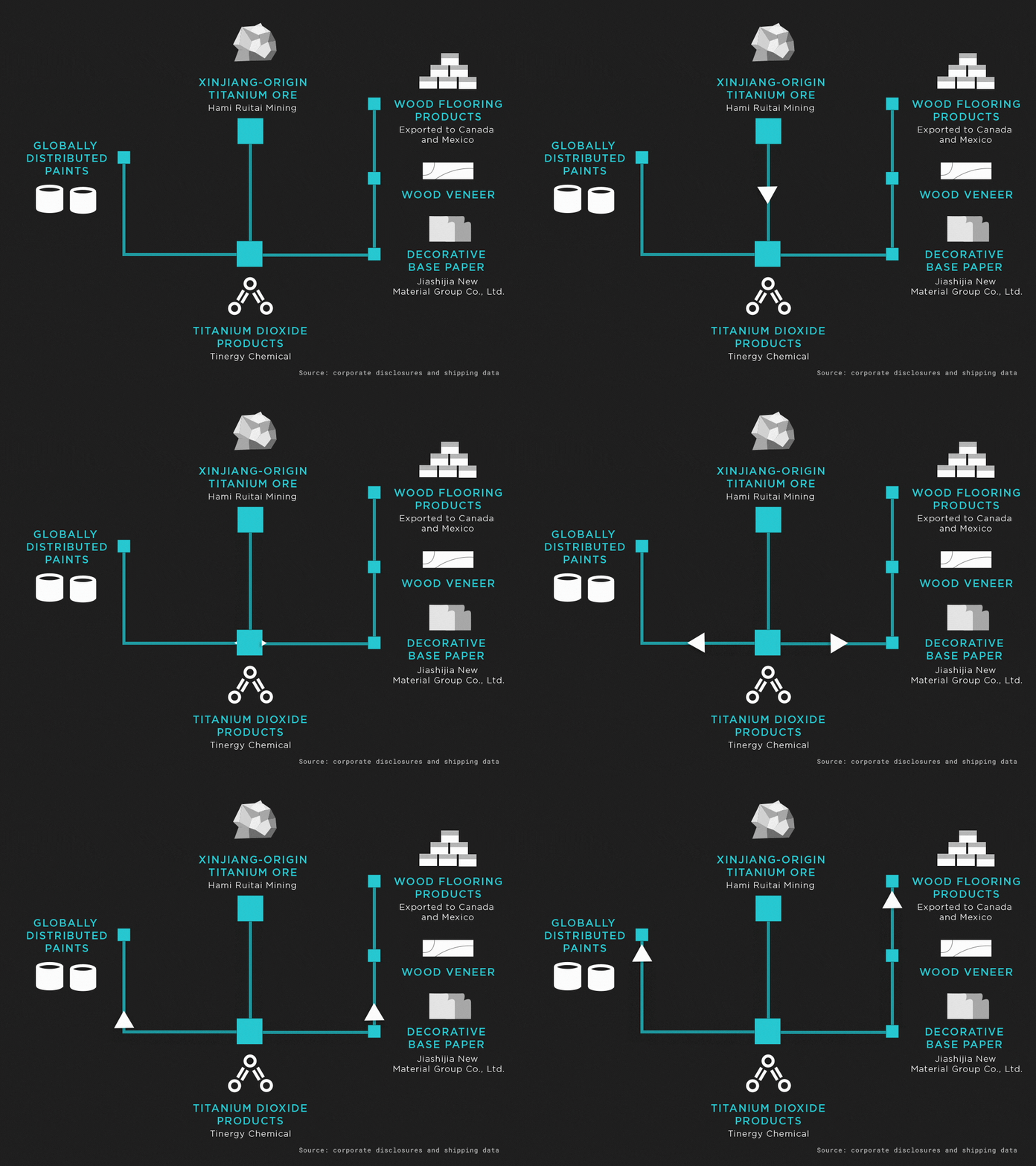
This year, Gold Star’s customers of titanium dioxide products have included subsidiaries of Dutch and Japanese paint companies, as well as North America-based firms. According to trade records, Gold Star’s shipments to a Mexican chemical company specifically listed shipments’ titanium dioxide brand as Tioxhua, the Tinergy subsidiary that signed contracts to buy from Xinjiang.
Branch 2: Meanwhile, two of Tinergy’s other largest customers are suppliers of “decorative base paper” to Jiashijia New Material Group Co., Ltd., in the eastern city of Changzhou, which uses it to make engineered wood veneer.
Jiashijia New Materials’ customers then export finished wood flooring products to Canada and Mexico.
But while titanium hasn’t joined them to date, the recent blacklistings of Tiangong Technology and fellow Xinjiang Xiangrun customer Baoji Jucheng Titanium Industry Co., Ltd., show that it’s on authorities’ radar, too.
Read more from The Brief:
Branch 2: Meanwhile, two of Tinergy’s other largest customers are suppliers of “decorative base paper” to Jiashijia New Material Group Co., Ltd., in the eastern city of Changzhou, which uses it to make engineered wood veneer.
Jiashijia New Materials’ customers then export finished wood flooring products to Canada and Mexico.
The bottom line
The Department of Homeland Security last expanded its list of high-priority sectors for UFLPA enforcement in August 2025, when it added steel and copper. Aluminum was on the list already.But while titanium hasn’t joined them to date, the recent blacklistings of Tiangong Technology and fellow Xinjiang Xiangrun customer Baoji Jucheng Titanium Industry Co., Ltd., show that it’s on authorities’ radar, too.
Read more from The Brief: