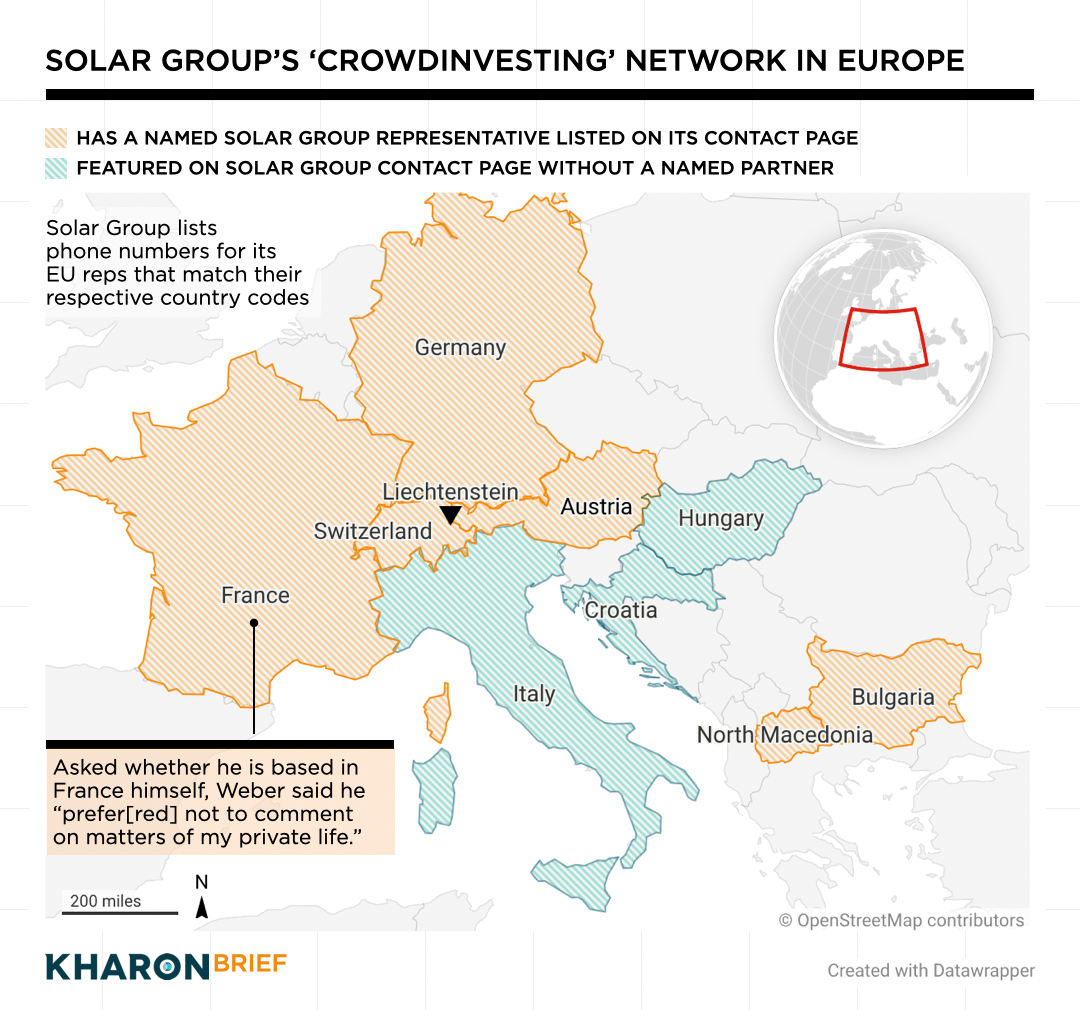
Solar Group’s network of representatives advertise that the money will fund Sovelmash, a Moscow-based subsidiary developing energy-efficient electric motors that can benefit any industry. “Support innovation that has the potential to improve the environmental situation of the entire planet and ensure your own financial well-being in the future!” one FAQ page reads.
But Sovelmash debuted a particular use case for its crowdfunded motors at Russia’s Army-2024 trade show: powering its Motylyok, or moth, drone, which it markets as “the world’s first heavy-duty drone with inverted asynchronous electric motors.” It means some Europeans have been investing in a Russian drone project amid the war in Ukraine, including after EU sanctions last fall banned financing for companies at Technopolis Moscow, the zone where Sovelmash is located.
- Solar Group reports that it’s raised more than $117 million for the project to date.
The wrinkle: Nine years into its fundraising, Sovelmash’s drone and motors are not yet in production. But Solar Group’s partners have been able to profit regardless of sales, according to an online FAQ page, by “promoting SOLARGROUP projects and bringing investments into them,” with “referral rewards based on the performance of their partner structure.”
At the top, those rewards can be substantial.
- According to Facebook posts from November 2024, Solar Group owner Sergey Semyonov handed France representative Gilles Weber the keys to a Rolls-Royce to honor him as the company’s “Ambassador winner” and, with a trophy emoji, its “Rolls royce car winner.” (Weber, in an emailed response to questions from The Brief, called it “a temporary and symbolic provision of use” for a Moscow work trip.)

By Semyonov’s own recorded acknowledgement, it would not be the first pyramid he’s been involved with.
A national drone push and international crowdfunding
Russia’s drone-development push has broadened and accelerated in recent years, Borsari said, including through targeted investments, low-interest government loans, and a new, drone-focused branch of the military that has aggressively recruited college students since it launched last November.Still, the “slow bureaucracy of the state” has led some Russian manufacturers to seek grassroots financing, Borsari said. “Crowdfunding has been an instrumental, critical part of Russia’s effort to address the structural problem they had in Ukraine in the first year and a half of the invasion,” he said.
Origin points: In a video clip uploaded to YouTube by a Russian blogger, a younger Semyonov is seen driving a car while discussing his past involvement with MMM, Russia’s most notorious Ponzi scheme. Semyonov confirms to a questioner that he “cashed in on MMM.”
- “You were rewarded?” the other man asks. “I parasite off of financial pyramids,” Semyonov says.
Construction of a Sovelmash design and engineering center began at the SEZ in December 2020, Solar Group says. (Sovelmash did not respond to an emailed list of questions from The Brief.)
- “When these motors are implemented, they are more efficient, cheaper, lighter, use less material, and so on,” Semyonov said in a podcast-style interview posted to Solar Group’s English-language YouTube channel last October. “So, yes, [the project is] primarily about profit, but it’s also significantly about the ethical and sustainable way we achieve that profit.”
- “This is our contribution to the efficient use of the planet’s resources,” Bulgarian representative Dimitar Dimitrov wrote on Instagram in January.
“The founder of the structure earns income from level two and subsequent levels depending on their status,” reads an FAQ page titled “How do SOLARGROUP partners earn a profit?”
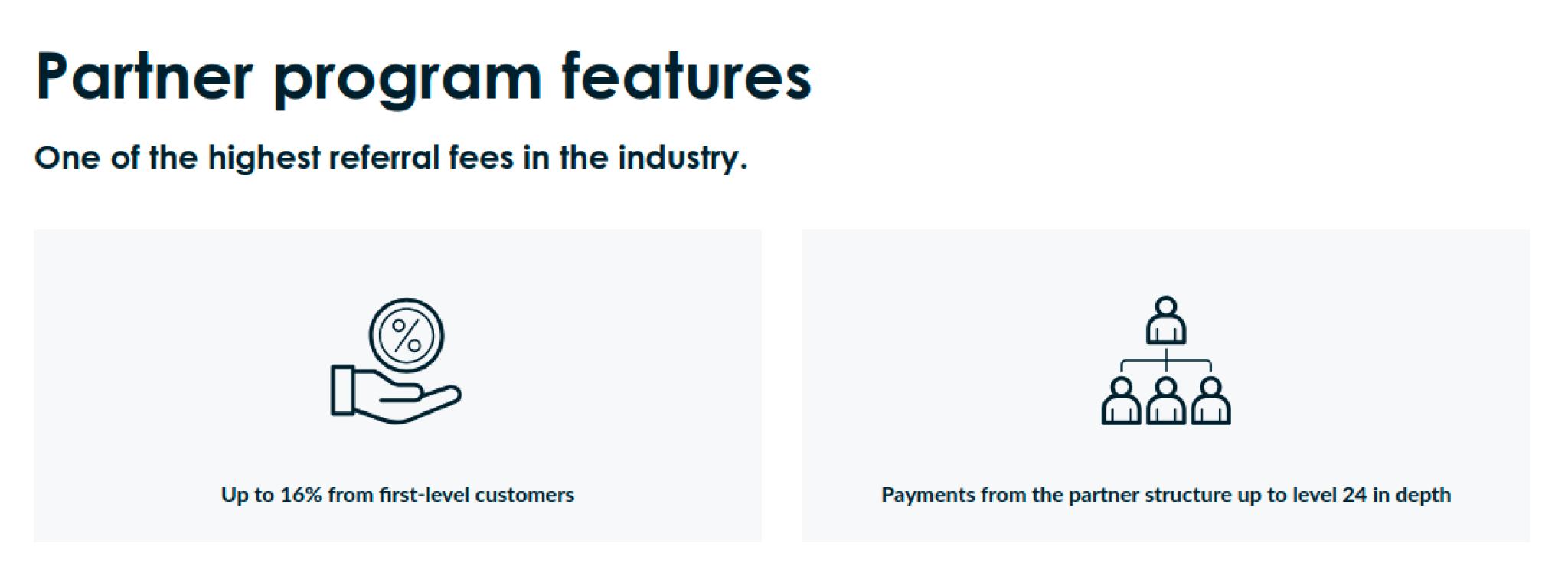
Explained: “A pyramid is a structure by which you earn compensation for the recruitment of additional people, independent of the retail activity or other genuine economic activity that fuels it,” said Bosley, the Hamline professor.
“There can be a product or service” involved in a company operating as a pyramid, she noted. But compensation structures that rely on recruitment can create an “endless chain problem,” Bosley said, in which those on the bottom struggle to profit.
Partners have promoted the motors project in person as well: According to a Solar Group website post, Dimitrov and Butschbach met with investors at a Solar Group conference in Bulgaria’s capital in November 2022, nine months after Russia’s full-scale invasion of Ukraine.
- “After the news from the conference in Bulgaria, many people from Germany wrote to me and wanted to know more,” Butschbach said afterward.
What EU sanctions say
The EU in October sharply restricted EU transactions with entities in 11 Russian special economic zones (SEZs) that “play a key role in supporting Russia’s military-industrial base.” It hit two zones with the strictest bans: Sovelmash’s Technopolis Moscow and Alabuga, the country’s drone-production nerve center.
Fine print: EU operators “must fully withdraw from these [two] zones and discontinue any existing participation or arrangements” to comply with the new Article 5ah, per European Commission guidance.
- That includes providing “financing or investment services” connected to entities located in these zones.
A France-based EU sanctions lawyer, speaking to The Brief on the condition that their name be withheld to discuss a sensitive legal matter, also pointed to Article 2 of the bloc’s Russia sanctions. That restricts EU operators from providing “financing” related to the sale, supply, transfer, or export of dual-use goods and tech to Russian entities or for use in Russia.
What the companies say: “[I]t should be noted that no relevant authority has, to date, declared SOLARGROUP’s activities illegal or established that they would constitute a violation of the European regulations mentioned in your letter,” Weber wrote to The Brief.
Solar Group and Sovelmash pages do not appear to disclose possible EU regulatory risks. “Anyone from any part of the world can participate in high-profit SOLARGROUP projects,” says one company Facebook group, targeting Indian investors, that includes more than 5,000 members.
A growing military appeal and ‘dragging’ delays
Three months before the Bulgaria conference, Sovelmash had shown off a motor-powered ATV in its first appearance at the Army trade show, hosted annually by Russia’s Ministry of Defense.- An expo highlight reel that included Sovelmash would be “shown to Russia’s top military commanders,” Solar Group said on its website.
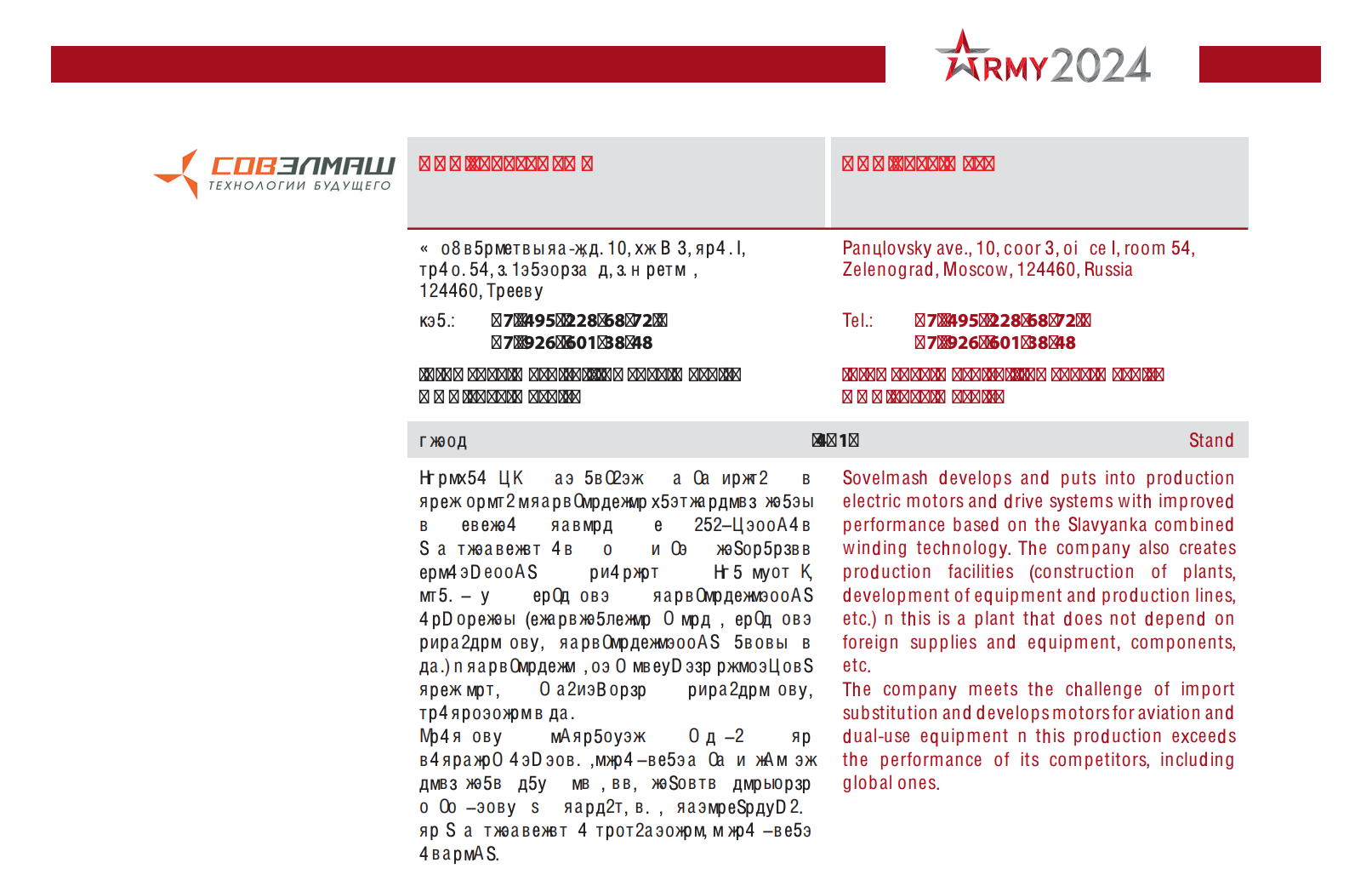
“The company meets the challenge of import substitution and develops motors for aviation and dual-use equipment,” Sovelmash wrote in a page of the Army-2024 catalog reviewed by Kharon.
- “A ‘Tsar-drone’—capable of carrying a suspended FAB-250 aerial bomb—was unveiled at the ‘Army-2024’ forum. It goes by the name ‘Motylyok’ (Moth) UAV,” the Russian online news site Mash posted to Telegram. “It flies not only toward the light but straight at the enemy. Its four electric motors are capable of lifting a 230-kilogram payload—be it an electronic warfare system or, indeed, a FAB-250—to rain down ‘democracy’ from an altitude of up to 100 meters.”
- The Russian newspaper Izvestia reported that “the device may well cover a distance of 150 km.” It cited a military expert who said such a drone “can be used to ensure logistics and supply of troops to the front line or in hard-to-reach places.”
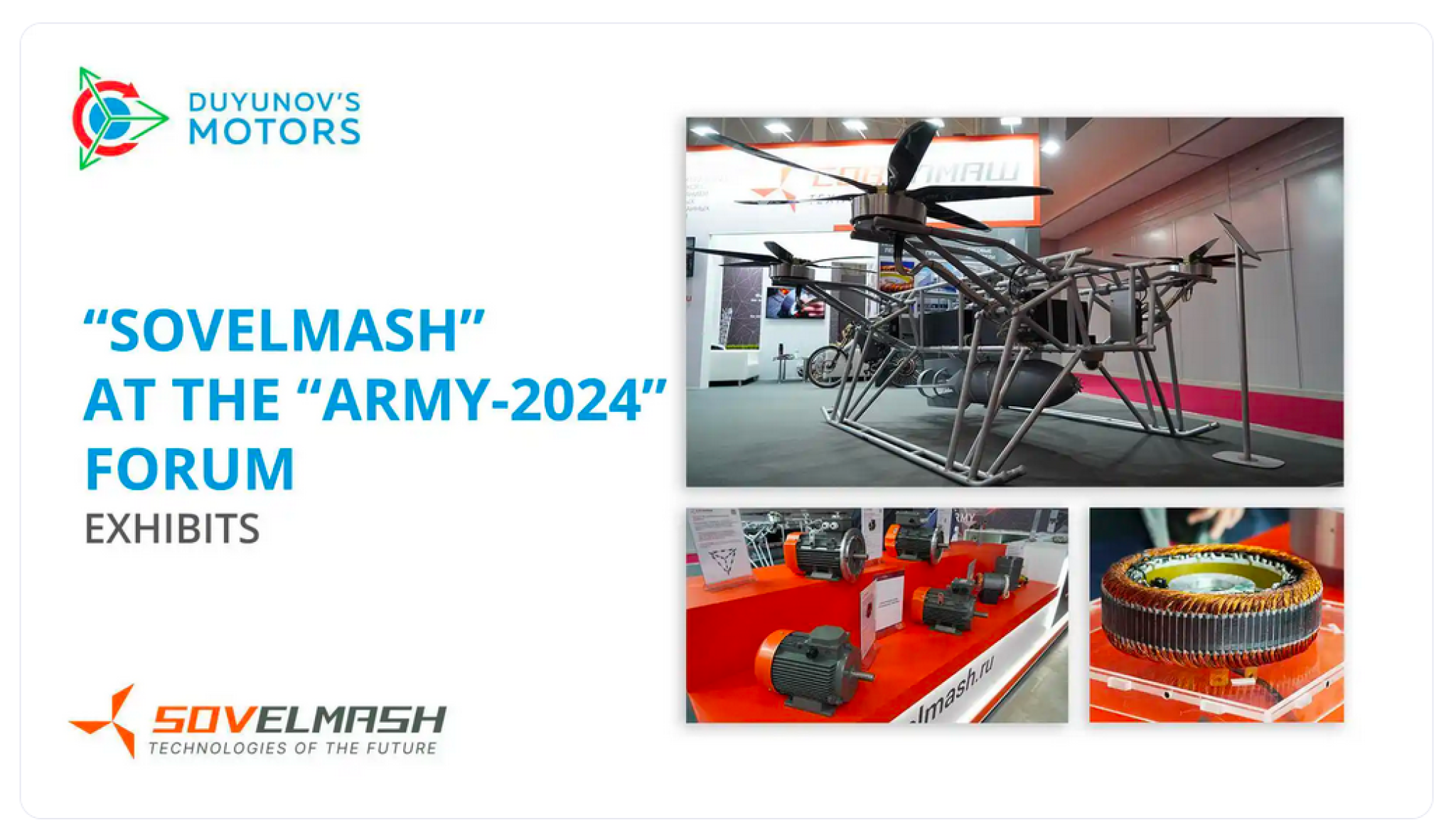
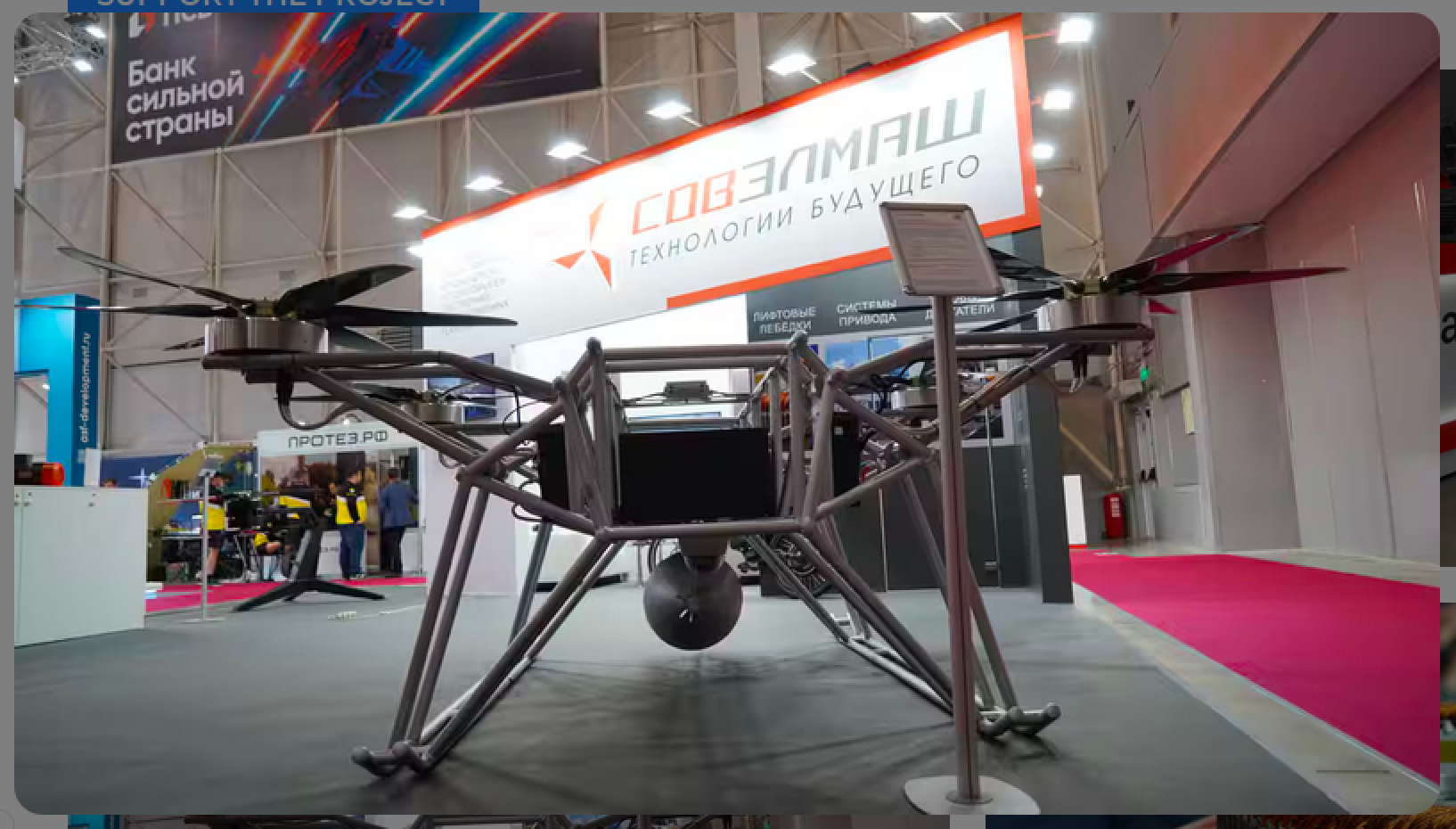
Troops need food, water, medicine, munitions, and even blood, Miron said, and “it’s not always feasible” for ground drones to reach them. “Using something like Motylyok … would make a lot of sense and would fill the gap that exists in the unmanned-systems ecosystem of the Russian armed forces,” she said.
- Borsari noted that heavy-duty drones, like Ukraine’s Vampire, can also “drop bombs vertically on targets.”
Borsari’s view: “Nothing is for only agricultural purposes nowadays.”
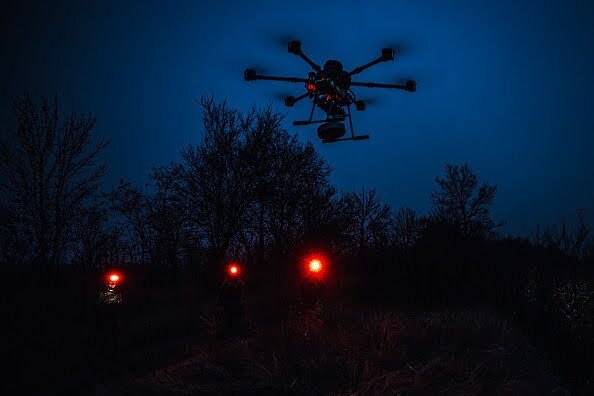
Weber acknowledged in a webinar earlier this year targeting French-speaking investors that “people find the wait too long.” Before the motors could reach production and investors could receive dividends, he said at the time, Duyunov needed to create a full sample assembly line and a prototype and show clients “how it works,” including for use in the Motylyok drones.
- Weber told The Brief on Wednesday that the Motylyok “is presented as a technological demonstration” related to the use of the electric motors. The day before, he had posted an update to Facebook that had referenced “preparations” and “new tests” for the drone.
A Russian warning, then more fundraising
One additional, related snag might be this: Last Christmas Eve, Russia’s Central Bank added Solar Group to its “warning list” of “companies showing signs of illegal activity in the financial market,” citing “illegal fundraising” practices. The bank simultaneously flagged Aeronova, a Semyonov-owned airship project for which Solar Group also solicits investment, for the same reasons.- The Central Bank then added SkyWay, a cable-car initiative where Semyonov was an early employee, to the same list in March, stating that it showed “signs of a pyramid scheme.”
On March 4, its Facebook pages from Croatia to France told investors the motors project was in its “final stages” and shared the same vague but upbeat message: “The risks everyone was worried about are in the past. And we would like to congratulate everyone on that!”

In the Semyonov interview posted to YouTube last fall, he appeared to try to preempt similar fears from investors about Sovelmash. Forty-one minutes in, the interviewer asked how Semyonov had dealt with “attacks from some vocal haters” that Solar Group might be a scam like, “unfortunately,” so many other projects online.
“The line is very, very thin,” Semyonov responded, “between a person who genuinely intended to make money but ultimately failed, so the investors unfortunately didn’t profit as expected, and someone who from the very start deliberately created a project that simply couldn’t be realized, spent investors’ hard-earned money irresponsibly, essentially stealing it, and never truly intended to deliver anything at all.”
That latter type of person, Semyonov suggested, wasn’t him.
Peter Maroulis contributed research to this report.
Read more from The Brief: