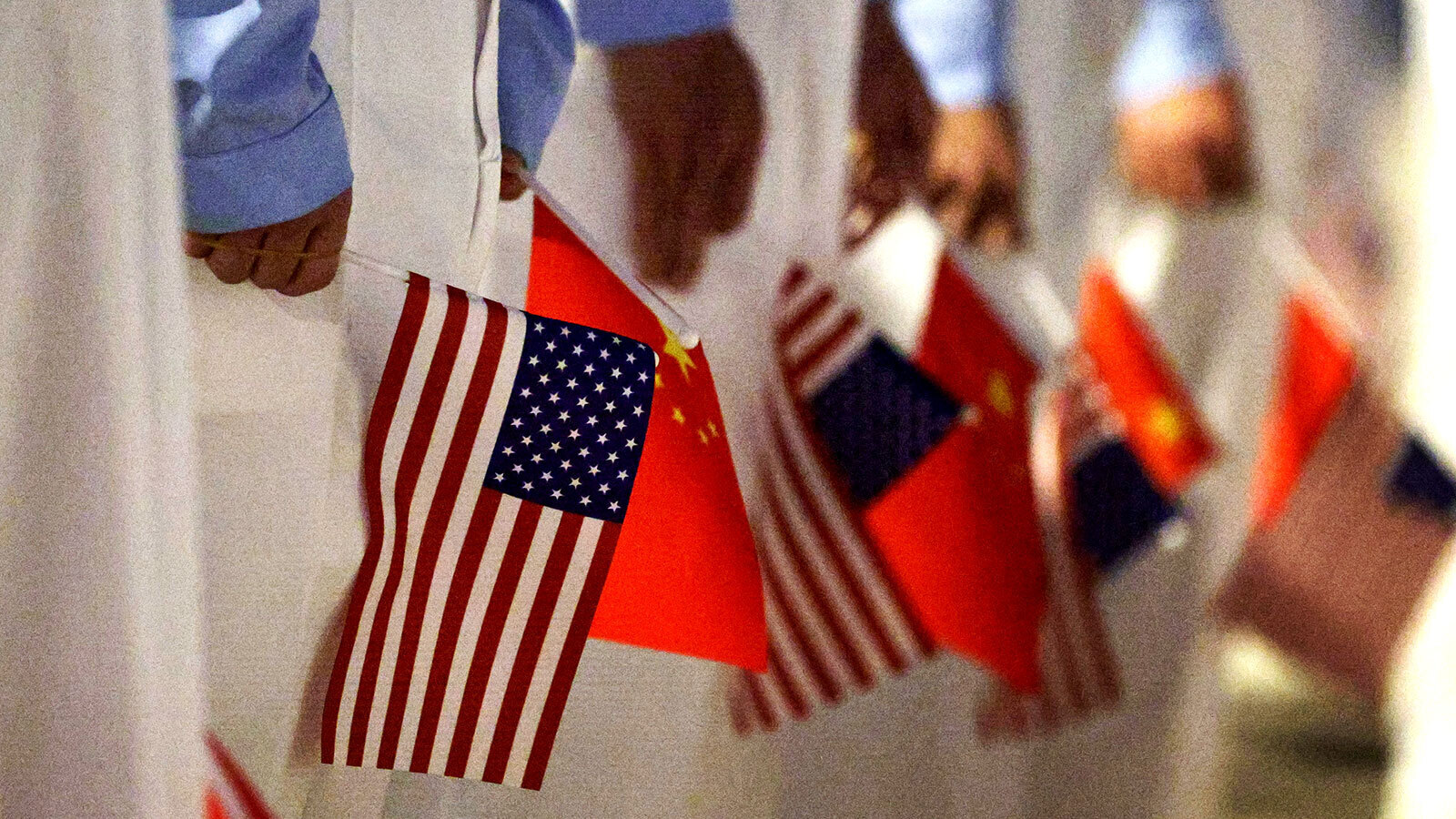
President Trump is in Beijing for a two-day summit with Chinese leader Xi Jinping that’s covering trade, technology, and Taiwan. The war in Iran—which sells 90% of its crude oil to China and whose foreign minister visited Beijing himself last week—looms large, too.
The talks, which began Wednesday night Eastern time, arrive as tensions between Washington and Beijing continue over a range of topics that both governments increasingly treat as national-security issues: export controls, financial flows, shipping networks, artificial intelligence, sanctions enforcement, and supply chains.
The talks, which began Wednesday night Eastern time, arrive as tensions between Washington and Beijing continue over a range of topics that both governments increasingly treat as national-security issues: export controls, financial flows, shipping networks, artificial intelligence, sanctions enforcement, and supply chains.
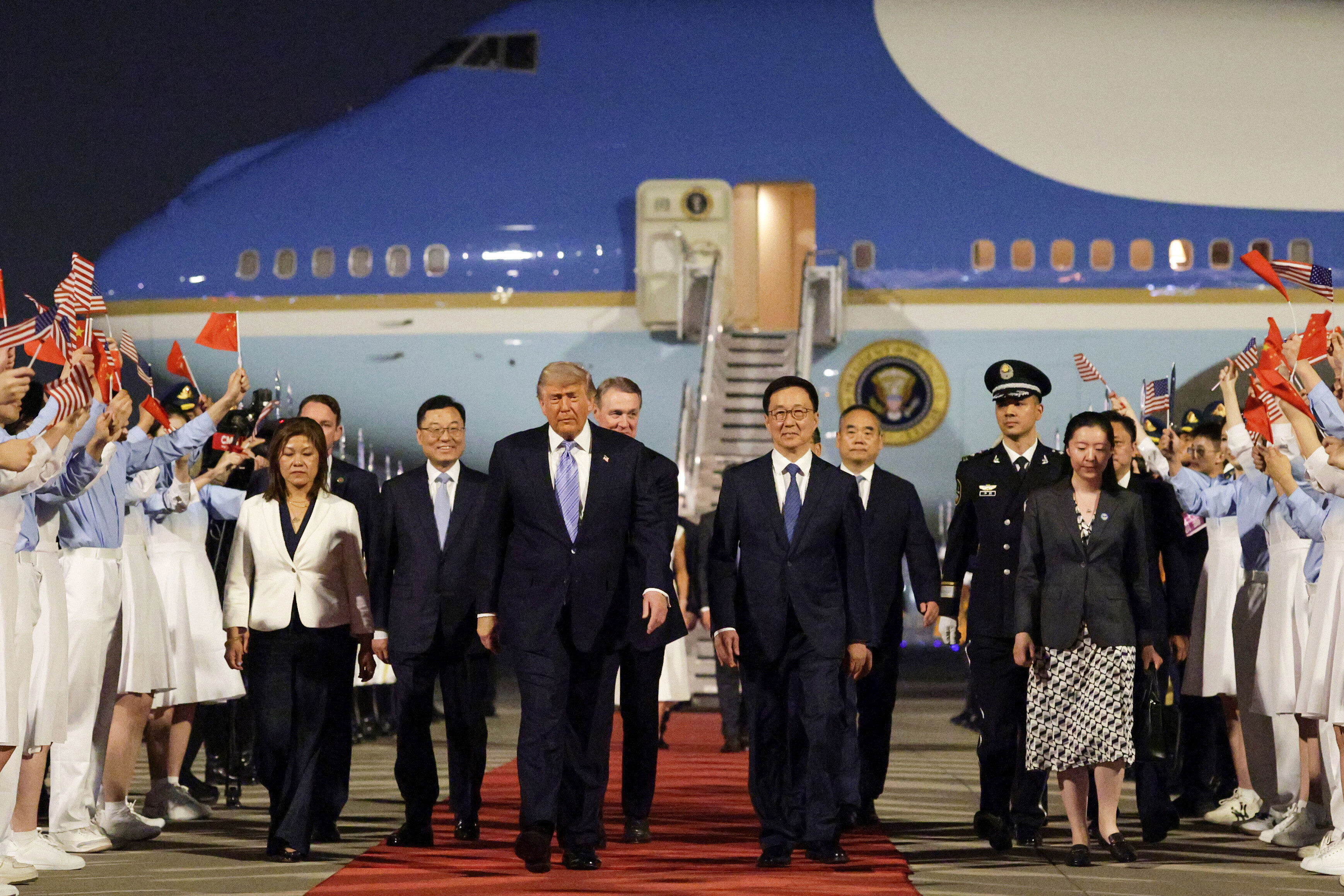
President Trump and the U.S. delegation arrives in Beijing. Talks began Wednesday night Eastern time. (Alex Wong/Getty Images)
Whatever is agreed (or not), the meeting is poised to set the terms of the world's most consequential economic relationship for at least the year ahead.
Here are four topics to know for the summit—and what The Brief has been tracking on each front.
The deal included a parallel understanding allowing continued Chinese rare earth exports to the U.S. Semiconductor controls and rare earths, which manufacturers need for everything from smartphones to defense technologies, are expected to be part of discussions now on extending the broader trade deal.
Dive deeper:
U.S. officials raised the conflict with Iran early at the Beijing summit, including in calling for China to leverage its economic influence over Tehran to press to open the waterway.
Dive deeper:
Beijing made clear ahead of the meeting that Taiwan remains “the most sensitive issue” in the bilateral relationship. Former U.S. national security officials assessed that Beijing will press for changes in U.S. messaging on Taiwan, including a shift from past language that it “does not support” Taiwanese independence to language that explicitly opposes it. The State Department reportedly held up U.S. arms sales to Taiwan, a longstanding point of friction with China, ahead of the summit.
Kharon investigations over the past year have tracked how Chinese maritime and academic research projects tied to the Taiwan Strait and South China Sea increasingly intersect with military-linked entities and dual-use technologies. The pattern points to a steady buildup of the capabilities Beijing would need to take Taiwan by force.
Dive deeper:
The talks highlight a U.S. policy tightrope: Washington has tightened and continued to enforce export controls aimed at slowing China’s AI development, even as officials increasingly acknowledge the need for some form of coordination on risks related to advanced AI models.
That tension is visible in the delegation itself. Nvidia, Micron, and Qualcomm—chipmakers whose access to Chinese markets has been directly constrained by those export controls—are among the senior executives joining Trump in Beijing, while White House AI and technology policy chief Michael Kratsios also traveled with the delegation. (We wrote about Kratsios and the White House’s AI Action Plan last year.)
Dive deeper:
Here are four topics to know for the summit—and what The Brief has been tracking on each front.
1. Export Controls: BIS 50% Rule Could Hang in the Balance
Last November’s U.S.-China trade truce suspended the BIS Affiliates Rule for one year. That “50% rule” would subject majority-owned subsidiaries of parties on the Entity List, many of which are Chinese, to those same export restrictions as their listed parents.The deal included a parallel understanding allowing continued Chinese rare earth exports to the U.S. Semiconductor controls and rare earths, which manufacturers need for everything from smartphones to defense technologies, are expected to be part of discussions now on extending the broader trade deal.
- In practice: Despite the BIS rule’s suspension, many semiconductor firms have been screening and adhering to it nonetheless, to avoid procurement delays and prepare for increased enforcement funding.
Dive deeper:
- A Guide to the BIS ‘50% Rule’: Its Global Impacts on Subsidiaries, Case Studies and More
- The BIS 50% Rule: Answers to 11 Frequently Asked Questions
- A BIS 50% Rule Case Study: Three High-Tech Subsidiaries of a Restricted Chinese Institute
- The U.S. Restricted China’s Chipmaking-Tech Champion. Its New Spinoff Is Another Story.
2. Iran: China’s Oil Trade and the Strait of Hormuz in Focus
Recent U.S. sanctions have targeted Chinese entities tied to Iranian oil shipments, leading Beijing to push back against what it calls “extraterritorial enforcement.” The dispute has added focus to the Strait of Hormuz, the critical global shipping route where the war’s disruption has fed volatility in energy markets.U.S. officials raised the conflict with Iran early at the Beijing summit, including in calling for China to leverage its economic influence over Tehran to press to open the waterway.
Dive deeper:
A Chinese AI Startup Said It Tracked U.S. Stealth Bombers Over Iran. It Wasn’t What It Seemed.
Iran’s Protest Crackdown Followed a China Playbook. There’s a Reason for That.
3. Taiwan: Reading the Signals in What Is Not Said
Taiwan is a sensitive undercurrent in discussions between Trump and Xi, even if it’s not a formally listed agenda item.Beijing made clear ahead of the meeting that Taiwan remains “the most sensitive issue” in the bilateral relationship. Former U.S. national security officials assessed that Beijing will press for changes in U.S. messaging on Taiwan, including a shift from past language that it “does not support” Taiwanese independence to language that explicitly opposes it. The State Department reportedly held up U.S. arms sales to Taiwan, a longstanding point of friction with China, ahead of the summit.
Kharon investigations over the past year have tracked how Chinese maritime and academic research projects tied to the Taiwan Strait and South China Sea increasingly intersect with military-linked entities and dual-use technologies. The pattern points to a steady buildup of the capabilities Beijing would need to take Taiwan by force.
Dive deeper:
A Chinese Drone Carrier Says It’s Just for Science. Under the Surface Lies a Sea of Military Ties.
Hypersonic Secret: ‘China’s MIT’ Worked with U.S. while Developing Weapons to Use Against It
4. AI: Coordination Remains an Open Question
U.S. officials said the two sides may explore whether to establish a formal communication channel on AI-related risks and safeguards.The talks highlight a U.S. policy tightrope: Washington has tightened and continued to enforce export controls aimed at slowing China’s AI development, even as officials increasingly acknowledge the need for some form of coordination on risks related to advanced AI models.
That tension is visible in the delegation itself. Nvidia, Micron, and Qualcomm—chipmakers whose access to Chinese markets has been directly constrained by those export controls—are among the senior executives joining Trump in Beijing, while White House AI and technology policy chief Michael Kratsios also traveled with the delegation. (We wrote about Kratsios and the White House’s AI Action Plan last year.)
Dive deeper:
China’s Two Sessions Show a Nation Hardening on Advanced Tech, Unmanned Warfare and Xinjiang
China’s Robotics Champion Is Going Public. Its PLA Ties and Western Dependence Aren’t.
This story, originally published May 13, has been updated.