The European Union designated 144 more actors on Monday that it said were supporting the Kremlin’s “war of aggression” in Ukraine, in a dual rollout targeting Russia’s economy, propaganda engine, and cyber activities.
The targets included the owner of Russia’s largest e-commerce site, Wildberries, as well as nearly 50 Russian financial institutions and players in Moscow’s revenue-generating energy sector.
Kaja Kallas, the bloc’s foreign policy chief, wrote in a social-media post Monday that the measures included “the largest set of listings to date against those behind Russia’s cyber and disinformation attacks against the EU.”
The EU, she added, would present its fuller 22nd sanction package against Russia “in the coming days.”
Zoom out: The EU’s designations landed a week after the Ukraine, the U.S., and Russia resumed trilateral peace talks, and as the EU itself moves to assume a seat at the table.
- They also came — as Kallas referenced — as Europe deals with an increased surge in suspected hybrid warfare activity within its borders, including cyberattacks, bomb threats, and drone incursions.
Meanwhile, among the energy-related targets were entities managing several Russian refineries and the oil terminal in St. Petersburg. The designations also extended to the shadow fleet, including companies in the UAE, China, the Seychelles, and Oman that the Union said were buying Russian oil, plus the owners and managers of vessels involved in transporting it.
From Kharon’s research: Corporate records show that Wildberries owns majority stakes in four other companies in or around Moscow: RWB LLC, Wildberries SK OOO, VB Aleksin OOO, and LLC WB Retail. Since EU regulations mandate that any subsidiaries owned 50 percent or more by a sanctioned individual or entity be treated as if they were sanctioned themselves, Monday’s action effectively covers those subsidiaries, too.
- On the list: Dubai-based AP International Petroleum Trading DMCC, a big-money intermediary for Russian oil that The Brief wrote about last year.
- According to trade data reviewed by Kharon, one close Russian trading partner continued to ship oil products to AP International into at least the first half of 2024, long after references to any Russian business disappeared from its website. Some of those shipments were marked for Malta, an EU member state.
From Kharon’s research: Corporate records show that Wildberries owns majority stakes in four other companies in or around Moscow: RWB LLC, Wildberries SK OOO, VB Aleksin OOO, and LLC WB Retail. Since EU regulations mandate that any subsidiaries owned 50 percent or more by a sanctioned individual or entity be treated as if they were sanctioned themselves, Monday’s action effectively covers those subsidiaries, too.
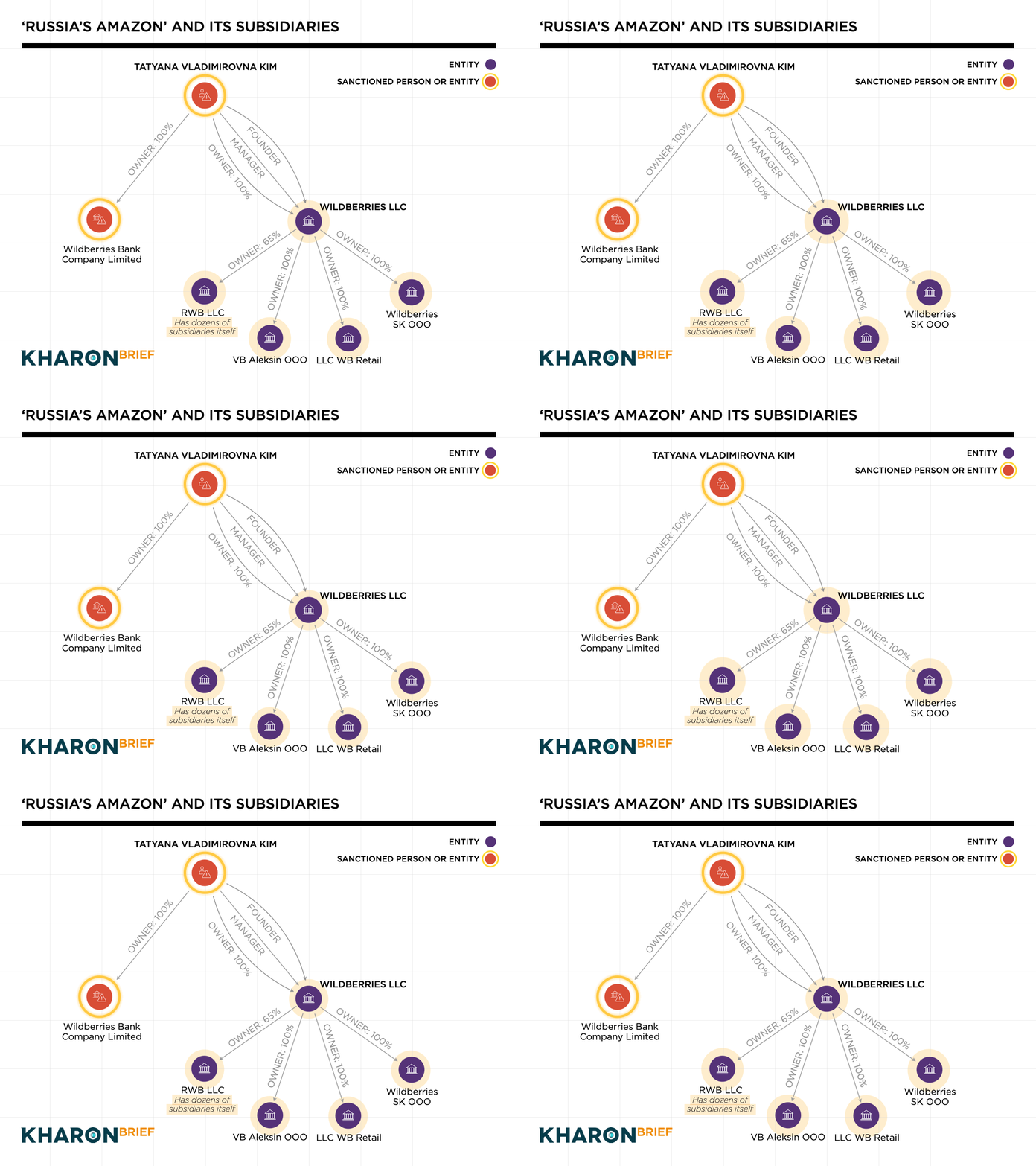
And the restrictions further extend to the dozens of subsidiaries that RWB LLC has — some of which had previously been owned by Wildberries directly.
Read more from The Brief:
Read more from The Brief: