
The Department of Defense last week added three of China’s most prominent civilian research universities — Fudan University, Shanghai Jiao Tong University, and Shandong University — to its list of foreign institutions tied to “problematic activity” that could threaten U.S. national security.
That Section 1286 list, which has grown to include 130 institutions across China, Russia, and Iran, coincides with a growing focus in Washington on the breadth of China’s military-civil fusion ecosystem.
And the list’s designations now carry tangible consequences for U.S. research institutions.
What it means: Since the start of fiscal year 2026, the Pentagon is barred from funding fundamental research involving any entity on the expanding 1286 list.
China’s Ministry of Commerce criticized the U.S. for “generalizing the concept of national security” and “politicizing, weaponizing and instrumentalizing scientific cooperation.”
What Kharon’s research shows: The three newly listed civilian universities all connect to China’s military-modernization efforts, from hypersonic weapons to advanced semiconductors.
Subsequent updates added dozens of service academies and defense laboratories, before the list expanded to cover Chinese civilian universities starting last year.
“The new listings show that the Department of War recognizes the depth of cooperation between Chinese civilian academies and the military,” said Timothy Heath, founder of the research firm Perceptum, who served for years as a China analyst for RAND and the U.S. military. “As that collaboration deepens, civilian universities and research institutes increasingly become research-security concerns for Washington.”
That Section 1286 list, which has grown to include 130 institutions across China, Russia, and Iran, coincides with a growing focus in Washington on the breadth of China’s military-civil fusion ecosystem.
And the list’s designations now carry tangible consequences for U.S. research institutions.
What it means: Since the start of fiscal year 2026, the Pentagon is barred from funding fundamental research involving any entity on the expanding 1286 list.
- That ban covers grants, contracts, and other federal assistance to universities, prohibits the use of equipment from listed entities, and applies to all employees at recipient institutions.
- DOD has warned researchers, too, that collaborating with anyone affiliated with a listed entity “constitutes a compliance risk and may negatively impact their eligibility for federal funding.”
China’s Ministry of Commerce criticized the U.S. for “generalizing the concept of national security” and “politicizing, weaponizing and instrumentalizing scientific cooperation.”
What Kharon’s research shows: The three newly listed civilian universities all connect to China’s military-modernization efforts, from hypersonic weapons to advanced semiconductors.
Redefining Research Security Risks
The 1286 list initially focused heavily on institutions tied to China’s defense-industrial base, including its state-backed “Seven Sons of National Defense” and a small number of academies run by the People’s Liberation Army (PLA), in addition to a handful of Russian and Iranian institutions.Subsequent updates added dozens of service academies and defense laboratories, before the list expanded to cover Chinese civilian universities starting last year.
“The new listings show that the Department of War recognizes the depth of cooperation between Chinese civilian academies and the military,” said Timothy Heath, founder of the research firm Perceptum, who served for years as a China analyst for RAND and the U.S. military. “As that collaboration deepens, civilian universities and research institutes increasingly become research-security concerns for Washington.”
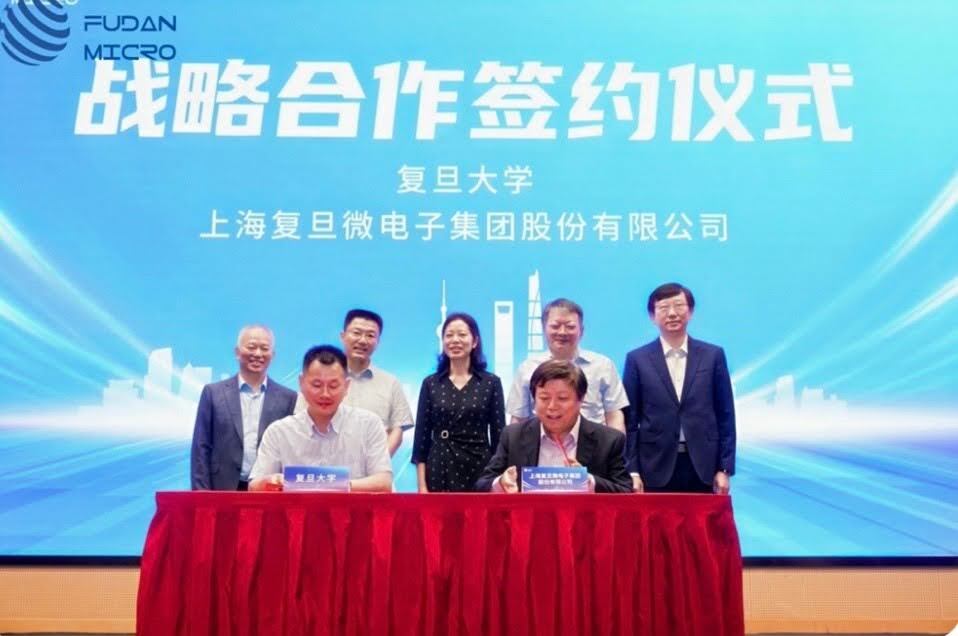
Fudan University and Shanghai Fudan Microelectronics Group hold a strategic-cooperation signing ceremony in July 2025. The U.S. named the latter to the Entity List two months later, for procuring U.S. components in support of China's “military modernization.” (Shanghai Fudan Microelectronics Group)
It’s also reflective of Washington’s typical regulatory approach, said Nazak Nikakhtar, chair of the national security practice at the D.C. law firm Wiley and a former Commerce Department undersecretary.
“When the government first exercises this [type of] legal authority, it tends to use it narrowly with easily defensible targets, in order to understand the litigation risks and the industry reactions, and then gradually the restrictions become more expansive,” Nikakhtar said. “The government tends to go after the low-hanging fruit first, and then it broadens restrictions to have greater impact.”
Shanghai Jiao Tong University (SJTU), China’s self-styled MIT, was one of the first nine schools in “Project 985,” a state initiative to build a Chinese Ivy League capable of competing with the West.
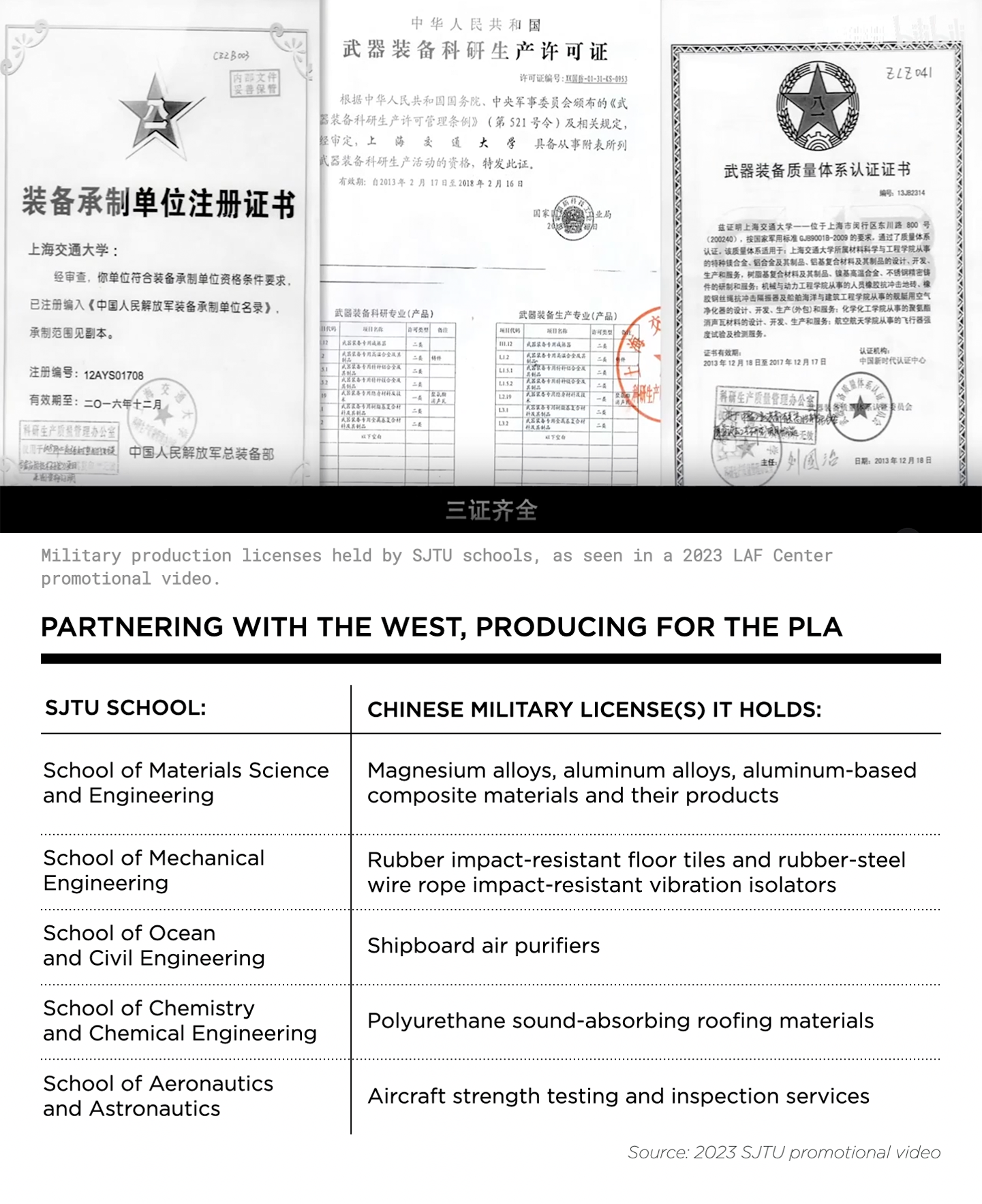
Last year, Kharon reported that a national laboratory inside SJTU’s School of Materials Science and Engineering was involved in hypersonic weapons research, including for components of anti-ship missiles that state-run CCTV dubbed the “carrier killer.” At the same time, SJTU and the lab maintained joint institutes and research ties with American universities and companies.
“When the government first exercises this [type of] legal authority, it tends to use it narrowly with easily defensible targets, in order to understand the litigation risks and the industry reactions, and then gradually the restrictions become more expansive,” Nikakhtar said. “The government tends to go after the low-hanging fruit first, and then it broadens restrictions to have greater impact.”
Top Universities, Military Ties
Two of the newly listed schools best illustrate how Chinese civilian institutions and the military can intersect.Shanghai Jiao Tong University (SJTU), China’s self-styled MIT, was one of the first nine schools in “Project 985,” a state initiative to build a Chinese Ivy League capable of competing with the West.
Last year, Kharon reported that a national laboratory inside SJTU’s School of Materials Science and Engineering was involved in hypersonic weapons research, including for components of anti-ship missiles that state-run CCTV dubbed the “carrier killer.” At the same time, SJTU and the lab maintained joint institutes and research ties with American universities and companies.
- In all, at least five SJTU schools hold licenses that specifically recognize their contributions to “military quality” research and products.
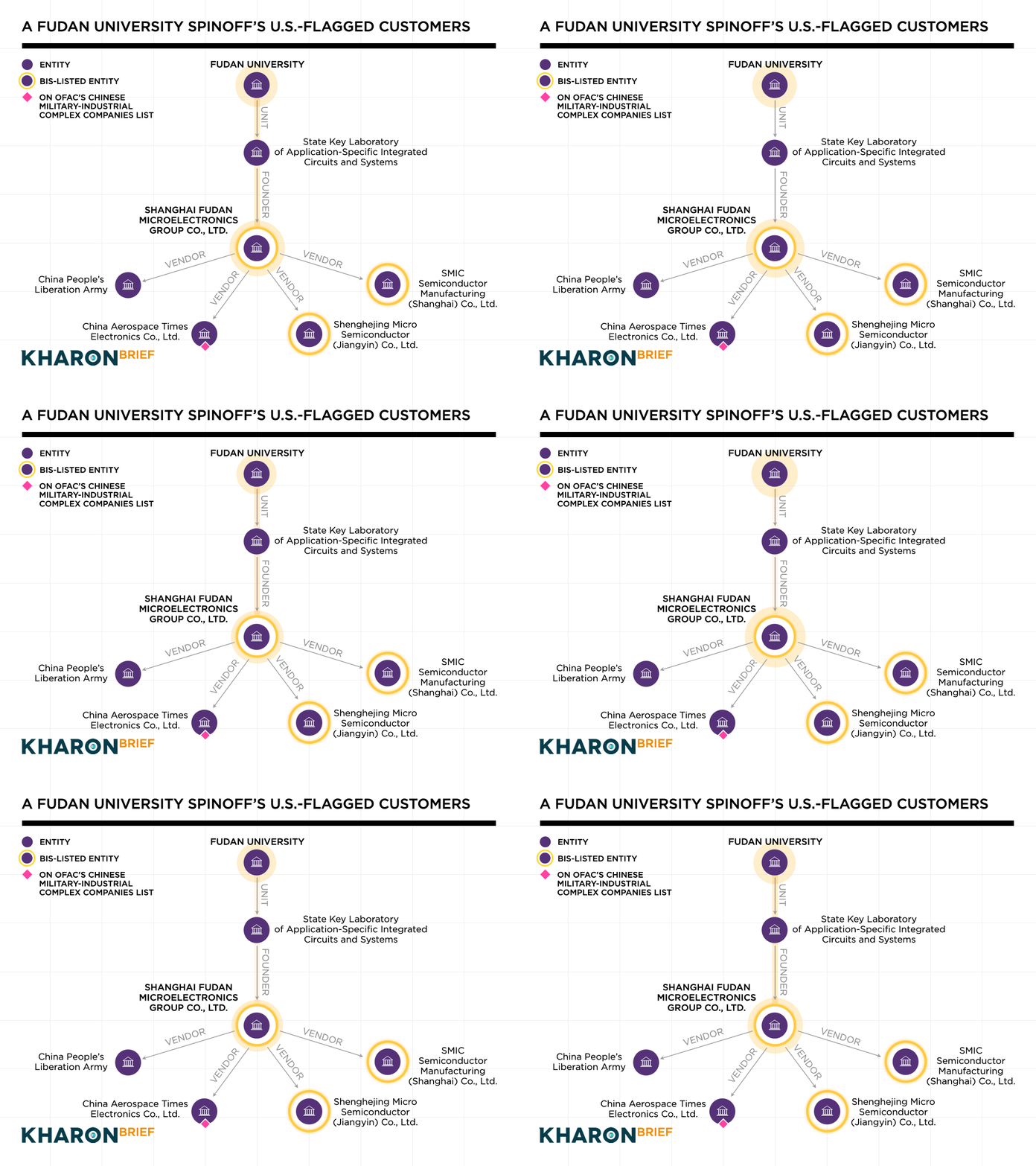
Fudan University, a fellow Project 985 school, drives chip research at state-funded labs and forms partnerships that then funnel breakthroughs into commercial production. It’s based in Shanghai, in the heart of the industrial cluster that China is counting on to build a self-sufficient chip industry and blunt the effects of U.S. export controls.
Meanwhile, according to corporate disclosures and reports from Chinese banks, the company’s downstream customers include the PLA and Entity-Listed vendors, among them the state chip foundry SMIC. In September, the U.S. Commerce Department added Fudan Microelectronics to the Entity List itself, for “acquiring and attempting to acquire U.S.-origin items in support of China’s military modernization” and for supplying its military, government, and security apparatus directly.
Zoom in: The university’s School of Microelectronics cites “military-civil fusion” and “major national strategic needs” as guiding goals.
Meanwhile, according to corporate disclosures and reports from Chinese banks, the company’s downstream customers include the PLA and Entity-Listed vendors, among them the state chip foundry SMIC. In September, the U.S. Commerce Department added Fudan Microelectronics to the Entity List itself, for “acquiring and attempting to acquire U.S.-origin items in support of China’s military modernization” and for supplying its military, government, and security apparatus directly.
- The designation said the company also had supplied technology to Russian military end-users.
Analysis: “While neither university is a military academy, under China’s military-civil fusion strategy, both play important roles in generating the research, technologies, and technical talent that can support the modernization of the PLA alongside civilian economic and scientific development,” said Richard Fisher, a senior fellow at the International Assessment and Strategy Center and the author of “China’s Military Modernization: Building for Regional and Global Reach.”
The two U.S. lists, Nikakhtar said, reflect the same strategy: using “name and shame” designations to signal risks, while imposing narrower compliance requirements than tools such as the Commerce Department’s Entity List.
By framing the measures as security-related actions rather than trade restrictions, she added, U.S. officials also can more easily defend them in legal and diplomatic settings, while preserving regulatory flexibility.
“This is very much a war of blacklists between China and the U.S.,” Nikakhtar said, “with both sides still exercising some restraint.”
Yu-Jie Liao contributed research to this report.
Read more from The Brief on TKTK:
The Bigger U.S.-China Picture
The Section 1286 update came just weeks after the Pentagon had expanded another list, its Section 1260H designations of “Chinese military companies.” China had sanctioned U.S. companies in response, marking another round of tit-for-tat measures.The two U.S. lists, Nikakhtar said, reflect the same strategy: using “name and shame” designations to signal risks, while imposing narrower compliance requirements than tools such as the Commerce Department’s Entity List.
By framing the measures as security-related actions rather than trade restrictions, she added, U.S. officials also can more easily defend them in legal and diplomatic settings, while preserving regulatory flexibility.
“This is very much a war of blacklists between China and the U.S.,” Nikakhtar said, “with both sides still exercising some restraint.”
Yu-Jie Liao contributed research to this report.
Read more from The Brief on TKTK: